
Pepper Comparisons: Cross-Tier Heat Jumps and Same-Tier Flavor Choices
Pepper comparisons work best when you start with the cooking decision, then check heat, flavor, form, and texture in that order. Use cross-tier matchups to control a large heat jump and same-tier matchups to choose between peppers that occupy a similar heat band.

Heat, flavor, kitchen fit.
Aji Amarillo vs Panca: Fruity Yellow vs Smoky Red
Cross-Tier Showdowns
Matchups spanning significant heat gaps to help you understand substitution risks.
 Heat Gap
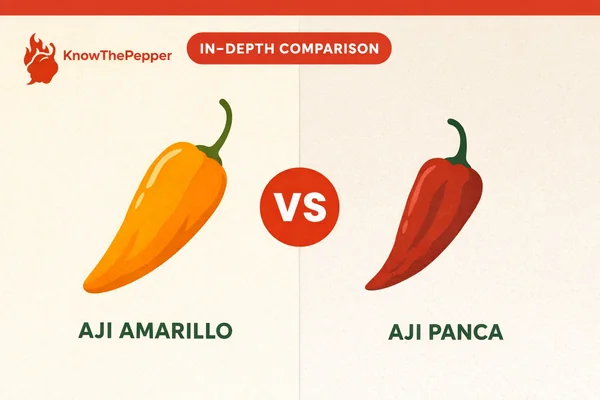
Aji Amarillo vs Panca
Aji Amarillo and Aji Panca are both Peruvian staples from the same botanical family, but they sit at opposite ends of…
 Heat Gap
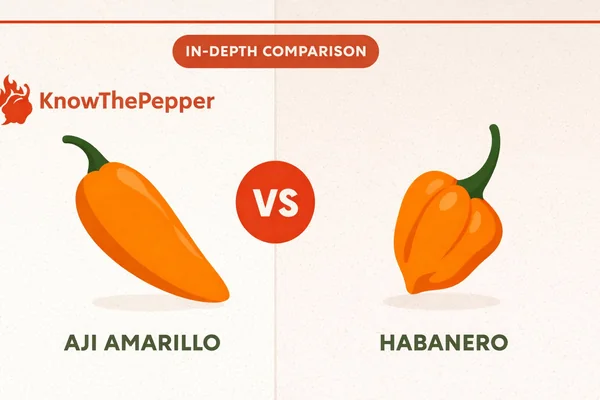
Aji Amarillo vs Habanero
Aji amarillo is the better pick when a sauce needs Peruvian yellow color, paste body, and medium-hot fruit.
 Heat Gap
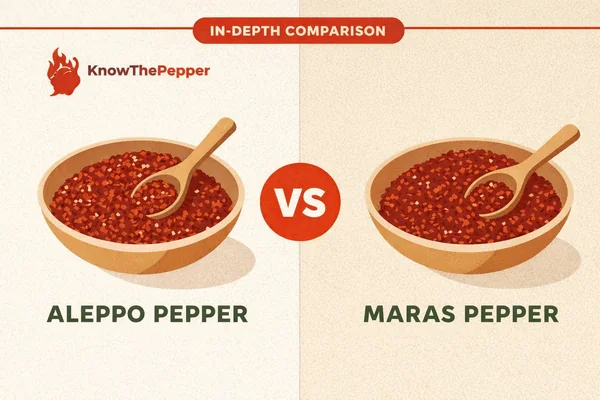
Aleppo vs Maras
Aleppo pepper is usually brighter, fruitier, and better as a finishing flake, while Maras pepper tends darker and works…
 Heat Gap
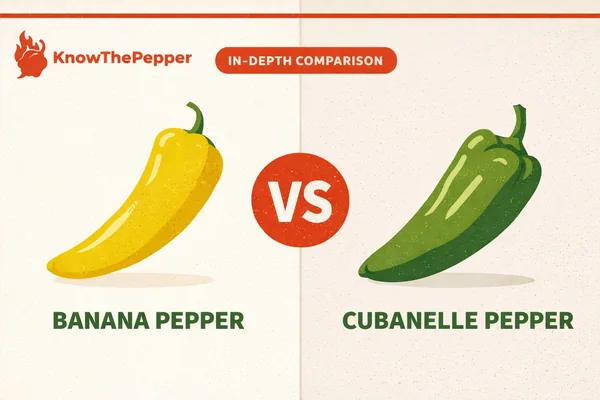
Banana vs Cubanelle
Banana peppers and cubanelle peppers are both mild, sweet, thin-walled peppers that sit at the very bottom of the…
 Mild vs Hot
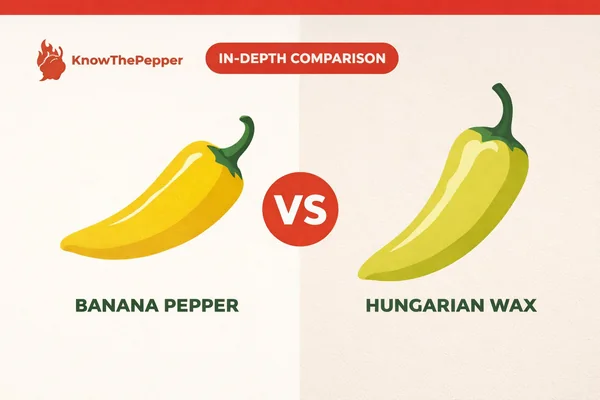
Banana vs Hungarian Wax
Banana pepper is the low-risk choice for mild pickled rings, sandwiches, salads, and pizza.
 Heat Gap
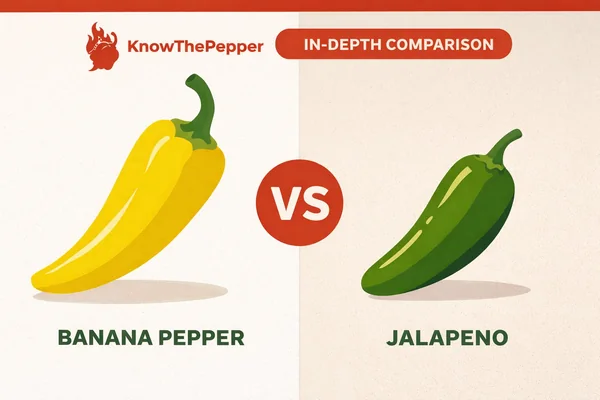
Banana Pepper vs Jalapeño
Choose sweet banana pepper for mild tang and long stuffed pods, and choose jalapeño for thick flesh and a clear medium…
 Heat Gap
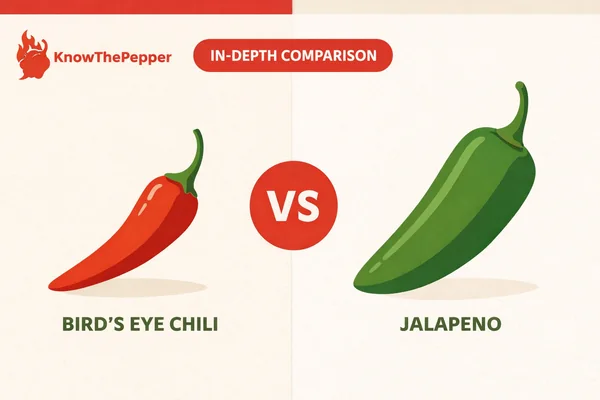
Bird's Eye Chili vs Jalapeño
Choose bird's eye chili for concentrated heat and jalapeño for crunch, roasted flesh, or visible green pieces.
 Heat Gap
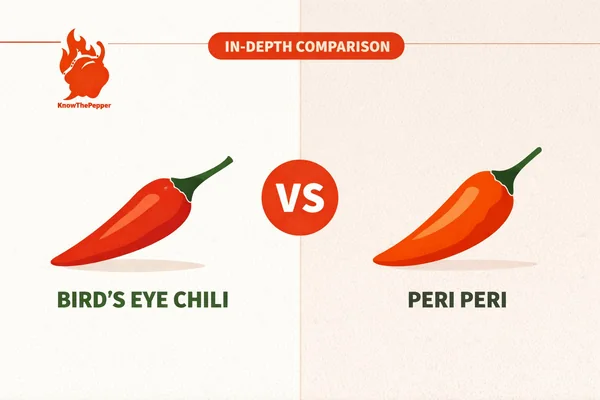
Bird's Eye vs Peri Peri
Bird's eye chili is the better choice for sharp fresh heat in Thai, Vietnamese, and Filipino dishes.
Bulgarian Carrot vs Habanero
The Bulgarian Carrot and habanero occupy completely different positions on the heat spectrum, one sits in the…
 Heat Gap
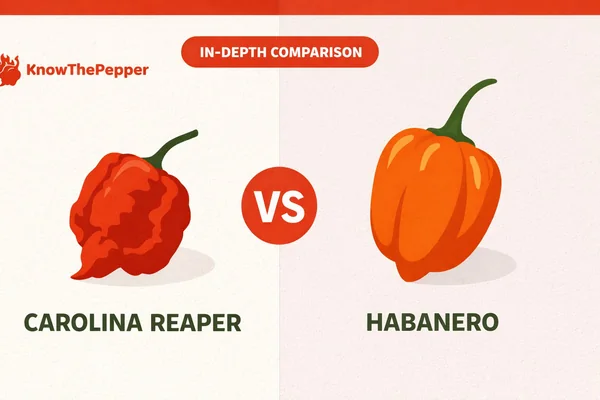
Carolina Reaper vs Habanero
The Carolina Reaper and habanero share the same species and a fruity flavor base, but they sit in completely different…
 Heat Gap
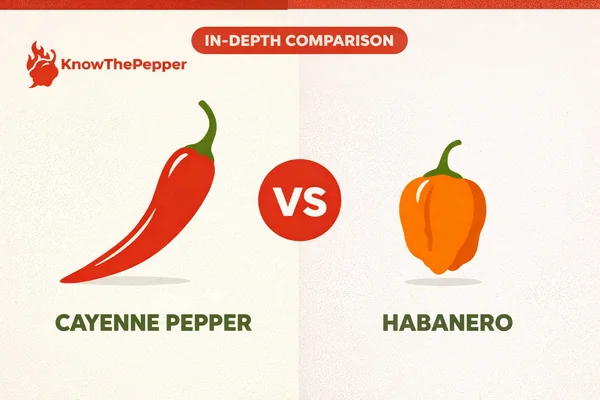
Cayenne vs Habanero
Cayenne is the better choice for measured background heat, especially as powder.
 Heat Gap
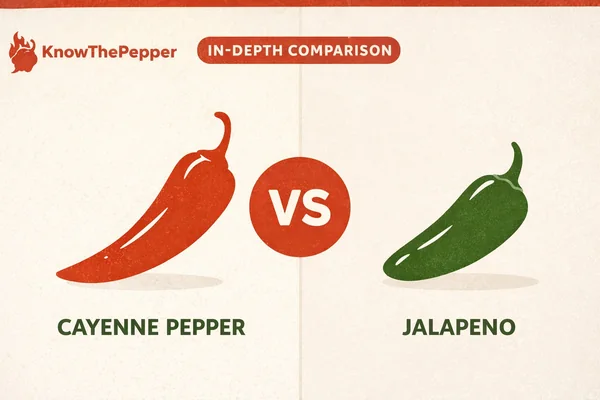
Cayenne vs Jalapeño
Cayenne gives concentrated heat that disappears into a dish, while jalapeño adds a fresh green bite you can see and…
 Heat Gap
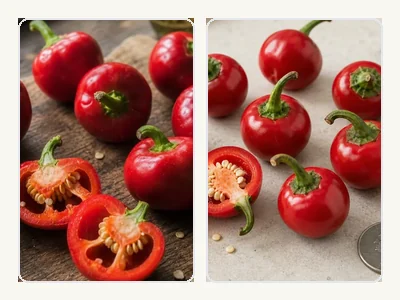
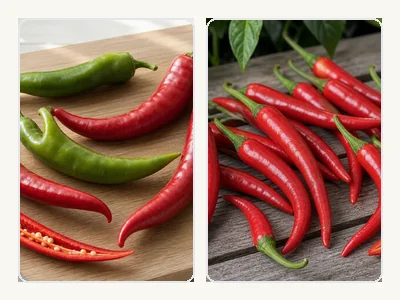
Cherry Bomb vs Cherry
Cherry Bomb is a named hot cultivar, while cherry pepper is a round-fruited category that may be sweet or hot.
 Heat Gap
Cowhorn vs Cayenne
Cowhorn pepper is the big fresh pod choice for stuffing, roasting, and pickling.
 Heat Gap
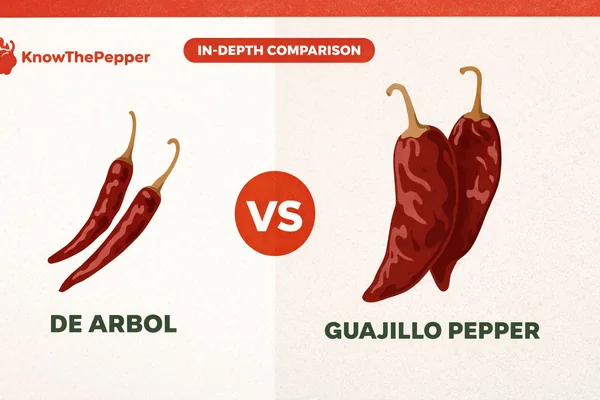
De Arbol vs Guajillo
De arbol and guajillo are two essential Mexican dried chiles, but they do different jobs.
 Heat Gap
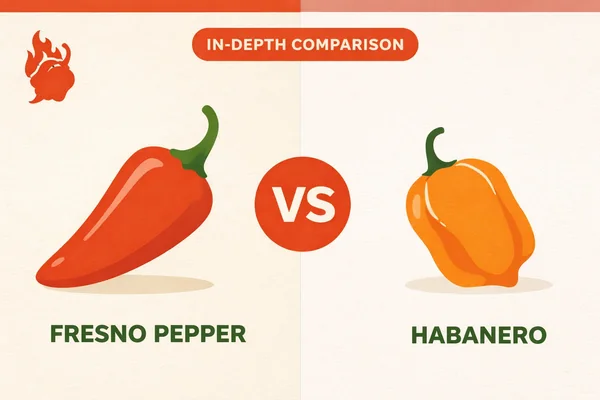
Fresno vs Habanero
Use Fresno pepper when the dish needs visible red chile pieces, medium heat, pickles, or fresh salsa.
 Heat Gap
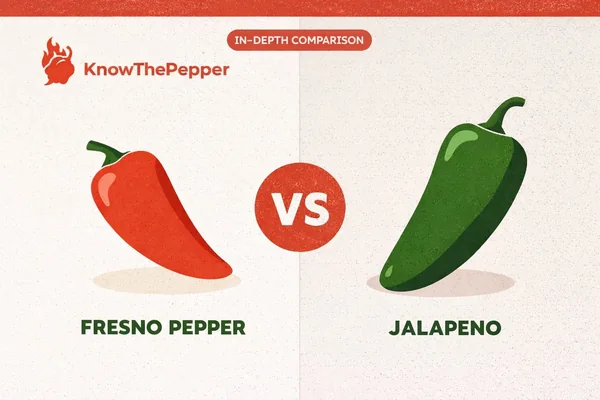
Fresno vs Jalapeño
Fresno and jalapeno peppers overlap almost completely on the Scoville scale, share the same species, and can look…
 Heat Gap
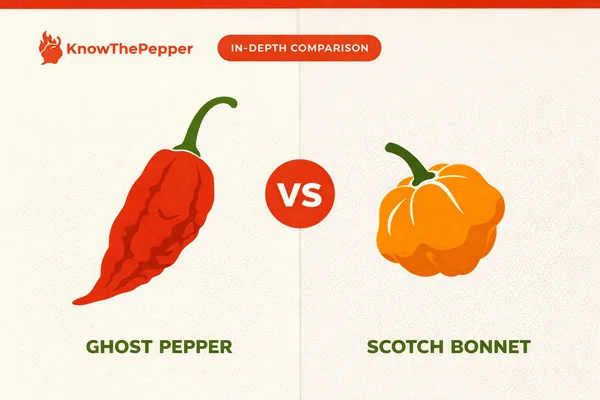
Ghost vs Scotch Bonnet
Ghost pepper heat is the choice when the recipe is built around superhot intensity.
 Heat Gap
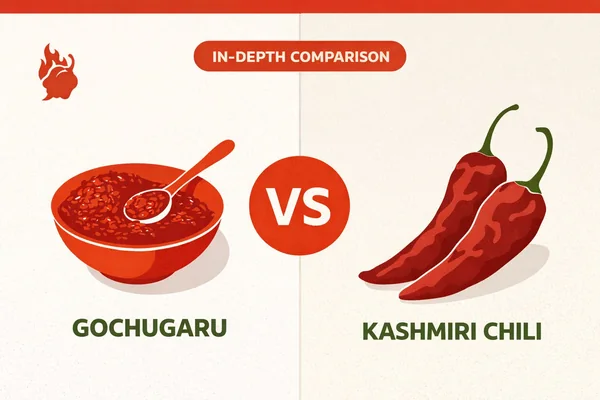
Gochugaru vs Kashmiri
Gochugaru is the Korean chile flake for kimchi texture, gochujang-style sauces, and clean red heat.
 Extra-Hot vs Medium
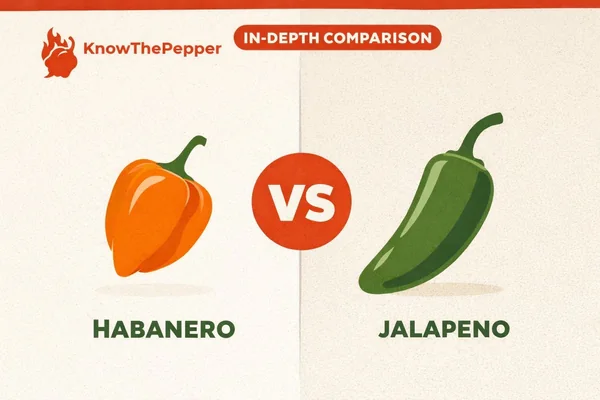
Habanero vs Jalapeno
The real split is not only heat. Habanero brings 100,000-350,000 SHU plus fruit and citrus.
 Heat Gap
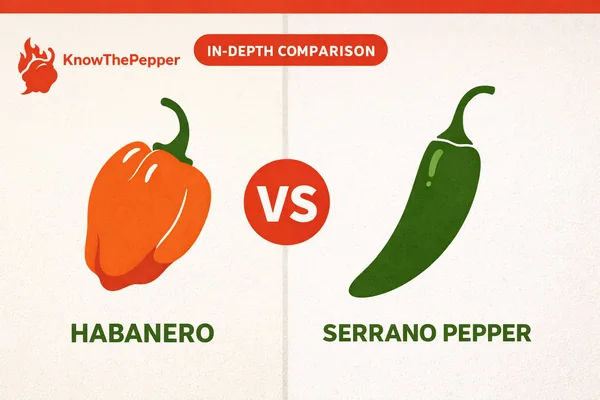
Habanero vs Serrano
Habanero is the fruit-forward extra-hot choice for mango salsa, Yucatan-style sauces, and small-dose hot sauce.
 Heat Gap
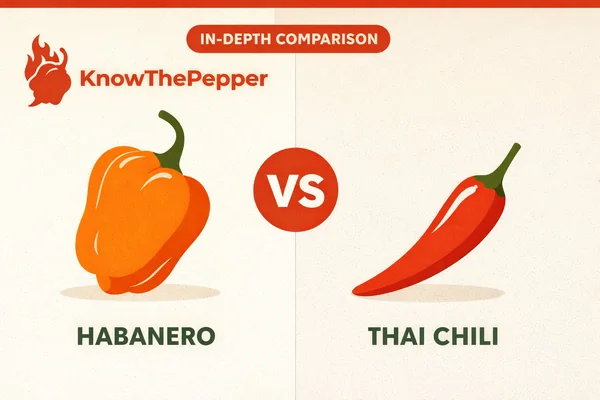
Habanero vs Thai Chili
Choose habanero when a sauce needs very high heat plus a fruity, citrus-like aroma.
 Heat Gap
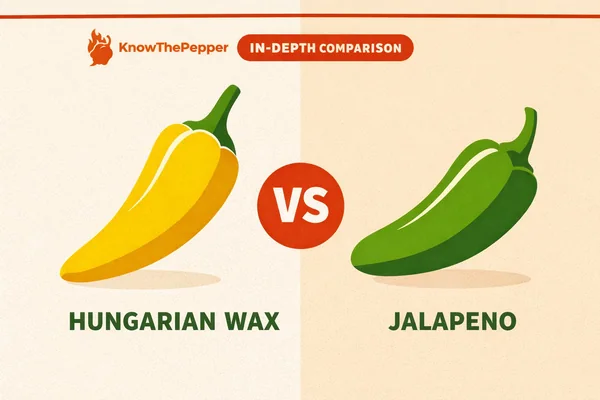
Hungarian Wax vs Jalapeno
Choose Hungarian Wax for long pickling slices, frying, or stuffed whole pods.
 Heat Gap
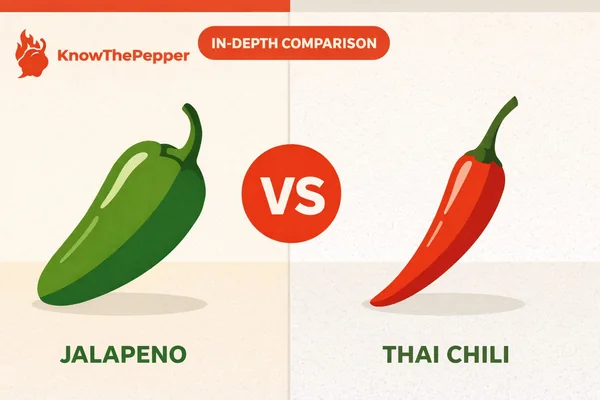
Jalapeno vs Thai Chili
Choose jalapeno when the pepper should provide crisp green flesh, rings, dice, or a stuffing cavity.
 Heat Gap
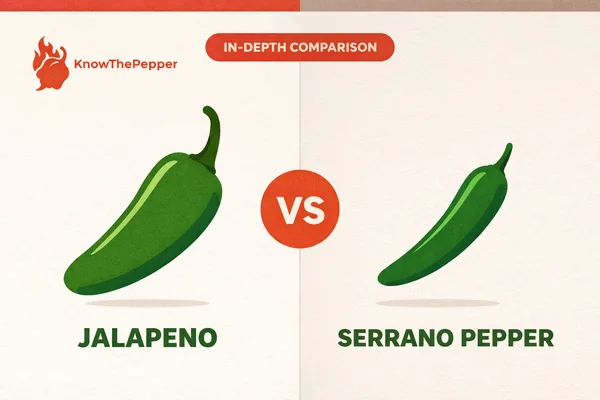
Jalapeno vs Serrano
Jalapeno provides 2,000 to 8,000 SHU and a larger pod for stuffing, rings, and moderate fresh heat.
 Heat Gap
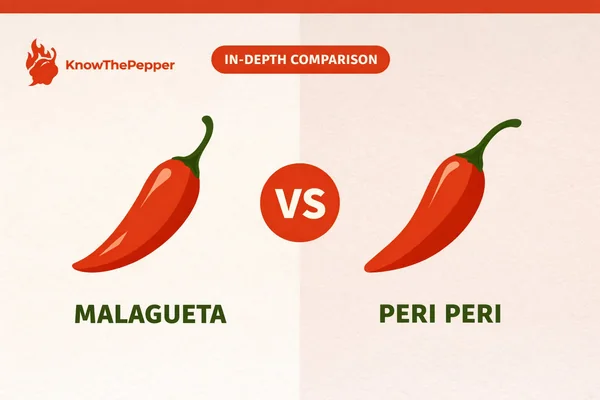
Malagueta vs Peri Peri
Malagueta and piri-piri can both name Capsicum frutescens, but peri-peri often means a finished sauce.
 Heat Gap
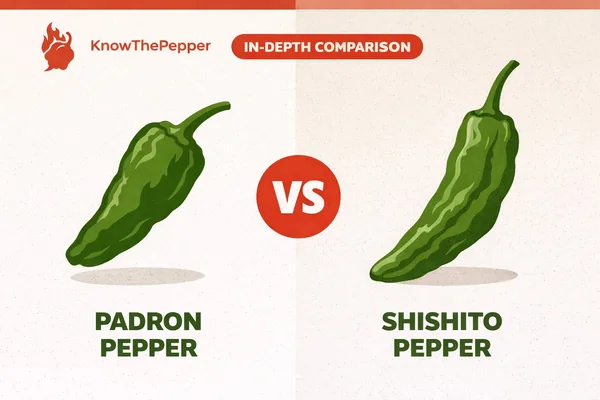
Padron vs Shishito
Padrón and shishito peppers occupy the same cooking niche, small, blister-friendly, mostly mild, yet they come from…
 Heat Gap
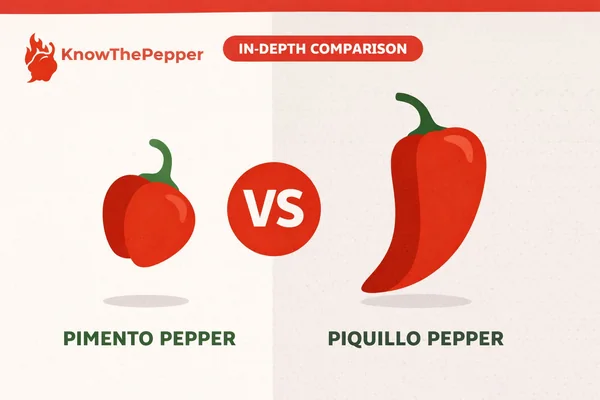
Pimento vs Piquillo
Choose pimento for mild sweetness in cheese spreads, olive stuffing, relishes, and recipes that need diced red pepper…
 Heat Gap
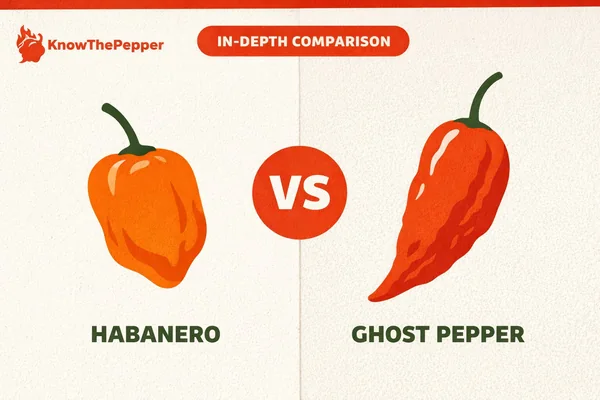
Habanero vs Ghost Pepper
The habanero sits between 100,000 and 350,000 SHU, making it one of the most recognizable hot peppers in kitchens…
 Heat Gap
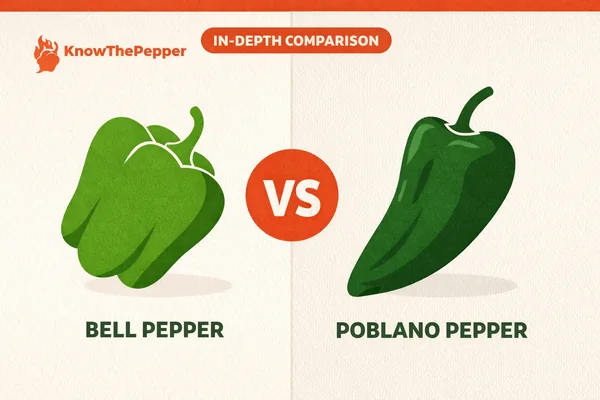
Bell Pepper vs Poblano
Bell pepper is the zero-heat choice for crisp raw pieces and large stuffed cups.
 Heat Gap
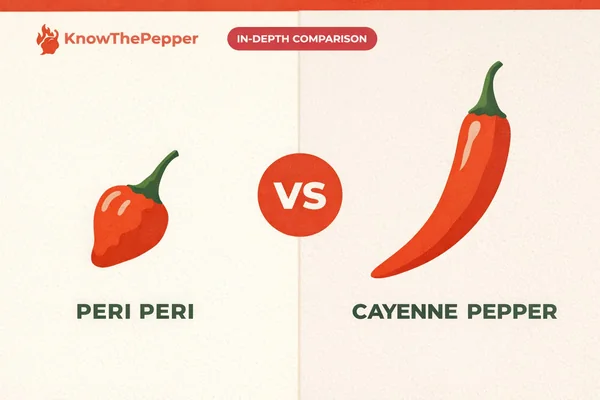
Peri Peri vs Cayenne
Use peri peri when the recipe wants a chile sauce with acid, garlic, oil, and bright heat.
 Mild vs Extra-Hot
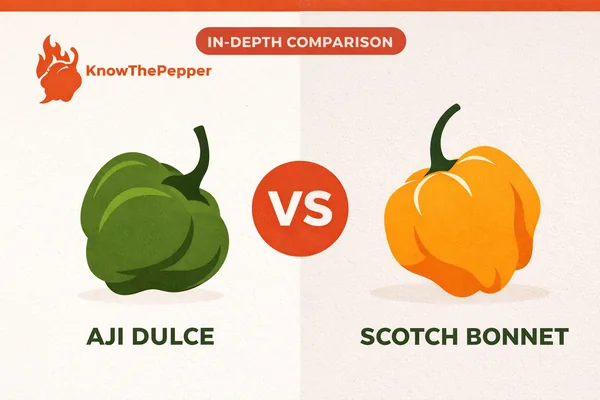
Aji Dulce vs Scotch Bonnet
Aji Dulce is the mild choice for aromatic volume, especially in sofrito, rice, beans, and braises.
 Heat Gap
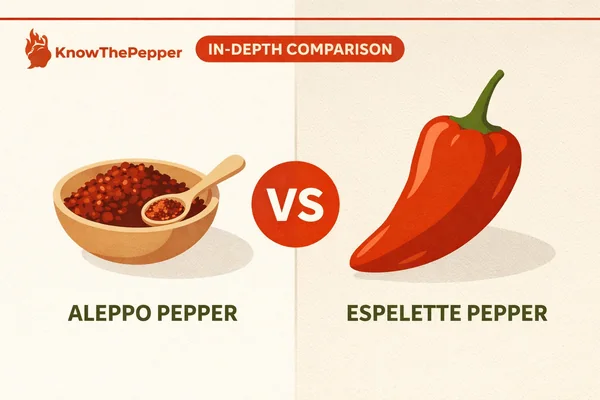
Aleppo vs Espelette
Aleppo pepper is the better choice for oily, fruity flakes in beans, lamb, yogurt sauces, and tomato dishes.
 Heat Gap
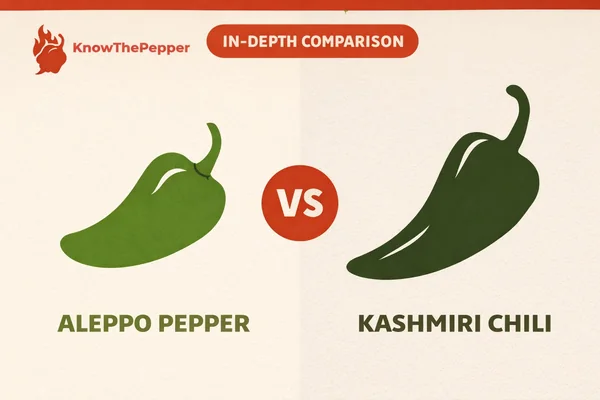
Aleppo vs Kashmiri
Choose Kashmiri chili when the recipe needs deep red color and almost no heat.
 Heat Gap
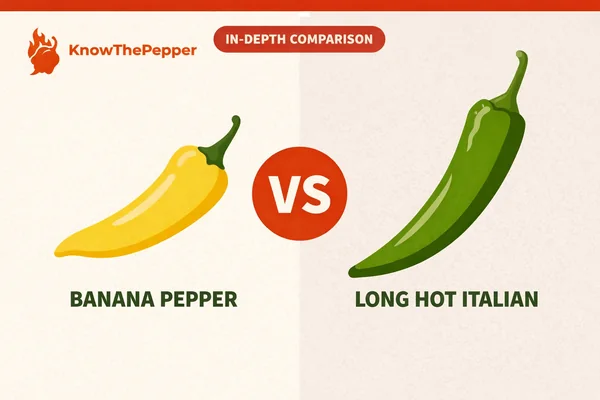
Banana vs Long Hot Italian
Banana pepper is the better pickling and sandwich pepper.
 Heat Gap
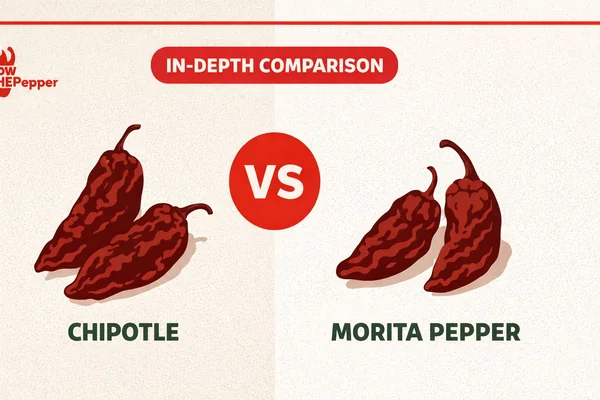
Chipotle vs Morita
Chipotle and morita are both smoke-dried jalapeños, but they diverge in color, texture, smoke intensity, and how…
 Heat Gap
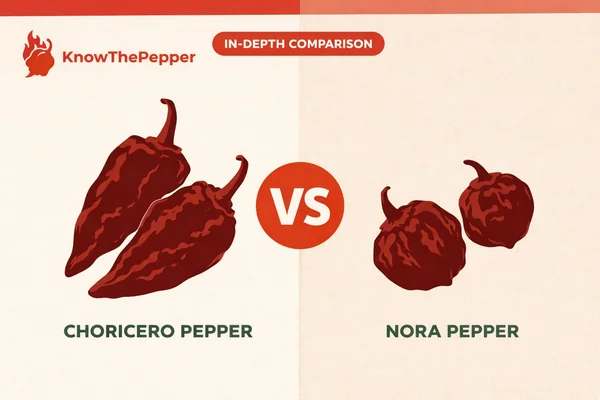
Choricero vs Nora
Both the choricero and the ñora are dried Spanish peppers with zero measurable heat, but they play distinctly different…
 Heat Gap
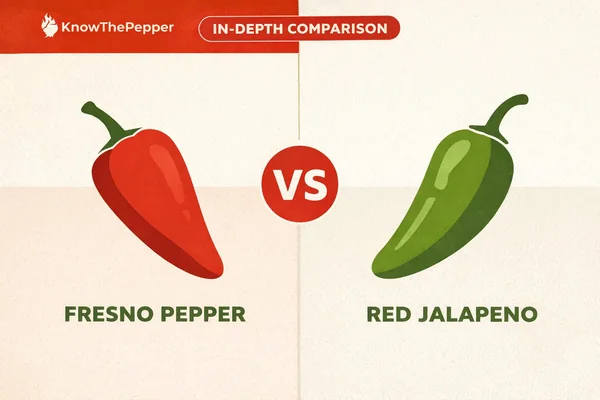
Fresno vs Red Jalapeno
Choose Fresno for a slimmer, usually thinner-walled red chile that blends readily into salsa and sauce.
 Heat Gap
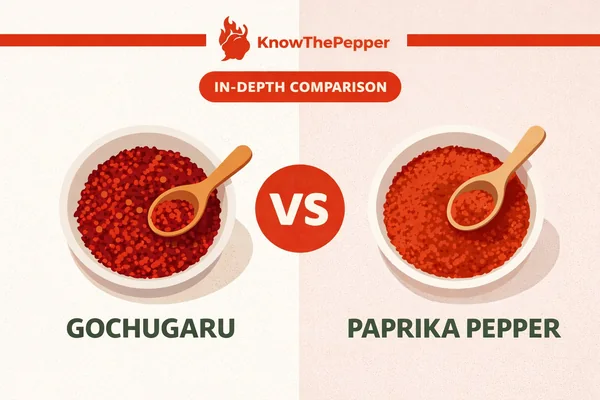
Gochugaru vs Paprika
Choose gochugaru when visible flakes, a textured seasoning paste, and Korean red-pepper character matter.
 Mild vs Extra-Hot
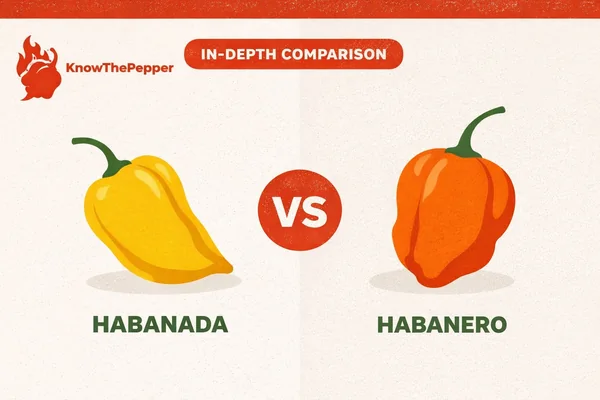
Habanada vs Habanero
The habanada and the habanero share nearly identical genetics and flavor DNA, but one registers 0 SHU and the other…
 Heat Gap
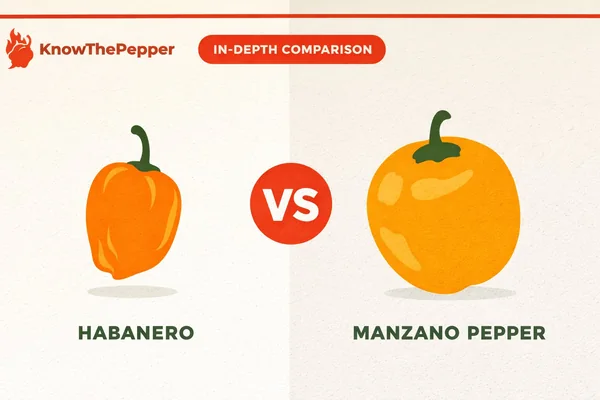
Habanero vs Manzano
Habanero is far hotter and works as a small dose of tropical, floral heat in sauces and marinades.
 Heat Gap
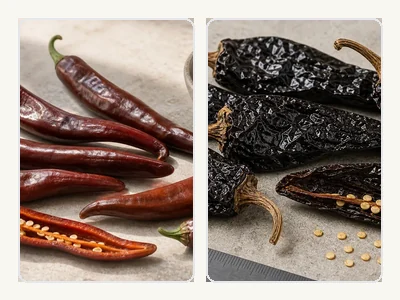
Holy Mole vs Pasilla
Holy Mole is a modern pasilla-type hybrid, while pasilla is the dried form of chilaca.
 Heat Gap
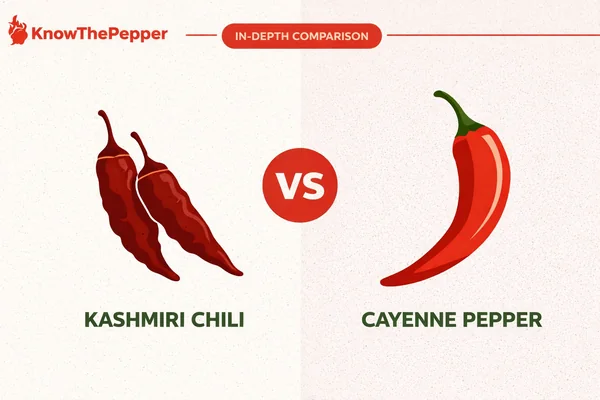
Kashmiri vs Cayenne
Use Kashmiri chili when the dish needs deep red color and only gentle warmth.
 Heat Gap
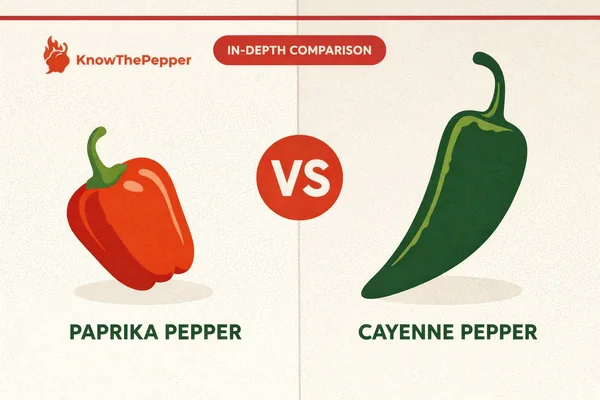
Paprika vs Cayenne
Paprika and cayenne are both red pepper powders, but they do different jobs.
 Heat Gap
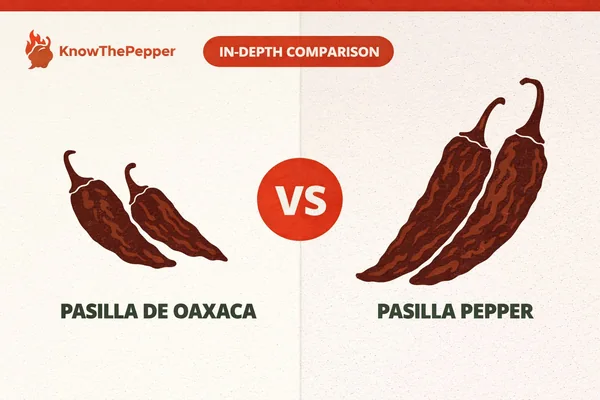
Pasilla de Oaxaca vs Pasilla
These chiles are easy to confuse because both carry the word pasilla, but they do very different work.
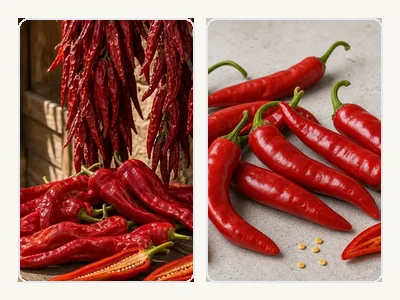 Mild vs Hot
Peperone di Senise vs Calabrian
Peperone di Senise is an Italian Capsicum annuum pepper at 0 SHU, completely sweet and suited to pepper flavor without…
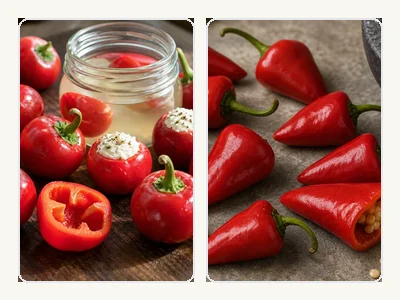 Heat Gap
Peppadew vs Piquillo
Peppadew is the sweet-brined, crisp choice for cold stuffed bites and tangy accents.
 Heat Gap
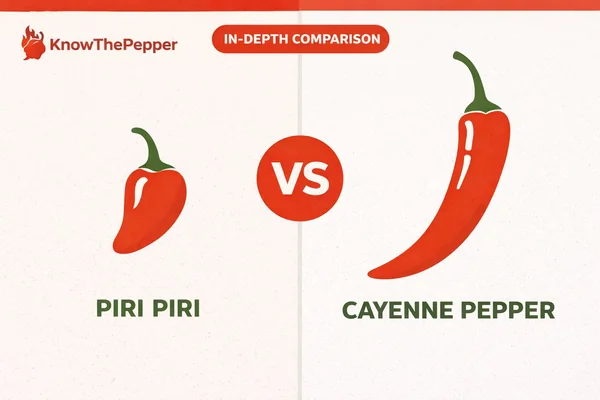
Piri Piri vs Cayenne
Piri piri and cayenne are both workhorses of the hot sauce world, but they sit in surprisingly different positions…
 Heat Gap
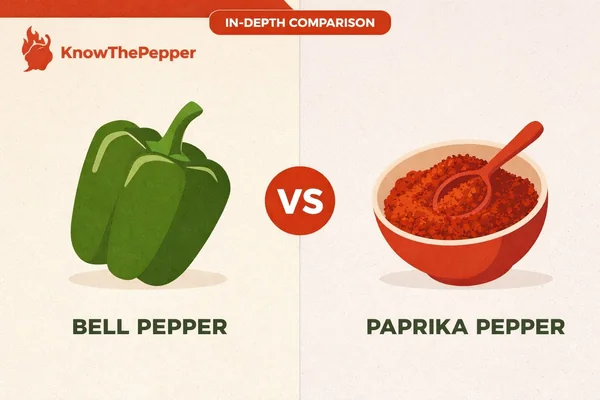
Bell vs Paprika
Choose bell pepper for fresh structure and paprika for concentrated dry seasoning.
 Heat Gap
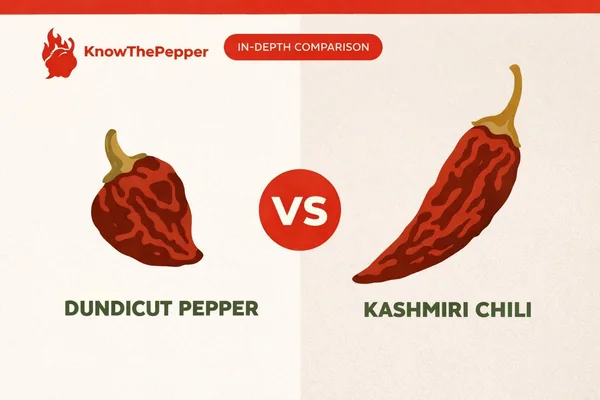
Dundicut vs Kashmiri Chili
Dundicut supplies the stronger dried-chile bite, while Kashmiri chilli is the easier choice for deep red color with…
 Hot vs Mild
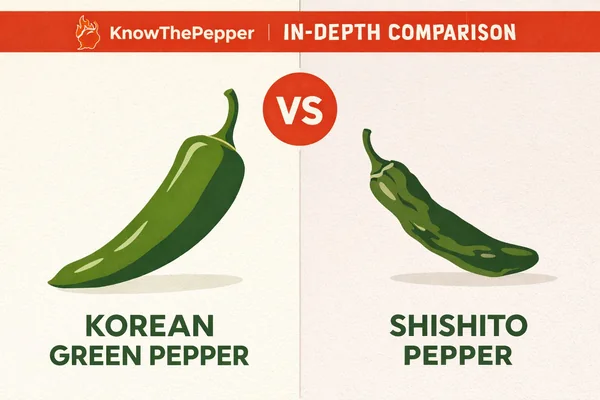
Korean Green vs Shishito
Both the Korean green pepper and the shishito register at 0 SHU on standardized tests, yet anyone who has eaten them…
 Heat Gap
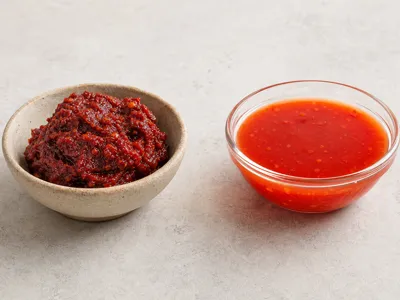
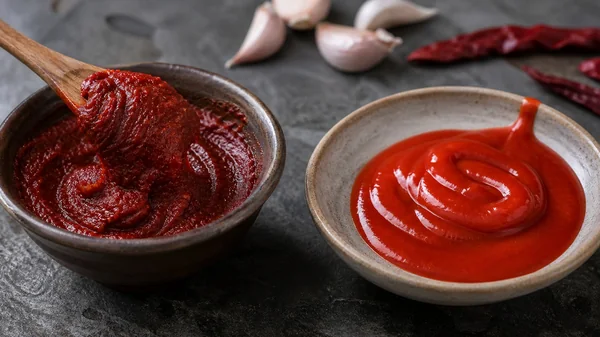
Chili Paste vs Chili Sauce
Chili paste usually adds concentrated chile solids with little liquid, while chili sauce adds pourable seasoning plus…
 Heat Gap
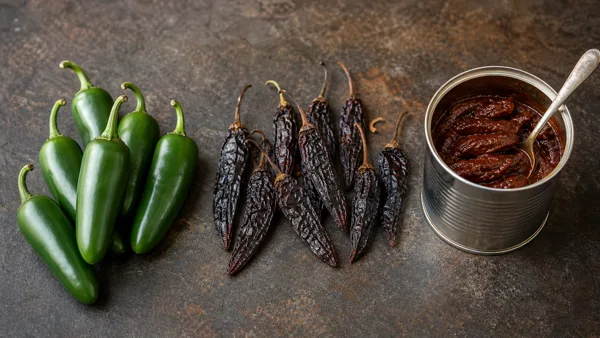
Jalapeño vs Chipotle in Adobo vs Morita
Fresh jalapeño brings green crunch. Dried morita brings concentrated fruity smoke.
 Heat Gap
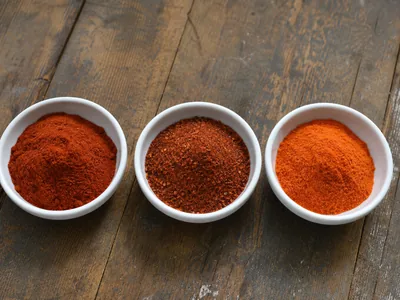
Paprika, Chili Powder, or Cayenne: Which to Use?
Paprika supplies red color and mild pepper flavor, chili powder supplies a chile-and-spice blend, and cayenne supplies…
Paprika vs Smoked Paprika
Paprika and smoked paprika can look similar in the jar, but they do not do the same job in a recipe.
 Heat Gap
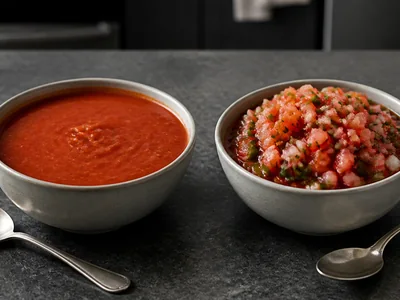
Picante Sauce vs Salsa
Picante sauce is a type of salsa in everyday U.
 Heat Gap
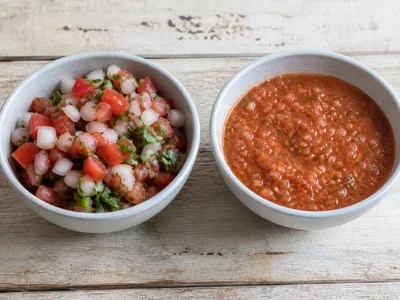
Pico de Gallo vs Salsa
Pico de gallo is a fresh, chopped type of salsa, while salsa is the larger family of Mexican table sauces.
Chili vs Chile
Chili is the standard American spelling for the pepper, the powder, the sauce, and the stew.
Chipotle Meco vs Morita
Meco is drier and more intensely smoky. Morita is darker, fruitier, and easier to blend into salsa and adobo.
Crushed Red Pepper vs Cayenne
Crushed red pepper adds visible flakes and uneven bursts. Cayenne powder adds denser, uniform heat.
 Heat Gap
Gochujang vs Sriracha
Choose gochujang for fermented savoriness, sweetness, and a thick coating sauce.
 Heat Gap
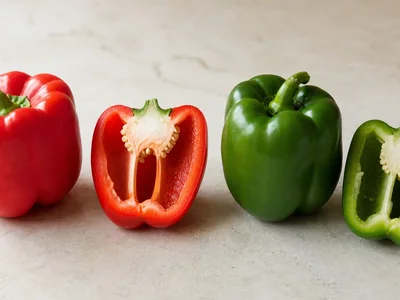
Red Pepper vs Green Pepper
Red pepper versus green pepper usually compares ripe and mature-green bell peppers.
 Heat Gap
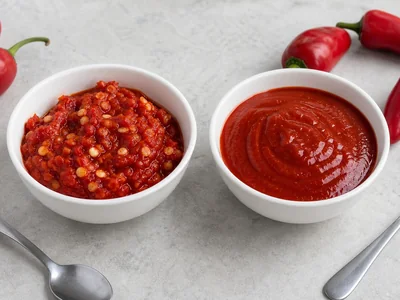
Sambal Oelek vs Sriracha
Choose sambal oelek for coarse, chile-forward heat with little automatic sweetness.
 Extra-Hot vs Medium
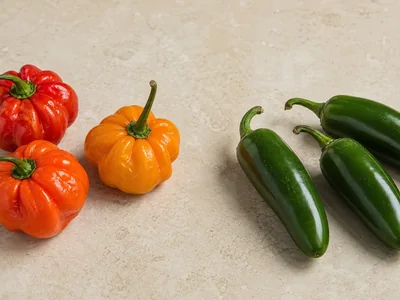
Scotch Bonnet vs Jalapeño
Choose jalapeño for fresh green flavor, visible pieces, and manageable heat.
 Heat Gap
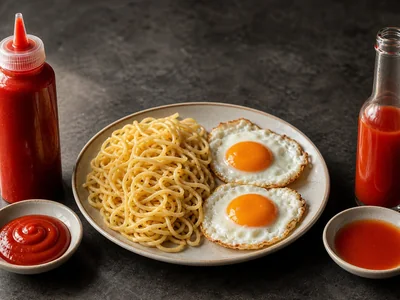
Sriracha vs Tabasco
Choose sriracha when food needs a smooth, clingy sauce with chile, garlic, and sweetness.
Ancho Chili Powder vs Chili Powder
Ancho chili powder and chili powder can both bring red-chile flavor to a dish, but they are not doing the same job…
 Heat Gap
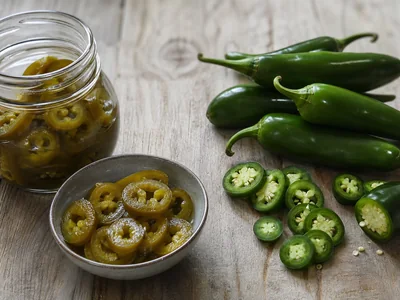
Canned vs Fresh Jalapenos
Fresh jalapenos bring crisp texture and green aroma, while canned or jarred rings bring soft texture, vinegar tang, and…
 Super-Hot vs Medium
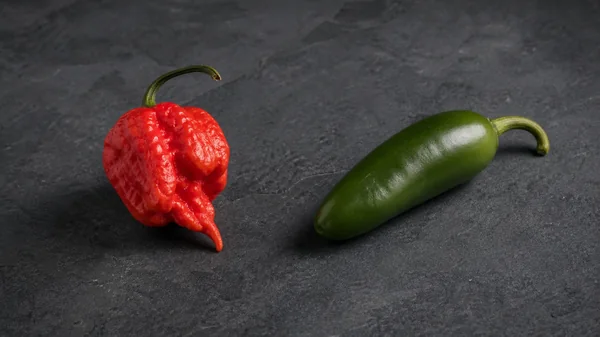
Carolina Reaper vs Jalapeno
A Carolina Reaper runs roughly 175 to 880 times hotter than a jalapeno, so treat it as a measured extreme-heat…
 Heat Gap
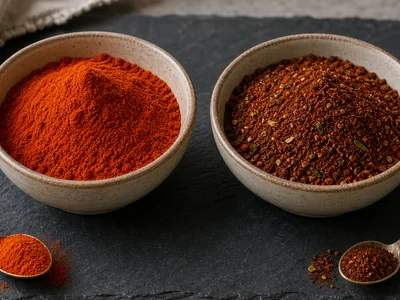
Cayenne Pepper vs Chili Powder
Cayenne pepper is a hot single-chile powder.
Chili Flakes vs Chili Powder
Chili flakes are coarse dried chile pieces for visible bite, table heat, and oil-bloomed texture.
 Heat Gap
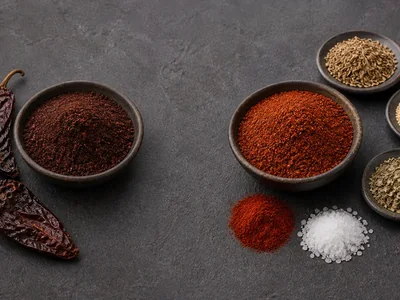
Chipotle Powder vs Chili Powder
Chipotle powder is usually one ground smoke-dried jalapeno, while many U.S.
Chipotle Powder or Smoked Paprika? Choose by the Job
Choose chipotle powder when a dish needs smoke plus noticeable chile heat.
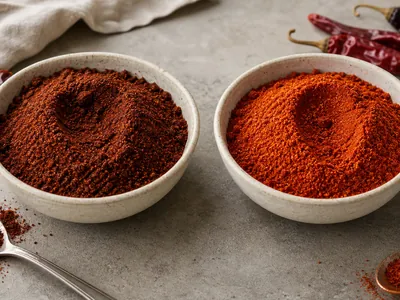 Heat Gap
Dark vs Light Chili Powder
Dark and light chili powder are maker-defined blend styles.
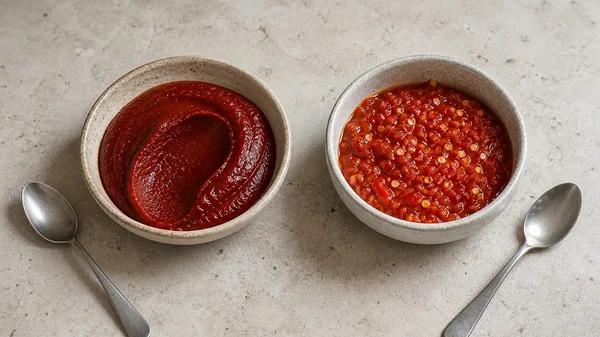
Fermented vs Unfermented Hot Sauce
Fermented and unfermented hot sauce can land in the same heat range, but they do not taste, move, or age the same way…
 Heat Gap
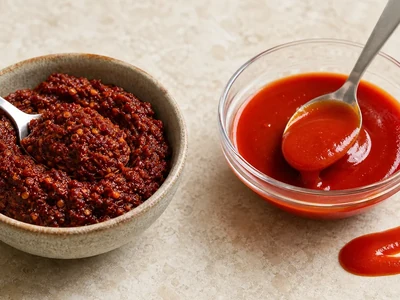
Gochujang vs Sambal Oelek
Gochujang gives sweet fermented body and cling.
 Heat Gap
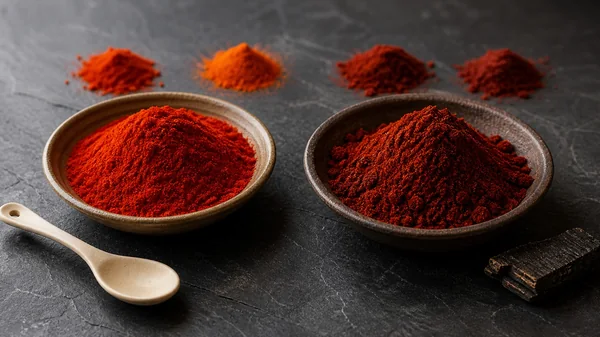
Harissa vs Sriracha
Choose harissa for earthy chile depth, warm spice, marinades, and cooking.
 Heat Gap
Hungarian vs Spanish Paprika
Choose Hungarian paprika when clean ripe-pepper flavor, color, and a named sweet or hot style matter.
 Heat Gap
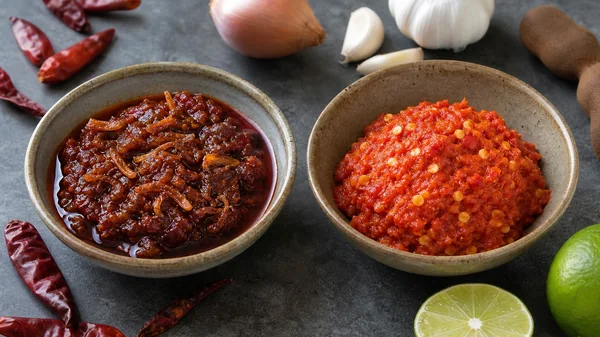
Nam Prik Pao vs Sambal Oelek
Choose nam prik pao for sweet roasted depth, oil, and savory seasoning.
Paprika vs Chili Powder
Paprika is usually a mild ground red pepper used for color, sweet pepper aroma, and gentle warmth.
 Heat Gap
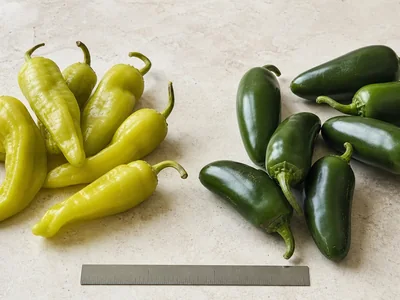
Pepperoncini vs Jalapeño
Choose pepperoncini when a sandwich, salad, or braise needs gentle pepper flavor plus the sharpness of pickling brine…
 Heat Gap
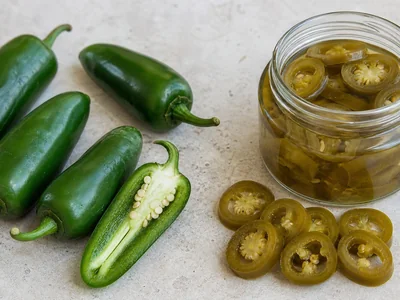
Pickled vs Fresh Jalapeño
Fresh jalapeño gives a dish crisp texture, green chile aroma, and concentrated bursts of heat.
 Heat Gap
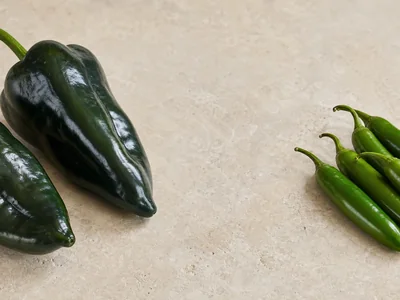
Poblano vs Serrano
Poblano is the mild, broad pepper for roasting, peeling, stuffing, and adding vegetable body.
 Heat Gap
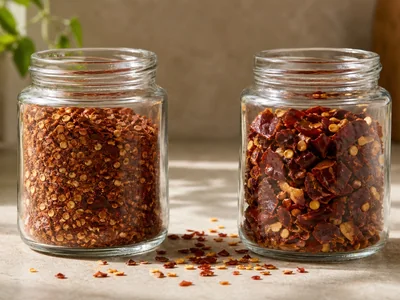
Red Pepper Flakes vs Crushed Red Pepper
In most US recipes and spice aisles, red pepper flakes and crushed red pepper mean the same coarse dried chile…
Red vs Green Jalapeno
Red and green jalapenos are the same pepper harvested at different ripeness stages.
Same-Heat Matchups
Peppers in the same heat bracket where flavor profile is the deciding factor.
 Super-Hot
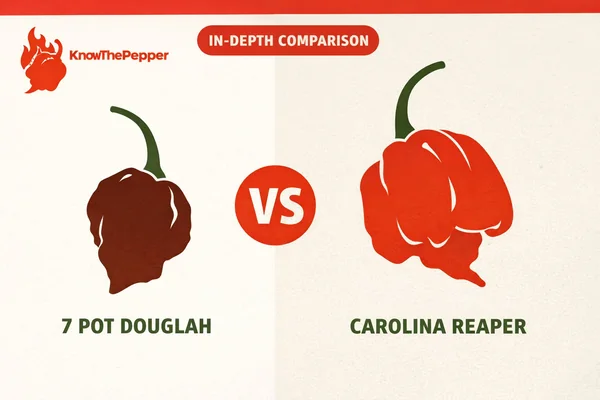
7 Pot Douglah vs Reaper
Choose 7 Pot Douglah when the recipe wants a dark, earthy superhot that can push a sauce deeper in color and tone…
 Super-Hot
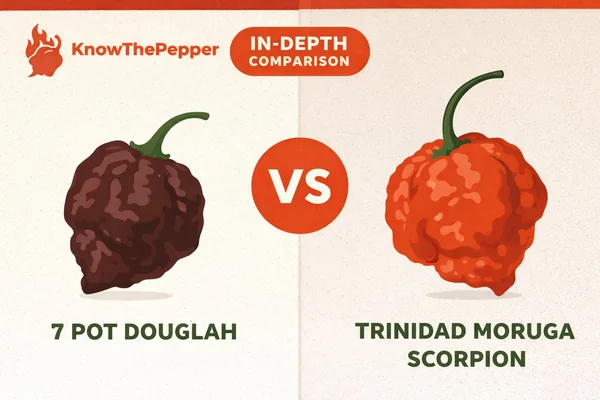
7 Pot Douglah vs Moruga
7 Pot Douglah is the darker, earthier superhot for savory sauces, powders, and fermented mashes.
 Hot
Hot
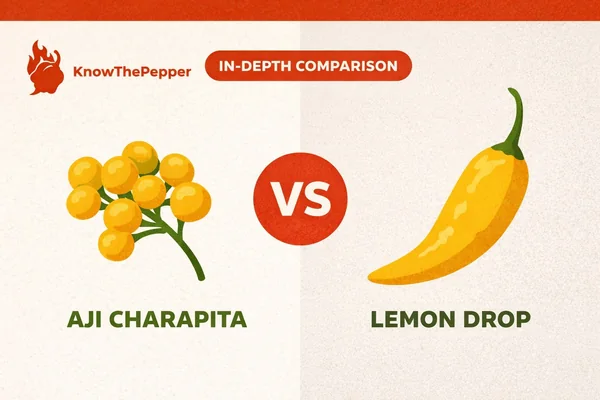
Aji Charapita vs Lemon Drop
Aji Charapita is best when a few tiny pods can perfume a sauce, ceviche-style topping, or finishing condiment.
 Hot
Hot
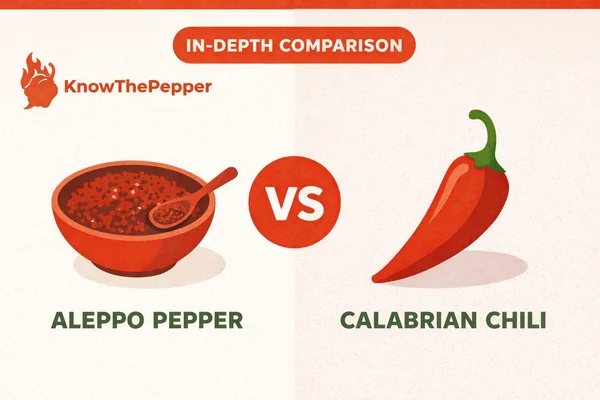
Aleppo vs Calabrian
Aleppo pepper is usually a fruity, mildly hot flake for finishing food, while Calabrian chili is a hotter regional…
 Hot
Hot
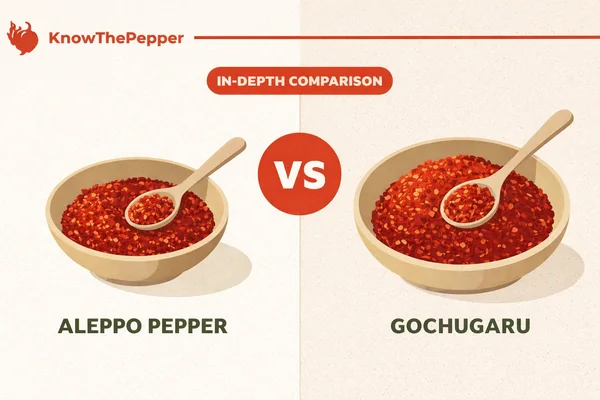
Aleppo vs Gochugaru
Aleppo pepper is the better flake for finishing eggs, yogurt, hummus, lamb, vegetables, and olive oil.
 Hot
Hot
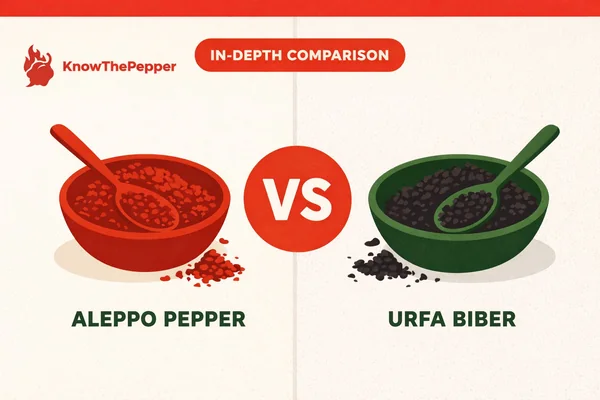
Aleppo vs Urfa Biber
Choose Aleppo-style pepper for a brighter, redder finishing flake with tart fruit and a loose texture.
 Medium
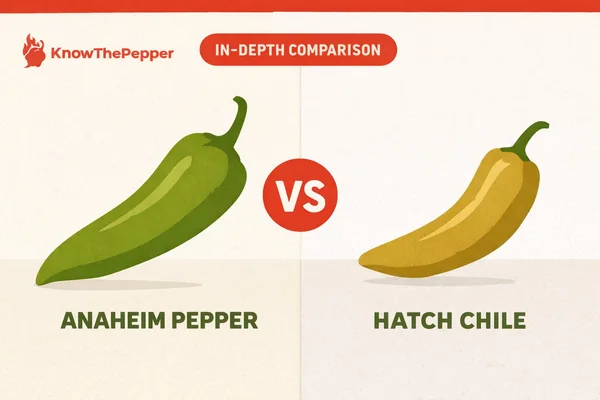
Anaheim vs Hatch Chile
Anaheim pepper is the year-round mild option.
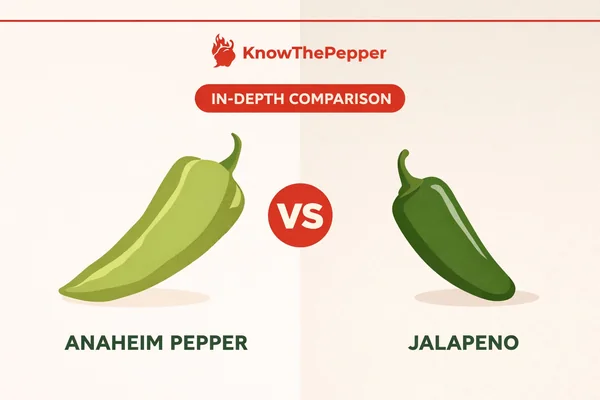 Medium
Anaheim vs Jalapeno
Anaheim is the better choice for roasting, peeling, long strips, and entree-size stuffed peppers.
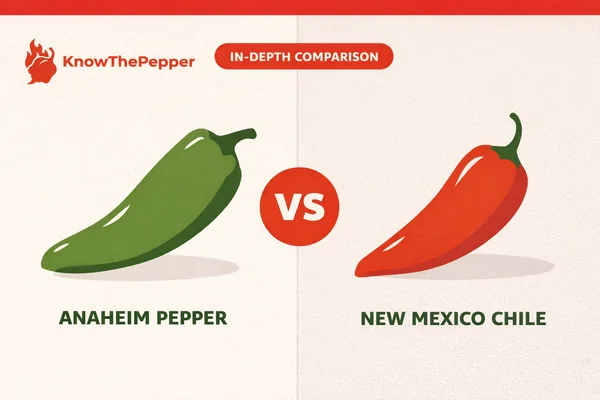 Medium
Anaheim vs New Mexico Chile
Anaheim pepper is the safer mild green roaster.
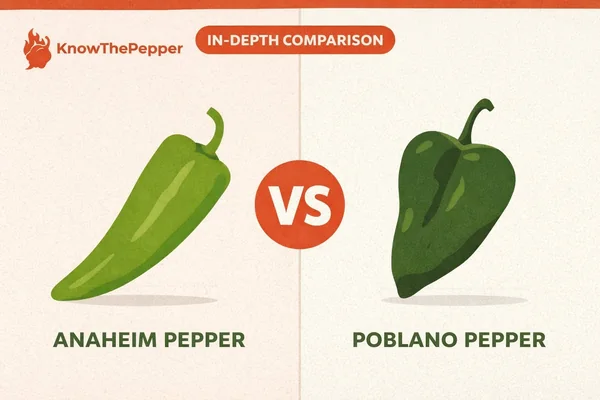 Medium
Anaheim vs Poblano
Choose Anaheim pepper when the chile will be chopped into eggs, casseroles, burgers, or mild green chile sauce.
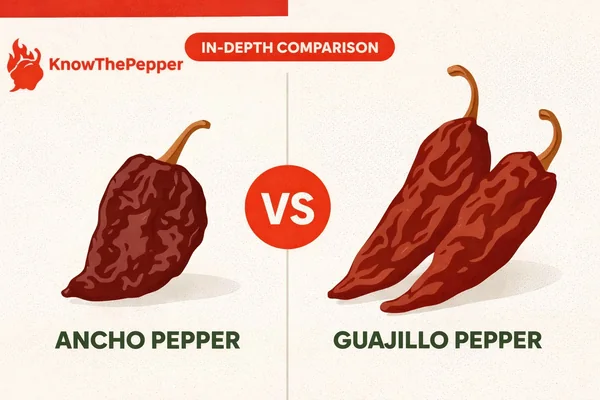 Medium
Ancho vs Guajillo
Choose ancho when the sauce needs sweet body, raisin-cocoa depth, and a darker base.
 Medium
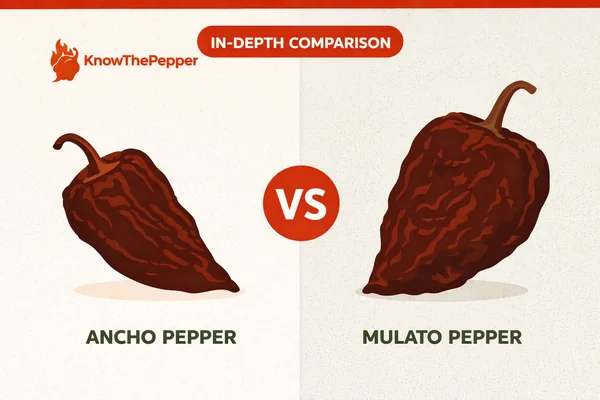
Ancho vs Mulato
Ancho pepper gives a mild red-brown base with dried-fruit sweetness.
 Medium
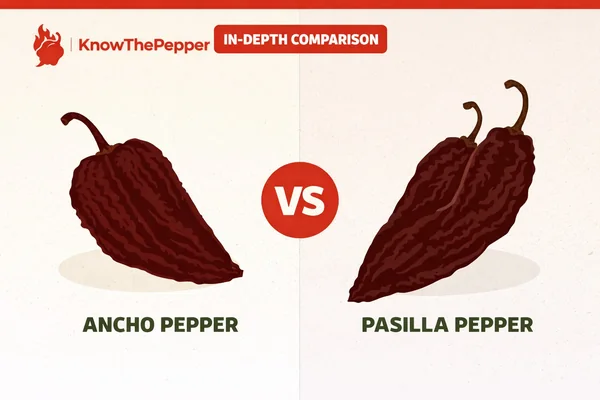
Ancho vs Pasilla
Ancho is the broader, sweeter dried poblano for fuller sauces.
 Medium
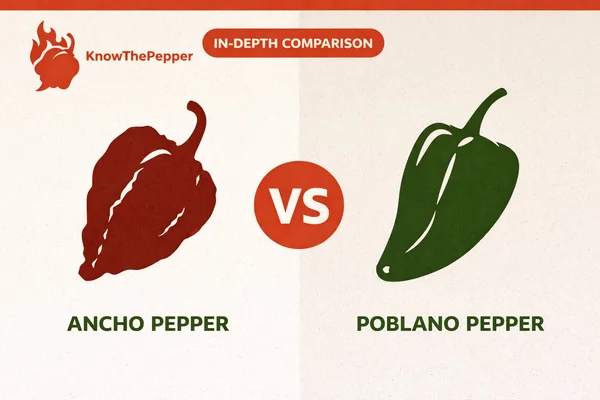
Ancho vs Poblano
Ancho and poblano come from the same pepper, but they are not the same ingredient in the pan.
 Mild
Mild
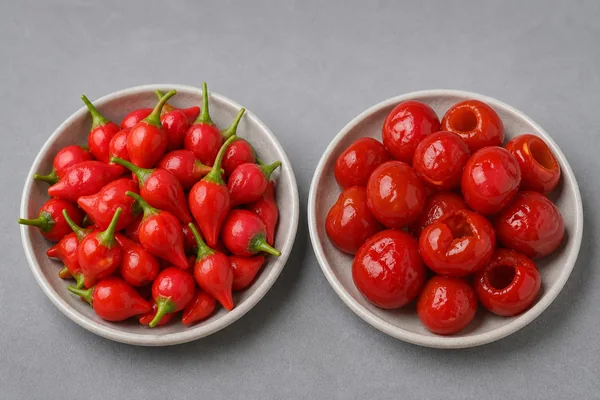
Banana Pepper vs Pepperoncini
Banana peppers and pepperoncinis look nearly identical in a grocery store pickle jar, and most people use the names…
 Mild
Mild
Biquinho vs Peppadew
Biquinho is a small Brazilian pepper type, while Peppadew is a trademarked sweet-pickled product made for a bolder…
 Hot
Hot
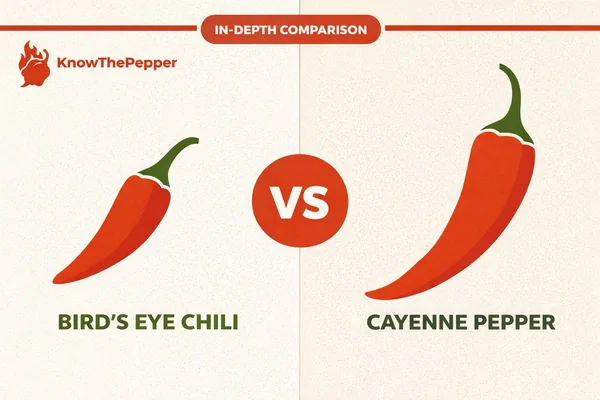
Bird's Eye vs Cayenne
Choose bird's eye chili for fresh, sharp heat in Southeast Asian sauces, pastes, soups, and stir-fries.
 Super-Hot
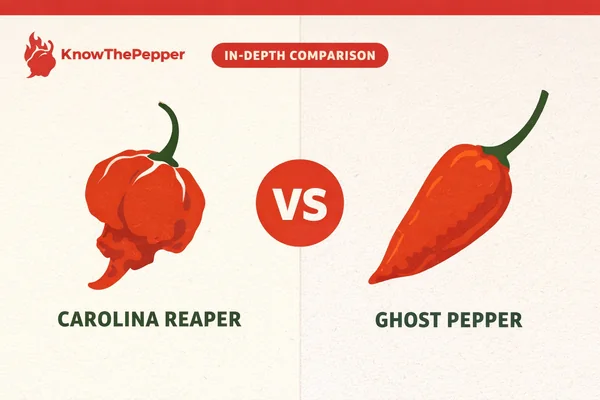
Carolina Reaper vs Ghost
The Carolina Reaper tops the Scoville scale at 1,400,000-2,200,000 SHU, making it one of the most intense peppers ever…
 Super-Hot
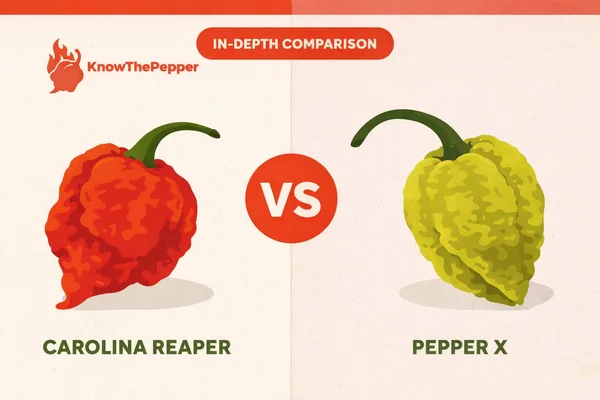
Carolina Reaper vs Pepper X
Pepper X is hotter than the Carolina Reaper, but the practical gap is smaller than many headlines imply.
 Super-Hot
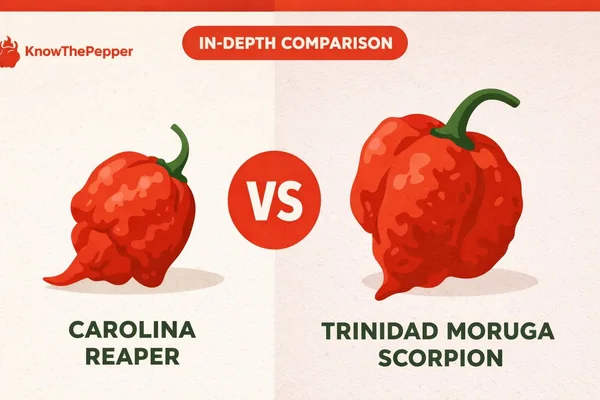
Carolina Reaper vs Moruga Scorpion
If you only want the hotter published ceiling, Carolina Reaper still edges Trinidad Moruga Scorpion in the common SHU…
 Medium
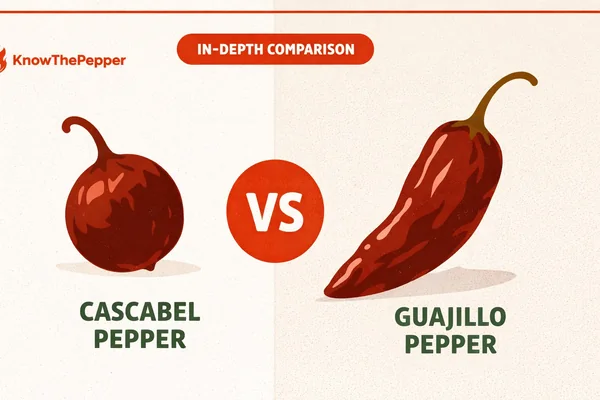
Cascabel vs Guajillo
Cascabel and guajillo are mild dried Mexican chiles with overlapping heat, but they do different work.
 Hot
Hot
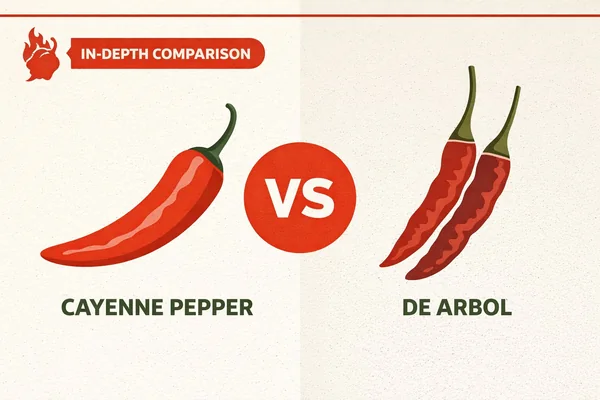
Cayenne vs Chile de Árbol
Cayenne is usually hotter and easier to dose, especially when a fine powder must disappear into a rub, soup, or…
 Hot
Hot
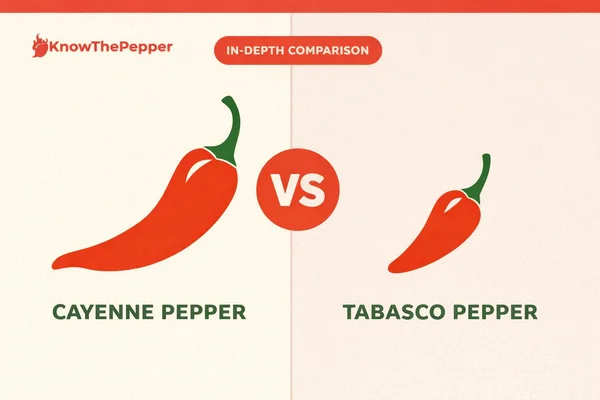
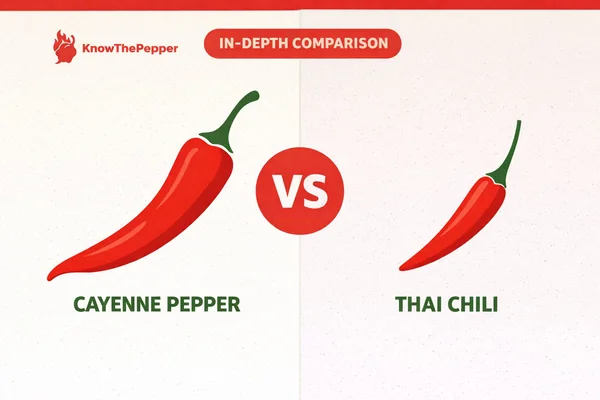
Cayenne vs Tabasco
Cayenne pepper is the better all-purpose dry heat for rubs, soups, beans, and spice blends.
 Hot
Hot
Cayenne vs Thai Chili
Cayenne is the easier dry seasoning, while Thai bird's-eye chile is the hotter fresh or dried pod for slicing…
 Medium
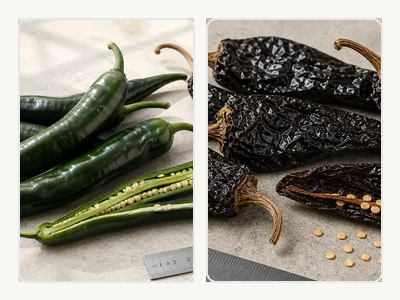
Chilaca vs Pasilla
Pasilla is the dried ripe form of chilaca, not a separate competing pepper.
 Medium
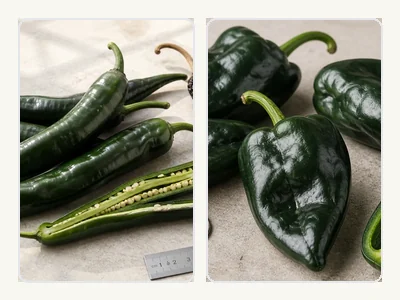
Chilaca vs Poblano
Chilaca and poblano overlap in mild heat, but their shapes give them different jobs.
 Medium
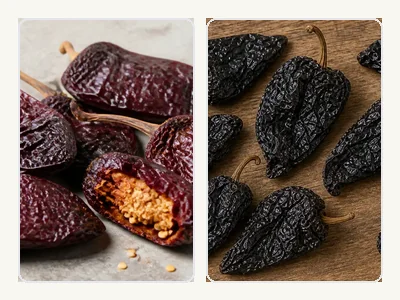
Chilhuacle vs Ancho
Chilhuacle is the best choice when an Oaxacan mole depends on rare regional chile character.
 Hot
Hot
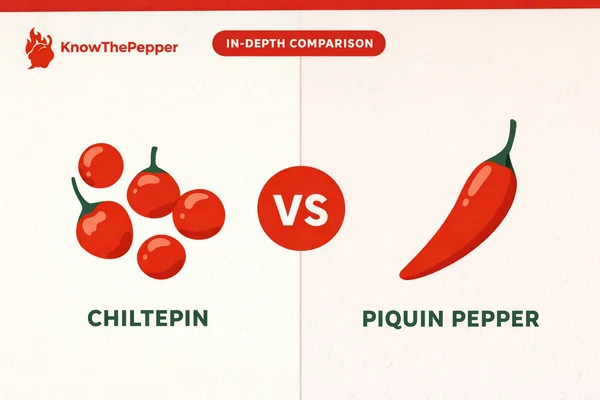
Chiltepin vs Piquin
Chiltepin is the rounder wild chile with a fast, bright sting.
 Medium
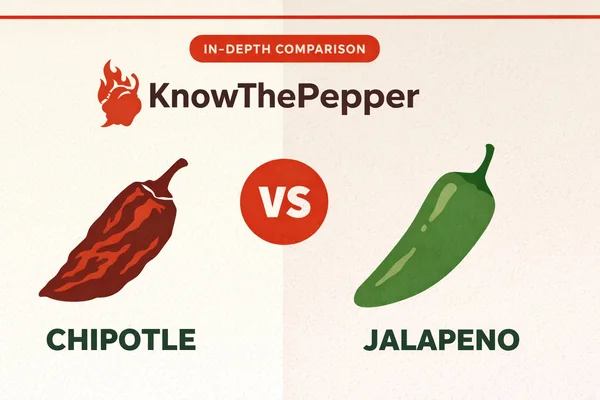
Chipotle vs Jalapeno
Chipotle and jalapeño are the same pepper at different stages, one fresh, one smoked and dried.
 Medium
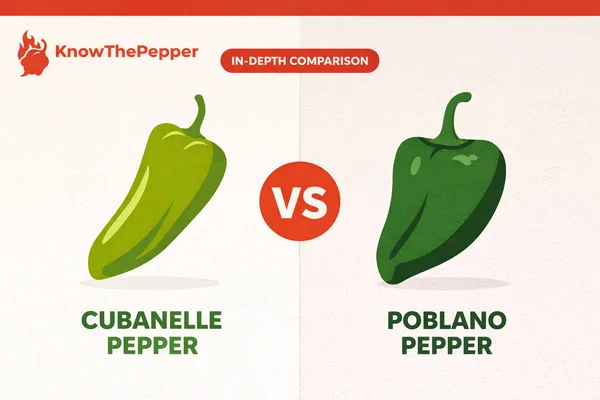
Cubanelle vs Poblano
Cubanelle is the better sweet, thin-walled pepper for quick frying, sandwiches, sofrito, and raw use.
 Extra-Hot
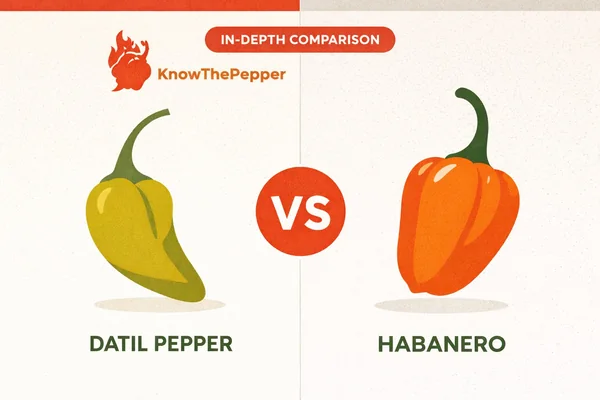
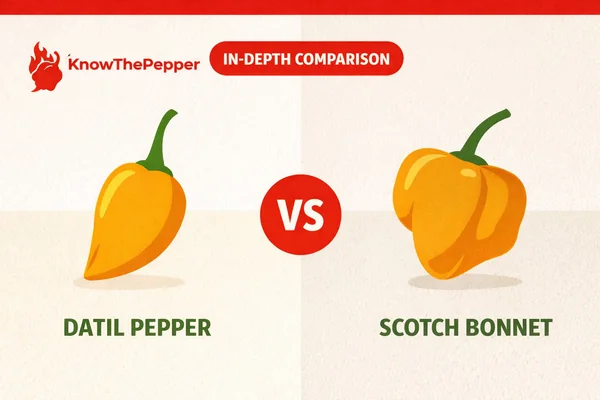
Datil vs Habanero
Datil and habanero share heavily overlapping extra-hot ranges, so neither name predicts the hotter pod.
 Extra-Hot
Datil vs Scotch Bonnet
Choose datil for sweet-tangy Northeast Florida sauces and chowders.
 Hot
Hot
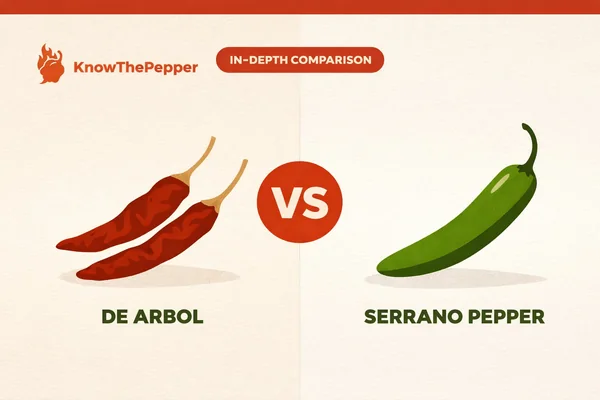
Chile de Arbol vs Serrano
Choose fresh serrano for green bite, juice, and crunch.
 Super-Hot
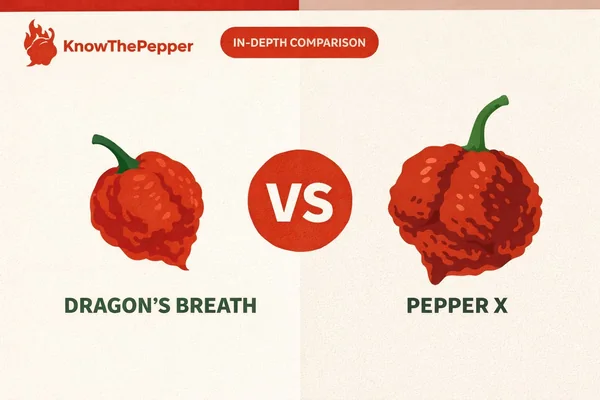
Dragon's Breath vs Pepper X
Pepper X is the documented winner because Guinness records its 2,693,000 SHU average.
 Extra-Hot
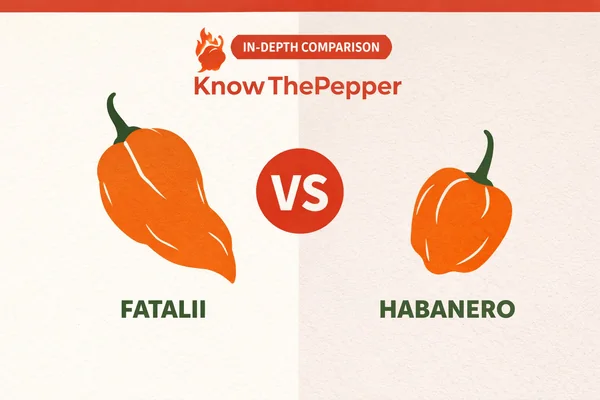
Fatalii vs Habanero
Fatalii and habanero are both C. chinense peppers with overlapping SHU ranges and similar fruity-citrus flavor…
 Extra-Hot
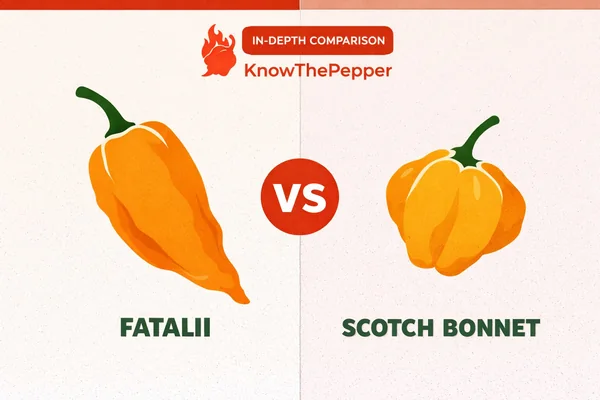
Fatalii vs Scotch Bonnet
Choose Fatalii when a sauce, seafood dish, or fruit blend needs sharp lemon-like heat.
 Hot
Hot
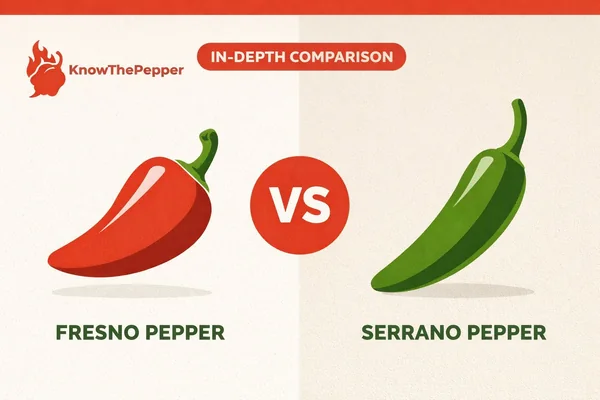
Fresno vs Serrano
Fresno pepper is the better choice when you want ripe red color, quick pickles, or blended sauce fruit.
 Super-Hot
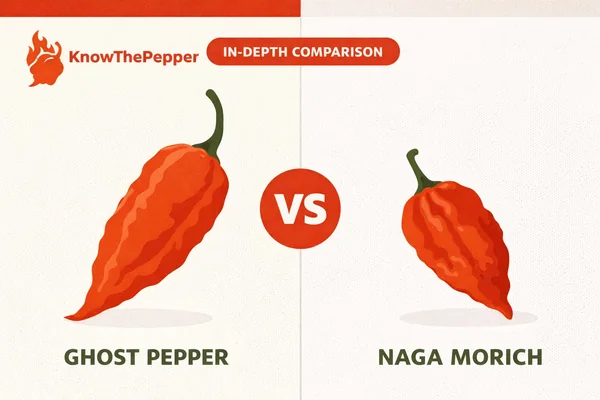
Ghost Pepper vs Naga Morich
Ghost Pepper and Naga Morich are closely related, but not automatic synonyms in careful source use.
 Super-Hot
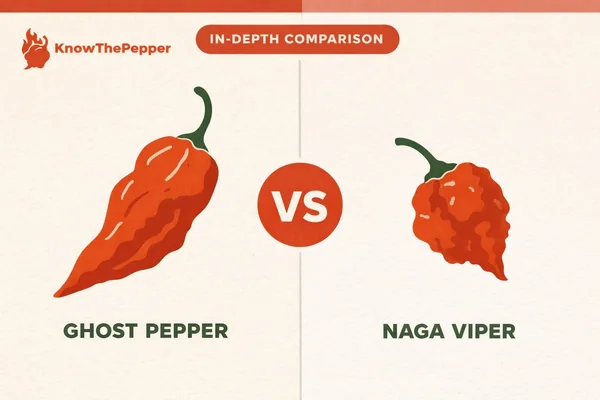
Ghost vs Naga Viper
Ghost Pepper is the better-documented and easier-to-source superhot for repeatable sauce.
 Super-Hot
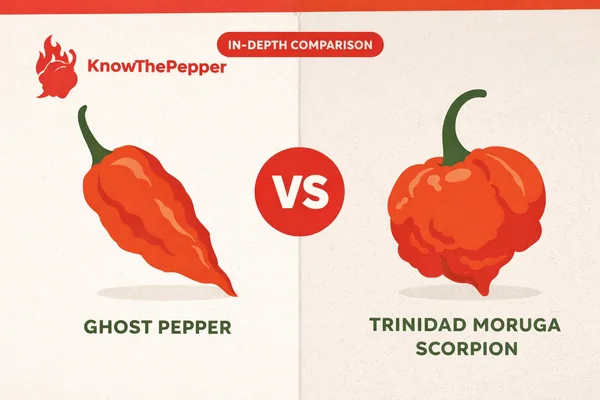
Ghost Pepper vs Moruga Scorpion
Choose Ghost Pepper when you want a widely available superhot with smoky background heat and a slower burn.
 Medium
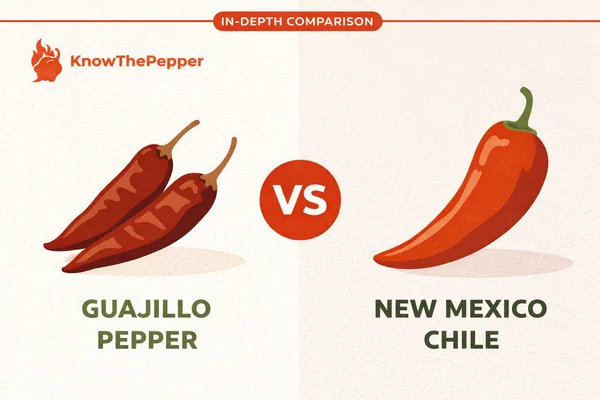
Guajillo Pepper vs New Mexico Chile for Red Sauce
Choose guajillo when a Mexican mole, adobo, or salsa needs the dried mirasol chile named in the recipe.
 Medium
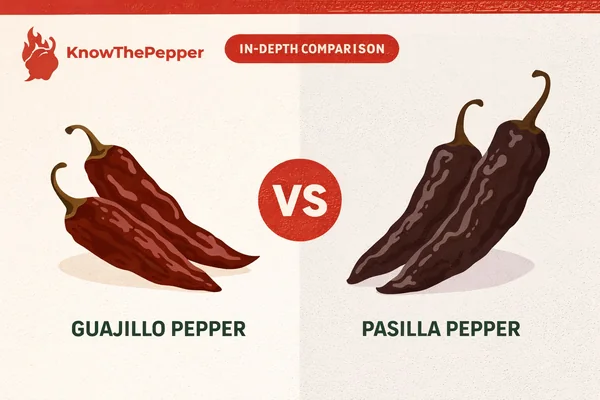
Guajillo vs Pasilla Pepper
Use guajillo for a vivid red sauce with tart dried-fruit lift, and use pasilla for a darker sauce with raisin and cocoa…
 Medium
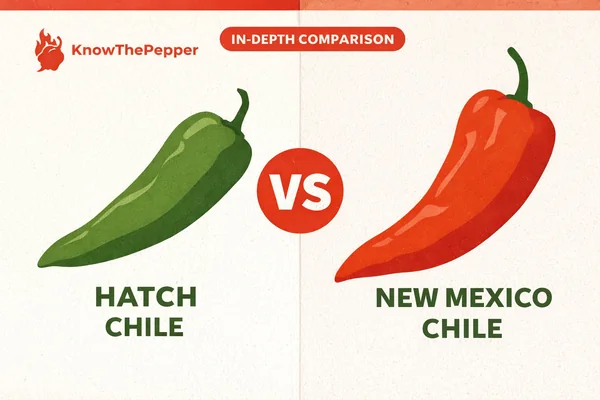
Hatch vs New Mexico Chile
Hatch chiles are New Mexico chiles grown in the Hatch Valley region.
 Medium
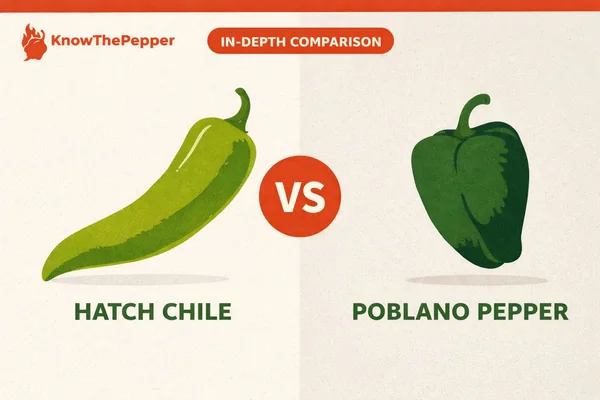
Hatch vs Poblano
Hatch chile is the better choice for roasted green chile flavor and flexible heat.
 Medium
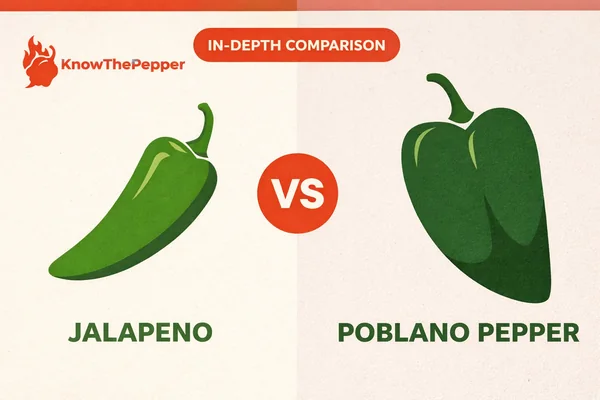
Jalapeño vs Poblano
Jalapeño is hotter and works best when a small sliced or minced chile should season the dish.
 Medium
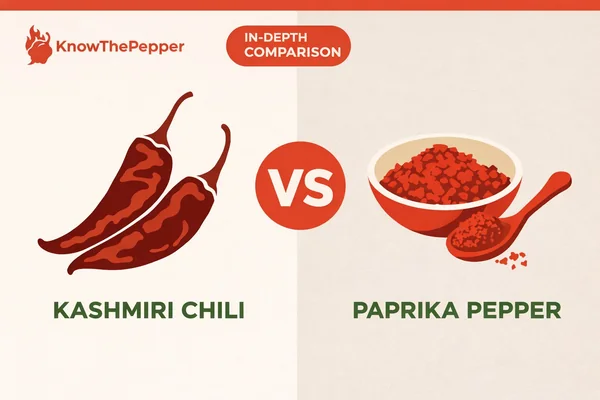
Kashmiri vs Paprika
Kashmiri chili is the better choice when a dish needs deep red color with noticeable mild heat, while sweet paprika…
 Hot
Hot
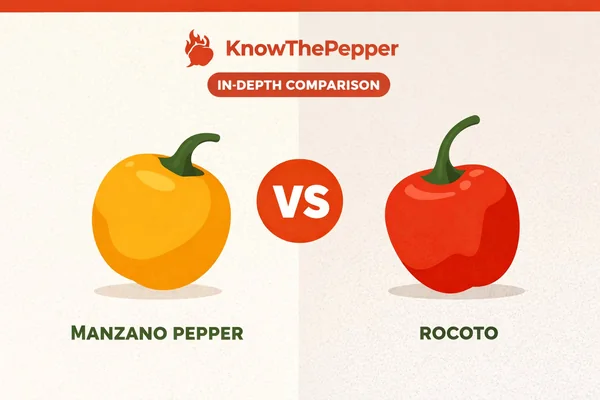
Manzano vs Rocoto
Manzano and rocoto are regional names used for Capsicum pubescens, the thick-walled chile species recognized by its…
 Medium
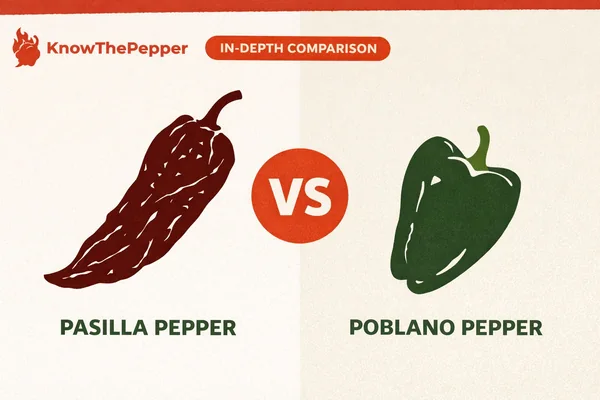
Pasilla vs Poblano
Choose pasilla pepper when the recipe needs a long dark dried chile for toasting, soaking, and blending.
 Mild
Mild
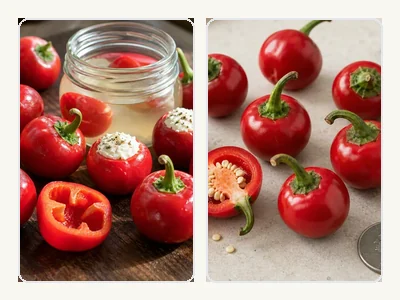
Peppadew vs Cherry Pepper
Peppadew behaves like a branded brined condiment with predictable sweet tang and gentle warmth.
 Medium
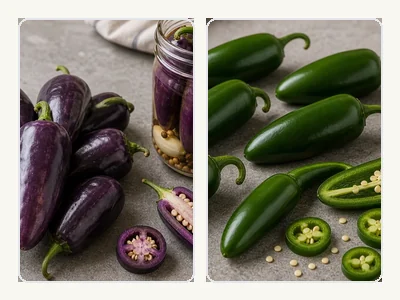
Purple Jalapeno vs Jalapeno
Purple jalapeños and jalapeños share identical SHU ranges (2,500-8,000) and the same Capsicum annuum species, yet they…
 Hot
Hot
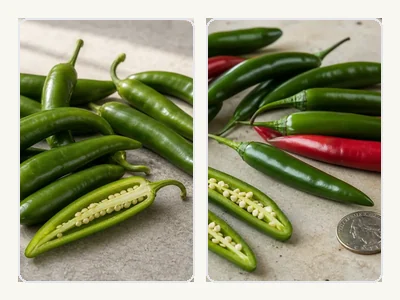
Sport Pepper vs Serrano
Choose sport peppers for a Chicago-style hot dog and serranos for fresh salsa, guacamole, or roasted green sauce.
 Hot
Hot
Tabasco vs Thai Chili
Tabasco pepper is the better choice for fermented mash, vinegar-forward sauce, and Gulf-style pickling.
 Super-Hot
7 Pot Douglah vs Ghost Pepper
The controlled comparison gives Douglah Trinidad Chocolate a higher mean than Bhut Jolokia, but the researchers found…
 Hot
Hot
Calabrian Chili vs Fresno
Use Calabrian chili for concentrated heat in pasta sauce, beans, aioli, or pizza oil.
 Hot
Hot
Calabrian Chili vs Red Pepper Flakes
Calabrian chili is a flavored ingredient, often paste, oil-packed pods, or crushed Italian pepper.
 Hot
Hot
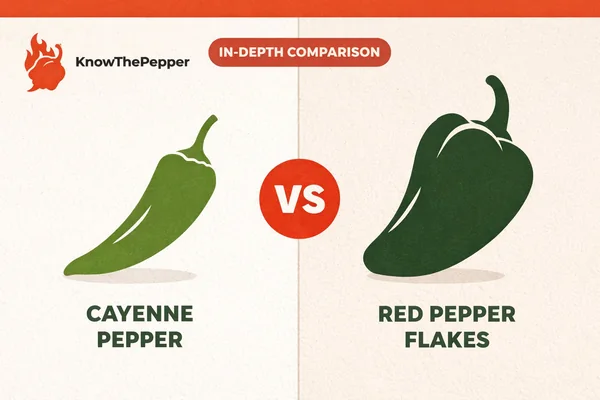
Cayenne vs Red Pepper Flakes
Use cayenne powder for smooth, even heat.
 Medium
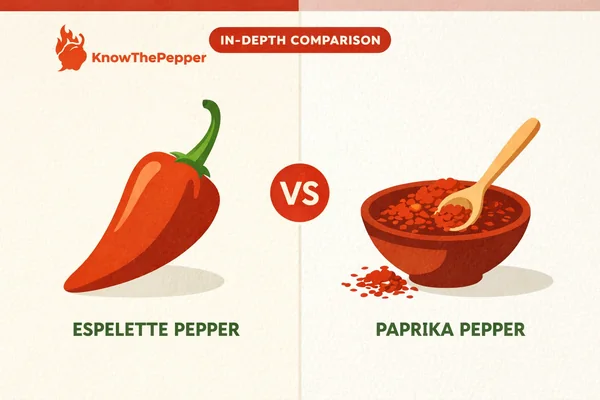
Espelette vs Paprika
Paprika Pepper is the better first jar when a dish needs sweet red color and body in the pan.
 Hot
Hot
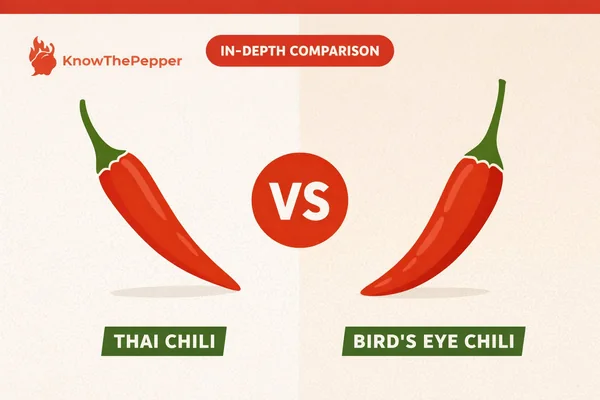
Thai Chili vs Bird's Eye
Thai chili and bird's eye chili often describe the same small hot pepper type in US references, but the labels are not…
 Super-Hot
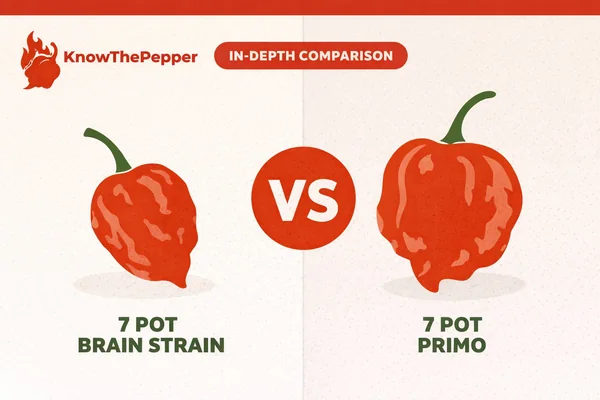
7 Pot Brain Strain vs Primo
7 Pot Primo has the higher published ceiling at 1,790,150 SHU, compared with Brain Strain's listed 1,000,000 to…
 Super-Hot
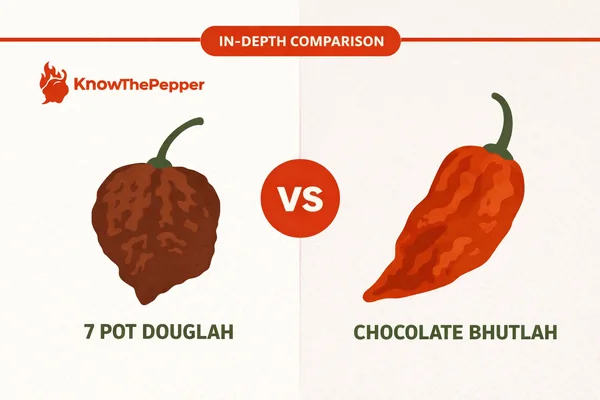
7 Pot Douglah vs Chocolate Bhutlah
Chocolate Bhutlah has the higher listed ceiling at about 2,000,000 SHU, but 7 Pot Douglah overlaps it at a reported…
 Hot
Hot
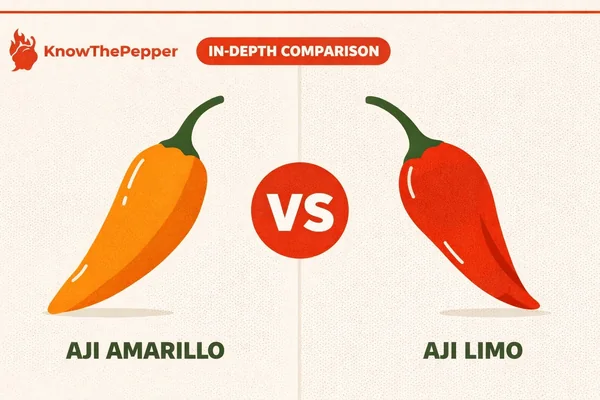
Aji Amarillo vs Aji Limo
Aji Amarillo and Aji Limo share the same 30,000-50,000 SHU heat range and both hail from Peru, but they belong to…
 Hot
Hot
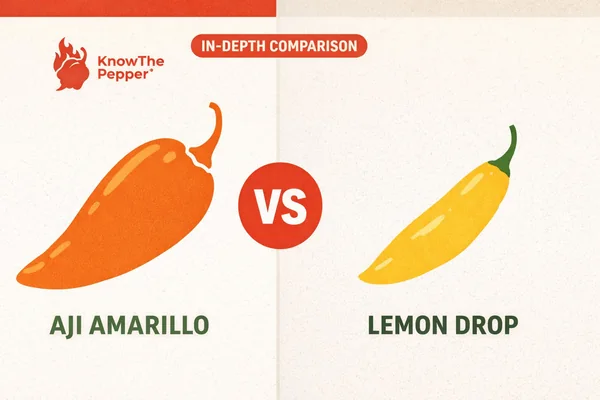
Aji Amarillo vs Lemon Drop
Choose Aji Amarillo when the dish needs Peruvian yellow chile body, sauce color, and paste-friendly fruit heat.
 Hot
Hot
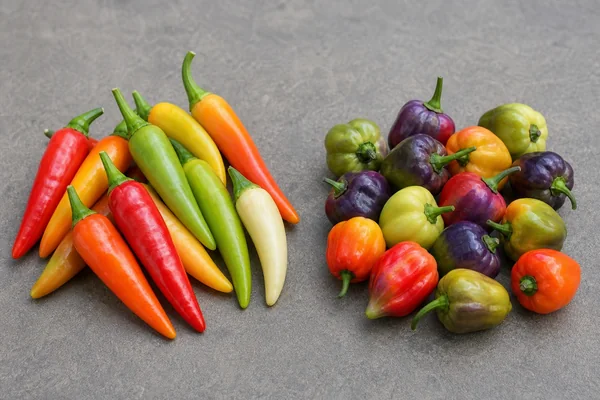
Aji Omnicolor vs Bolivian Rainbow
Aji Omnicolor is the better edible choice when you want bright baccatum fruit and hotter fresh pods.
 Mild
Mild
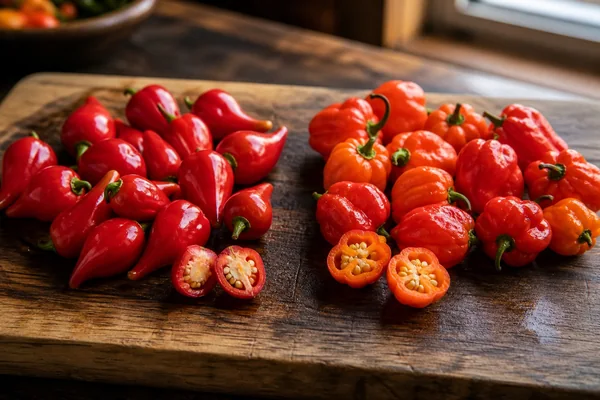
Biquinho vs Aji Dulce
Biquinho Pepper and Aji Dulce both sit near the bottom of the Capsicum chinense heat range but solve different kitchen…
 Hot
Hot
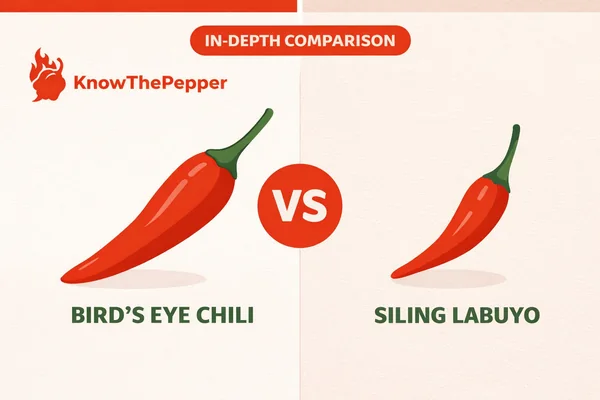
Bird's Eye vs Siling Labuyo
Bird's eye chili is a broad market name for small hot chilies used across South and Southeast Asia.
 Hot
Hot
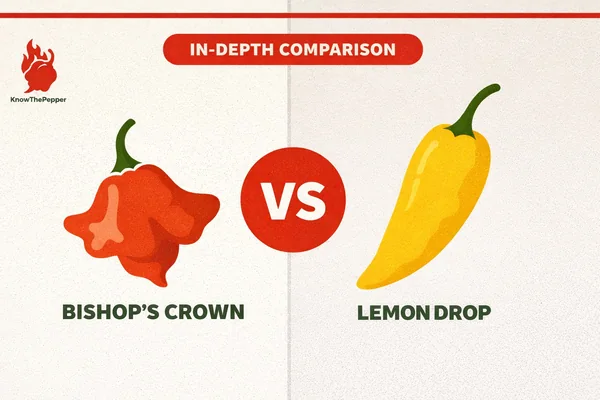
Bishop's Crown vs Lemon Drop
These are both Capsicum baccatum peppers, but they pull in different directions.
Bulgarian Carrot vs Hungarian Wax
Choose Hungarian Wax when the recipe needs firm pickled rings, stuffed yellow pods, or a tangy pepper that stays…
 Hot
Hot
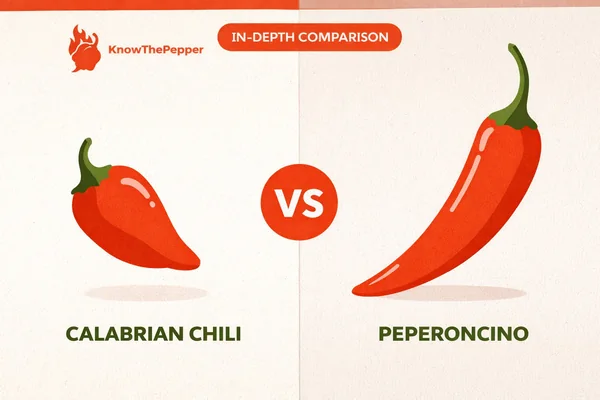
Calabrian Chili vs Peperoncino
Peperoncino is a broad Italian word for hot chile, while Calabrian chili identifies a regional style or product claim…
 Super-Hot
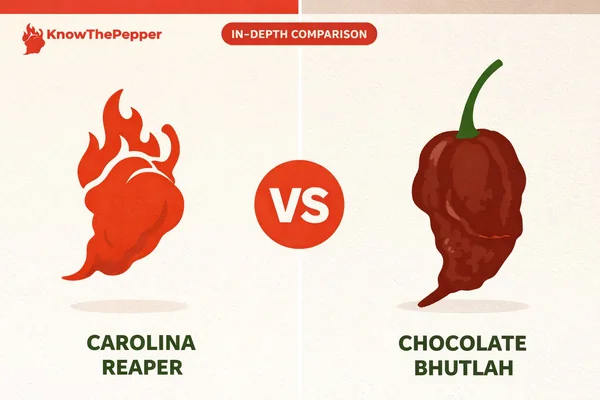
Carolina Reaper vs Chocolate Bhutlah
Choose Carolina Reaper when you need a better-documented red superhot with record history and a fruity flash in tiny…
 Medium
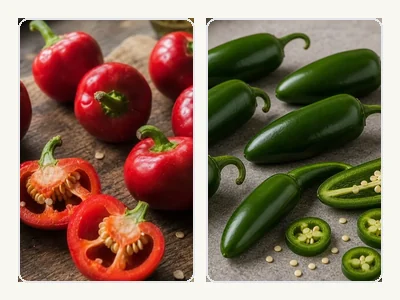
Cherry Bomb vs Jalapeño
Cherry Bomb and jalapeño overlap in medium heat, but Cherry Bomb makes round cups and broad pieces while jalapeño makes…
 Mild
Mild
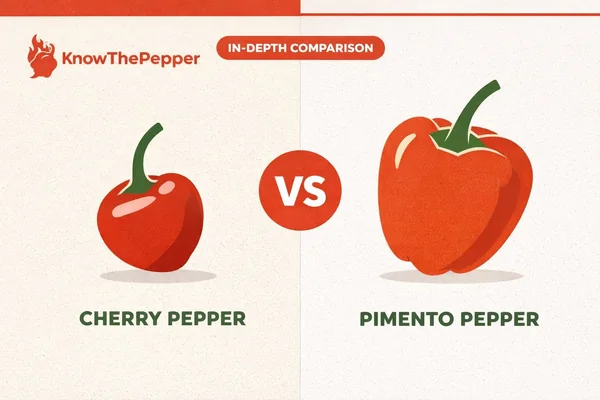
Cherry Pepper vs Pimento
Cherry pepper is the better whole, pickled, or stuffed bite, while pimento is the better soft red pepper for cheese…
 Medium
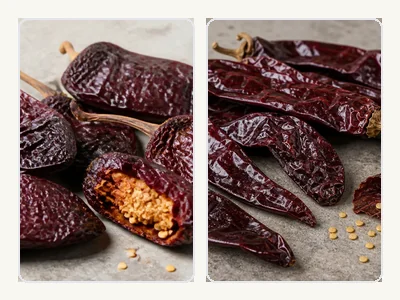
Chilhuacle vs Guajillo
Guajillo is the better everyday chile for red adobos and broths, while chilhuacle is the specialist choice for dark…
 Medium
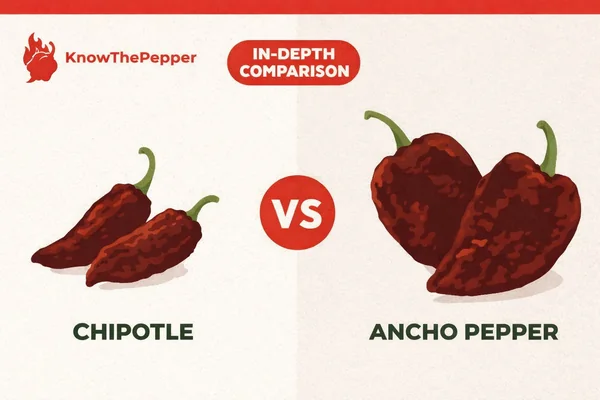
Chipotle or Ancho? Choose Smoke, Heat, or Sauce Body
Choose chipotle when the dish needs wood smoke and a sharper chile edge.
 Medium
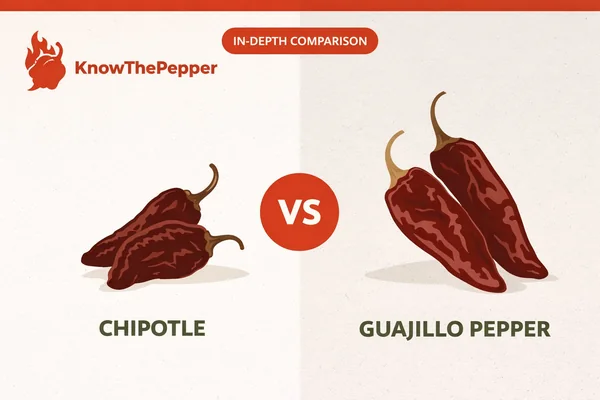
Chipotle or Guajillo? Build the Sauce Before the Smoke
Use guajillo as the red sauce base for birria, enchilada sauce, pozole rojo, adobo, and marinades.
 Medium
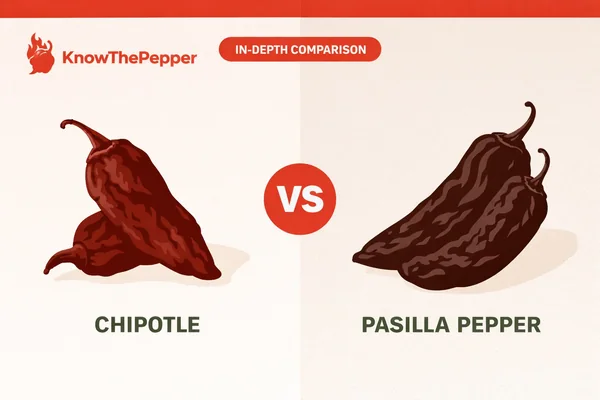
Chipotle vs Pasilla
Choose chipotle when smoke should lead the dish, especially for adobo, beans, marinades, and tomato-based sauces…
 Hot
Hot
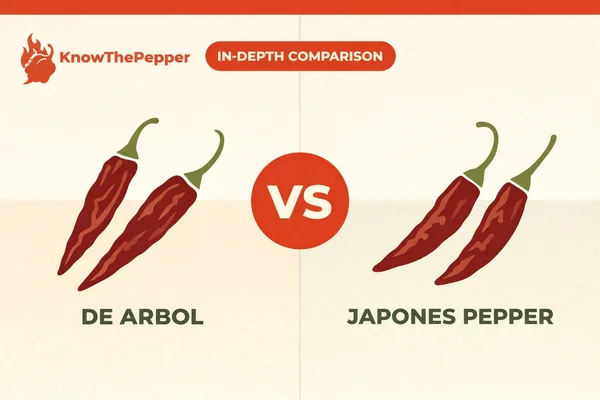
De Arbol vs Japones
Chile de arbol and japones share a 15,000 to 30,000 SHU band, but their best jobs differ.
 Hot
Hot
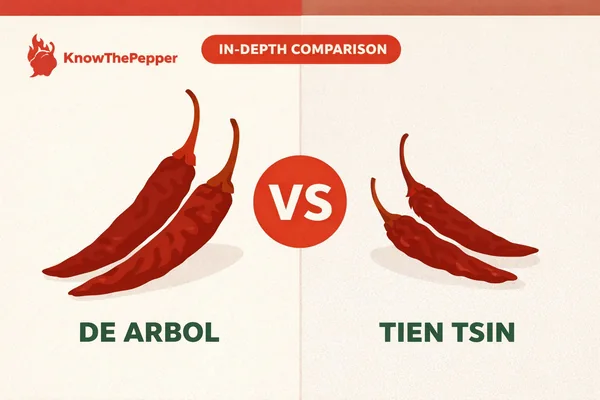
De Arbol vs Tien Tsin
De Arbol fits Mexican sauces, salsa, and chile oil when you want nutty red heat.
 Super-Hot
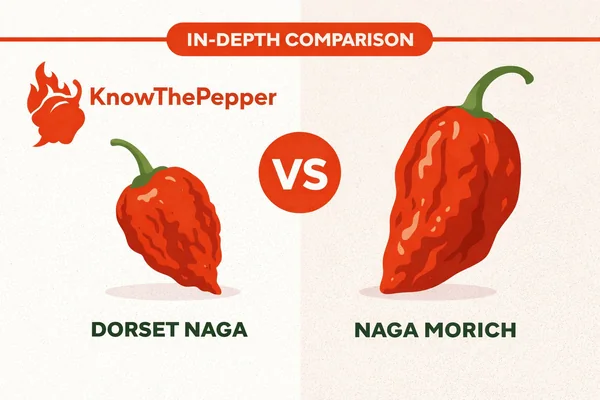
Dorset Naga vs Naga Morich
Naga Morich is the original South Asian Naga-style pepper.
 Super-Hot
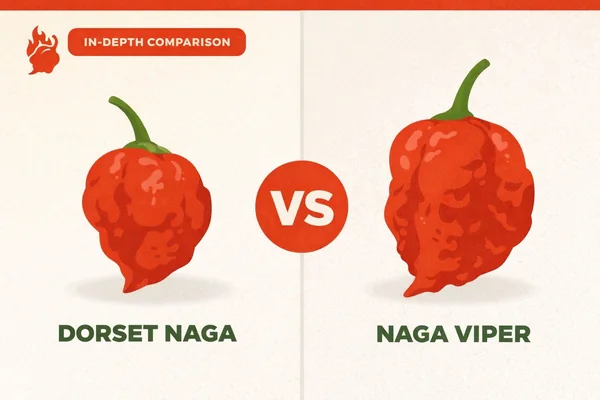
Dorset Naga vs Naga Viper
Dorset Naga is the better choice when you want a more stable Naga-style superhot with fruity heat and seed-saving…
 Hot
Hot
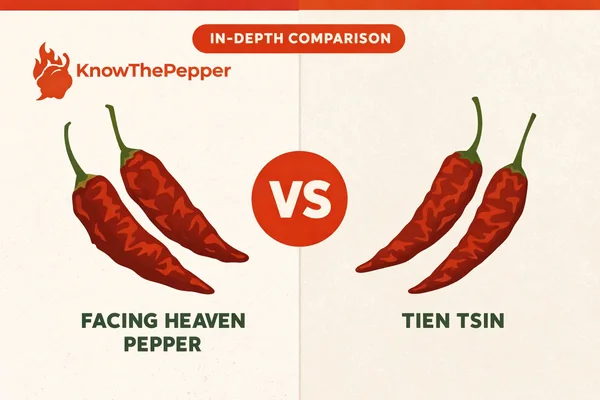
Facing Heaven vs Tien Tsin
Choose Facing Heaven pepper when the dish needs aromatic Sichuan-style dried chile flavor, especially in chili oil…
 Hot
Hot
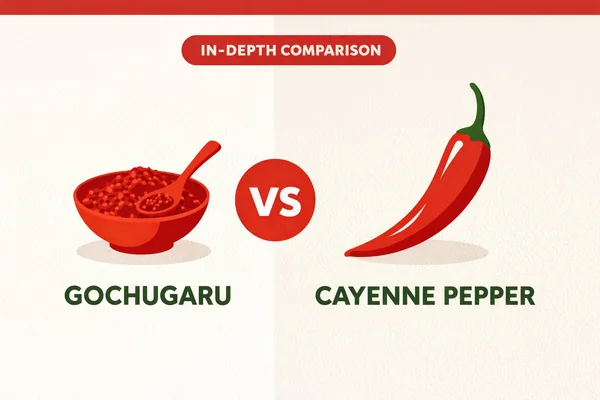
Gochugaru vs Cayenne
Gochugaru and cayenne are both Capsicum annuum peppers, but they land in completely different cooking worlds.
 Hot
Hot
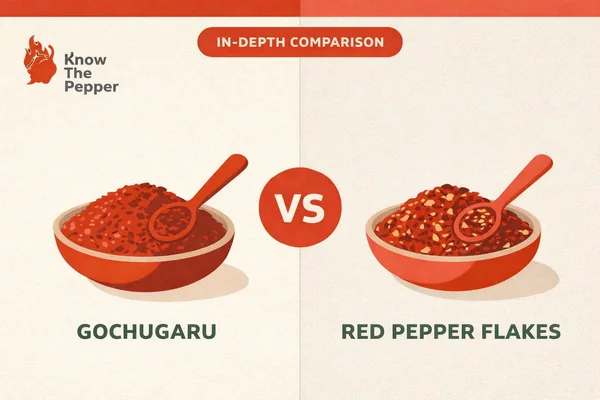
Gochugaru vs Red Pepper Flakes
Choose gochugaru when red chile must hydrate into a seed-light coating.
 Hot
Hot
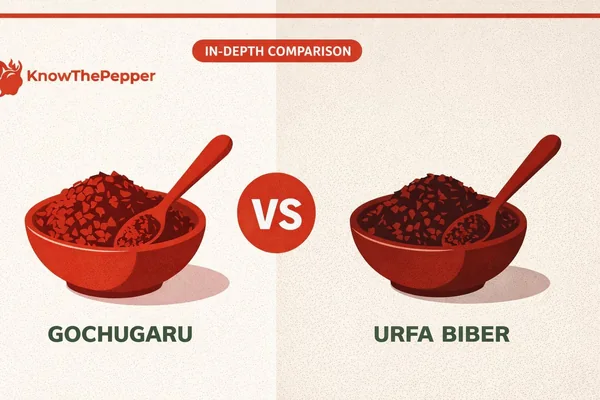
Gochugaru vs Urfa
Gochugaru and Urfa Biber are both dried, ground chilies with smoky personalities, but they bring distinctly different…
 Extra-Hot
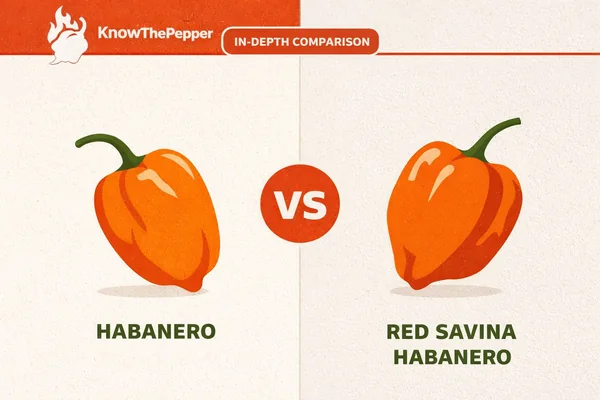
Habanero vs Red Savina
The habanero and Red Savina habanero share the same species, similar fruity character, and nearly identical appearance…
 Extra-Hot
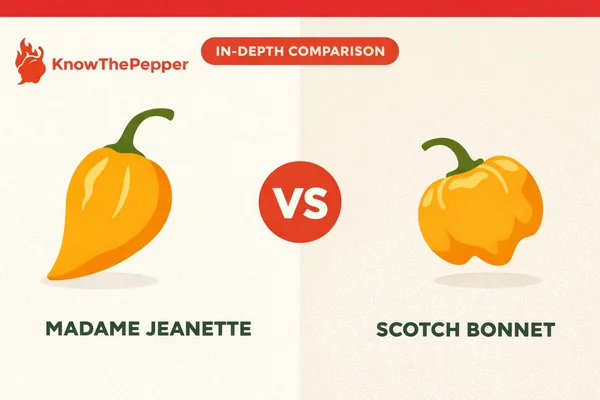
Madame Jeanette vs Scotch Bonnet
Choose Madame Jeanette when a Surinamese dish or bright yellow pepper sauce calls for that named pepper.
 Extra-Hot
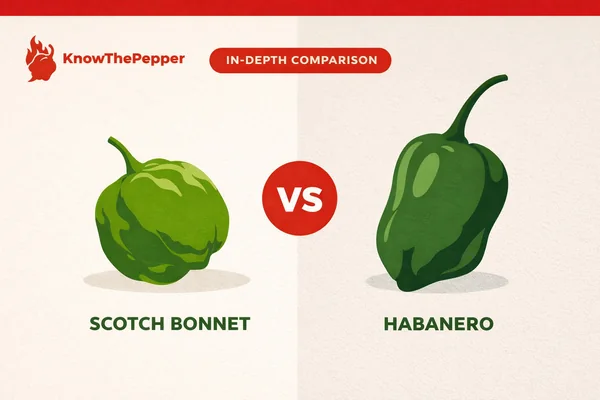
Scotch Bonnet vs Habanero
Scotch Bonnet and Habanero share identical SHU ranges of 100,000-350,000 and the same C. chinense species, yet they…
 Extra-Hot
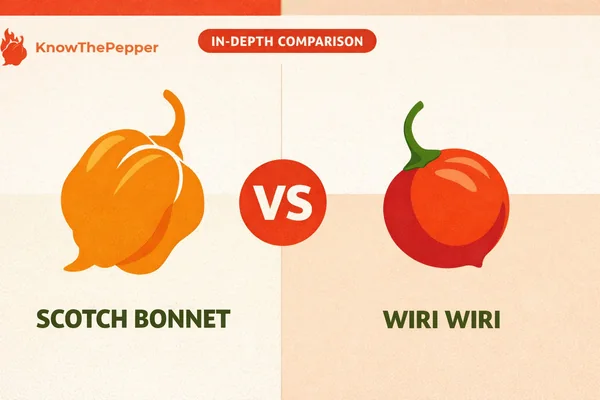
Scotch Bonnet vs Wiri Wiri
Use Scotch bonnet when Caribbean jerk aroma is the target.
 Hot
Hot
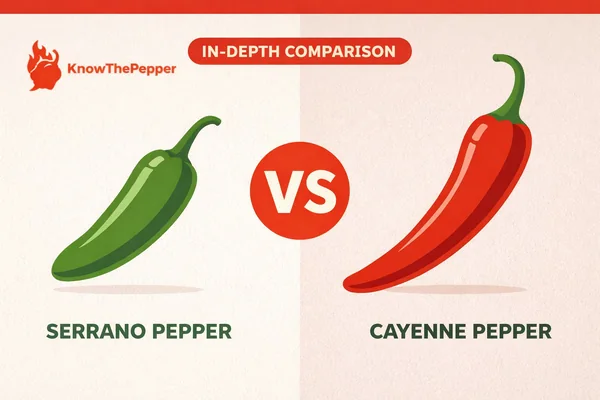
Serrano vs Cayenne
Serrano and cayenne are both C. annuum peppers, but they sit in noticeably different places on the heat scale and serve…
 Hot
Hot
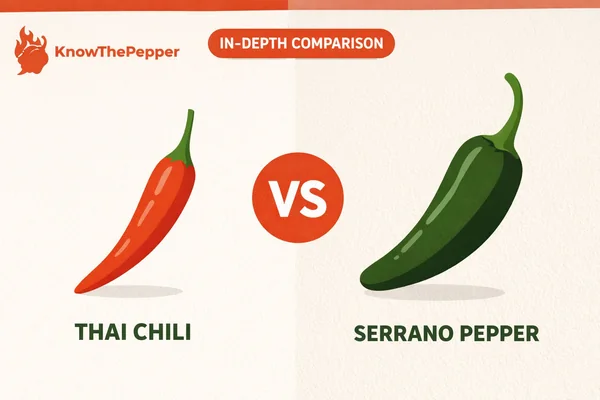
Thai Chili vs Serrano
Thai chili and serrano are both members of C. annuum, but they land in very different places on the heat scale.
 Hot
Hot
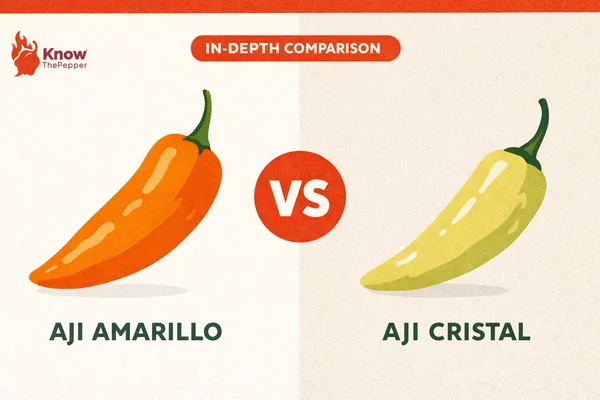
Aji Amarillo vs Aji Cristal
Aji Amarillo and Aji Cristal are two Capsicum baccatum peppers from South America that share an identical heat range of…
 Mild
Mild
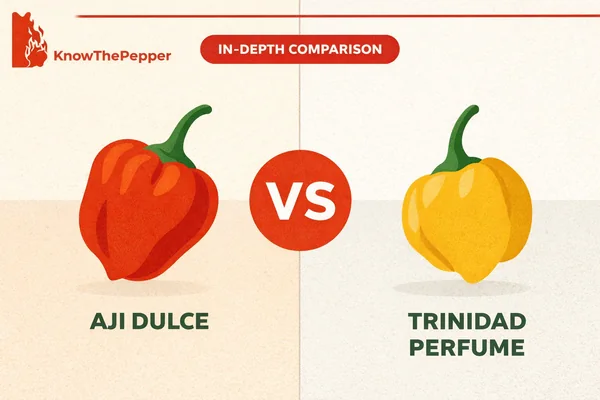
Aji Dulce vs Trinidad Perfume
Aji Dulce is the better choice for sofrito, beans, rice, and Caribbean seasoning bases.
 Medium
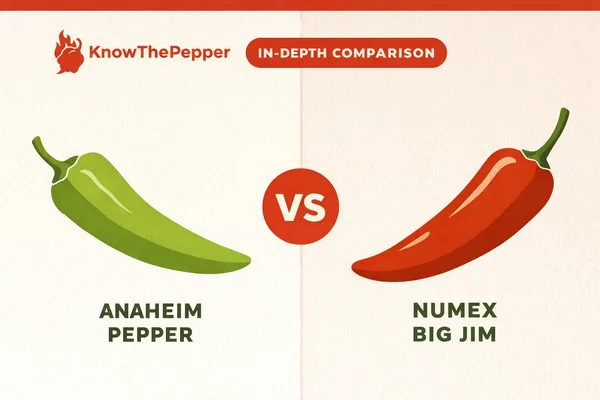
Anaheim vs NuMex Big Jim
Choose NuMex Big Jim for large rellenos, wide roasted strips, and freezer batches.
 Mild
Mild
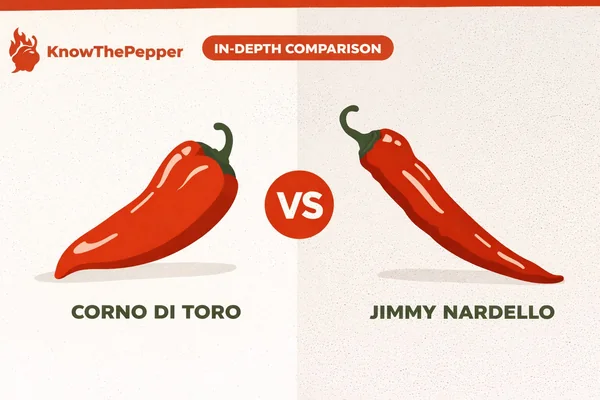
Corno di Toro vs Jimmy Nardello
Choose Jimmy Nardello when you want a thin sweet pepper that blisters fast in olive oil.
 Mild
Mild
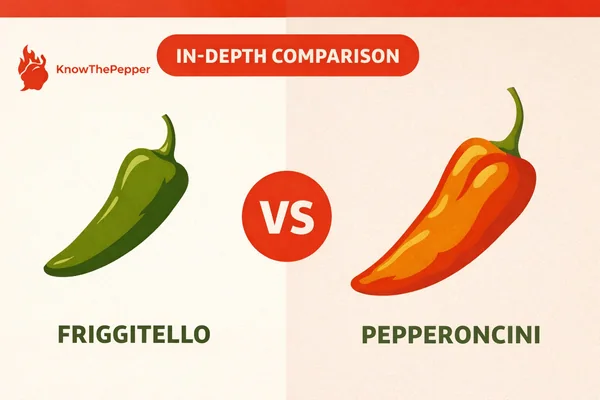
Friggitello vs Pepperoncini
Friggitello and pepperoncini are both mild Italian peppers, but form and acidity decide the swap.
 Mild
Mild
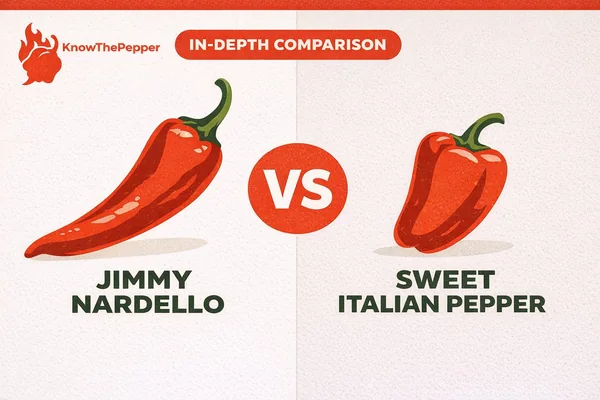
Jimmy Nardello vs Sweet Italian
Choose Jimmy Nardello for a pan-fried sweet pepper that caramelizes fast and eats almost like a finished side dish…
Apollo vs Carolina Reaper
Apollo's reported 2.5M-3M SHU range sits above Carolina Reaper's practical 1.
Dragon's Breath vs Carolina Reaper
Choose Carolina Reaper for a documented heat benchmark and a repeatable cooking product.
Start with the decision on the stove
A useful comparison answers one immediate question. It may tell you whether a swap will overwhelm a sauce, which dried chile will build more body, or which fresh pepper will keep its crunch after cooking.
Choose a cross-tier matchup when heat control is the main risk, and open a same-tier matchup when flavor, flesh, skin, or regional use will decide the dish. The cards above separate those two starting points before you spend time reading a full page.
Representative starting points include ancho vs pasilla for two commonly confused dried chiles and scotch bonnet vs habanero for peppers with overlapping heat ranges but different cooking traditions.
| Your decision | First signal | Best place to start |
|---|---|---|
| Control a major heat jump | The SHU bands do not overlap | Cross-tier matchups |
| Choose between similar heat levels | Flavor or texture decides the dish | Same-tier matchups |
| Choose fresh, dried, powder, or sauce | Moisture and processing differ | Form guidance, then a matchup |
| Replace one missing ingredient | Only one candidate is known | Pepper substitute library |
Compare the ingredient form before the pepper name
Fresh pods contribute water and flesh, while whole dried chiles need rehydration or grinding before they can perform the same kitchen task. The University of California Agriculture and Natural Resources notes that dried peppers can be soaked for cooked dishes or ground into powder, which makes form an early decision rather than a minor detail.
Powder disperses quickly and offers no chile flesh, while a pepper packed in adobo also brings tomato, vinegar, salt, and liquid that a dry ingredient cannot replace.
The how fresh and dried forms change explains those format changes in depth. For a concrete sauce decision, chipotle vs ancho separates smoke from sauce body, while chipotle vs guajillo shows why a red sauce may need guajillo structure before chipotle smoke.
Treat SHU as a boundary, not a flavor score
New Mexico State University's Chile Pepper Institute describes high performance liquid chromatography as the modern method used for capsaicinoid heat testing. The resulting Scoville Heat Unit range helps define the size of a heat gap, but it does not measure fruitiness, smoke, acidity, skin thickness, or moisture.
A range also describes tested material rather than a promise for every pod. The Institute's research index documents significant environmental effects on pungency, so a comparison should use SHU to set a safe starting quantity and then name the other traits that affect the recipe.
Open the how Scoville heat is measured when you need the measurement explained. Return to a matchup when you need to know what the numbers mean for a sauce, salsa, roast, rub, or fresh garnish.
Read flavor through cooking behavior
Flavor words become useful when they lead to an action. A comparison should explain whether a chile supplies raisin-like depth, green brightness, smoke, bitterness risk, thick flesh, or a thin skin that disappears into a puree.
Cooking time changes which of those traits matters first. A quick salsa keeps fresh aroma and texture visible, while a long simmer rewards a chile that can build color and body without making smoke dominate the pot.
The strongest matchups connect each trait to a named dish and a correction. They also distinguish a compatible blend from a direct replacement, since two peppers can work together even when neither can take the other's place at 1 to 1.
What a useful matchup should settle
- Which pepper controls the heat ceiling
- Which ingredient supplies smoke, fruit, earthiness, or green flavor
- Whether the dish needs flesh, puree body, dry seasoning, or sauce
- Which starting amount protects the rest of the recipe
- Whether the pair works better as a blend than a replacement
Use the substitute library when the original is missing
A comparison is the better tool when you have two named candidates and want to choose between them. The pepper substitutes library is the faster starting point when the recipe names one unavailable ingredient and you need several ranked alternatives.
For tested canning recipes, follow the named preservation authority before changing ingredient amounts. University of California Cooperative Extension advises keeping the specified total amount or weight of peppers in fresh-pepper substitutions, because changing low-acid ingredient volume can change the safety of the preserved food.
Use the comparison cards for ordinary cooking choices, then confirm the final amount against the recipe and its preservation method. That sequence keeps flavor adjustments separate from food-safety limits.
How We Compare Peppers
Evidence Behind the Matchups
Each page names the authority behind its heat range, identity, and handling claims. Core references include the Chile Pepper Institute at New Mexico State University and the sources listed on the individual comparison.
Why Compare Peppers?
Choosing the right pepper depends on more than heat. A habanero and scotch bonnet can occupy overlapping SHU ranges while serving different dishes.
Cross-tier comparisons expose substitution risk. Same-tier comparisons move the decision toward form, texture, and the flavor the recipe needs.
Need a Quick Substitute?
Our Substitute Finder gives ranked alternatives with conversion ratios, and the Scoville Scale shows every pepper on a visual heat map.
Frequently Asked Questions
-
Begin with cross-tier when the heat gap could make the dish unusable. Choose same-tier when the peppers sit in a similar heat band and flavor, form, or texture will decide the result.
-
Similar SHU is only the first check. Match the ingredient form, moisture, flesh, smoke, and the role it plays in the recipe before using a 1 to 1 ratio.
-
Yes. Each matchup identifies the form being compared when processing changes moisture, texture, salt, acidity, smoke, or how quickly the chile disperses.
-
Use the pepper substitutes library when you only know the missing ingredient. It groups several candidates by the job they can perform, while this page is designed for two named choices.