
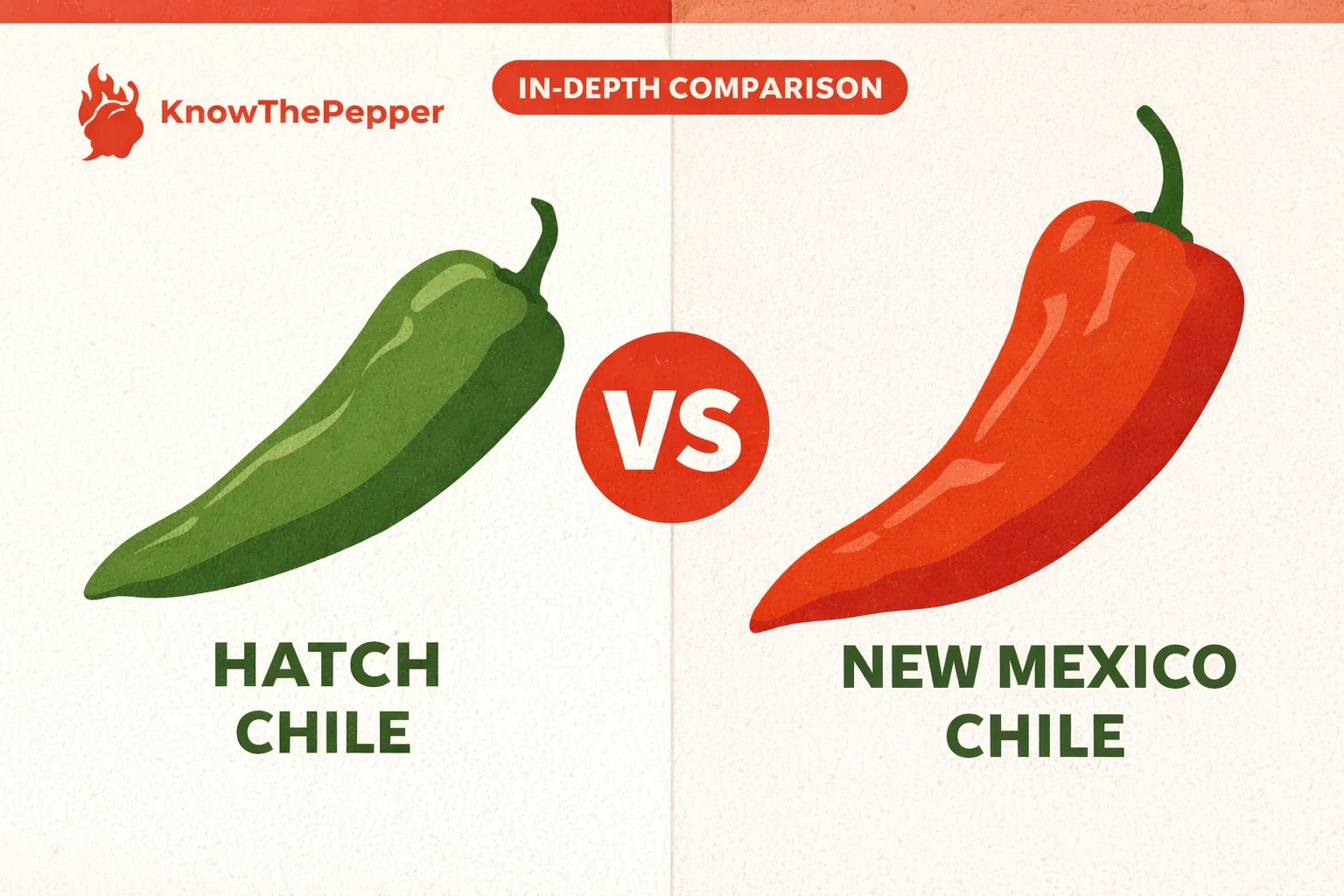
Guajillo Pepper vs New Mexico Chile for Mole, Adobo, or Red Chile Sauce
Choose guajillo when a Mexican mole, adobo, or salsa needs the dried mirasol chile named in the recipe. INIFAP documents those uses, while New Mexico State University teaches dried New Mexican red pods as the base for regional red chile and enchilada sauce.
Heat does not settle the choice because guajillo overlaps several New Mexican cultivars. The New Mexico State University cultivar table shows why the name on the bag matters more than a single range for the entire New Mexican pod type.

Guajillo Pepper
MediumNew Mexico Chile
MediumQuick Comparison
| Attribute | Guajillo Pepper | New Mexico Chile |
|---|---|---|
| Scoville evidence | 2,500-5,000 SHU | Varies by cultivar |
| Heat Tier | Medium | Medium |
| vs Jalapeño | 1x hotter | 1x hotter |
| Flavor | tangy and sweet | earthy, sweet, roasted, green-to-red |
| Species | C. annuum | C. annuum |
| Origin | Mexico | New Mexico, USA |
Which Is Hotter, Guajillo or New Mexico Chile?
Guajillo is usually the more predictable purchase, while New Mexico chile can be milder or hotter depending on the cultivar.
A published agricultural reference used by Mexico's SIAP places guajillo at 2,500 to 5,000 SHU, which is a useful retail benchmark rather than a promise for every pod.
New Mexico State University's cultivar table does not give one heat band for every New Mexican chile. It lists NuMex R Naky at 350 SHU, New Mexico 6-4 at 900 SHU, New Mexico No. 9 at 1,500 SHU, Española Improved at 2,500 SHU, and Sandia at 6,500 SHU.
That evidence makes a midpoint comparison misleading. Guajillo can be hotter than a very mild New Mexican cultivar, overlap Española Improved, or sit below Sandia.
NMSU also warns that its figures are averages that change with year, location, and plant stress. For a heat-sensitive dish, read the cultivar or heat label and reserve part of the chile puree until the sauce has simmered.
How Do Guajillo and New Mexico Chile Taste Different?
Choose guajillo for a distinct Mexican dried-chile layer and New Mexico chile for the flavor identity of New Mexican red sauce. This is a regional cooking decision before it is a contest over which pepper tastes more complex.
Larousse Cocina describes guajillo as a smooth, shiny, reddish-brown dried chile that supplies red color and body to stews, moles, and sauces. Its cooking dictionary also notes that Mexican cooks commonly combine it with chiles such as ancho instead of asking guajillo to carry every layer alone.
New Mexico State University treats flavor as a cultivar trait, which means a bag labeled only New Mexico chile leaves useful information unstated. NMSU's breeding history links today's New Mexican pod type to many cultivars selected for different heat, color, drying, and traditional-flavor goals.
For cooking, expect guajillo to make its own dried-chile character easier to notice in a blended chile mix. Expect a named New Mexican red cultivar to keep a regional red sauce closer to the dish described by NMSU, but do not assume every New Mexico chile tastes or heats the same.
Which Sauces Suit Guajillo and Which Suit New Mexico Chile?
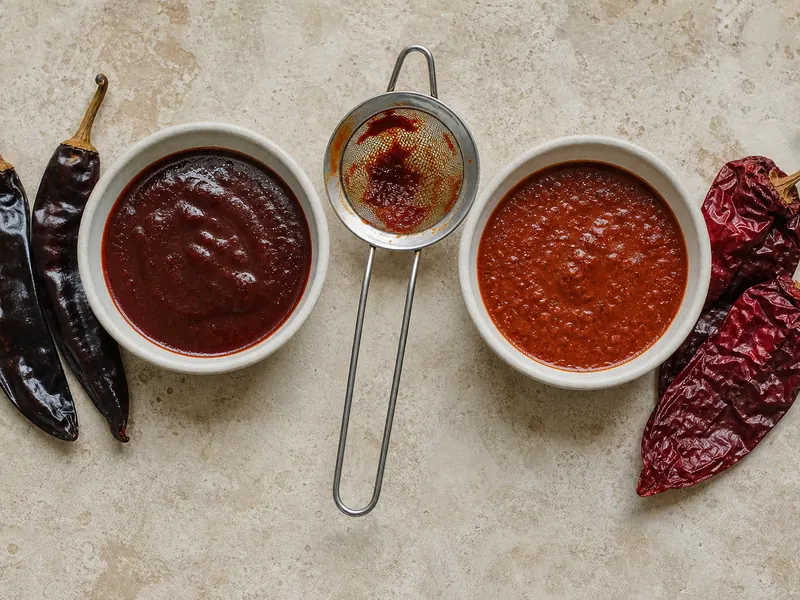
Use guajillo for Mexican adobos, moles, meat sauces, and salsas.
INIFAP identifies guajillo, also called mirasol before drying, as a principal ingredient in those preparations across regions of Mexico.
Larousse Cocina adds an important limit to that choice. Guajillo often works with another dried chile when a mole or sauce needs more than red color and consistency from one pepper.
Use New Mexico red chile for New Mexican red sauce, red enchiladas, chile con carne, and burritos.
NMSU's Extension guide makes the sauce from dried red pods, while its New Mexico Favorites circular gives a second method based on dry red chile powder.
The form on the ingredient list changes the method. Whole pods must be cleaned, softened, blended, and sometimes strained, while powder disperses directly into the sauce base.
A recipe that simply asks for dried red chile may tolerate either pepper, but a named regional dish gives a stronger signal. Match guajillo to the Mexican chile blend and New Mexican red chile to the regional red sauce before adjusting heat.
| What the recipe says | Better first choice | Evidence behind the choice |
|---|---|---|
| Mexican mole or adobo | Guajillo | INIFAP identifies guajillo as a principal chile in Mexican moles, adobos, and sauces. |
| New Mexican red enchilada sauce | New Mexico red chile | NMSU Extension builds the sauce from dried red pods or pure red chile powder. |
| Heat-sensitive sauce with an unlabeled New Mexico bag | Check the cultivar first | NMSU's cultivar averages run from very mild examples to cultivars hotter than guajillo's usual band. |
| Emergency swap in a blended sauce | Start by seeded weight | Pod size differs, so weight is a more stable cooking starting point than counting pods. |
Verdict
Pick guajillo when the recipe names guajillo or mirasol, or when it builds a Mexican mole, adobo, or blended salsa around that chile. Its documented role in those preparations matters more than a small overlap in Scoville values.
Pick a named New Mexican cultivar when the goal is New Mexican red chile sauce. New Mexico 6-4 gives a mild reference point, Española Improved sits near the lower part of guajillo's usual band, and Sandia moves above it according to NMSU's averages.
If a package gives no cultivar, treat the heat as unknown and add the puree in stages. If the package gives neither origin nor heat information, it cannot support a precise heat comparison no matter how familiar the front label looks.
Is Guajillo the Same as New Mexico Chile?
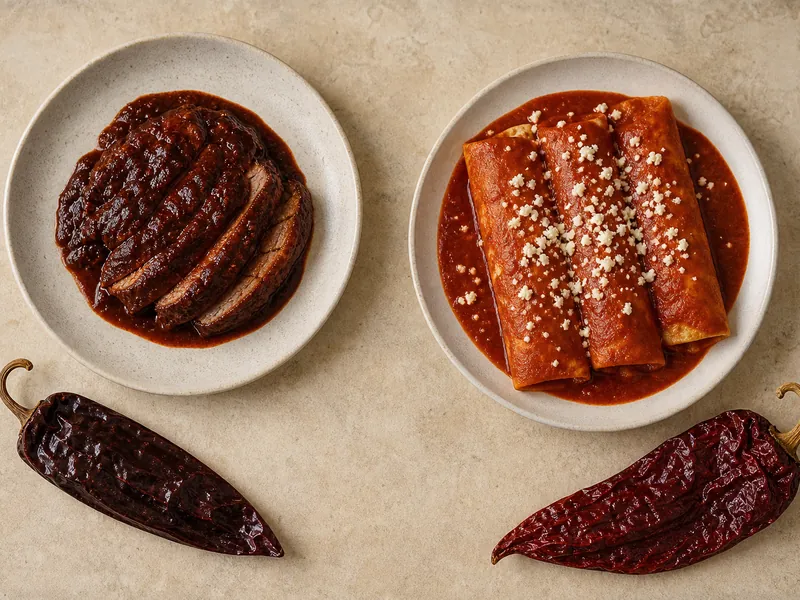
Guajillo is the dried name for mirasol chile.
Mexico's Secretariat of Agriculture lists mirasol as the fresh chile and guajillo as its dried form, and INIFAP describes the same fresh-to-dried identity in its cultivation guidance.
New Mexico chile is a pod type with many cultivars, not one dried counterpart to guajillo.
NMSU traces the modern New Mexican pod type through releases that begin with New Mexico No. 9 in 1913 and continue through mild, medium, hot, red-processing, and fresh-market cultivars.
New Mexican pods can be harvested green or allowed to mature red. NMSU's production guide explains that mature red pods are commonly dehydrated and sold whole, as flakes, or as powder.
This distinction resolves the common label confusion. Guajillo tells you which dried chile you bought, while New Mexico chile still leaves the cultivar, heat, and sometimes the final form to be checked.
How to Prepare Whole Pods and Chile Powder
For whole New Mexican red pods, NMSU Extension says to remove stems and seeds, wash the pods, cover them with boiling water for 30 minutes, and blend the softened flesh with fresh hot water. Its guide says 12 to 14 large pods yield about 1 pint of puree, then directs cooks to sieve unwanted peel and simmer the puree for 10 minutes before further use.
INIFAP likewise recommends soaking guajillo before grinding and straining the blend to remove epidermis residue. That instruction corrects the idea that every guajillo disappears into a perfectly smooth sauce without a sieve.
Powder skips rehydrating whole pods, but it is not automatically interchangeable by spoonful with a whole-pod recipe. NMSU's powder-based red sauce uses 1/2 cup dry red chile powder with 2 cups water, flour, salt, garlic, oil, and optional Mexican oregano, then simmers the mixture for 15 minutes.
Do not use a decorative ristra as a food source unless the seller confirms it is edible. NMSU specifically excludes pods treated with plastic, shellac, or insecticide from cooking.
How To Buy The Chile The Recipe Means
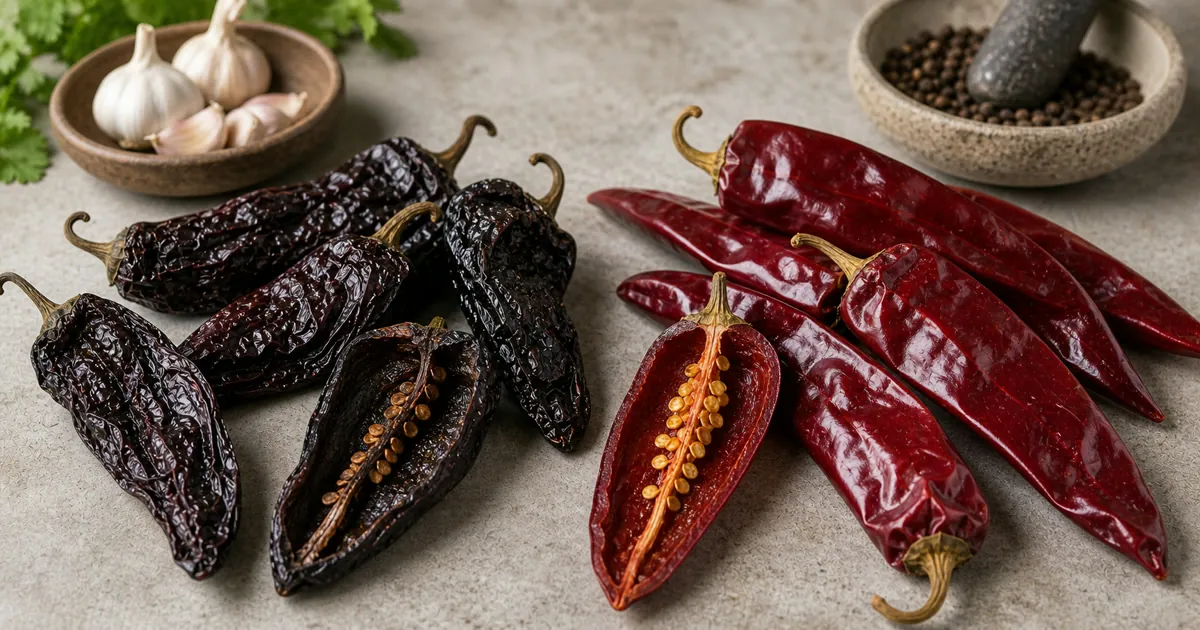
A useful guajillo bag should contain pliable, intact, reddish-brown pods with the elongated shape described by INIFAP and Larousse Cocina. Reject pods with mold, insect damage, or decay, which matches NMSU's safety screen for dried red chile.
For New Mexico chile, look for a cultivar and heat label. New Mexico 6-4, Española Improved, Sandia, and other New Mexican cultivars are not interchangeable heat specifications even though they share a pod type.
Also check whether the recipe expects whole pods, pure chile powder, or a seasoning blend. NMSU confirms that dehydrated New Mexican chile is marketed as whole pods, flakes, and powder, so the words red chile on a package do not identify one preparation.
Store dried pods or powder in a cool, dark place to protect color and flavor, following NMSU Extension guidance. Buy only enough pliable whole chile for the near term because a faded, brittle pod gives the cook less useful information than a clear cultivar label and sound condition.
Substitution
For a blended sauce, start with 1:1 by seeded weight, not by pod count.
This is a practical starting conversion because dried pods vary in size, and it does not promise identical flavor or heat.
When New Mexico chile replaces guajillo, choose a cultivar whose heat fits the recipe and expect to lose some of the specific dried-chile identity that made the recipe name guajillo. Do not automatically add vinegar, sugar, or smoke because none of those additions can identify the missing cultivar.
When guajillo replaces New Mexico chile, the sauce moves away from the regional ingredient documented by NMSU. Add the guajillo puree in stages, then judge chile intensity and sauce body after simmering instead of trying to correct the swap before the chile has hydrated.
For powder, match by weight when possible and confirm that both products are pure ground chile. A seasoning blend with salt, cumin, garlic, or oregano is a different ingredient and should not be converted as plain chile powder.
Guajillo Pepper vs New Mexico Chile FAQ
- INIFAP: Cultivo del chile en México
- Mexico Secretariat of Agriculture: Fresh and dried chile names
- New Mexico State University: Chile Cultivars, 1913-2022
- New Mexico State University: Using Chile to Make Ristras and Chile Sauce
- New Mexico State University: Red Chile and Paprika Production
- New Mexico State University: New Mexico Favorites, Chile and Pecans
- Larousse Cocina: Chile guajillo
- Agro Productividad: Guajillo chile production and quality