

KnowThePepper
Ancho Pepper: What a Ripe Poblano Becomes Once Dried for Mole and Adobo
Ancho pepper is a dried ripe poblano, not a separate fresh pepper. UF/IFAS lists poblano at 1,000-2,000 SHU and notes that ripe dried poblanos are called ancho, a form used for mole, adobo, enchilada sauce, salsa roja, braises, rubs, and chile pastes when raisin-like sweetness, dark color, and gentle heat matter.
- Species: C. annuum
- Heat tier: Medium (1K-10K SHU)
What Kind of Pepper Is Ancho Pepper?
Ancho pepper is the dried form of a ripe poblano chile. It belongs to C. annuum dried chile varieties, but its kitchen identity comes from drying: the fresh pod ripens red, loses water, darkens, flattens, and turns broad and wrinkled.
UF/IFAS lists poblano at 1,000-2,000 SHU and states that ripened, dried poblanos are called ancho. That puts ancho in the lower medium SHU range, although most dishes read it as mild because the chile is usually seeded, soaked, and blended into a sauce.
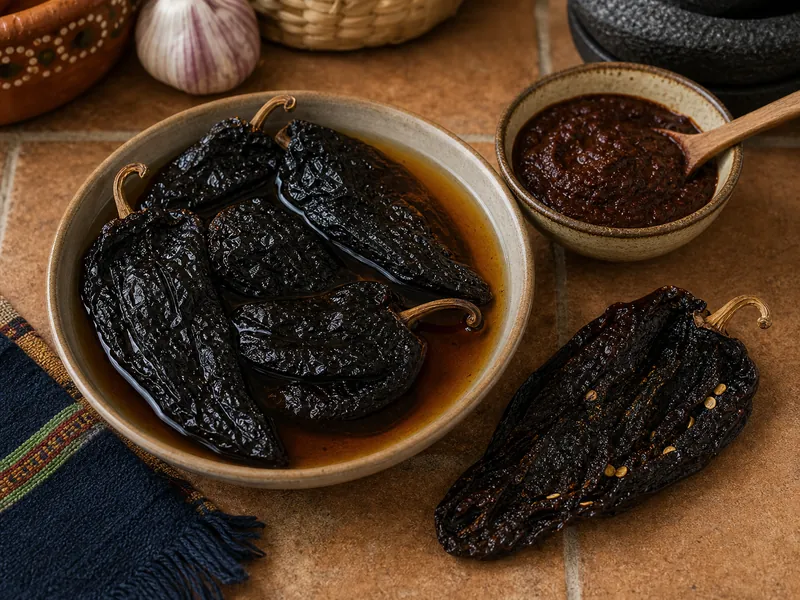
The dried form matters more than the heat number. A good ancho smells sweet, raisin-like, earthy, and lightly cocoa-like.
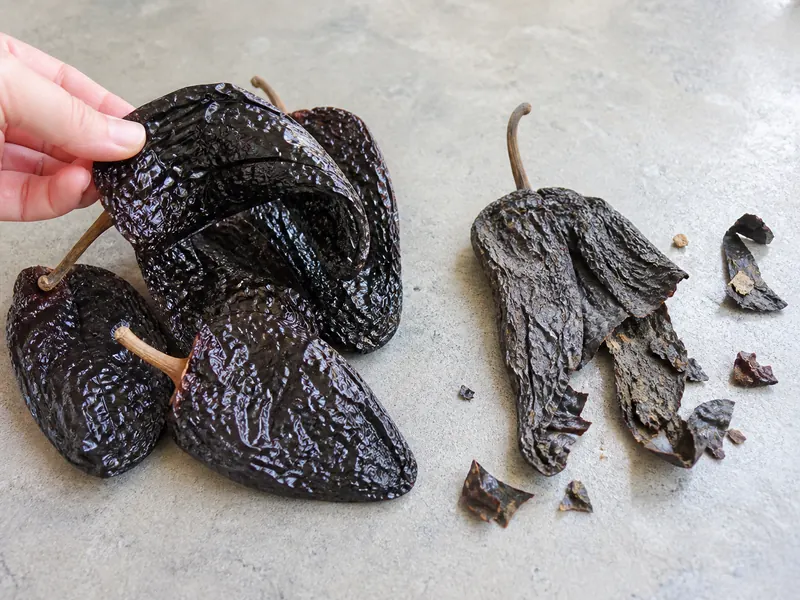
The pod should be dark red-brown to almost black, wide, flat, and still a little pliable. Dusty, brittle pods have usually lost aroma.
Ancho also solves a naming problem. Fresh poblano pepper identity covers the green or red fresh pod.
Ancho covers the dried ripe form. mulato chile and pasilla sit nearby, but they are not interchangeable names.
Use the ancho substitute page when you need replacement ratios rather than identity. The Ancho versus Guajillo comparison answers whether brighter fruit suits the dish.
For darker dried-chile choices, compare ancho with pasilla or mulato. The Ancho versus Chipotle comparison isolates smoke as the deciding variable.
What Is the History of Ancho Pepper?
Ancho belongs to Mexico's dried-chile pantry because it starts as poblano, a Mexican pepper tied closely to Puebla and central Mexican cooking. Drying ripe chiles preserved the harvest and changed the flavor into something deeper than the fresh pod.
Food & Wine's Diana Kennedy chile guide gives the clearest reader-facing naming point: the fresh poblano becomes ancho when dried. That matters because grocery labels often confuse ancho, pasilla, and poblano.
New Mexico State University also treats Ancho as a recognized dried Capsicum product category in import and export classifications. That does not prove a single origin story for every modern ancho on the shelf, but it supports the basic product identity: ancho is a dried chile form, not just a fresh pepper name.
For this profile, the safest history claim is narrow. Ancho is a Mexican dried poblano form used in sauces, moles, and chile pastes.
Claims about ancient origin, exact first use, or single-region ownership need stronger primary evidence than most retail chile pages provide.
How Spicy Is Ancho Pepper, and How Does It Taste?
The Ancho Pepper delivers 1K–2K Scoville Heat Units, placing it in the Medium tier (1K-10K SHU).
Flavor notes: sweet, raisin-like, earthy, lightly cocoa-like.
What Nutrients Does Ancho Pepper Provide?
Ancho nutrition should be framed as dried-chile serving context, not a health claim. A normal recipe may use one or two dried pods spread through an entire sauce, stew, or marinade.
USDA FoodData Central can support generic dried chile nutrition, but exact values vary by pod size, moisture, seeds, brand, and whether the chile is whole or ground. That is why this profile does not promise exact vitamin percentages for a single ancho.
Capsaicin is present at a low to modest level because ancho usually sits around 1,000-2,000 SHU. Capsaicin is why mild dried chiles still feel warm in a concentrated paste, but ancho should not be treated as a supplement or wellness shortcut.
What Is Ancho Pepper Best Used For?
Most ancho cooking starts with a simple sequence: stem, seed, toast, soak, then blend. Toast the chile in a dry skillet only until aromatic, usually a few seconds per side.
If the skin blackens hard, the sauce can taste bitter.
Soak toasted pods in hot water until pliable, then blend them with fresh water, stock, tomatoes, tomatillos, garlic, onion, spices, or nuts depending on the dish. The soaking liquid can be useful, but taste it first because some batches turn bitter.
Ancho is a backbone chile for mole-style sauces, adobo, enchilada sauce, salsa roja, braised beef, beans, pozole-style broths, tamale sauces, and dry rubs. It gives dark fruit and body without pushing the dish into high heat.
The Mexican dried chile trio helps when a recipe uses ancho with guajillo and pasilla. Ancho brings sweetness and body, guajillo brings color and tang, and pasilla brings darker dried-fruit earth.
For powder, use pure ground ancho when the recipe asks for ancho flavor. Generic chili powder may include cumin, garlic, oregano, salt, or hotter chile.
That difference belongs to the powder comparison page, not this profile.
Stem, seed, toast, soak, blend
- Stem and seed the pod first, so nothing bitter goes into the pan.
- Toast in a dry skillet only until aromatic, usually a few seconds a side.
- Stop before the skin blackens hard. Past that point the sauce tastes bitter and there is no recovering it.
- Soak the toasted pods in hot water until pliable.
- Blend, using a little of the soaking liquid only if the sauce needs loosening.
Where Can You Buy Ancho Pepper, and How Do You Store It?
Buy whole anchos when you can. Look for pods that are flexible, glossy to satin, dark red-brown, and fragrant.
They should bend a little without turning to dust.
Avoid pods with mold, damp patches, a stale dusty smell, or pale brittle skin. Very dry pods can still make powder, but they usually give weaker sauce than pliable pods.
Store whole anchos in an airtight container away from light, heat, and moisture. Keep them whole until you need them because ground powder loses aroma faster.
Use the fresh-versus-dried pepper when a recipe tries to swap poblano and ancho directly. Fresh poblano gives green chile flesh.
Ancho gives dried fruit, color, and sauce body.
For stuffing, use poblano. For dried chile sauce, use ancho.
For brighter red sauce, compare ancho with guajillo before substituting.
Dried form: Dried ripe poblano. Sold whole, stemmed pieces, flakes, paste, or pure ancho powder.
What Can Replace Ancho Pepper in a Recipe?
Compare substitutes for Ancho Pepper by form, flavor, and heat before choosing a ratio. Measured adjustments must account for the dish and the concentration of the replacement.
Direct comparisons show where flavor, form, and preparation differ in the Ancho vs Poblano and Ancho vs Guajillo matchups.
Compare Ancho Pepper with: Ancho Pepper vs Chilhuacle
How Do You Grow Ancho Pepper at Home?
Growing ancho means growing poblano and drying ripe pods after harvest. The plant phase produces the pepper.
The drying phase creates the ancho flavor.
Use the pepper seed-starting workflow for trays, warmth, light, hardening off, and transplant timing. University of Minnesota Extension recommends starting pepper seed about eight weeks before outdoor planting and transplanting after cold nights have passed.
Give poblano plants full sun, warm soil, steady moisture, and enough space for broad pods. Harvest green pods if you want fresh poblanos.
For ancho, leave selected pods on the plant until they ripen red and firm.
Drying needs airflow and control. Use the home pepper drying process once pods are ripe, and cut away any damaged or soft spots before drying.
Thick poblano walls dry more slowly than thin cayenne-type pods, so do not trap them in a damp pile.
If your climate turns wet before the pods ripen fully, harvest the best red pods and finish drying indoors with controlled heat and airflow. The finished ancho should be leathery to dry, clean-smelling, and free of soft pockets.
Ancho Pepper FAQ


- UF/IFAS Gardening Solutions - Peppers by Scoville Units
- New Mexico State University Circular 706 - Chile Cultivars of NMSU
- New Mexico State University - U.S. Imports and Exports of Chile Peppers and Pepper Products FAQ
- Food & Wine - Diana Kennedy guide to fresh and dried Mexican chiles
- University of Minnesota Extension - Growing peppers in home gardens
- USDA FoodData Central
Species classification: C. annuum - based on published botanical taxonomy.