

KnowThePepper
New Mexico Chile: The Pod Type Behind Hatch, Roasted Green or Dried Red
New Mexico chile is best understood as a New Mexican pod type within C. annuum, not one single cultivar. We use a practical 1,000-8,000 SHU range because common New Mexican types run from mild roasting peppers to hotter Sandia-style pods.
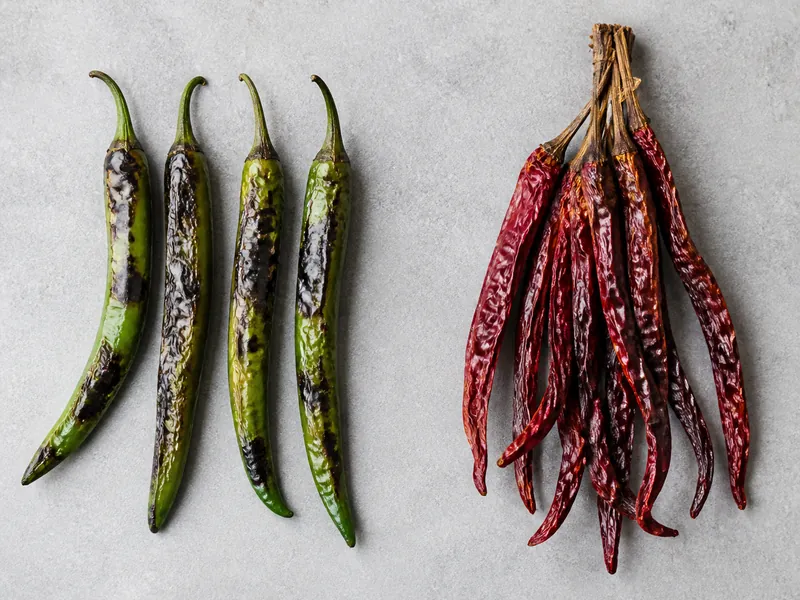
The core distinction is use: green pods are usually roasted and peeled, while mature red pods are dried for sauce, powder, flakes, and ristras.
Hatch chile is the place-grown version from the Hatch Valley, and Anaheim is a related cultivar line that moved from New Mexico to California.
- Species: C. annuum
- Heat tier: Medium (1K-10K SHU)
- Comparison: the same heat range as a jalapeño because their published ranges overlap
What Is New Mexico Chile Known For?
New Mexico chile is a New Mexican pod-type chile in the Capsicum annuum species. It is not one fixed cultivar, so a clean answer has to separate the pod type from named varieties such as NuMex Big Jim, Sandia, NuMex Joe E. Parker, and New Mexico 6-4.
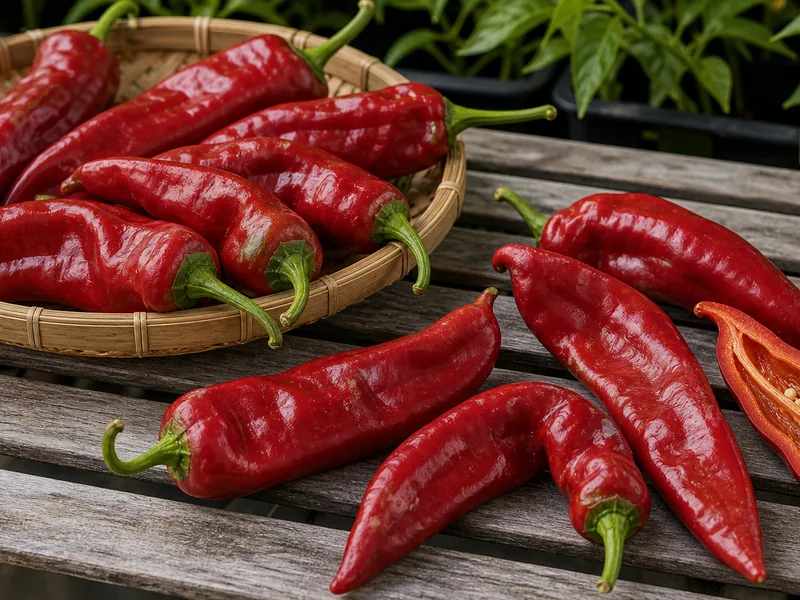
For cooking and shopping, treat New Mexico chile as a family of long green-to-red pods that usually land in the medium heat range. We list 1,000-8,000 SHU for the market category because the common market category includes mild green-chile cultivars and hotter New Mexican selections.
NMSU extension material is the strongest authority for this profile. It describes New Mexican-type chiles as a New Mexico crop tradition, a processing crop, and a breeding line that supports green chile, red chile, paprika, and other market uses.
The pod is usually long, smooth, and thick-fleshed enough to roast and peel. NMSU describes New Mexico 6 fruit as large, smooth, thick-fleshed pods about 6-8 inches long, which is a useful visual model even though other cultivars vary.
The common confusion is Anaheim. The Anaheim versus New Mexico chile matters because Anaheim seed originated in New Mexico, moved to Anaheim, California, and then developed site-specific traits of its own.
That makes Anaheim related, not a synonym for the full New Mexican pod type.
A practical store label may say New Mexico chile, Hatch chile, green chile, red chile, or a named NuMex cultivar. The choice is the same: identify whether the pod is fresh green for roasting, mature red for drying, or a specific cultivar with a published heat expectation.
What Is the History of New Mexico Chile?
New Mexico chile has a documented breeding history at New Mexico State University. NMSU Circular 706 says the chile improvement program began with Dr. Fabian Garcia, who selected improved New Mexican pod-type chiles and released New Mexico No. 9 in 1913.
That release matters because it helped standardize New Mexico-type chile peppers for farmers and processors. NMSU H-230 describes New Mexico No. 9 as a foundation for the state chile processing industry, with roughly 8,000-10,000 acres harvested annually in the context of that publication.
The later NuMex line kept refining the category for yield, heat, color, disease resistance, processing, and flavor. NMSU lists New Mexican-type cultivars such as New Mexico 6-4, Sandia Select, NuMex Garnet, NuMex Joe E. Parker, Machete, and Charger in current production guidance.
Named profiles here fit inside that story. NuMex Big Jim chile is known for very large pods and variable heat, while Sandia-style heat sits higher in the New Mexican family. Those are cultivars or selections inside the larger pod type, not separate silos.
Hatch is geographic. Hatch Valley-grown chile can be New Mexico chile, but the word Hatch points to where it was grown and marketed, not to a single botanical cultivar. That distinction keeps this page from competing with the Hatch profile.
How Spicy Is New Mexico Chile, and How Does It Taste?
The New Mexico Chile delivers 1K–8K Scoville Heat Units, placing it in the Medium tier (1K-10K SHU). That makes it roughly the same heat range as a jalapeño because their published ranges overlap.
Flavor notes: earthy, sweet, roasted, green-to-red.
What's in New Mexico Chile? Nutrition Facts
Nutrition data for New Mexico chile is best treated as generic hot-chile data unless a lab report names the cultivar and maturity stage. USDA FoodData Central provides a useful baseline for raw hot chili peppers, but it does not turn every New Mexican cultivar into the same nutrition item.
The visible nutrition panel on this page uses generic raw hot-chile values per 100g: about 40 calories, high vitamin C, vitamin A, and measurable capsaicinoids. Fresh green pods and fully red mature pods can differ because maturity changes pigment, moisture, and sugar balance.
Use those numbers for orientation, not medical advice. The practical nutrition point is simpler: New Mexico chile adds flavor, color, and heat with little fat or added sugar when used fresh, roasted, dried, or blended into sauce.
The capsaicin dose is lower than superhot peppers, but it still varies by cultivar and pod. Remove seeds and inner placenta for a milder dish, or use hotter New Mexican selections when the recipe needs more bite.
How Do You Use New Mexico Chile in the Kitchen?
Green and red New Mexico chiles behave like two different kitchen ingredients. Green pods are picked before full red maturity, roasted until the skin blisters, peeled, and used in stews, eggs, burgers, green chile sauce, and roasted chile salsa.
NMSU H-230 describes New Mexican-type green chile as commonly peeled, then canned or frozen whole or diced. That explains why supermarket frozen green chile can be a legitimate ingredient, not a lesser version of fresh pods.
Red pods are harvested ripe and partly dried before further dehydration. They become whole dried pods, flakes, or powder, and they are the backbone of red chile sauce.
Compared with a brighter, more dried-fruit guajillo, dried New Mexico red chile is usually earthier and rounder.
For sauce, remove stems and seeds, rinse the pods, soften them in hot water, and blend until smooth. NMSU E-327 gives a simple red chile sauce model built from chile puree, water, garlic, salt, oil, and oregano, then simmered gently.
Ristras are a special red-chile use, not just decoration. NMSU E-327 says green chile is not acceptable for ristras because it has not matured, and it names New Mexico 6-4 and Sandia as common ristra cultivars because they dry well.
For substitutes, match the chile form before matching the heat. Fresh roasted green New Mexico chile is closer to a roasted medium fresh pepper than to a dried pod, while dried red New Mexico chile can stand near mild-to-medium dried peppers when the dish wants earthy color more than sharp heat.
| Variety | Where it sits on heat | What it is usually for |
|---|---|---|
| NuMex Big Jim | Mild end of the range | Very long pods, the classic choice for rellenos and stuffing |
| New Mexico 6-4 | Mild | The long-standing green chile standard, roasted and peeled |
| NuMex Joe E. Parker | Mild | A 6-4 successor, grown for even pods and reliable roasting |
| Sandia | The hot end of the range | Green chile for cooks who want the family's upper heat |
How Should You Buy and Store New Mexico Chile?
Buy fresh green New Mexico chile when the pods feel firm, glossy, and heavy for their size. In the Southwest, harvest and roasting season usually clusters in late summer, and many markets roast sacks of green chile on site.
Fresh unwashed pods usually keep 1-2 weeks in the refrigerator. For better storage, roast, peel, portion, and freeze the chile flat in bags so a stew or sauce can use one portion at a time.
For red chile, choose pods that are fully red, pliable, and free of mold or wet dark spots. A ristra should be decorative only until it is fully dry and kept in a clean, dry place.
Kitchen steam shortens its useful life.
Ground red New Mexico chile loses aroma faster than whole pods. Buy smaller amounts, keep the powder airtight and dark, and replace it when the color dulls or the earthy aroma fades.
Prepared red chile sauce needs food-safety handling. NMSU E-327 says leftover sauce or puree should be refrigerated promptly and used or frozen within 3 days.
Dried form: Dried red pods, flakes, powder, and ristras
Green chile, from the roaster to the freezer
- Buy in late summer, when Southwest harvest and roasting season clusters and markets roast sacks on site.
- Choose pods that feel firm, glossy and heavy for their size.
- Unwashed fresh pods keep one to two weeks refrigerated, which is the short route.
- For the long route, roast until the skin blisters, peel, portion and freeze.
- Keep red pods for ristras. NMSU guidance calls for mature red fruit, because green pods have not reached the dry red stage and will not hang properly.
What Can Replace New Mexico Chile in a Recipe?
Compare substitutes for New Mexico Chile by form, flavor, and heat before choosing a ratio. Measured adjustments must account for the dish and the concentration of the replacement.
Direct comparisons show where flavor, form, and preparation differ in the Guajillo Pepper vs New Mexico Chile for Red Sauce and Hatch vs New Mexico Chile matchups.
How Do You Grow New Mexico Chile at Home?
New Mexico chile was bred for hot, dry New Mexico growing conditions, but the crop can grow outside the Southwest when the season is warm enough. The limiting factor is usually time: green harvest arrives earlier than fully red dry-chile maturity.
NMSU H-230 gives a direct-seeding window of March 1 to May 1 for southern New Mexico, then 4-6 weeks later in central and northern New Mexico. It also gives about 120 days to green harvest and about 165 days to the red crop.
Gardeners outside that climate should start seed indoors and transplant only after nights stay warm. A short-season garden may still produce good green chile, but red mature pods may be unreliable unless the grower chooses an early cultivar such as Espanola Improved.
Plant selection matters more than the broad label. New Mexico 6-4, NuMex Joe E. Parker, Sandia Select, and NuMex Big Jim are all New Mexican types, but they do not have the same heat, pod size, wall thickness, or harvest behavior.
Use full sun, steady irrigation, and well-drained soil. Water stress can reduce yield, but heavy overwatering can push leafy growth at the expense of fruit set.
If hot weather causes bloom drop, the pepper flower drop covers the temperature and pollination checks.
For planning, the pepper growing timeline matters more than the name on the seed packet. Decide first whether you need green roasting pods, fully red sauce pods, or a dried ristra crop, then choose the cultivar and planting date around that job.
New Mexico Chile FAQ


- NMSU Circular 706 - Chile Pepper Cultivars for New Mexico
- NMSU H-230 - Chile Production in New Mexico
- NMSU E-327 - Using Chile to Make Ristras and Chile Sauce
- USDA FoodData Central - Hot chili pepper nutrition search
Species classification: C. annuum - based on published botanical taxonomy.