
Hatch Chile vs New Mexico Chile: Is the Difference Only Where It Grows?
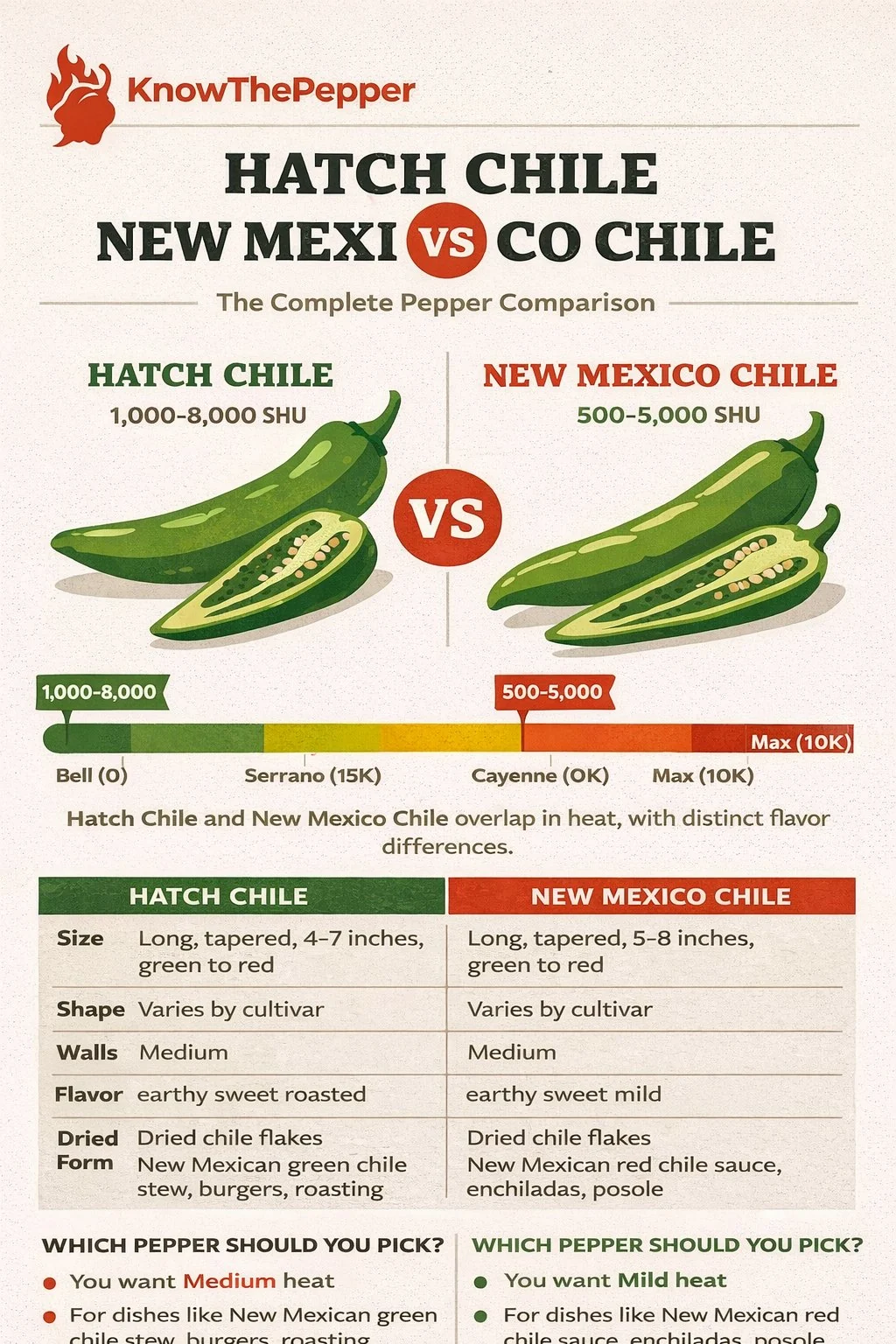
Hatch chiles are New Mexico chiles grown in the Hatch Valley region. They share the same broad 1,000-8,000 SHU range and Capsicum annuum species, but Hatch names the growing place while New Mexico chile describes the wider pepper family.

Hatch Chile
MediumNew Mexico Chile
MediumQuick Comparison
| Attribute | Hatch Chile | New Mexico Chile |
|---|---|---|
| Scoville evidence | 1K-8K SHU | 1K-8K SHU |
| Heat Tier | Medium | Medium |
| vs Jalapeño | 1x hotter | 1x hotter |
| Flavor | earthy and sweet | earthy, sweet, roasted, green-to-red |
| Species | C. annuum | C. annuum |
| Origin | USA | New Mexico, USA |
Is Hatch Chile Hotter Than New Mexico Chile?
Both peppers sit in the 1,000-8,000 SHU range, which places them firmly in the medium SHU classification - hotter than a bell pepper but well below the jalapeño's typical 2,500-8,000 SHU ceiling. At their mildest, both clock in around 1,000 SHU, roughly one-third the heat of an average jalapeño.
At their peak, an 8,000 SHU specimen matches the hottest jalapeños you'd pull from a grocery bin.
The critical thing to understand: there is no heat difference between these two peppers in any measurable, consistent sense. A New Mexico Chile grown in Hatch, New Mexico becomes a Hatch Chile by location alone, the SHU range does not change.
What does change heat within either category is the specific variety (NuMex Big Jim, Heritage 6-4, Sandia) and growing conditions like soil mineral content, irrigation timing, and temperature stress during pod development.
For practical cooking purposes, treat them as interchangeable on the Scoville heat ranking index. Neither requires the capsaicin-neutralizing dairy buffer you'd need after biting into a habanero.
The burn is clean, front-of-mouth, and fades relatively quickly, characteristic of C. annuum varieties across the American pepper origins tradition.
Do Hatch and New Mexico Chiles Taste Different?
The flavor profile description for both is earthy and sweet - and that overlap is not a simplification. These peppers share genetic lineage, regional soil chemistry, and centuries of cultivation history in the same high-desert corridor of the American Southwest.
The famous Hatch flavor, that roasted, slightly smoky sweetness with a mineral backbone, is the New Mexico Chile flavor.
They are the same thing grown in the same place.
Where genuine flavor variation exists, it comes from variety selection and roasting method, not from some botanical distinction between "Hatch" and "New Mexico." The Heritage 6-4 variety leans more vegetal and grassy when fresh.
NuMex Big Jim develops deeper sweetness at full red ripeness.
Sandia runs hotter with a sharper, more pungent edge.
Fresh green pods from either category taste bright, grassy, and mildly sweet. Roasted, they shift dramatically, the skin chars, the sugars caramelize, and that signature earthy depth emerges.
Dried red New Mexico Chiles take on a brick-like, raisin-adjacent sweetness that differs substantially from the fresh green version.
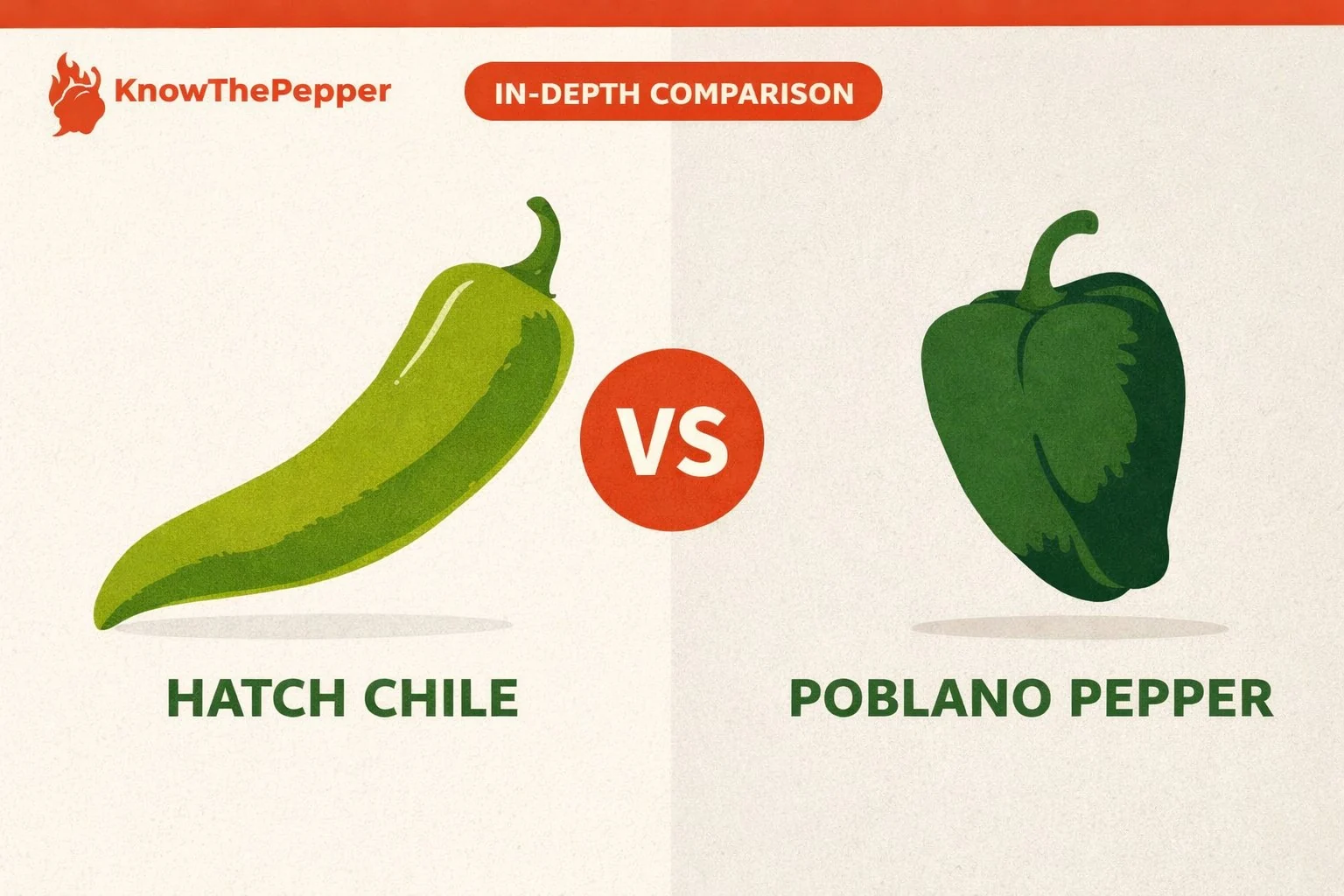
For a comparison that shows actual flavor lookrgence, the Hatch Chile versus poblano heat and flavor gap is far more instructive than any Hatch-vs-New-Mexico breakdown.
Can You Use Hatch and New Mexico Chile Interchangeably?
The honest cooking advice here: buy whichever you can find, because the recipes treat them identically. Both work beautifully in green chile stew (the New Mexico staple), enchilada sauce, chile verde, roasted chile omelets, and green chile cheeseburgers.
For roasting, place whole pods directly over a gas flame or under a broiler until the skin blisters and blackens on all sides, usually 4-6 minutes per side under a broiler at 500°F. Steam them in a sealed bag for 10 minutes afterward, then peel.
The flesh underneath will be silky, smoky, and ready for any application.
Dried red New Mexico Chiles (the same pod left to ripen and dehydrate) serve a different cooking purpose entirely. Rehydrated in hot water for 20-30 minutes, they form the base of traditional red chile sauce, earthy, brick-red, and mildly sweet.
This is the sauce that goes on Christmas-style plates in New Mexico restaurants (ordering "Christmas" means you want both red and green).
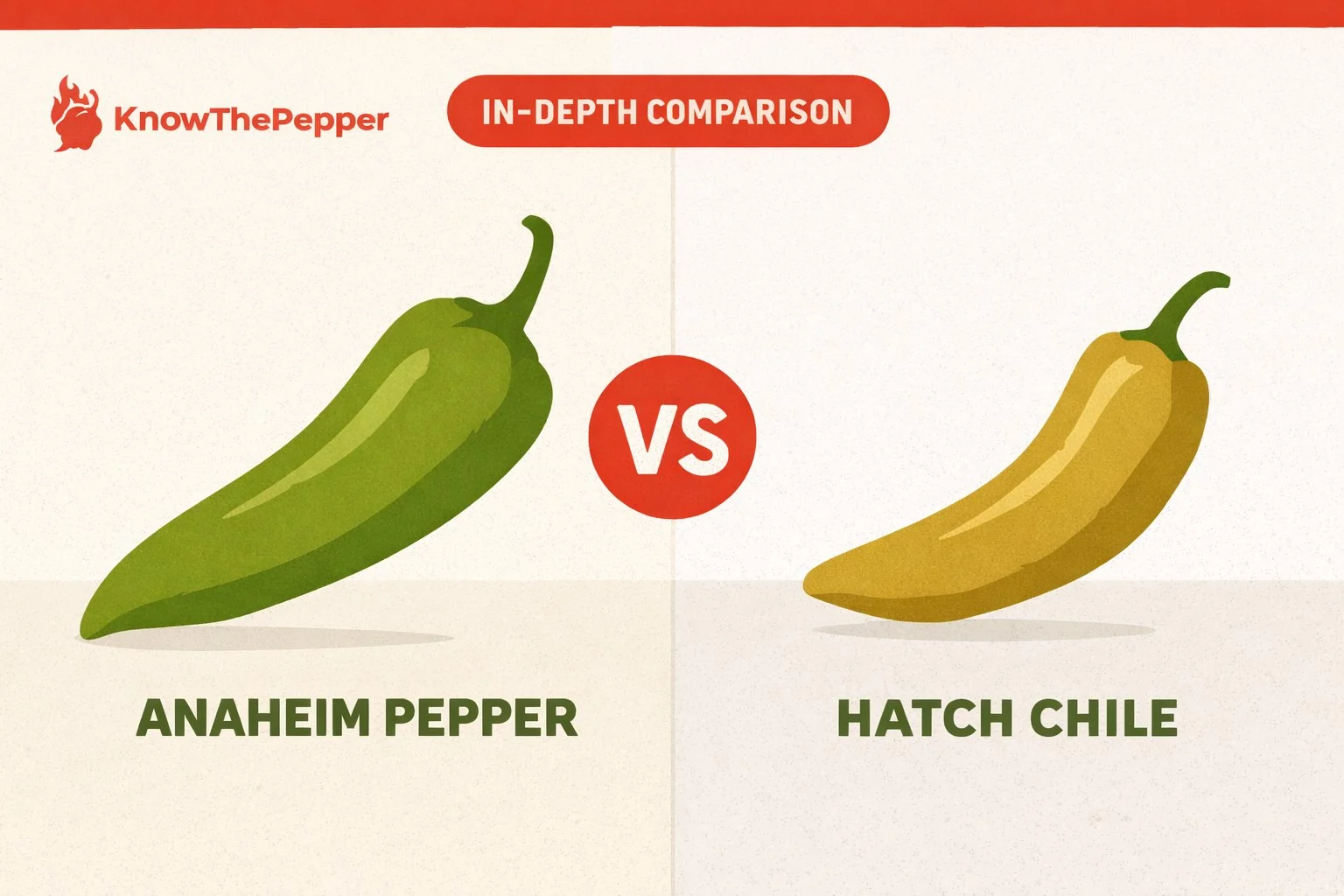
Substitution is straightforward. Anaheim peppers work as a mild stand-in when neither is available, though the Anaheim versus New Mexico Chile flavor shows the Anaheim runs slightly milder and less complex.
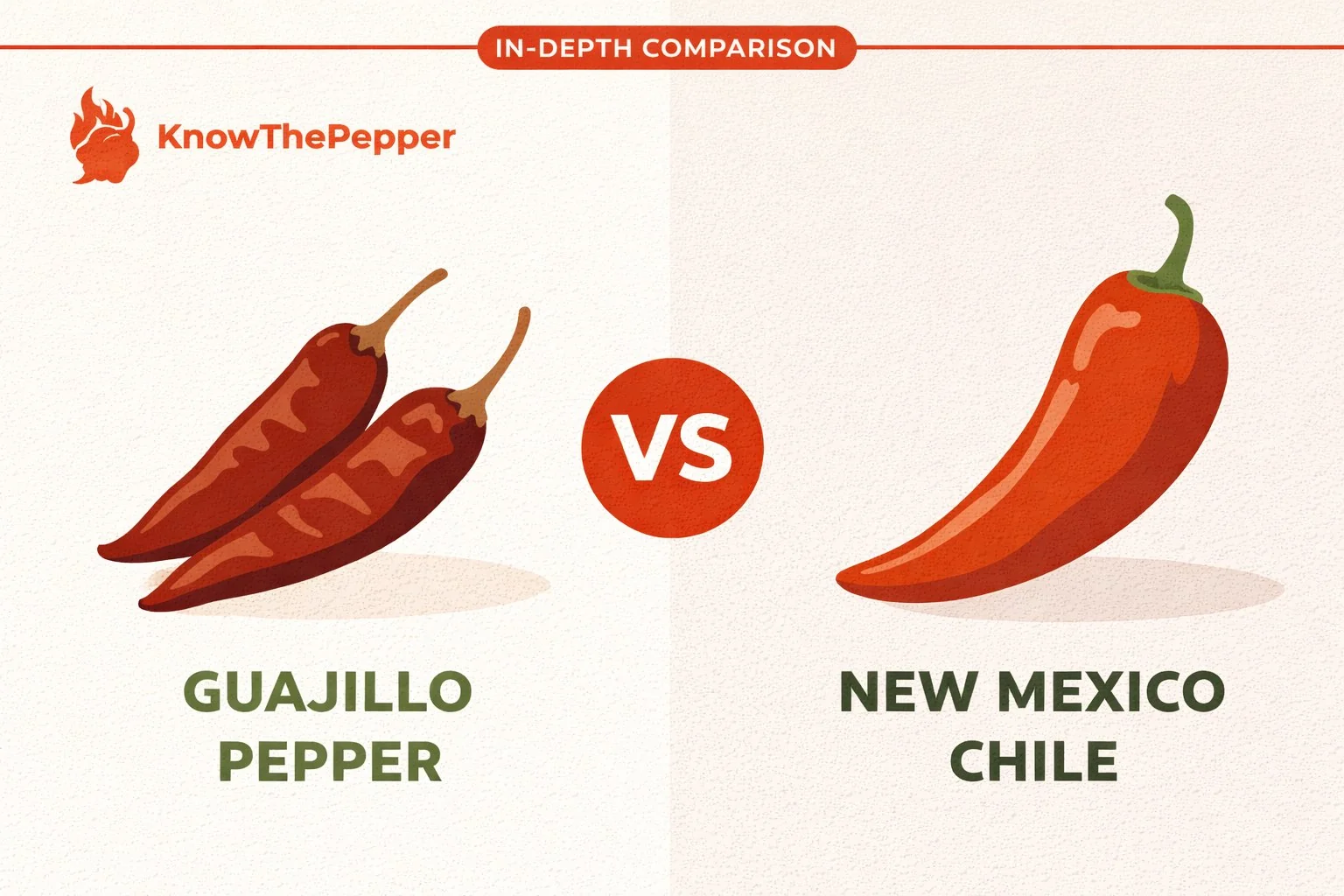
Guajillo dried chiles can approximate the red chile sauce application, the guajillo versus New Mexico Chile head-to-head breaks down exactly where they lookrge in depth and heat.
For fresh substitution, use a 1:1 ratio in any recipe. For dried red pods, guajillos substitute at 1:1 with a slight fruity shift in the sauce.
Which Should You Buy, Hatch or New Mexico Chile?
If you are standing in a grocery store trying to decide between a bag labeled "Hatch Chile" and one labeled "New Mexico Chile," the decision is essentially marketing. Buy whichever is fresher or more affordable.
The real distinctions worth caring about: fresh green versus dried red (dramatically different applications), and variety selection (Big Jim for size and mild sweetness, Sandia for more heat, Heritage 6-4 for traditional flavor). Those choices matter.
The label does not.
Hatch Chiles carry a premium price and cultural cachet tied to their specific valley origin, if you are making a dish where provenance matters to you or your guests, that premium may be worth it. For everyday cooking, a New Mexico Chile grown anywhere in the state delivers the same earthy Southwest medium heat that defines this pepper category.
For anyone curious about the C. annuum botanical classification that both share, or how cultivation affects heat development, the growing context matters more than the name on the bag.
Is Hatch Chile a New Mexico Chile?
This is one of the most common chile confusions in American cooking, because Hatch chile is a New Mexico chile. The distinction is geographic, not botanical.
New Mexico chile: Any pepper in the New Mexico chile family (developed at New Mexico State University), grown anywhere. This includes varieties like Big Jim, Sandia, NuMex Heritage 6-4, and others.
Same plant, same genetics, grown in California, Colorado, Texas, or anywhere else.
Hatch chile: A New Mexico chile grown specifically in the Hatch Valley of New Mexico (Hatch, Arrey, Salem, Garfield townships). The valley's combination of high altitude (4,000 feet), intense sun, low humidity, and sandy soil produces a flavor that longtime fans consider distinct.
The practical takeaway: every Hatch chile is a New Mexico chile, but not every New Mexico chile is a Hatch.
Both fall in the same range depending on variety:
- Mild varieties (Big Jim, NuMex Heritage 6-4): 1,000-2,000 SHU
- Medium varieties (Big Jim Medium): 2,000-4,000 SHU
- Hot varieties (Barker's Hot, Sandia): 5,000-8,000 SHU
The Hatch valley's growing conditions do not reliably produce higher or lower SHU than the same variety grown elsewhere, heat is primarily variety-dependent. A Hatch Big Jim and a Colorado Big Jim should have similar SHU.
This is the core debate.
Yes, according to longtime Hatch fans: The valley's sandy loam soil, intense sun, and low humidity concentrate sugars and flavor compounds differently than most other growing regions. Many tasters describe Hatch chiles as sweeter with a more complex, earthy smokiness when roasted.
Not consistently in cooked dishes: Hatch and New Mexico-variety chiles can taste very close once roasted, sauced, or baked. Some fresh-roasted batches show more sweetness and earthiness.
Others are hard to separate from similar New Mexico cultivars.
Our position: For most cooked applications (green chile stew, enchilada sauce, casseroles), the difference is subtle to undetectable. For roasted and eaten-fresh applications, the Hatch designation may matter more, as with wine terroir.
Both are used identically. The primary applications:
- Roasting whole - charred under a broiler or on a gas flame, peeled, then used in stews, sandwiches, and dips.
This is the signature Hatch preparation. - Green chile stew - pork or chicken braised with green chile, potatoes, and garlic - Chile rellenos - the thick walls hold up to stuffing and frying better than thinner-walled peppers - Enchilada sauce - blended roasted chile, garlic, and broth - Chile verde - slow-cooked pork in green chile sauce
The only application where Hatch origin might matter: fresh-roasted chiles eaten immediately after roasting, where the flavor is most present before cooking mellows it.
New Mexico chile (non-Hatch): Available year-round dried or canned (Hatch brand canned green chiles are widely sold but use generic New Mexico variety chiles, not necessarily Hatch Valley origin).
True Hatch chiles: Available fresh only during the Hatch season: late July through early September. Many supermarkets host Hatch chile roasting events during this window.
Outside the season, frozen Hatch chiles are available from specialty retailers.
Fresh in season (July-September): Buy Hatch if you can find them and the price premium is acceptable. The freshness matters more than the origin, a fresh non-Hatch New Mexico chile beats a mediocre Hatch.
Outside of season: Frozen Hatch chiles maintain good flavor. Canned New Mexico green chiles are the best pantry substitute for cooked dishes.
Are Hatch chiles always green" No, green is the immature stage (harvested before full ripeness). Red Hatch chiles are the same pepper left to ripen fully.
Red is sweeter, less vegetal, and used differently.
What is the difference between Hatch and Anaheim" Anaheim peppers are a related but distinct variety, milder (500-2,500 SHU) and less complex in flavor. They are widely available year-round and work as a Hatch substitute in mild applications, though the flavor difference is noticeable in raw or simply-roasted use.
Can I grow Hatch chiles at home" Yes, buy seeds labeled "New Mexico Big Jim" or "NuMex Heritage 6-4." The pepper grown in your garden will be botanically identical to Hatch but won't carry the Hatch Valley terroir (if that matters to you).
When Does the Hatch Label Matter?
The decision is mostly about label precision. Hatch chile means New Mexico-type chile grown in the Hatch Valley, so it carries a place signal as much as a flavor signal.
New Mexico chile is the broader family and market label.
Use Hatch when the recipe or buyer cares about the valley-grown roast-chile identity. Use New Mexico chile when the dish only needs the broader mild-to-medium green or red chile profile.
Which Chile Fits Roasting and Which Fits Red Sauce?
For roasted green chile, both labels can work if the pods are fresh, thick enough to roast, and fragrant after charring.
For red sauce, check whether the recipe means dried New Mexico red chile pods rather than fresh green Hatch-style pods. The color and form matter more than the marketing label.
Buying by Form and Checking the Hatch Label
Shop by form first: fresh green pods for roasting, roasted frozen chile for stews and cheeseburgers, dried red pods for sauce, and powder for seasoning. If the package says Hatch, look for origin language that actually ties it to Hatch Valley rather than a generic New Mexico chile type.
Final Choice
Final Choice: pick Hatch chile when origin label, roasted green chile flavor, and valley-grown identity matter. Pick New Mexico chile when you need the broader regional chile type, especially dried red sauce pods or a flexible mild-to-medium chile base.
Hatch Chile vs New Mexico Chile FAQ
- Chile Pepper Institute - New Mexico State University
- New Mexico Chile Association