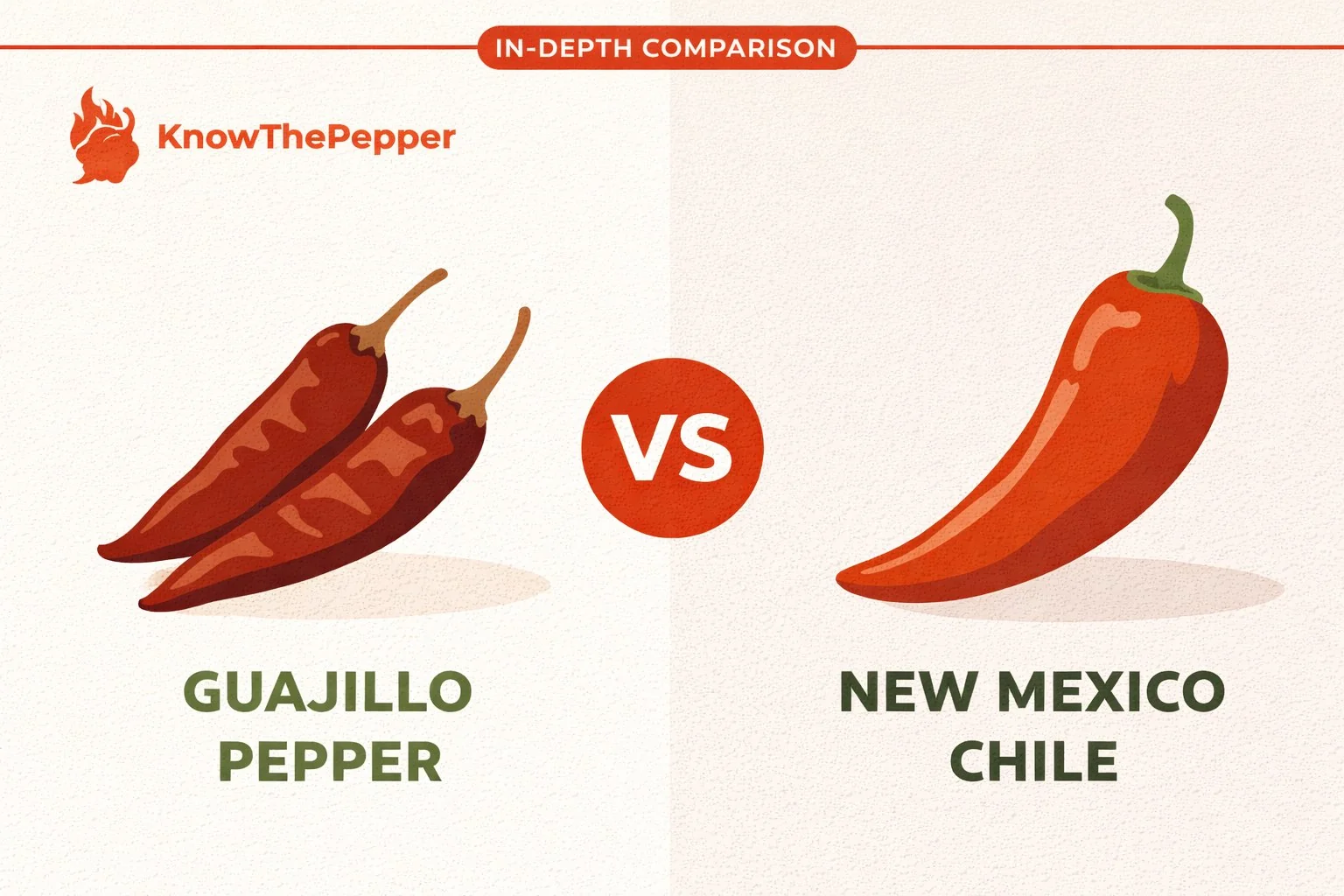
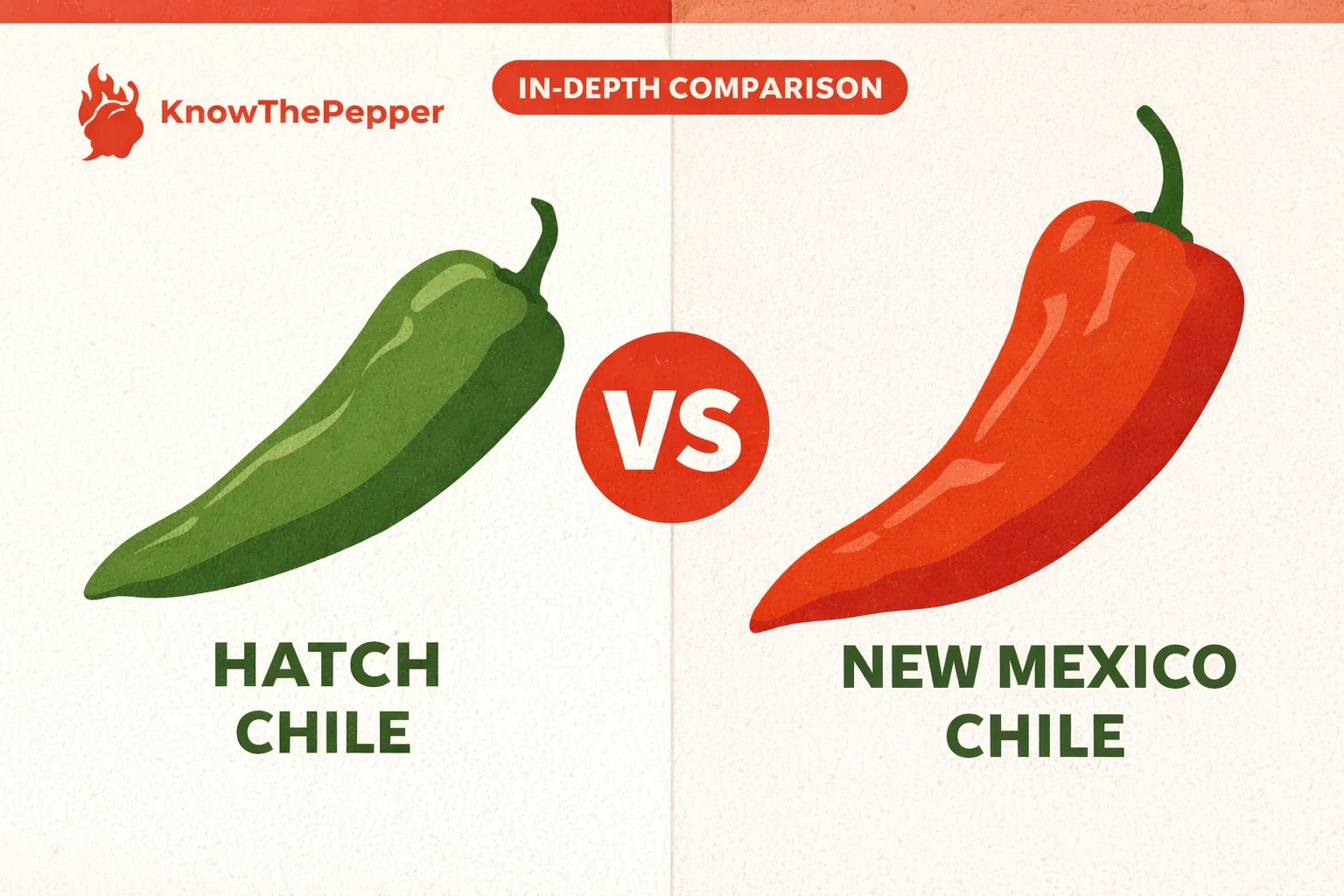
Anaheim vs New Mexico Chile: Green or Red Roaster?

Anaheim pepper is the safer mild green roaster. New Mexico chile is the broader New Mexican pod type: green for roasting, red for sauce, and usually hotter or more variable by cultivar.

Anaheim and New Mexico chile peppers side by side with sliced pods on a cutting board
Quick Comparison

Anaheim Pepper measures 500–3K SHU while New Mexico Chile registers 1K–8K SHU. That makes New Mexico Chile about 3.2x hotter by upper SHU range. Anaheim Pepper is known for its mild, grassy-sweet, lightly earthy when roasted flavor (C. annuum), while New Mexico Chile offers earthy, sweet, roasted, green-to-red notes (C. annuum).

Anaheim Pepper
500–3K SHU
Medium · mild, grassy-sweet, lightly earthy when roasted
New Mexico Chile
1K–8K SHU
Medium · earthy, sweet, roasted, green-to-red
  • Heat difference: New Mexico Chile is about 3.2× hotter by upper SHU range
  • Species: Both are C. annuum
  • Best for: Anaheim Pepper excels in everyday cooking and salsas, New Mexico Chile in fresh salsas and mild recipes

Anaheim Pepper vs New Mexico Chile Comparison

Attribute Anaheim Pepper New Mexico Chile
Scoville (SHU) 500–3K 1K–8K
Heat Tier Medium Medium
vs Jalapeño n/a 1x hotter
Flavor mild, grassy-sweet, lightly earthy when roasted earthy, sweet, roasted, green-to-red
Species C. annuum C. annuum
Origin USA New Mexico, USA

Anaheim Pepper vs New Mexico Chile Heat Levels

Position on the Scoville Scale
Anaheim
New
0 SHU3.2M SHU

New Mexico Chile is about 3.2× hotter than Anaheim Pepper.

Anaheim Pepper spans 500–3K SHU. New Mexico Chile spans 1K–8K SHU, about 1× a jalapeño at the upper end. Use the ranges to decide whether the recipe needs a measured dose, a mild overlap, or a hard substitution limit. Tools: Scoville chart and SHU calculator.

Flavor Profile Comparison

Anaheim Pepper
mild grassy-sweet lightly earthy when roasted C. annuum

Anaheim pepper is a mild green chile built for roasting, peeling, and stuffing. It belongs to the C. annuum species profile and sits around 500-2,500 SHU, which places it in KTP's lower medium heat tier rather than true hot-pepper territory.

That heat range is useful because Anaheim is often eaten by the whole pod. A jalapeno can be several times hotter, while a bell pepper has no capsaicin burn.

New Mexico Chile
earthy sweet roasted C. annuum

New Mexico chile is a New Mexican pod-type chile in the Capsicum annuum species. It is not one fixed cultivar, so a clean answer has to separate the pod type from named varieties such as NuMex Big Jim, Sandia, NuMex Joe E. Parker, and New Mexico 6-4.

For cooking and shopping, treat New Mexico chile as a family of long green-to-red pods that usually land in the medium heat range. KTP lists 1,000-8,000 SHU for the route because the common market category includes mild green-chile cultivars and hotter New Mexican selections.

Both peppers belong to C. annuum, so they share some underlying flavor chemistry. However, Anaheim Pepper’s mild, grassy-sweet, lightly earthy when roasted notes contrast with New Mexico Chile’s earthy, sweet, roasted, green-to-red character.

Anaheim Pepper brings mild, grassy-sweet, lightly earthy when roasted notes, so it fits recipes where that flavor should remain visible. New Mexico Chile leans earthy, sweet, roasted, green-to-red, which can change the sauce, filling, marinade, or garnish even when the heat range looks close.

Anaheim Pepper and New Mexico Chile comparison

Culinary Uses for Anaheim Pepper and New Mexico Chile

Anaheim Pepper

Roasting is the main Anaheim technique. Char the skin under a broiler, over a flame, or on a grill, then steam briefly in a covered bowl and peel once cool enough to handle.

Once roasted, Anaheim works in green chile sauce, eggs, breakfast burritos, enchiladas, quesadillas, soups, casseroles, burgers, tacos, and salsa. It gives chile flavor without the sharp bite of a hotter fresh pepper.

Anaheim is also a practical stuffing pepper. The long pods can hold cheese, rice, beans, chicken, or ground meat, although they are narrower than poblanos.

New Mexico Chile

Green and red New Mexico chiles behave like two different kitchen ingredients. Green pods are picked before full red maturity, roasted until the skin blisters, peeled, and used in stews, eggs, burgers, green chile sauce, and roasted chile salsa.

NMSU H-230 describes New Mexican-type green chile as commonly peeled, then canned or frozen whole or diced. That explains why supermarket frozen green chile can be a legitimate ingredient, not a lesser version of fresh pods.

Red pods are harvested ripe and partly dried before further dehydration. They become whole dried pods, flakes, or powder, and they are the backbone of red chile sauce.

Which Should You Choose?

Best fit

Choose Anaheim Pepper if…

You want milder heat
You prefer mild, grassy-sweet, lightly earthy when roasted flavors
You need a C. annuum variety

Best fit

Choose New Mexico Chile if…

You want maximum heat
You prefer earthy, sweet, roasted, green-to-red flavors
You need a C. annuum variety

Can You Substitute One for the Other?

Start near 1:1 by amount. The heat ranges are close enough that flavor, form, and recipe role matter more than a strict Scoville conversion.

Growing Anaheim Pepper vs New Mexico Chile

Growing notes

Anaheim Pepper

Grow Anaheim as a warm-season C. annuum pepper with enough time for long green pods and optional red ripening. It does not need superhot-level patience, but it still dislikes cold soil and stalled transplants.

Use the pepper seed-starting workflow for trays, heat, light, hardening off, and transplant timing. University of Minnesota Extension recommends starting pepper seed about eight weeks before planting outside and transplanting after cold nights have passed.

Plant in full sun with warm, well-drained soil and consistent moisture. Long green pods can be heavy enough to bend branches, so staking helps if the plant sets a strong crop.

Growing notes

New Mexico Chile

New Mexico chile was bred for hot, dry New Mexico growing conditions, but the crop can grow outside the Southwest when the season is warm enough. The limiting factor is usually time: green harvest arrives earlier than fully red dry-chile maturity.

NMSU H-230 gives a direct-seeding window of March 1 to May 1 for southern New Mexico, then 4-6 weeks later in central and northern New Mexico. It also gives about 120 days to green harvest and about 165 days to the red crop.

Gardeners outside that climate should start seed indoors and transplant only after nights stay warm. A short-season garden may still produce good green chile, but red mature pods may be unreliable unless the grower chooses an early cultivar such as Espanola Improved.

Where They Come From

Origin & background

Anaheim Pepper

USA · C. annuum

Anaheim's name is Californian, but the seed story points back to New Mexico. New Mexico State University notes that New Mexico No.

NMSU Circular 706 adds the important Anaheim detail: Anaheim seed originated in New Mexico and was taken to Anaheim, California, where it developed site-specific traits over time. That is a cleaner claim than treating Anaheim as purely Californian or purely New Mexican.

Origin & background

New Mexico Chile

New Mexico, USA · C. annuum

New Mexico chile has a documented breeding history at New Mexico State University. NMSU Circular 706 says the chile improvement program began with Dr.

That release matters because it helped standardize New Mexico-type chile peppers for farmers and processors. NMSU H-230 describes New Mexico No.

Buying & Storage

Whether you’re shopping for Anaheim Pepper or New Mexico Chile, the same quality indicators apply. Fresh peppers should feel firm and heavy for their size, with taut, glossy skin and no soft or wet spots. Minor stem cracks known as “corking” are perfectly normal and often indicate a mature, flavorful pod.

Selection

What to look for

  • Firm pods with taut skin and consistent color
  • Should feel heavy relative to size
  • Minor stem cracks (“corking”) are normal
  • Avoid anything soft, shriveled, or with dark wet spots

Storage

How to store them

  • Fresh: Paper bag, crisper drawer, 1 to 2 weeks
  • Frozen: Wash, dry, freeze on sheet pan, 6+ months
  • Dried: Airtight and away from light, up to 1 year

Mistakes to avoid

Common misses

Anaheim Pepper

  • Equating green with unripe. Different products.
  • Overcooking. Cell walls break down fast.
  • Sealed plastic storage. Causes rot. Use paper bags.

Common misses

New Mexico Chile

  • Equating green with unripe. Different products.
  • Overcooking. Cell walls break down fast.
  • Sealed plastic storage. Causes rot. Use paper bags.
Final call

Anaheim Pepper vs New Mexico Chile

Anaheim Pepper and New Mexico Chile sit in the same heat tier but serve different roles. New Mexico Chile delivers about 3.2× more upper-range heat with its distinctive earthy, sweet, roasted, green-to-red character. Anaheim Pepper, with its mild, grassy-sweet, lightly earthy when roasted profile, excels in everyday cooking.

Heat gap about 3.2× by upper range Anaheim Pepper mild, grassy-sweet, lightly earthy when roasted New Mexico Chile earthy, sweet, roasted, green-to-red
Additional Anaheim Pepper and New Mexico Chile comparison view

Green Label Or Chile Family

The useful split is label scope. Anaheim names a mild grocery cultivar with California market history, while New Mexico chile names a family of New Mexican pod types used for green roasting and red chile sauce.

That means the shopping question is not "which pepper is better." It is whether the recipe expects a mild, predictable green pod or a New Mexican chile with cultivar variation behind the label.

NMSU material places Anaheim seed back in New Mexico before the California market name took hold. That shared origin explains why the pods look related, but it does not make every bag behave the same.

If a recipe says canned diced green chiles, roasted strips, or a mild breakfast burrito filling, Anaheim's mild roasting role usually works. If it says red chile sauce, ristras, Sandia, NuMex, or a specific New Mexico cultivar, New Mexico chile's red-pod lane owns the dish.

Red Pod Changes The Answer

Red form changes the answer. Anaheim is usually bought green, roasted, peeled, and used fresh, canned, or frozen.

New Mexico chile keeps a second life after ripening. Mature red pods dry into whole chiles, flakes, powder, and sauce bases, so they can season food long after fresh roasting season ends.

That matters in enchilada sauce. A mild Anaheim can give roasted green flavor, but it cannot replace the earthy dried-red body that a New Mexico chile pod brings to a blender.

Heat Range Is A Warning Label

The numbers make New Mexico chile less predictable: Anaheim sits around 500 to 2,500 SHU, while New Mexico chile commonly spans 1,000 to 8,000 SHU. Both sit in the medium pepper range on KTP, but the top end is not the same.

Treat the New Mexico number as a cultivar warning, not a fixed burn promise. NuMex, Sandia, Big Jim, and local sacks can land differently, especially when a market labels heat level as mild, medium, or hot.

Dish Role Decides The Swap

For stuffed pods, Anaheim is easier. Long, mild, smooth-walled pods roast and peel cleanly, and the heat stays low enough for cheese, eggs, rice, or chicken fillings.

For green chile stew, either can work after roasting, but New Mexico chile gives more regional accuracy and often a deeper roasted finish. If the stew leans on chile as the main flavor, use the New Mexico option.

For red sauce, do not make a straight fresh Anaheim swap. Use dried New Mexico pods, or move to a different dried chile comparison such as guajillo vs New Mexico chile when color, fruit, and earthiness matter more than fresh pod shape.

For a mild pan of roasted strips, Anaheim is the better control pepper. For a chile-forward sauce or stew, New Mexico chile gives the cook more range.

Buying And Storage Rule

Buy Anaheim when you need mild heat today and want the pod to behave like a grocery chile. Buy New Mexico chile when the label names green, red, Hatch-family, Sandia, NuMex, or a roasting sack.

Best practice: roast and freeze extra green pods flat in recipe portions. For dried red New Mexico chile, buy pliable pods with clean color and store them airtight in the dark.

Fact-Checked & Expert Reviewed
Editorial Standards: Head-to-head comparisons include blind tasting when applicable. Heat levels cross-referenced with multiple sources. All substitution ratios tested side-by-side.
Review Process: Written by James Thompson (Lead Comparison Reviewer) , reviewed by Karen Liu (Lead Fact-Checker & Science Editor) . Last updated June 29, 2026.

Anaheim Pepper vs New Mexico Chile FAQ
No. Anaheim came from New Mexican-type seed history, but Anaheim is the milder grocery cultivar name. New Mexico chile is a broader family of pod types used green for roasting and red for sauce.

New Mexico chile is usually hotter and more variable. Anaheim is about 500 to 2,500 SHU, while New Mexico chile commonly runs about 1,000 to 8,000 SHU depending on cultivar and label.

Not cleanly. Fresh Anaheim can replace green roasted chile in mild dishes, but red chile sauce needs dried red New Mexico pods or another dried chile with body.

Buy Anaheim for mild stuffed peppers. The long pods roast well, peel cleanly, and keep heat low. New Mexico chile is better when the filling needs a stronger roasted chile flavor.

Hatch chile is a place-linked New Mexico chile from the Hatch Valley area. It is not a separate species, and it sits inside the larger New Mexico chile category.

Sources & References
KL
Fact-checked by Karen Liu
Research Contributor
SHU Verified
Sources Cited
Expert Reviewed
All Comparisons Browse Peppers Scoville Scale