Anaheim vs NuMex Big Jim: Everyday Roaster or Giant New Mexico Chile?
Choose NuMex Big Jim for large rellenos, wide roasted strips, and freezer batches. Choose Anaheim for easier shopping, smaller portions, and flexible everyday cooking.

Anaheim Pepper
MediumNuMex Big Jim
MediumQuick Comparison
| Attribute | Anaheim Pepper | NuMex Big Jim |
|---|---|---|
| Scoville evidence | 500-2.5K SHU | 500-3K SHU |
| Heat Tier | Medium | Medium |
| vs Jalapeño | n/a | n/a |
| Flavor | mild, grassy-sweet, lightly earthy when roasted | mild and sweet |
| Species | C. annuum | C. annuum |
| Origin | USA | USA |
Is NuMex Big Jim Hotter Than Anaheim?
Choose by pod size and kitchen job before choosing by heat. KTP's canonical ranges put Anaheim at 500 to 2,500 SHU and NuMex Big Jim at 500 to 3,000 SHU, so most pods occupy the same mild-to-medium neighborhood.
New Mexico State University reports a narrower 500 to 2,000 SHU average range for Big Jim and warns that its heat can vary from plant to plant. One pod can taste mild while another from a different plant carries a clearer burn.
Anaheim varies too because genetics, weather, growing conditions, and fruit age affect capsaicinoid production. A single number on a produce sign cannot guarantee the heat of the pepper in your hand.
For a low-heat meal, remove the pale placenta and taste a cooked piece before seasoning the whole dish. That check matters more than a pod-for-pod formula when the published ranges overlap.
Are Anaheim and NuMex Big Jim the Same Pepper?
Anaheim and Big Jim are close relatives, but the names do not describe the same cultivar. NMSU identifies both as cultivars within the New Mexican pod type, whose breeding history begins with New Mexico No. 9.
Anaheim seed originated in New Mexico and later traveled to Anaheim, California, where growers maintained it as a widely cultivated long green chile. The name now appears in supermarkets far beyond California.
Dr. Roy Nakayama released NuMex Big Jim through NMSU in 1975. The university measured mature green fruit at an average 7.68 inches long and 1.89 inches wide, with thick, smooth flesh and a moderately flattened body.
That named release matters when you buy seed. The labels long green, Anaheim, Hatch, and Big Jim describe a market type, a cultivar, a growing region, and a specific NMSU cultivar respectively.
How Do Anaheim and Big Jim Taste Different?
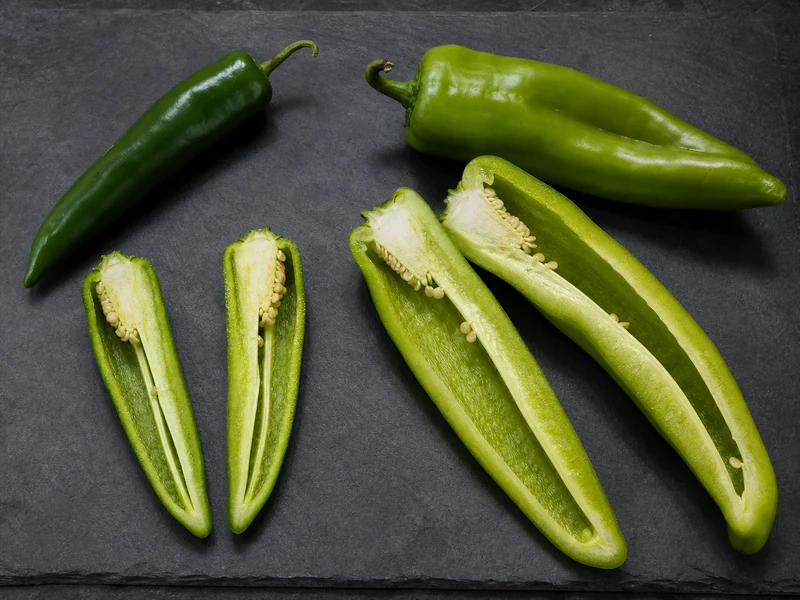
Both peppers begin with a green, vegetal flavor and become sweeter and more rounded after roasting. Anaheim usually gives a clean, mild background, while Big Jim supplies more flesh and a fuller roasted-chile presence in each pod.
A fresh Anaheim is often narrower and easier to cut into modest strips or dice. Its lighter footprint works in eggs, soups, casseroles, and sauces where chile should support the other ingredients.
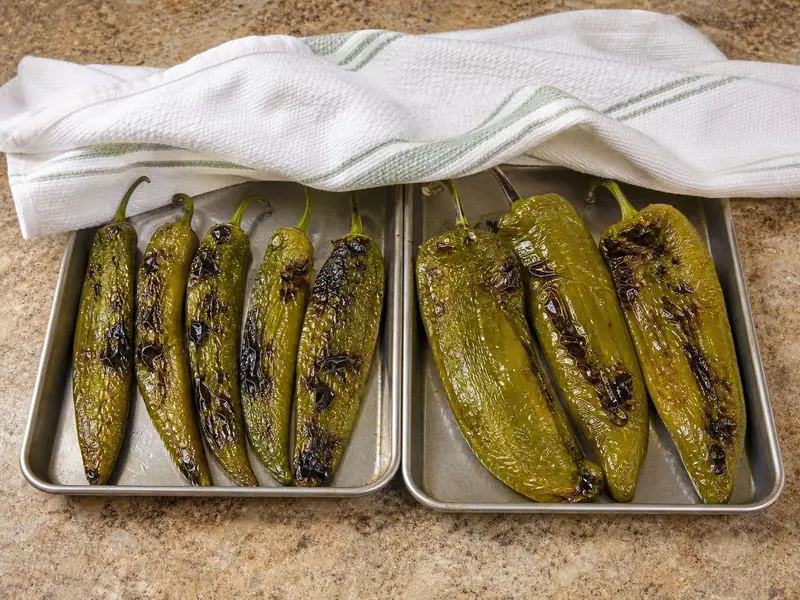
Big Jim's broad, fleshy wall makes a larger roasted sheet. Charring adds smoky bitterness at the surface, steaming loosens the skin, and peeling exposes soft flesh that can be chopped or laid flat around a filling.
Ripening either cultivar to red increases sweetness and opens drying uses. Green pods remain the practical choice for this comparison because produce markets and seasonal roasters commonly sell them at the mature-green stage.
Which Is Better for a Big Roasting Batch?
Pick Big Jim for a freezer batch or a tray of roasted green chile. Fewer large pods cover the grate, and each peeled pod returns broader pieces, so stemming and peeling take less work per cup of usable flesh.
Anaheim is more convenient when dinner needs only one or two peppers. The smaller pod is easier to fit into a compact broiler pan, and leftover roasted flesh is less likely.
Use the same roasting technique for either cultivar: blister every side over a grill, flame, or broiler, then cover the hot peppers for 5 to 10 minutes. UC Agriculture and Natural Resources recommends this resting step because trapped steam helps release the skin.
Do not rinse peeled peppers under the tap. Water carries away roasted juices and flavor.
Wipe away stubborn char with a damp towel instead.
How Do You Cook With Anaheim and Big Jim?
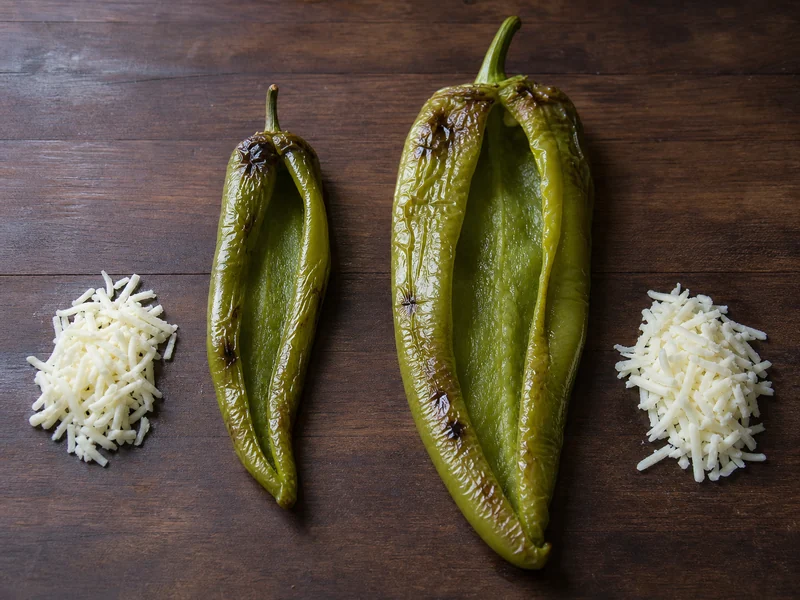
Big Jim has the physical advantage in chile rellenos. NMSU calls the cultivar a favorite for the dish because its large pod creates a generous cavity, while the broad shoulder gives cheese, meat, beans, or grain more room.
Choose straight, intact fruit for stuffing. A torn shoulder leaks filling during frying or baking, and a sharply curled pod is harder to seed without splitting.
Anaheim handles everyday chopped applications with less leftover pepper. Roast it for enchilada sauce, fold diced flesh into scrambled eggs, or add strips to burgers and breakfast burritos.
Big Jim also works in those dishes, but measure the prepared flesh by cups or grams. One large pod can replace several small Anaheims, so equal pod counts distort both volume and moisture.
Batch Yield Matrix
Use prepared volume for sauces and cavity size for stuffed peppers. The matrix below turns those two rules into a starting decision without pretending that every harvest produces identical pods.
| Kitchen job | Better first choice | Reason |
|---|---|---|
| One breakfast or small soup | Anaheim | A smaller pod limits leftovers |
| Freezer-size roasted batch | NuMex Big Jim | More flesh per pod reduces handling |
| Whole chile relleno | NuMex Big Jim | Broad walls provide a larger stuffing cavity |
| Recipe measured in chopped cups | Either | Prepared volume removes the pod-size mismatch |
Treat the table as a shopping guide, then inspect the actual bin. A large Anaheim can outperform a small Big Jim, and damaged walls erase the stuffing advantage.
Where Can You Buy True NuMex Big Jim?
Buy Anaheim when availability matters most. Mainstream produce departments commonly use that label, while true Big Jim is more likely to appear through New Mexico growers, seasonal roasting stands, farmers markets, and specialist seed sellers.
Look for a cultivar name on seed packets and plant tags; Hatch chile means the crop came from the Hatch Valley. It does not prove that the seed is Big Jim.
Fresh pods should feel firm, heavy, and taut. Soft patches lower usable yield, and split shoulders make stuffing difficult even when the fruit is impressively long.
For roasting, choose fairly flat sides that can contact the heat evenly. For rellenos, prioritize an intact shoulder and a cavity wide enough for the planned filling instead of chasing the longest pod in the box.
Which Should You Choose, Anaheim or Big Jim?
Choose NuMex Big Jim when the pepper itself is the structure of the dish: whole rellenos, wide roasted strips, or a large batch for the freezer. Its documented average dimensions and thick flesh make the extra size useful rather than decorative.
Choose Anaheim for easier shopping and smaller everyday portions; It delivers the same broad style of mild roasted green-chile flavor without requiring a specialty grower or leaving a large amount of prepared pepper.
Either cultivar can replace the other in chopped sauces, soups, eggs, and casseroles when you measure the roasted flesh by volume. Expect Big Jim to need fewer pods.
For whole stuffing, wait for the correct shape instead of forcing the swap. Several narrow Anaheims produce several smaller portions.
They do not create one Big Jim-size cavity.
Substitution
Review the choices for when Anaheim is unavailable. Swap Anaheim and NuMex Big Jim at 1:1 by prepared volume or weight in chopped cooked dishes.
Do not swap them at 1:1 by pod count. Big Jim's average fruit is large enough that one pod can contribute far more usable flesh than a small Anaheim.
For rellenos, match the number of servings first. Use one intact pepper per diner and accept that Anaheim makes a smaller portion.
For freezer batches, buy by raw weight, then record the cooked yield after roasting and peeling. That note gives your next batch a better estimate than a generic pepper count.