
Aji Amarillo vs Aji Panca: A Hot Fruity Paste and a Mild Smoky One
Aji Amarillo and Aji Panca are both Peruvian staples from the same botanical family, but they sit at opposite ends of the flavor and heat spectrum, with Amarillo bringing 30,000-50,000 SHU of bright, fruity fire. Aji Panca is listed at 1,500-8,400 SHU with deep smoky sweetness, so choose Amarillo for heat and brightness or Panca for mild depth.

Aji Amarillo
HotAji Panca
MediumQuick Comparison
| Attribute | Aji Amarillo | Aji Panca |
|---|---|---|
| Scoville evidence | 30K-50K SHU | 1.5K-8.4K SHU |
| Heat Tier | Hot | Medium |
| vs Jalapeño | 6x hotter | 1x hotter |
| Flavor | fruity, tropical, slightly raisin-like | smoky, berry-like, mildly sweet |
| Species | C. baccatum | C. chinense |
| Origin | Peru | Peru |
Is Aji Amarillo Hotter Than Aji Panca?
The gap here is substantial. Aji Amarillo lands in the hot-tier SHU range at 30,000-50,000 SHU, putting it firmly above a Fresno chili, which typically tops out around 10,000 SHU.
That makes Amarillo roughly 3-5x hotter than a Fresno, with noticeable heat that builds and lingers.
Aji Panca, by contrast, is listed at 1,500-8,400 SHU. That runs from poblano-level warmth up to about a jalapeño, far below Amarillo.
Against a Fresno's 2,500-10,000 SHU, Panca runs a little milder, and most of its heat reads as gentle warmth.
Both belong to the Capsicum baccatum species group, a species known for producing fruity, berry-forward heat rather than the sharp, immediate burn you get from Capsicum annuum varieties. The capsaicin in baccatum peppers tends to hit mid-palate and fade more cleanly than the throat-catching heat of habaneros or chinense types.
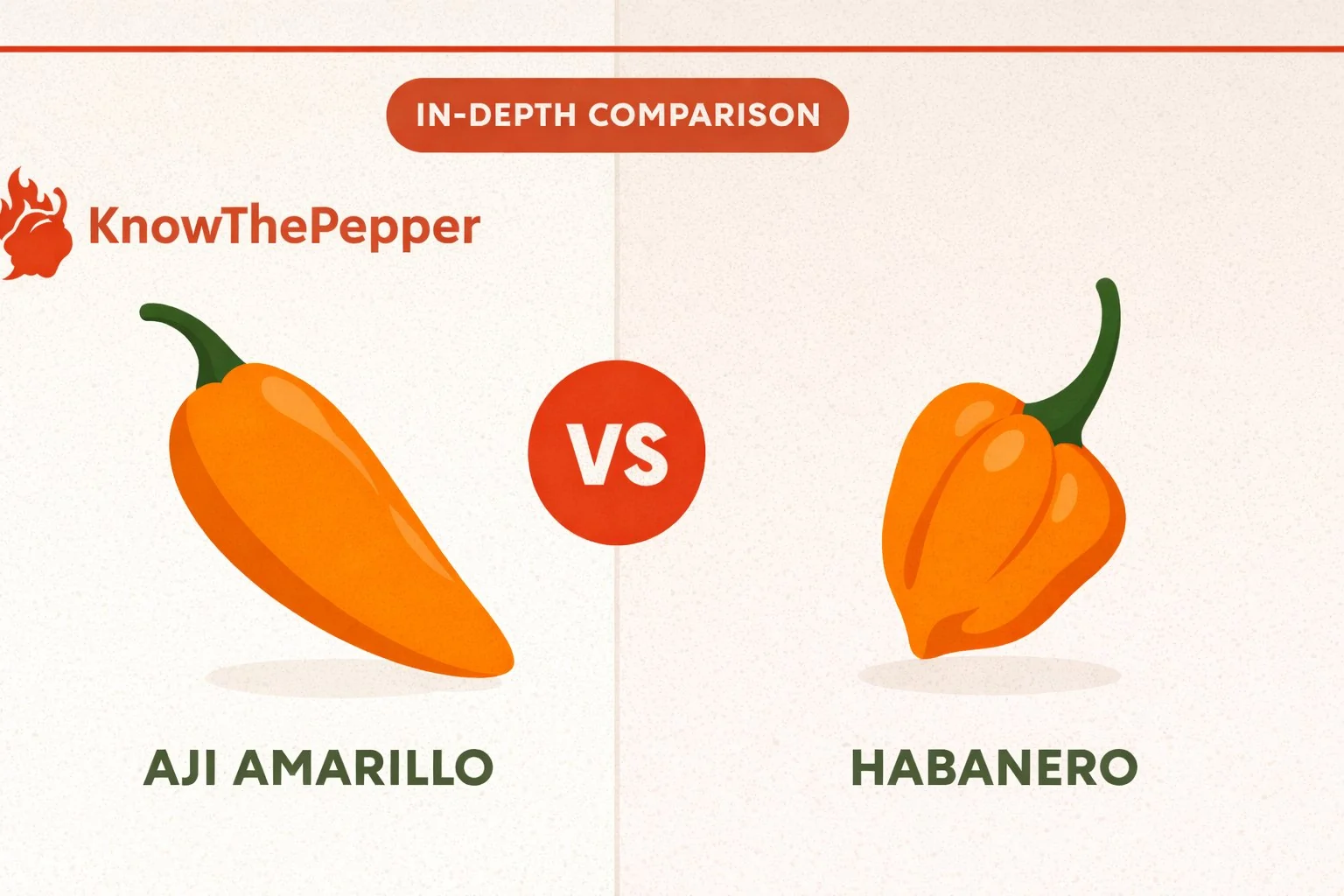
For context on how these two compare to an actual heavy hitter, check out Aji Amarillo's SHU matchup against habanero-level heat, where the difference is dramatic.
Amarillo holds its own as a genuinely hot pepper, while Panca is seasoning rather than a heat source. If your recipe calls for Panca but you want more fire, you're changing the entire character of the dish rather than making a small adjustment.
What Do Aji Amarillo and Aji Panca Taste Like?
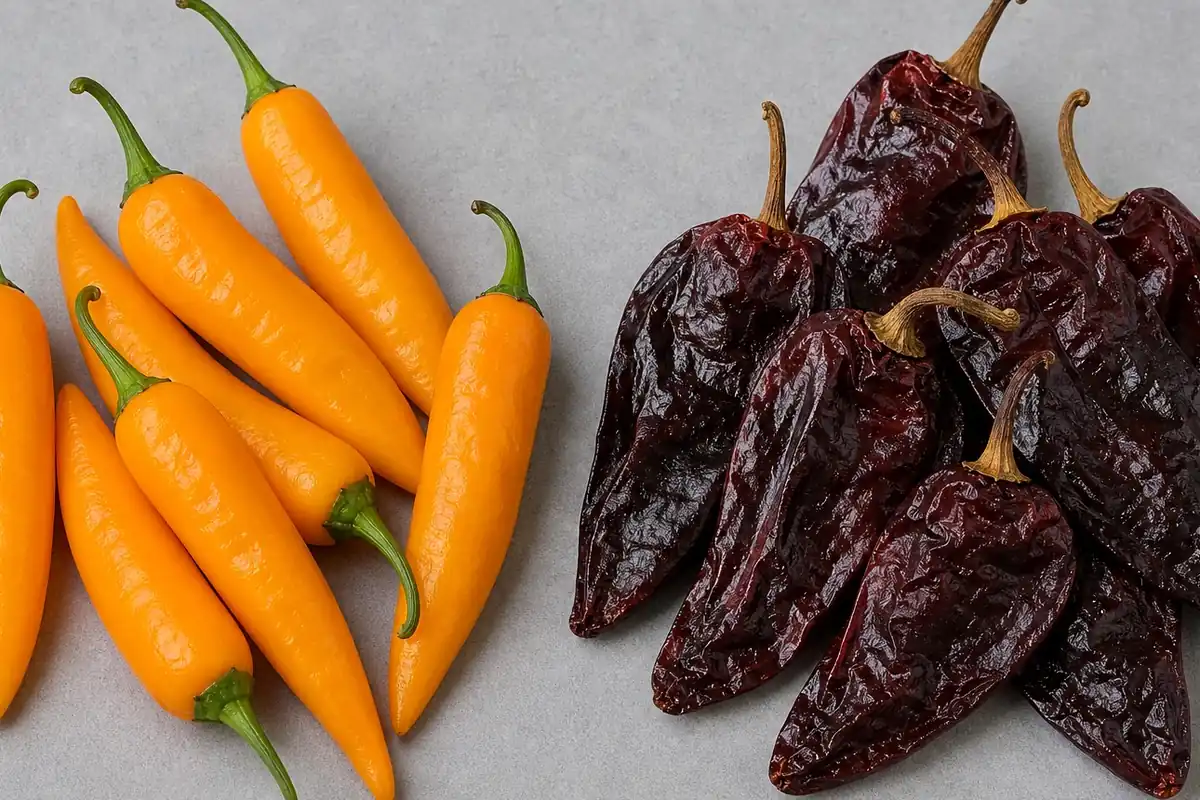
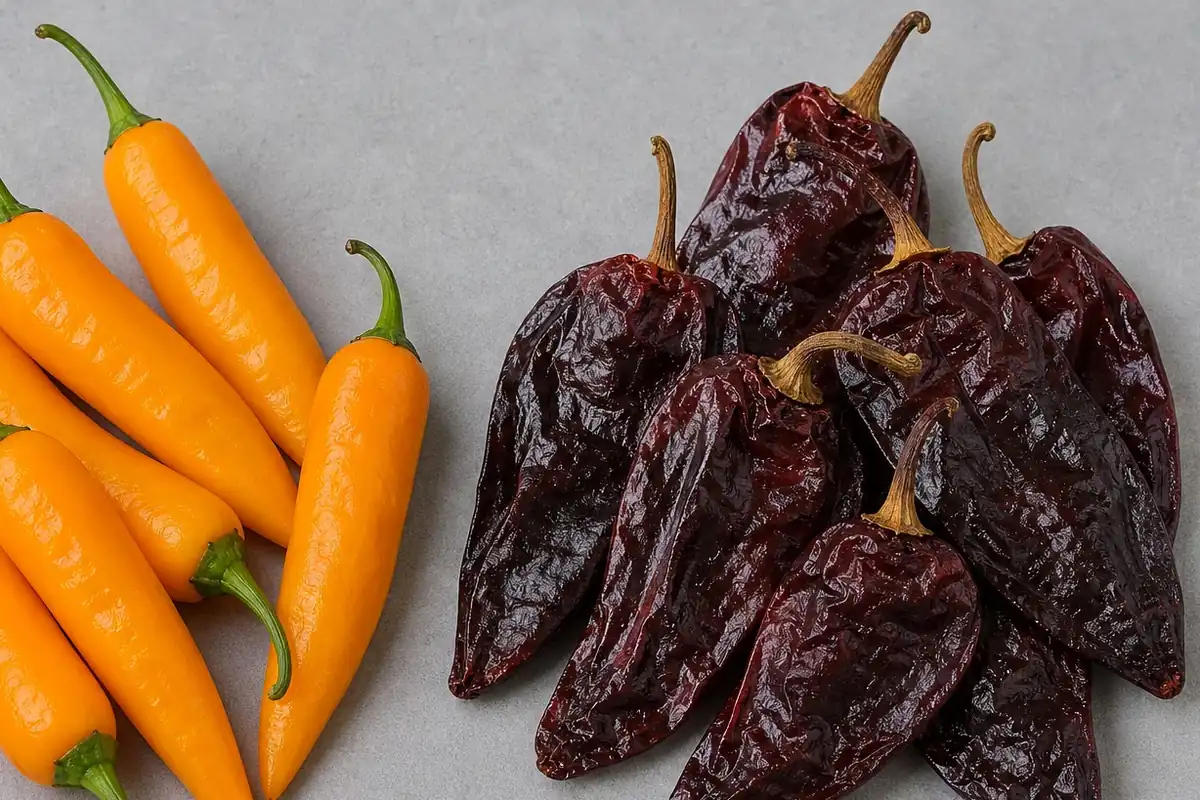
Flavor is where this comparison gets genuinely interesting. Aji Amarillo tastes like tropical fruit and heat got into a productive argument, with mango, passion fruit, and a hint of raisin all showing up before the burn takes over.
It's bright and forward, with an almost citrusy lift that makes it distinctive in fresh preparations.
Aji Panca goes in a completely different direction. Dried and slightly fermented before processing, it develops a deep, smoky sweetness with dried cherry, cocoa, and a faint earthiness that reads more like a spice than a chili.
There's fruit in there, but it is dark fruit such as plum, raisin, and dried blackberry.
Aroma tells the story clearly. Crack open a jar of Aji Amarillo paste and the room smells alive, fruity, and sharp.
Aji Panca paste smells like something slow-cooked, almost chocolatey.
These two don't substitute for each other in any meaningful way. Swapping Panca for Amarillo in a ceviche would dull the brightness completely.
Using Amarillo in a slow braise meant for Panca would overwhelm the other flavors with heat and acidity.
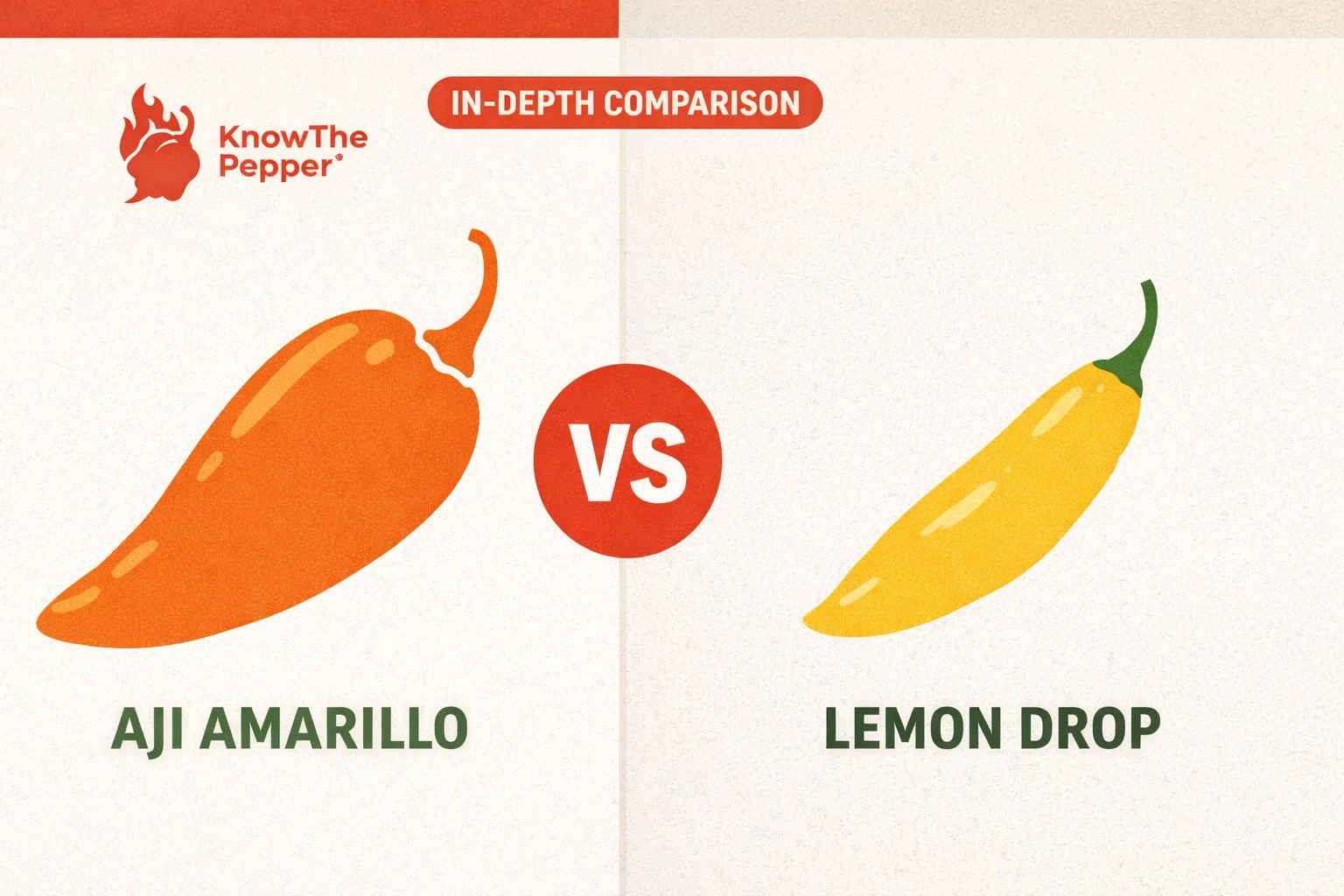
For a comparison that highlights how Amarillo's fruit notes play against a similarly bright pepper, the flavor contrast between Aji Amarillo and lemon drop pepper is worth reading because both are baccatum and fruity, but the citrus angle diverges sharply. Panca occupies a flavor space closer to ancho or mulato than to any fresh chili.
Verdict
Pick Aji Amarillo when heat and brightness are the point. It's the right call for ceviches, fresh sauces, and any dish where you want the pepper to announce itself as fruity, hot, and unmistakable.
Its 30,000-50,000 SHU range is real heat, not background warmth.
Pick Aji Panca when you're building depth. It's a seasoning pepper rather than a heat source, which makes it ideal for braises, marinades, and slow-cooked applications where that smoky, dried-fruit character can develop fully.
At 1,500-8,400 SHU, it adds complexity without the fire of Amarillo.
The Capsicum baccatum species produces some of the most distinctive flavor profiles in the pepper world, and these two represent its range beautifully. For cooks building a serious pantry, keeping both on hand makes sense because they complement rather than overlap.
Use Amarillo for the bright dishes and Panca for the dark ones.
Cooking Uses
Aji de Gallina, Peru's iconic creamy chicken stew, is the definitive showcase for Aji Amarillo. The pepper's fruity heat cuts through the richness of bread, walnuts, and evaporated milk in a way no other chili replicates.
Beyond that, Amarillo paste goes into ceviche marinades, causa, and sauces where you want color and heat simultaneously.
The paste form, widely available in Latin grocery stores, is the practical choice for most home cooks, with 1-2 tablespoons as a starting point in any recipe calling for moderate heat with fruit character.
Aji Panca belongs to the slow-cooked world. It's the base for adobo-style marinades, braised meats, and stews where you're building background complexity rather than front-of-palate heat.
Peruvian anticuchos, or grilled beef heart skewers, traditionally rely on Panca paste for their characteristic deep, smoky marinade. Use 2-3 tablespoons in marinades since the low heat means you can be generous without scorching the dish.
For substitution, if Amarillo isn't available, a mix of a small amount of habanero and fresh mango or a splash of orange juice can approximate the fruity heat, though nothing truly replicates it.
Panca is harder to fake. Ancho paste with a drop of smoked paprika gets you in the neighborhood.
Both peppers are central to Peruvian pepper traditions and show up across the full range of that cuisine.
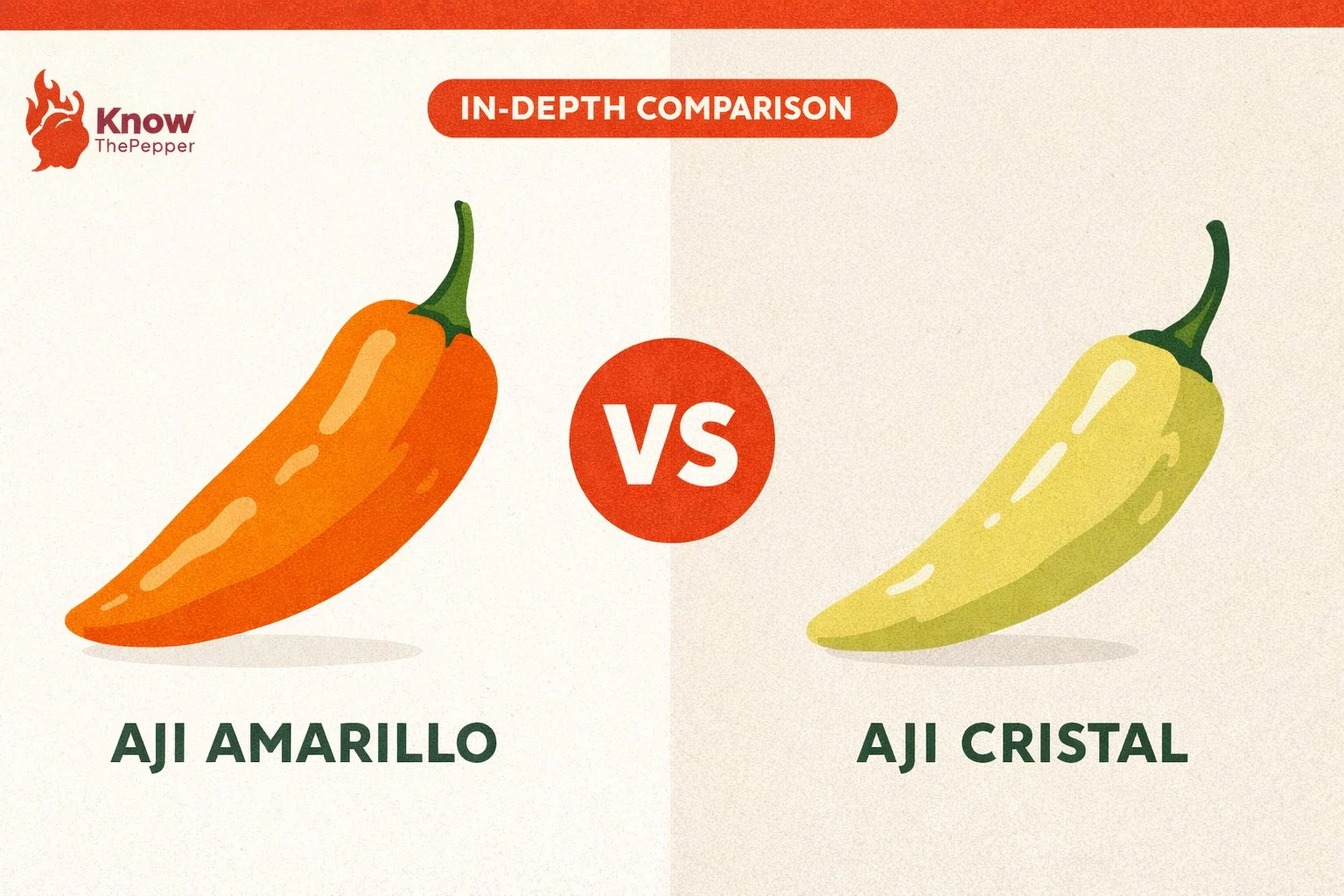
The Aji Amarillo vs Aji Cristal matchup is useful reading if you're building a Peruvian pantry and want to understand where each variety fits in the cooking hierarchy. Neither pepper works well as a fresh garnish because both are at their best cooked down into pastes or incorporated into sauces.
Which Dishes Call for Aji Amarillo or Aji Panca?
Choose aji amarillo when the dish needs bright yellow-orange heat, fruit, and lift. It is the better pepper for causa, huancaina-style sauces, chicken stews, ceviche-adjacent sauces, and Peruvian pastes where color and fresh-tasting heat matter.
Choose aji panca when the dish needs dark red depth, mild heat, and a smoky raisin-like base. It is better for anticucho marinade, braises, bean dishes, and sauces where the pepper should add body without pushing heat too high.
The comparison is less about which is hotter and more about color and mood.
Aji amarillo brightens, while Aji panca deepens. If the sauce should look golden and taste lively, choose amarillo.
If it should look red-brown and taste rounder, choose panca.
Can You Substitute Aji Amarillo for Aji Panca?
Use 1 tablespoon aji amarillo paste for 1 tablespoon aji panca paste only when color is not important, then add a tiny pinch of smoked paprika or mild chile powder to recover depth. The sauce will be hotter and brighter than intended.
Going the other direction, use 1 tablespoon aji panca plus a small pinch of cayenne and a little yellow pepper or carrot puree for 1 tablespoon aji amarillo.
That is a workaround rather than a clean match. It darkens the sauce and lowers the fresh fruit note.
For Peruvian dishes, keep both pastes if you cook them often. They are related pantry staples, but they solve opposite problems because amarillo supplies lift and heat while panca supplies depth and color.
How Does Each Paste Change a Sauce or Marinade?
In paste tests, aji amarillo changed color immediately and made sauces taste brighter. It brought heat, yellow-orange color, and a fresh fruit impression even from paste.
Aji panca made the same base darker, softer, and more savory.
In marinades, panca behaved more like a backbone ingredient. It gave meat and beans a deeper red-brown color without pushing heat too far.
Amarillo stood out more, which is good in creamy sauces but less subtle in long-cooked dishes.
The two pastes also age differently in the refrigerator. Amarillo loses brightness first.
Panca loses aroma more slowly but can taste flat if it dries out.
Keep both sealed tightly and taste before measuring into a sauce.
Serving Guidance
Serve aji amarillo in sauces where color should stay gold or orange, such as huancaina-style sauces, chicken stews, potato dishes, and bright dipping sauces. It should feel lively and warm.
Serve aji panca where the dish needs depth, including anticucho-style marinades, beans, braises, and dark red sauces. It should support the dish rather than draw attention to itself.
If a recipe names one paste, use that one when possible.
The substitute tricks work in a pinch, but Peruvian dishes often use amarillo and panca as separate building blocks rather than interchangeable heat sources.
How Do You Buy, Prep, and Store Aji Amarillo and Panca?
Buying form is central because many cooks outside Peru encounter both peppers as paste. Aji amarillo paste is often brighter and hotter, while aji panca paste is darker and milder.
Whole dried panca is more common than whole dried amarillo in many import sections.
For prep, bloom either paste in oil before adding liquid. Amarillo releases color and aroma fast.
Panca benefits from a slower cook because its deeper dried-fruit notes need time to spread through fat and onions.
For storage, keep opened paste cold and covered with a thin film of oil if the jar allows it. Amarillo turns dull when exposed to air.
Panca can darken further and taste flat if it dries around the rim.
The cleanest decision is color-led, with amarillo for gold and lift and panca for red-brown depth. Heat is secondary.
Substitution
Start near 1:1 by amount because the heat ranges are close enough that flavor, form, and recipe role matter more than a strict Scoville conversion.
Aji Amarillo vs Aji Panca FAQ
- USDA Agricultural Research Service — Capsicum baccatum