
Aji Amarillo vs Aji Cristal: Equal Heat, Raisin-Like Depth or Tangy Bite
Aji Amarillo and Aji Cristal are two Capsicum baccatum peppers from South America that share an identical heat range of 30,000-50,000 SHU, yet they taste surprisingly different in the kitchen. The Amarillo leans toward deep, raisin-like fruit, while the Cristal delivers a brighter, tangier bite. Choosing between them comes down to flavor direction, not heat tolerance.

Aji Amarillo
HotAji Cristal
HotQuick Comparison
| Attribute | Aji Amarillo | Aji Cristal |
|---|---|---|
| Scoville evidence | 30K-50K SHU | 30K-50K SHU |
| Heat Tier | Hot | Hot |
| vs Jalapeño | 6x hotter | 6x hotter |
| Flavor | fruity, tropical, slightly raisin-like | fruity and tangy |
| Species | C. baccatum | C. baccatum |
| Origin | Peru | Chile |
Is Aji Amarillo Hotter Than Aji Cristal?
Both peppers land squarely in the hot pepper classification band at 30,000-50,000 SHU, which puts them roughly 6-10 times hotter than an Anaheim pepper (typically 500-2,500 SHU). That gap is significant, an Anaheim barely registers for most people, while these two aji varieties produce a sustained, full-mouth burn that demands attention.
The Scoville scale, which you can compare through the Scoville unit measurement method, places both peppers in the same bracket as cayenne at its lower end and approaching the base of habanero territory at the top.
Neither pepper is a one-trick heat bomb, the burn builds gradually rather than hitting instantly, a trait common across the Capsicum baccatum botanical family.
What separates them heat-wise is texture of delivery, not intensity. Aji Amarillo tends to concentrate heat at the back of the palate and throat, giving a lingering warmth.
Aji Cristal often registers more upfront, with a sharper initial spike that fades faster. Both clock the same SHU numbers, but the subjective experience differs enough that cooks notice.
The capsaicin binding process, specifically the TRPV1 heat-trigger response - is identical in both, but the pepper's sugar and acid content shapes how quickly that signal arrives.
For context, this heat level sits comfortably above serrano territory but well below habanero. Anyone comfortable with cayenne-spiced food will handle either pepper without trouble.
How Do Aji Amarillo and Aji Cristal Taste Different?
This is where the two peppers genuinely diverge. Aji Amarillo, the backbone of Peruvian pepper-based cooking traditions, carries a distinctive raisin-like depth, dried fruit sweetness layered beneath the heat, with subtle floral notes and a richness that holds up through long cooking.
It's why Peruvian cooks have used it in stews and sauces for centuries because the flavor deepens rather than disappears when simmered.
Aji Cristal, a variety rooted in South American pepper-growing regions, goes a different direction entirely. The flavor profile is tangy and bright, closer to citrus peel than dried fruit, with a clean acidity that cuts through fat.
Fresh Aji Cristal has an almost effervescent quality, which is why it works particularly well in ceviches, fresh salsas, and vinegar-based preparations where that acidity is an asset rather than a distraction.
Aroma differences are equally noticeable. Aji Amarillo smells tropical and slightly musky when sliced; Aji Cristal has a sharper, more herbaceous scent.
Side by side, they can seem like unrelated peppers despite the identical heat numbers.
Both share the fruity backbone typical of Capsicum baccatum varieties, a characteristic that separates this species from the earthier Capsicum annuum or the intensely floral Capsicum chinense. But within that shared framework, Amarillo reads as warm and complex while Cristal reads as cool and electric.
Neither is a substitute for the other when flavor is the priority.
What Dishes Use Aji Amarillo and Aji Cristal?
Aji Amarillo has one of the most defined cooking identities of any South American pepper. It's the foundation of aji de gallina (Peruvian creamed chicken), causa (layered potato dish), and countless Nikkei-Peruvian fusion preparations.
Paste form, made by roasting, peeling, and blending, is the standard delivery method. A tablespoon of aji amarillo paste carries the flavor of roughly 2-3 fresh peppers and is the format most commonly found outside Peru.
For substitution, the aji amarillo substitute ratio covers the full range of options, but Aji Cristal is actually one of the closer swaps when you need the same heat level with a slightly different flavor direction. Use a 1:1 ratio by volume when substituting fresh, though expect a tangier, less sweet result.
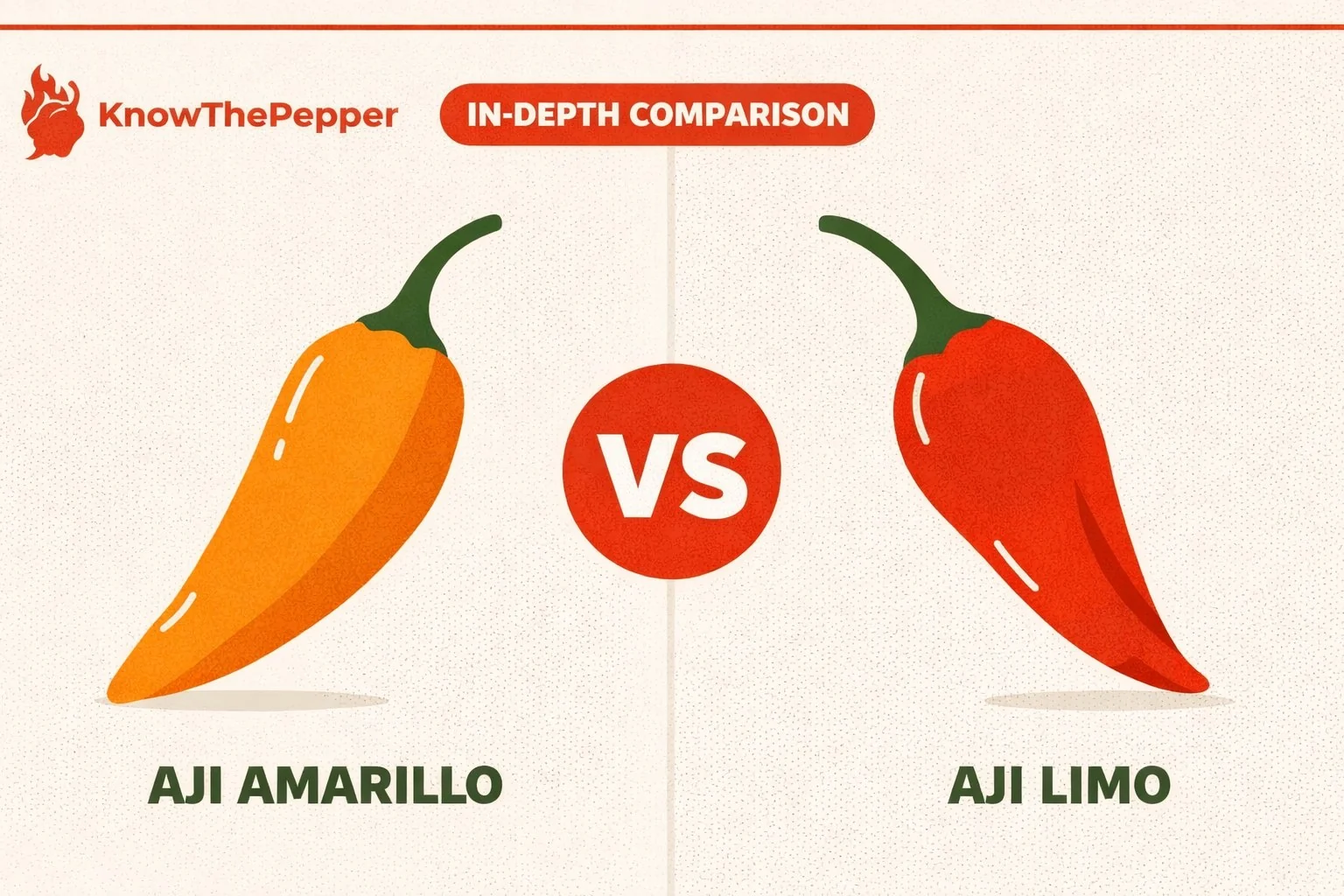
For a side-by-side heat and flavor breakdown with Aji Limo - another bright, citrusy baccatum, the flavor gap between Amarillo and Cristal becomes even clearer by comparison.
Aji Cristal shines in applications where acidity matters. Fresh salsas, escabeche, and citrus-marinated fish dishes benefit from its tangy punch.
It's also excellent pickled because the natural acidity of the pepper amplifies the brine rather than fighting it. Roasting softens the tang considerably and brings out a sweeter side, making it more Amarillo-adjacent when cooked.
Both peppers dry well, though Amarillo loses less of its character in the drying process. Dried Cristal becomes more raisin-like itself, ironically converging toward Amarillo's profile.
Fresh applications are where the difference matters most.
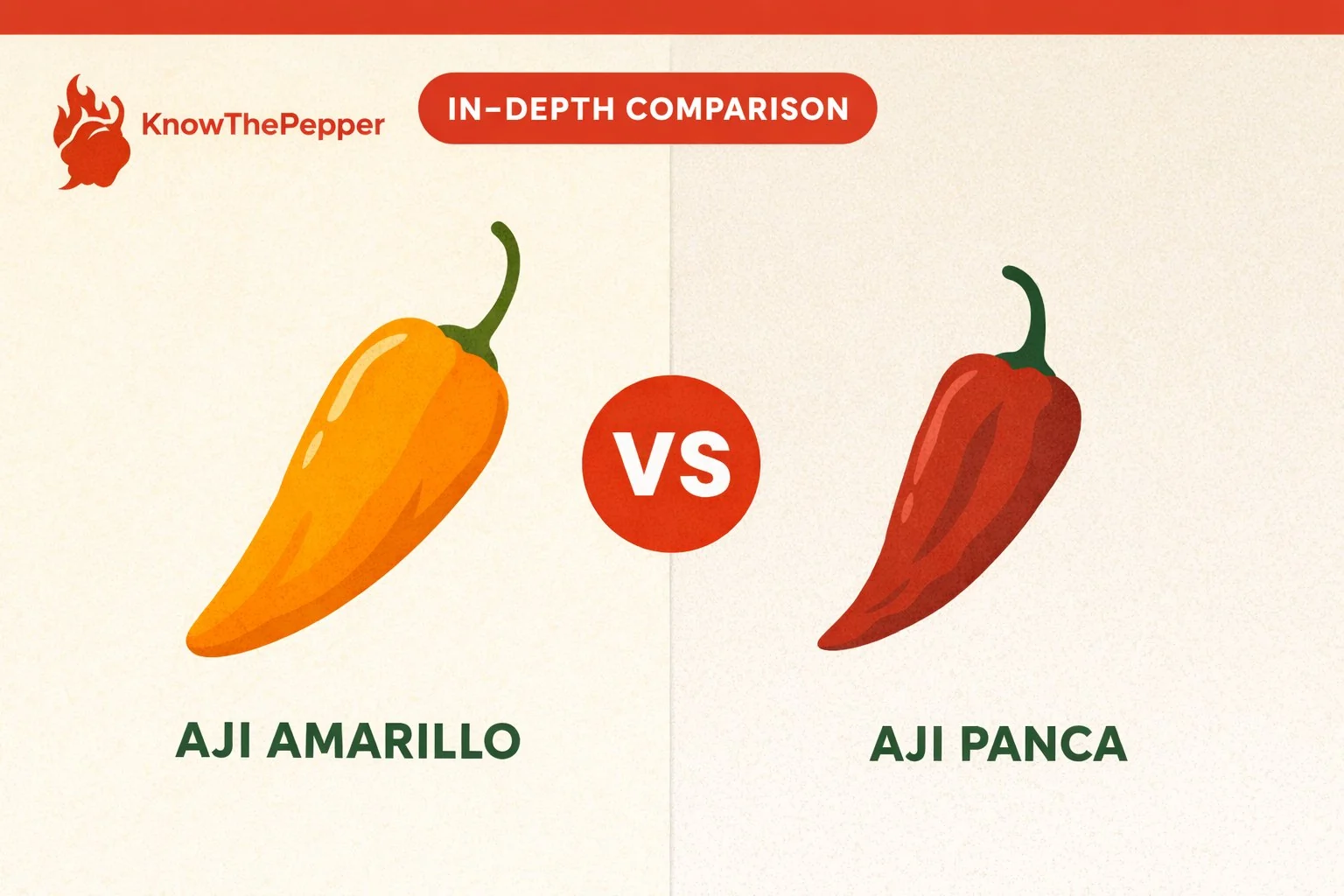
For a deeper contrast between Amarillo's fruity heat and Aji Panca's smoky depth, the flavor difference within the baccatum family becomes even more apparent, Cristal sits between those two poles, brighter than Panca but less sweet than Amarillo.
Build a sauce
Aji Amarillo supplies yellow-orange color, fruit and paste-friendly body.
Keep a fresh bite
Aji Cristal suits slicing, quick pickling and bright acidic dishes.
Verdict
If you're cooking traditional Peruvian dishes - aji de gallina, causa, lomo saltado - Aji Amarillo is non-negotiable. Its raisin-fruit depth is baked into those recipes at a foundational level, and no substitution fully replicates it.
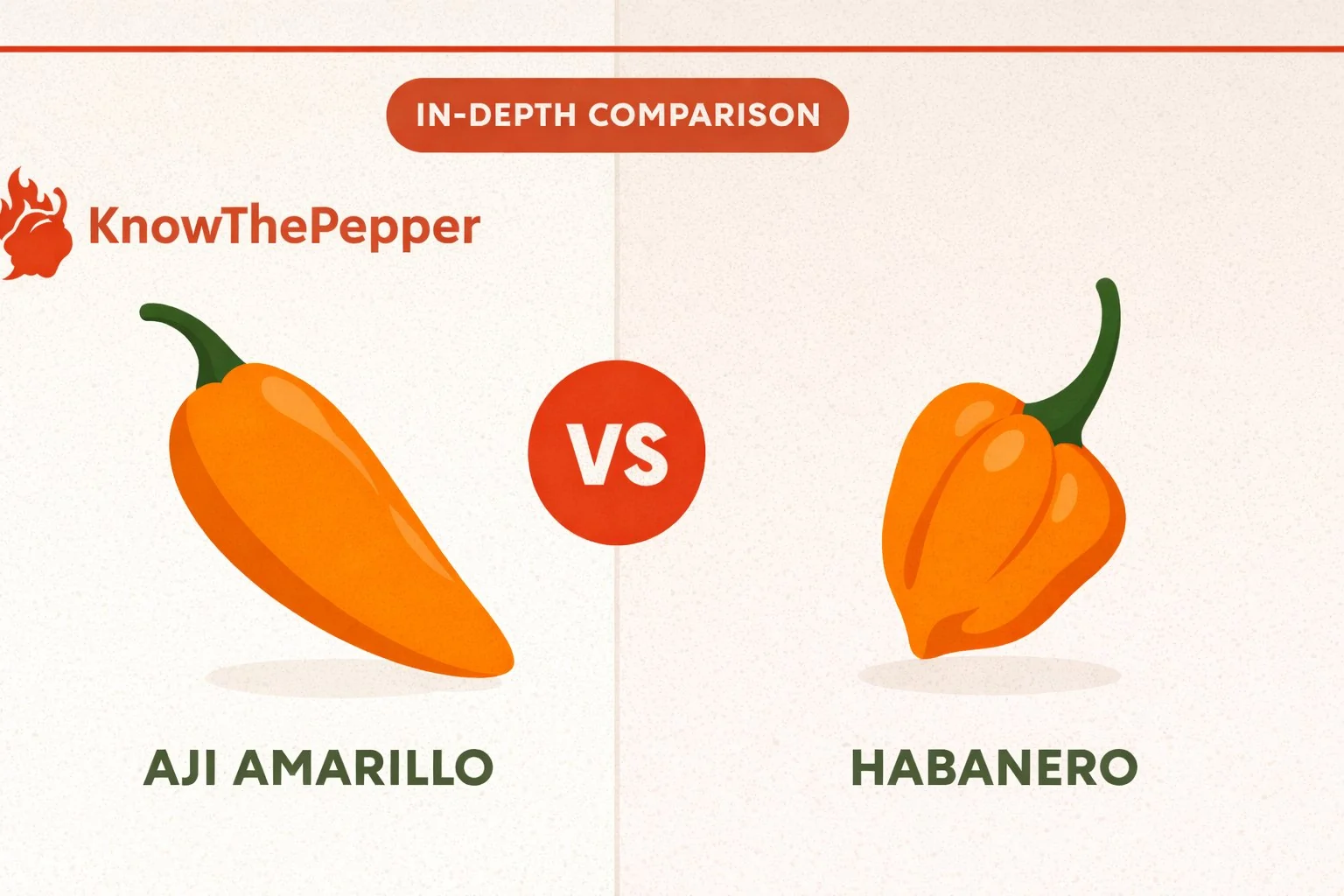
The Amarillo's fruity profile against habanero's floral intensity shows just how specific that flavor identity is.
Aji Cristal earns its place in the kitchen when brightness is the goal. Ceviches, fresh salsas, pickled preparations, and vinegar-forward sauces are where it outperforms Amarillo.
The tangy acidity does work that Amarillo's sweetness cannot.
For heat alone, there's no difference, both sit at 30,000-50,000 SHU, both qualify as peppers in the hot intensity classification, and both require the same handling precautions. The decision is purely about flavor direction: deep and sweet versus bright and tangy.
Grow both if you can. They're close enough in heat that you can use either in a pinch, but different enough in flavor that having both opens up more cooking options than either alone.
Heat And Substitution Notes
Aji Amarillo is listed at 30,000-50,000 SHU. Aji Cristal is listed at 30,000-50,000 SHU.
At midpoint, Aji Cristal runs about 1.0x hotter than Aji Amarillo.
That is only a planning number, but it keeps substitutions from drifting wildly.
For substitution, start by matching the role before matching the number. If the pepper is mainly there for color or body, use volume as the guide.
If it is there for heat, start with half the hotter pepper and taste before adding more. If it is a dried chile comparison, match by seeded weight after stems are removed, not by pod count.
Flavor is the second correction. Add a little vinegar or lime when the replacement tastes flat, a pinch of sugar when the replacement tastes bitter, and a small amount of smoked paprika only when the original pepper had smoke.
Do not add smoke to a bright fresh-pepper dish unless the recipe already points that way.
Which Should You Choose, Aji Amarillo or Aji Cristal?
Choose aji amarillo when the recipe needs Peruvian yellow-orange sauce body, fruity depth, and paste-friendly chile flavor. It fits aji de gallina, huancaina-style sauce, causa, stews, and blended table sauces.
Choose Aji Cristal when the dish needs brighter Chilean fresh chile heat for pebre, pickles, salsas, and raw or lightly cooked dishes. It fits pebre, pickles, fresh salsa, light sauces, and chopped raw chile applications.
The decision depends on more than heat. It is Peruvian paste body versus Chilean fresh brightness.
If a recipe names one pepper because of form, region, or serving style, treat the other as an adjustment rather than an equal swap.
Best Method Match
Aji amarillo works best as a paste or frozen pods that build color, thickness, and cooked fruit.
Aji cristal works best as fresh pods that slice, pickle, and brighten food without creating a creamy sauce base.
This method difference changes timing. Add the pepper early when it needs to bloom into sauce or fat.
Add it late when fresh aroma, texture, or table service matters. A pepper that is perfect for a skillet can fail in a stuffing recipe, and a dried powder can fail when the recipe needs visible fresh pieces.
How Do You Swap Aji Amarillo and Aji Cristal?
For substitution, match the role before matching the SHU number.
The safest starting point is start with 1 tablespoon aji amarillo paste for 1 small fresh Aji Cristal only in cooked sauces, then adjust acid.
After that, correct the dish around the missing trait: add acid when the swap tastes flat, add mild pepper body when the swap is too thin, and add heat separately only after the sauce or salsa rests for a few minutes. Do not add smoke unless the original pepper had smoke.
How Do You Buy and Prepare Aji Amarillo and Aji Cristal?
Buy aji amarillo as paste or frozen pods in Latin markets. Buy Aji Cristal fresh when available, with glossy yellow-green to orange pods and firm walls.
Prep should follow the form: roast fresh thick-walled peppers when skin matters, mince fresh thin peppers for raw bite, toast dried pods before soaking, and bloom powders in fat or liquid so they do not taste dusty.
The Chile Pepper Institute's species framework places both peppers in Capsicum baccatum, but shared species does not make their market forms equivalent. Buy paste when the sauce needs cooked body, and buy fresh pods when crisp acidity must survive into serving.
That form-first check prevents waste because fresh Aji Cristal cannot thicken a sauce like prepared amarillo paste, while paste cannot preserve the clean snap expected from a sliced or pickled Cristal pod.
Which Pepper Does Your Recipe Call For?
If the recipe is creamy, yellow, blended, or Peruvian, aji amarillo probably supplies body as well as heat. If the recipe is chopped, fresh, acidic, or Chilean, Aji Cristal is closer.
Aji amarillo paste can make a fresh salsa heavy. Aji Cristal can make a cooked yellow sauce taste thin unless you add another body ingredient.
We treat this as the practical checkpoint because it survives the swap test: changing the pepper names would break the cooking advice, not merely change the label.
Common Mistake
The common mistake is assuming every yellow South American chile plays the same role. Aji amarillo is a Peruvian sauce builder; Aji Cristal is a Chilean fresh and pickling pepper.
A second mistake is swapping by pod count when the peppers differ in wall thickness, drying level, or sauce form. Weight, texture, and cooking method are better guides than count.
Final Choice
Final Choice: pick aji amarillo for Peruvian yellow-orange sauce body, fruity depth, and paste-friendly chile flavor. Pick Aji Cristal for brighter Chilean fresh chile heat for pebre, pickles, salsas, and raw or lightly cooked dishes.
If the recipe gives a method clue, follow that clue first and adjust heat second.
Aji Amarillo vs Aji Cristal FAQ
- Scoville, W.L. (1912) - Note on Capsicums, Journal of the American Pharmaceutical Association