

KnowThePepper
What Is Aji Amarillo? Heat, Flavor, Paste, and Uses
Aji Amarillo is Peru's orange Capsicum baccatum chile, commonly listed at 30,000-50,000 SHU, and fully ripe pods usually appear deep yellow-orange or orange. Its tropical fruit character works in smooth Peruvian sauces, while the ingredient form determines whether a dish gets fresh texture, concentrated paste, or dried depth.
- Species: C. baccatum
- Heat tier: Hot (10K-100K SHU)
- Comparison: 4-20x hotter than a jalapeño, depending on where the jalapeño falls in its 2,500-8,000 SHU range
What Makes Aji Amarillo Different?
Aji Amarillo is a Peruvian Capsicum baccatum pepper with elongated pods, orange ripe color, and enough heat to shape a sauce without reaching habanero intensity. The common published range is 30,000-50,000 SHU.
New Mexico State University explains that laboratories measure capsaicinoids with HPLC and convert the result to Scoville Heat Units. Genetics, weather, growing conditions, and fruit age can move one pod or jar away from the headline range, so a cook should still taste before increasing the amount.
The flavor is best understood as tropical fruit with a light raisin-like depth rather than the grassy bite of a green annuum chile. We use that distinction as editorial sensory guidance, not as a claim of firsthand tasting.
Amarillo means yellow in Spanish, but the traditional name does not describe a strict final color. Ripe pods commonly deepen from green through yellow into vivid orange.
What Is the History of Aji Amarillo?
Peru's Ministry of the Environment identifies Aji Amarillo, also called aji escabeche, as a cultivated C. baccatum pepper associated with the Peruvian coast. That named record is stronger evidence for identity than a broad claim that every ancient Andean chile was the same modern cultivar.
Official Peru Travel references show why the pepper remains central to the country's cooking. Aji de gallina uses a yellow chile sauce around shredded chicken, while causa carries chile through seasoned potato layers.
Ceviche and tiradito use chile differently from those creamy dishes, but the same ingredient supplies color, aroma, and a clean edge beside citrus and seafood. These named preparations explain the pepper's cooking importance more precisely than calling it a general-purpose hot chile.
What Does Aji Amarillo Taste Like, and How Hot Is It?
The Aji Amarillo delivers 30K–50K Scoville Heat Units, placing it in the Hot tier (10K-100K SHU). That makes it roughly 4-20x hotter than a jalapeño, depending on where the jalapeño falls in its 2,500-8,000 SHU range.
Flavor notes: fruity, tropical, slightly raisin-like.
What Nutrients Does Aji Amarillo Provide?
USDA FoodData Central lists raw green hot chile peppers at 40 calories per 100 grams, with vitamin C, potassium, and fiber. That entry is general hot-chile context, not a cultivar-specific laboratory result for Aji Amarillo.
A serving also changes with the format because one sauce may divide a spoonful of paste among several plates. Nutrition data should therefore be read from the specific packaged product when salt, oil, or preservatives matter.
Capsaicin is relevant here as a handling compound, not a treatment claim. Wash hands, knives, and boards after cutting hot pods, and avoid touching the eyes or face during preparation.
Which Dishes Suit Aji Amarillo?
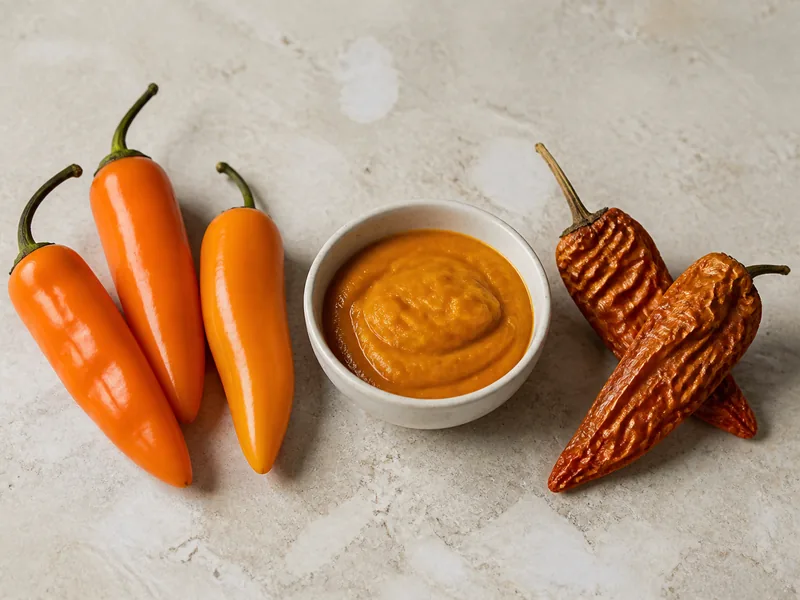
Choose the form by the texture the dish needs. Fresh pods provide pieces that can be sliced, roasted, or blended, while prepared paste disappears smoothly into aji de gallina, causa, huancaina-style sauce, and marinades.
A jar of paste is the practical choice in many markets outside Peru, but brands may include different amounts of salt, acid, oil, or cooked pepper. Start with a modest spoonful, read the label, and adjust after the paste has dispersed through the sauce.
Frozen pods keep the actual pepper available for cooked sauces even though thawing softens their flesh. Dried pods or powder concentrate pantry flavor and color, but they cannot supply the fresh texture of sliced pepper or the ready-made smoothness of paste.
Removing the pale interior placenta lowers the capsaicinoid load more effectively than shaking out seeds alone, according to New Mexico State University. That step matters when potatoes, corn, chicken, seafood, cheese, or citrus should remain as noticeable as the chile.
Different forms solve different texture problems even when fresh, paste, frozen, and dried Aji Amarillo come from the same pepper.
| Form | What it gives you | Where it belongs |
|---|---|---|
| Fresh pods | Pieces with texture, which can be sliced, roasted or blended | Anywhere the pepper should stay visible in the finished dish |
| Jarred paste | A smooth base that disappears into a sauce | Aji de gallina, causa, huancaina-style sauces and marinades |
| Frozen pods | The actual pepper, kept available out of season | A substitute for fresh when the market has none |
| Dried, as aji mirasol | A deeper, drier, more concentrated flavour | Sauces built from rehydrated chile rather than fresh fruit |
Where Can You Buy Aji Amarillo, and How Do You Store It?
Fresh Aji Amarillo is most likely at Latin American markets, Peruvian grocers, specialty growers, or farmers markets during pepper season. Choose firm yellow-orange or orange pods without wet soft spots, mold, or collapsed skin.
Jarred paste is usually easier to find than fresh pods outside Peru. Check the ingredient list for salt, vinegar, oil, and preservatives, then refrigerate after opening when the manufacturer directs it.
Frozen pods are useful for cooked sauces because freezing preserves the ingredient while sacrificing crisp texture. Keep them sealed and labeled so they are not confused with a milder orange pepper.
Store dried pods and powder in an airtight container away from light, heat, and moisture. Replace them when aroma has faded or moisture has caused clumping, because color alone does not prove good flavor.
What Is a Good Substitute for Aji Amarillo?
Compare substitutes for Aji Amarillo by form, flavor, and heat before choosing a ratio. Measured adjustments must account for the dish and the concentration of the replacement.
Direct comparisons show where flavor, form, and preparation differ in the Aji Amarillo vs Panca and Aji Amarillo vs Habanero matchups.
Compare Aji Amarillo with: Aji Amarillo vs Aji Limo · Aji Amarillo vs Lemon Drop · Aji Amarillo vs Aji Cristal
How Do You Grow Aji Amarillo at Home?
Aji Amarillo needs the same warm start as other long-season peppers. University of Minnesota Extension recommends starting pepper seed indoors, moving plants outside only after frost risk has passed, and growing them in full sun with well-drained soil.
Steady moisture supports flowering and fruit fill, while cold nights and transplant stress can slow the crop. Gardeners with short summers can use containers or season extension so plants have more time to reach ripe color.
Harvest green pods when a recipe wants a firmer, less ripe chile, or wait for yellow-orange to orange pods when fruit character and sauce color matter most. Clip the stem instead of pulling hard enough to damage the branch.
Saved seed may cross with other flowering peppers in the same garden. Isolation is the practical choice when the next generation needs to retain the cultivar's pod shape, color, and baccatum character.
Aji Amarillo FAQ


- Ministerio del Ambiente del Peru - Conservacion de los ajies peruanos
- HortScience - Morphologic Variation in Capsicum baccatum Germplasm
- New Mexico State University Circular 706 - Chile Pepper Cultivars for New Mexico
- University of Minnesota Extension - Growing peppers
- USDA FoodData Central - Peppers hot chili green raw
Species classification: C. baccatum - based on published botanical taxonomy.