

KnowThePepper
Bird's Eye Chili: Heat, Name Scope and Kitchen Uses
Bird's eye chili is a small hot chile commonly sold as Thai pepper or bird's chili. UF/IFAS lists this Thai pepper/bird's eye type at 50,000-100,000 SHU, with small tapering pods that ripen from green to red.
Treat it as a hot C. annuum Thai-pepper profile, while remembering that some markets use the same common name for similar C. frutescens chiles.
- Species: C. annuum
- Heat tier: Hot (10K-100K SHU)
- Comparison: 6-40x hotter than a jalapeño, depending on where the jalapeño falls in its 2,500-8,000 SHU range
What Is Bird's Eye Chili?
Bird's eye chili is hot in a very practical way: UF/IFAS lists Thai pepper, also called bird's eye chili or bird's chili, at 50,000-100,000 SHU on the Scoville scale. That places it in the hot pepper range, clearly above most jalapeno and serrano use cases and close enough to cayenne that small pod counts matter.
The name needs a little care.
UF/IFAS treats Thai pepper as a cultivar type derived from the C. annuum species group, but it also notes that these peppers are often confused with similar C. frutescens cultivars. In a grocery store, bird's eye can be a market label for small Thai-style hot chiles rather than a certified cultivar name.
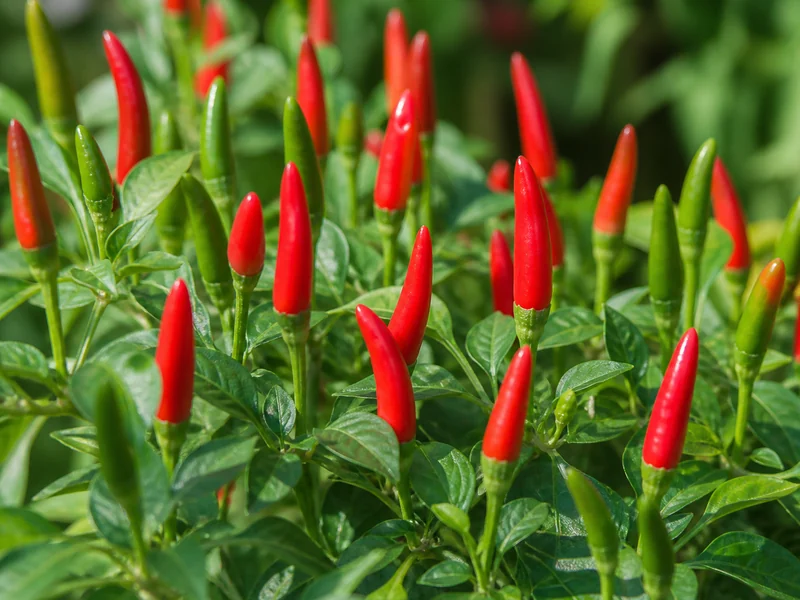
For identification, look for small, narrow pods about 1 inch long that taper to a point and ripen from green to red. The fresh flavor is sharp, peppery, and bright rather than sweet or smoky, with a quick burn that makes pod count more useful than volume for a first dose.
This profile explains what Bird's Eye Chili is, how hot it is, where the name gets fuzzy, and how to use or store it. The bird's eye chili substitutes are ranked by form and dose, and the Thai chili is the label that most often overlaps with it.
What Is the Origin of Bird's Eye Chili?
UF/IFAS says Thai pepper's origin might be Mexico, Central America, or South America, while noting that it is now commonly grown in South and Southeast Asian countries. This is a Capsicum spread-and-adoption story, not proof of a Thai botanical origin.
The common name feels Thai because small hot chiles became central to Thai, Vietnamese, Indonesian, Malaysian, and other regional cooking systems after Capsicum peppers moved through global trade.
Local seed saving and market preference then favored compact plants, small pods, quick heat, and heavy production in warm climates.
A seed packet may say Thai pepper, bird's eye chili, bird pepper, or bird's chili. Produce bags in Asian groceries may use the same terms for similar-looking small hot chiles.
When exact species matters for growing or breeding, follow the seed supplier's botanical name, not the grocery label alone.
How Hot Is Bird's Eye Chili, and What Does It Taste Like?
The Bird's Eye Chili delivers 50K–100K Scoville Heat Units, placing it in the Hot tier (10K-100K SHU). That makes it roughly 6-40x hotter than a jalapeño, depending on where the jalapeño falls in its 2,500-8,000 SHU range.
Flavor notes: sharp, peppery, bright heat.
How Nutritious Is Bird's Eye Chili?
Bird's eye chili is usually eaten in gram-level amounts, so a 100g nutrient table can mislead readers. USDA FoodData Central is useful for generic hot-pepper lookups, but it should not be treated as a bird's-eye-specific nutrient guarantee or as proof that someone should eat a large serving of these pods.
This pepper's 50,000-100,000 SHU range means capsaicin can irritate eyes, skin, and mucous membranes during batch prep.
Wear gloves when cutting many pods, wash boards and knives well, and keep chile-covered hands away from contacts or eyes.
The capsaicin heat chemistry explains the receptor response behind the burn. This food profile makes no supplement, disease, or treatment claim.
How Do You Cook With Bird's Eye Chili?
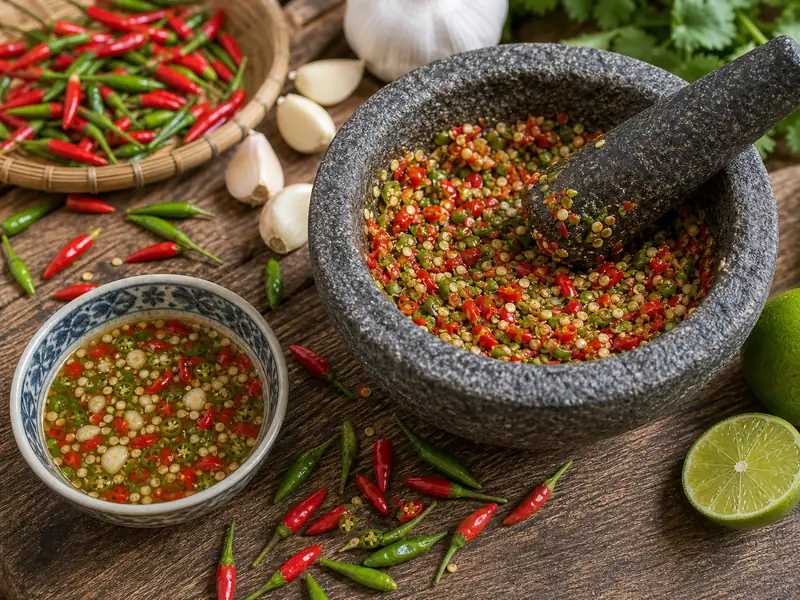
Bird's eye chili works best when a dish needs fresh, fast heat in a small footprint. Slice it into fish-sauce dips, pound it into chile pastes, simmer it into soups, or add thin rings to stir-fries near the end of cooking.
Because the pods are small and intense, measure by pod count before you measure by spoonful.
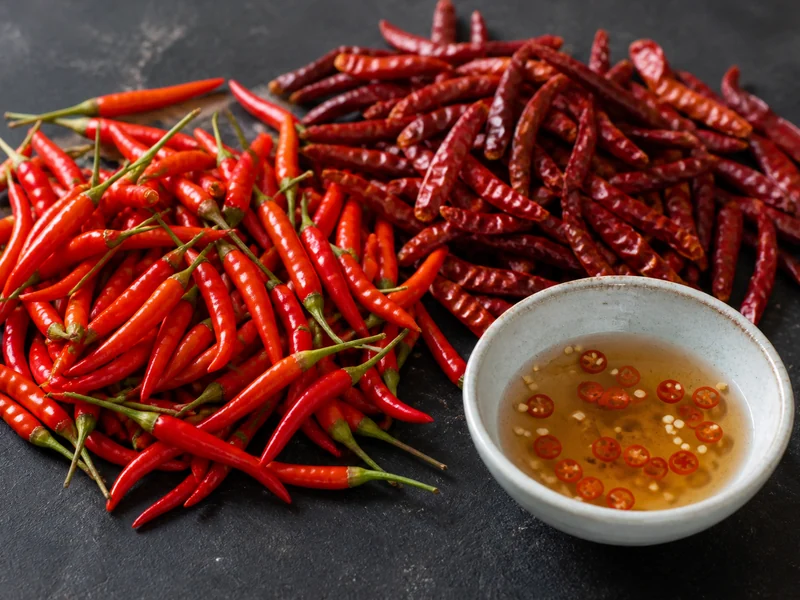
Fresh pods taste greener and sharper than dried pods. Dried bird's eye chilies lose water, so the heat can feel more concentrated per gram, with a deeper aroma that fits curry pastes, chile oils, and spice blends.
Fresh pods are better when you want the clean snap of raw or lightly cooked chile.
For heat calibration, serrano peppers are much milder, while cayenne peppers overlap at the lower edge and are often used dried.
The related comparisons Bird's Eye Chili vs Cayenne Pepper and Bird's Eye Chili vs Jalapeno are better when a recipe asks for a direct swap.
For regional swaps, piri-piri peppers fit when the dish leans Portuguese or African. The bird's eye and siling labuyo differences matter in Filipino cooking.
For a swap, match fresh or dried form first, then begin below the recipe's full pod count because small-chile heat varies by cultivar and batch.
| Form | What it contributes | Best fit |
|---|---|---|
| Fresh green | Sharp, grassy heat | Raw dips and late stir-fry additions |
| Fresh red | Riper aroma with fast heat | Curry paste, soup, and sauce |
| Whole dried | Concentrated heat and deeper aroma | Chile oil, curry paste, and simmered broth |
How Do You Buy and Store Bird's Eye Chili?
Buy bird's eye chilies that are firm, glossy, and narrow, with no wet patches or collapsed tips. Green pods taste sharper and less ripe, while red pods are mature and often a little rounder in flavor.
Mixed-color bags are normal because small hot pepper plants can carry several ripeness stages at once.
Refrigerate fresh pods unwashed in a breathable bag or loose container, then wash only before use while the skins are still taut.
For longer storage, freeze whole pods on a tray and move them to a freezer bag. Frozen pods soften after thawing but work well in cooked sauces, soups, and stir-fries.
Dried bird's eye chilies belong in an airtight container away from light, heat, and moisture. Whole dried pods hold aroma better than pre-ground flakes.
If you are fermenting, pickling, or canning hot peppers, use a tested preservation recipe rather than treating this profile as a food-safety process.
Dried form: Dried bird's eye chilies concentrate the same sharp heat into lighter pods for curry pastes, spice blends, chile oils, and table flakes.
Which Peppers Can Replace Bird's Eye Chili?
Compare substitutes for Bird's Eye Chili by form, flavor, and heat before choosing a ratio. Measured adjustments must account for the dish and the concentration of the replacement.
Direct comparisons show where flavor, form, and preparation differ in the Bird's Eye Chili vs Jalapeño and Bird's Eye vs Cayenne matchups.
Compare Bird's Eye Chili with: Bird's Eye Chili vs Peri Peri
How Do You Start and Grow Bird's Eye Chili Peppers?
University of Minnesota Extension recommends starting pepper seed about 8 weeks before transplanting, then moving plants outside after nighttime lows stay above 50 F.
Warm soil matters because pepper seedlings stall when the root zone stays cold.
UF/IFAS notes that Thai pepper plants can grow tall, up to about 6 feet, and produce small tapering fruit about an inch long.
In containers, choose a pot that can support a hot pepper with many pods and keep watering steady. In the ground, give plants full sun, airflow, and room to branch.
Aphids, mites, and fungal problems are easier to manage before they spread, so use the pepper pest symptoms when leaves curl, stipple, yellow, or spot.
Avoid overwatering in humid weather, but do not let container plants swing from bone dry to soaked.
If you save seed, remember that "bird's eye" is a loose common name covering several types. These plants can cross with other compatible Capsicum nearby, and saved seed from a grocery pod may not grow true.
The seed-saving process explains isolation and drying before storage.
Bird's Eye Chili FAQ


- UF/IFAS Gardening Solutions - Peppers Ranked by Heat
- UF/IFAS EDIS - Common Pepper Varieties in Florida
- University of Minnesota Extension - Growing peppers in home gardens
- USDA FoodData Central, SR Legacy 170106, Peppers, hot chili, red, raw
- Nature Scientific Reports - Capsaicin content across Capsicum species
Species classification: C. annuum - based on published botanical taxonomy.