

KnowThePepper
Piri Piri Is a Real Pepper: A Citrusy Mozambican Chile Up to 175,000 SHU
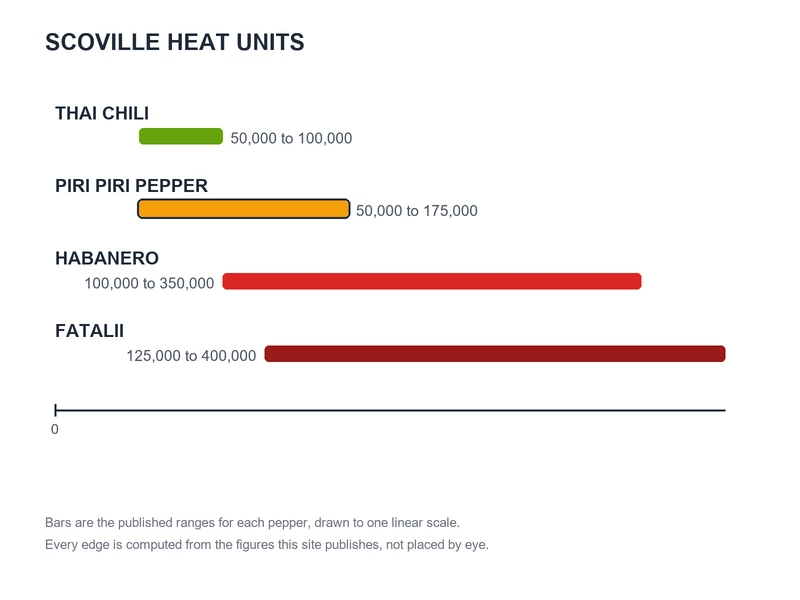
Most people think piri piri is just a sauce. It's actually a specific pepper - Capsicum frutescens - originating in Mozambique, clocking 50,000-175,000 SHU.
That upper range puts it well past what most home cooks expect. The flavor is bright, citrusy, and fruity, which makes the heat hit differently than a flat-burning chili.
Small pods, serious firepower.
- Species: C. frutescens
- Heat tier: Extra-Hot (100K-1M SHU)
- Comparison: 6-70x hotter than a jalapeño, depending on where the jalapeño falls in its 2,500-8,000 SHU range
What Kind of Pepper Is Piri Piri Pepper?
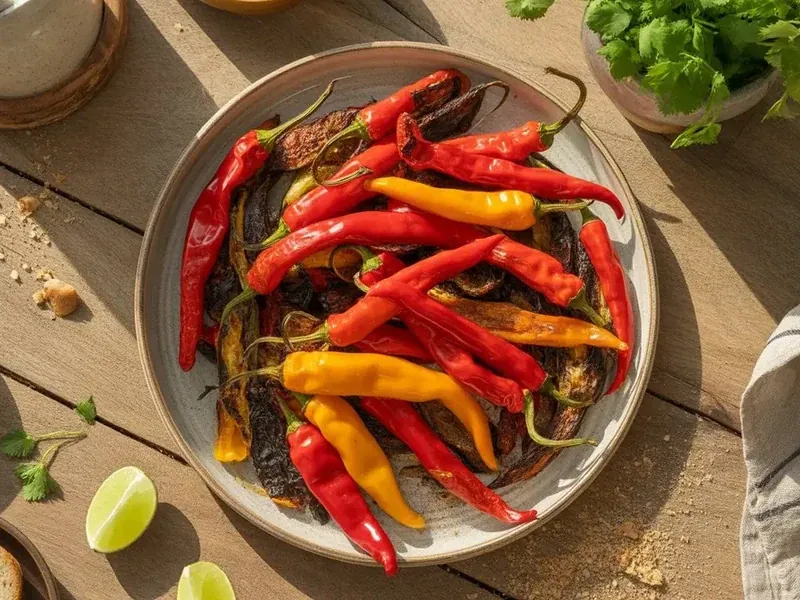
Piri piri, also spelled peri peri, refers to an actual pepper before it refers to any sauce or spice blend. The Capsicum frutescens species produces small, tapered pods that ripen from green through yellow to vivid red, and the heat range of 50,000-175,000 SHU means you're dealing with a pepper that can be nearly as punishing as a fatalii on its hottest day.
The flavor profile is what makes this pepper genuinely interesting. That citrusy brightness and fruity edge aren't just marketing language, they're detectable even at the upper heat range, which is rarer than you'd think.
Most peppers at this SHU level burn first and ask questions later. Piri piri burns AND delivers flavor, which explains why it became the foundation for one of the most globally recognized sauces in African cuisine.
At the lower end of its range (50,000 SHU), it sits in the same neighborhood as a strong cayenne. At 175,000 SHU, it's competing with the lower end of habanero territory.
That variability isn't unusual for C. frutescens - the species is known for inconsistency between plants and even between pods on the same plant. Growing conditions, soil, and water stress all push the heat up or down considerably.
For anyone tracking extra-hot pepper varieties as a category, piri piri is one of the few that earns its place through flavor as much as heat.
What Is the History of Piri Piri Pepper?
Portuguese traders didn't invent piri piri, they spread it. The pepper was already established in Mozambique and across southern African pepper traditions when Portuguese colonizers arrived in the 15th and 16th centuries.
The name itself comes from Swahili, where it simply means 'pepper pepper' - a linguistic doubling that reflects just how central the ingredient was to the region.
The Portuguese brought the pepper back to the Iberian Peninsula and eventually to their other colonies, which is why piri piri shows up in Brazilian, Angolan, and Goan cooking.
The famous Nando's restaurant chain, founded in South Africa in 1987, turned piri piri into a global brand name, which ironically made the original pepper harder to identify, most people now associate the name with a sauce rather than a specific C. frutescens botanical variety.
How Spicy Is Piri Piri Pepper, and How Does It Taste?
The Piri Piri Pepper delivers 50K–175K Scoville Heat Units, placing it in the Extra-Hot tier (100K-1M SHU). That makes it roughly 6-70x hotter than a jalapeño, depending on where the jalapeño falls in its 2,500-8,000 SHU range.
Flavor notes: fruity, citrusy, bright.
How Nutritious Is Piri Piri Pepper?
Fresh piri piri pods carry vitamin C, as fresh Capsicum generally does. The citrusy note is not a measure of it, because that brightness comes from volatile aroma compounds rather than from ascorbic acid, so taste tells you nothing about the vitamin content.
Beyond the vitamin, they contain capsaicin and related capsaicinoids, which have been studied for anti-inflammatory and metabolic effects.
Calorie content is negligible, roughly 20-30 calories per 100g of fresh pods. The red-ripe stage provides significantly more beta-carotene than green pods.
Dried piri piri powder concentrates all of these compounds, so a small amount goes further nutritionally as well as culinarily. Iron and potassium are present in modest amounts.
What Is Piri Piri Pepper Best Used For?
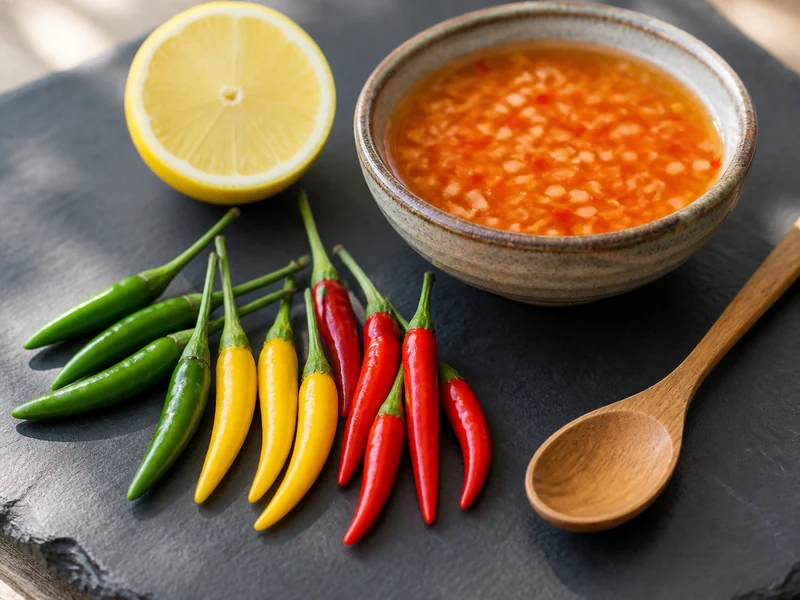
The pepper's citrusy brightness makes it genuinely flexible in ways that hotter, flatter-burning chilies aren't. Traditional piri piri sauce, the real Mozambican version, not the bottled supermarket kind, is built from the fresh or dried pods, lemon juice, garlic, and oil.
The acid in the lemon echoes the pepper's own citrus notes rather than fighting them.
Chicken is the obvious pairing, and for good reason. The fat in poultry skin absorbs the oil-soluble capsaicin and spreads the heat more evenly than a lean protein would.
Marinating for at least 12 hours lets the fruity notes penetrate rather than just coating the surface.
For cooking applications where you want the heat without the texture, dried piri piri flakes behave similarly to how Thai chili function, they dissolve into sauces and oils quickly. The bright, clean burn of the malagueta offers a useful comparison point for understanding piri piri's heat delivery: both are fast-hitting and clear rather than lingering.
Dried pods ground into powder work well in dry rubs. A ratio of one part piri piri powder to three parts smoked paprika gives you heat with depth.
Fresh pods can be used whole in stews or split and seeded for a milder contribution.
Where Can You Buy Piri Piri Pepper, and How Do You Store It?
African and Portuguese markets are where fresh pods live, and outside them they are hard to come by. Dried whole pods and ground powder are more accessible and actually preferable for most applications, the drying process concentrates flavor without losing much of the citrusy character.
When buying dried pods, look for vivid red color and a slight sheen. Dull, brown-tinged pods have lost potency.
Store dried pods in an airtight container away from light, they'll hold for 12-18 months at room temperature or up to 3 years frozen. Ground powder degrades faster.
Replace it after 12 months regardless of smell.
What Can Replace Piri Piri Pepper in a Recipe?
Compare substitutes for Piri Piri Pepper by form, flavor, and heat before choosing a ratio. Measured adjustments must account for the dish and the concentration of the replacement.
Direct comparisons show where flavor, form, and preparation differ in the Piri Piri vs Cayenne matchups.
How Do You Grow Piri Piri Pepper at Home?
Capsicum frutescens varieties run warmer and take longer than most annuums, so starting seeds indoors 10-12 weeks before last frost isn't optional, it's necessary in most climates. Germination is slower and less predictable than with C. annuum.
Soil temperature of 80-85°F significantly improves germination rates.
Transplant after all frost risk has passed into full sun with well-draining soil. Piri piri plants grow compact but bushy, typically reaching 2-3 feet in height.
They're drought-tolerant once established, but consistent moisture during pod development keeps the fruit from becoming excessively hot or bitter, water stress is the primary driver of capsaicin production in this species.
If your pepper leaves are turning brown mid-season, check for both nutrient deficiency and overwatering before assuming disease. C. frutescens is particularly sensitive to waterlogged roots.
Pods are ready to harvest when fully red, though green pods can be used for a sharper, grassier flavor. The plants are perennial in USDA zones 9-11 and can be overwintered indoors in colder climates.
A mature plant brought inside and kept near a south-facing window will often produce a second or third season with minimal fuss.
| Capsicum frutescens, this pepper | Capsicum annuum, most garden peppers | |
|---|---|---|
| Sowing | 10 to 12 weeks before last frost | 8 to 10 weeks is usually enough |
| Germination | Slower and less predictable | Faster and more even |
| Soil warmth | 80 to 85F matters, and it stalls below | Tolerates a cooler start |
| Season length | Wants a long warm run to ripen | Many varieties finish sooner |
Piri Piri Pepper FAQ


- Capsicum frutescens L. - USDA GRIN Taxonomy
- CABI, Peppers: Botany, Production and Uses
- USDA Agricultural Research Service, Beltsville
Species classification: C. frutescens - based on published botanical taxonomy.