

KnowThePepper
Bulgarian Carrot Pepper: Orange Pods With Serrano-Like Heat
The Bulgarian Carrot pepper is a compact Bulgarian Capsicum annuum cultivar with bright orange, carrot-shaped pods about 3 inches long. Its 5,000-30,000 SHU range overlaps serrano heat, while the crisp fruit is particularly useful for pickling, fresh salsa, and drying into flakes.
- Species: Capsicum annuum
- Heat tier: Hot (10K-100K SHU)
- Comparison: the same heat range as a jalapeño because their published ranges overlap
What Kind of Pepper Is Bulgarian Carrot Pepper?
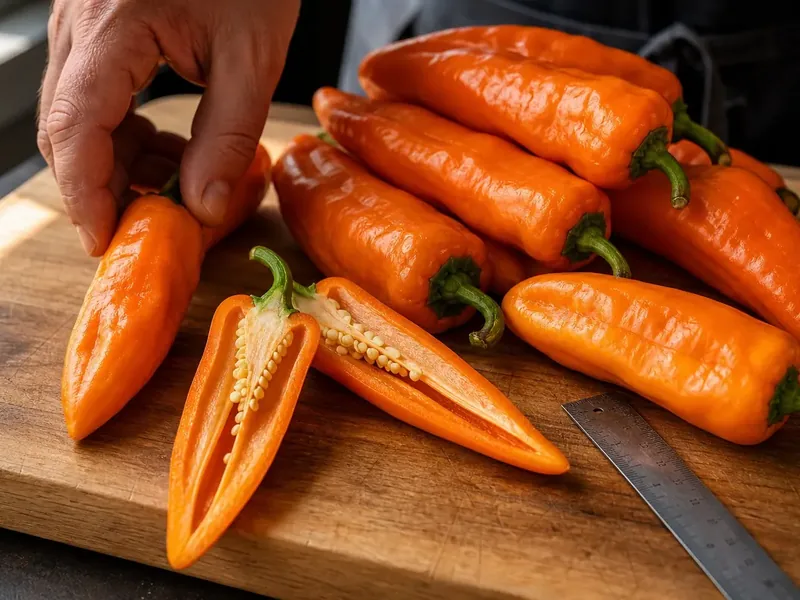
The Bulgarian Carrot pepper is a Bulgarian Capsicum annuum cultivar with glossy orange pods that taper like small carrots. Sandia Seed Company and Experimental Farm Network both describe ripe fruit at about 3 inches long, which makes color, shape, and size the fastest identification cues.
The pod begins green and reaches its recognizable bright orange stage at full ripeness.
Experimental Farm Network describes the plant as prolific and Sandia lists a compact 18-inch habit, so the fruit reads as ornamental even though the cultivar is grown for cooking.
Its practical appeal comes from a rare combination of crisp fresh texture and a narrow pod that preserves well. That gives one harvest several distinct jobs, from fresh salsa and pickles through to dried whole pods and flakes.
Where Did Bulgarian Carrot Pepper Originate?
Experimental Farm Network identifies Bulgaria as the cultivar's origin and says the peppers are known there as Shipka. Those two details are the reliable core of the name history.
The deeper timeline is where the record thins out.
Experimental Farm Network puts the variety at least as far back as the 1850s and labels the story about seeds leaving the Eastern Bloc in the 1980s as rumor, so neither belongs in a sentence that sounds settled.
Modern seed catalogs consistently circulate Bulgarian Carrot as an open-pollinated or heirloom hot pepper. Sandia lists it as open-pollinated, while Experimental Farm Network classifies it as a cultivar and identifies its current seed source.
What Does Bulgarian Carrot Pepper Taste Like, and How Hot Is It?
The Bulgarian Carrot Pepper delivers 5K–30K Scoville Heat Units, placing it in the Hot tier (10K-100K SHU). That makes it roughly the same heat range as a jalapeño because their published ranges overlap.
Flavor notes: fruity, crisp, and steadily hot.
Bulgarian Carrot Pepper Nutrition Facts
No USDA entry isolates Bulgarian Carrot as a cultivar, so generic raw hot-pepper data is the honest nutrition baseline. USDA FoodData Central and Utah State University Extension describe fresh chiles as low-calorie foods that supply vitamin C and vitamin A compounds, but those values should not be presented as cultivar-specific measurements.
The burn comes from capsaicinoids rather than from the seeds themselves, which is the point the chemistry of pepper heat sets out. New Mexico State University places the capsaicinoid glands on the placenta, the pale tissue around the seeds, and notes that genetics, weather, growing conditions, and fruit age can change the heat of individual pods.
At a published range reaching 30,000 SHU, keep cut surfaces away from eyes and sensitive skin.
Wash the knife and board afterwards, and reach for gloves when handling several pods at once.
What Is Bulgarian Carrot Pepper Best Used For?
Use Bulgarian Carrot where crisp slices and a clear orange color should remain visible. Experimental Farm Network specifically recommends it for salsa, frying, roasting, and pickling, which makes fresh rings a strong fit for tacos, sandwiches, relishes, and mixed pickles.
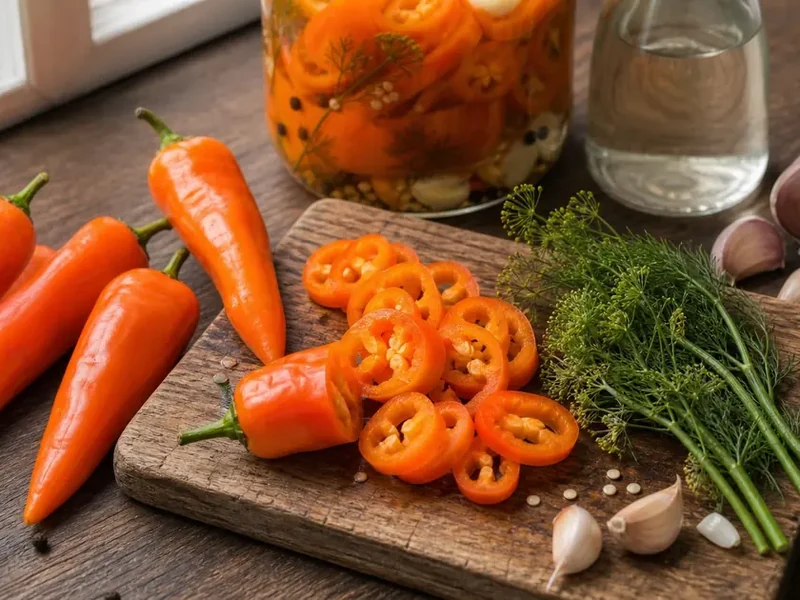
Pickling suits it because the shape stays recognizable in a jar.
Slice into rings for even brine contact, or pickle small pods whole after piercing them so the brine reaches the interior. The pickled jalapeno brine is a workable ratio to start from.
Drying gives the harvest a second job without pretending every pepper dries equally well. Experimental Farm Network specifically names whole-pod drying and pounding the brittle pods into flakes, and Utah State University Extension advises drying sliced chiles until brittle before sealing them for storage.
For fresh substitution, serrano is the closest familiar heat benchmark, but it lacks the same ripe orange color. Cayenne fits dried flakes better when Bulgarian Carrot is unavailable, while a sweet wax pepper does not replace the heat.
| Kitchen job | Best form | Why it fits |
|---|---|---|
| Fresh salsa | Thin rings or fine dice | Keeps the ripe orange color visible and spreads serrano-like heat. |
| Pickles | Rings or pierced whole pods | Brine reaches the interior while the pepper remains identifiable. |
| Chile flakes | Fully dried brittle pods | The narrow fruit dries efficiently and crushes cleanly. |
Where Can You Buy Bulgarian Carrot Pepper, and How Do You Store It?
Fresh Bulgarian Carrot peppers are usually a specialty-grower or home-garden crop rather than a standard supermarket item. Choose pods that are firm, bright orange, and smooth with a fresh green calyx, which matches Utah State University Extension's quality cues for mature peppers.
Use green pods when immediate heat matters more than full cultivar character, much as an early-picked jalapeno trades sweetness for sharpness. Wait for complete orange color when the goal is the ripe appearance and the form documented by Sandia and Experimental Farm Network.
University of Minnesota Extension gives fresh peppers an expected shelf life of about 2 weeks near 55 F in perforated plastic and warns that temperatures below 45 F can cause surface pitting. A household refrigerator is colder, so inspect stored pods often and use them before the skin softens or pits.
For a larger harvest, dry ripe pods until brittle or use freezing peppers for future cooked dishes. Utah State University Extension says properly packaged frozen peppers can hold quality for up to a year at 0 F or below.
Choose the right harvest stage
- Pick firm green pods for an earlier, sharper harvest.
- Wait for full bright orange color for the cultivar's defining ripe form.
- Set aside unblemished ripe pods for drying or pickling.
- Discard pods with wet soft spots or a damaged calyx.
What Is a Good Substitute for Bulgarian Carrot Pepper?
Direct comparisons show where flavor, form, and preparation differ in the Bulgarian Carrot vs Habanero and Bulgarian Carrot vs Hungarian Wax matchups.
What Does Bulgarian Carrot Pepper Need to Grow Well?
Start Bulgarian Carrot seed indoors about 8 weeks before the last frost. Sandia recommends 85 F bottom heat for germination, then transplanting seedlings after they have six true leaves.
Wait for safe outdoor temperatures instead of following the calendar alone. University of Minnesota Extension says peppers should go outside after nighttime lows stay above 50 F, and it recommends 18-inch spacing in garden rows.
The cultivar also fits container peppers because its published plant height is compact. Sandia lists about 18 inches, while Experimental Farm Network reports plants up to 2 feet, so one plant can fit a roomy pot without sacrificing the cultivar's normal form.
Sandia lists maturity at 75 days after transplant, with best fruit set between 65 and 85 F.
Oregon State University Extension includes Bulgarian Carrot among its recommended garden cultivars, which is the closest thing to institutional endorsement this pepper has.
Heavy fruit set can pull a compact plant sideways. Experimental Farm Network recommends giving plants about a foot of space and staking individual plants if the crop begins to topple them.
Bulgarian Carrot Pepper FAQ


- Sandia Seed Company - Bulgarian Carrot Pepper Seeds
- Experimental Farm Network - Bulgarian Carrot (Shipka) Hot Pepper
- University of Minnesota Extension - Growing peppers
- Oregon State University Extension - Grow Your Own Peppers
- Utah State University Extension - How to Grow Peppers in Your Garden
- Utah State University Extension - How to Preserve Chiles
- New Mexico State University - Chile Pepper Cultivars for New Mexico
- USDA FoodData Central, SR Legacy 170106, Peppers, hot chili, red, raw
Species classification: Capsicum annuum - based on published botanical taxonomy.