

KnowThePepper
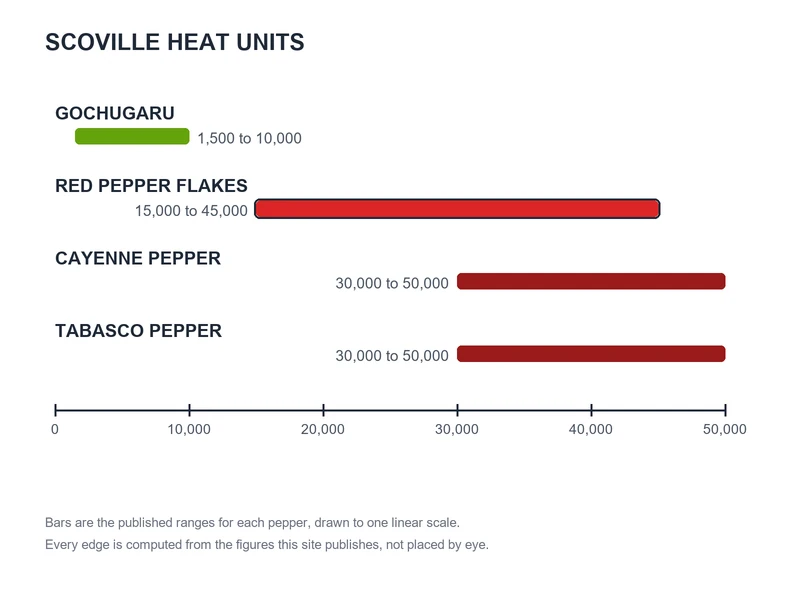
Red Pepper Flakes: 15,000-45,000 SHU and No Standard Blend
Red pepper flakes deliver a sharp, peppery heat that hits fast and lingers. Ranging from 15,000 to 45,000 SHU, they sit firmly in the hot tier, roughly comparable to dried peppers with intense aromatic heat - and appear in kitchens across every continent.
Most blends are built on dried C. annuum varieties, though the exact mix varies by producer.
- Species: C. annuum
- Heat tier: Hot (10K-100K SHU)
- Comparison: 2-18x hotter than a jalapeño, depending on where the jalapeño falls in its 2,500-8,000 SHU range
What Is Red Pepper Flakes?
Red pepper flakes read as dry and dusty rather than fruity, and the taste follows: sharp, peppery and direct, without the complexity of a fresh chile. That's the character of red pepper flakes, and it's exactly what makes them so useful.
At 15,000 to 45,000 SHU, the heat range is wide because the blend is rarely standardized. Most commercial flakes start with dried Capsicum annuum varieties, often cayenne-type chiles, though some regional blends incorporate hotter or smokier peppers.
The sharp heat of dried cayenne-type peppers forms the backbone of most mass-market flakes you'll find on a pizza table.
That sharpness shows in how the heat arrives, fast and surface-level at first, then builds into a persistent warmth. Compared to a fresh jalapeño, you're looking at roughly 9x the heat.
Put another way, flakes sit in the same general range as tabasco pepper - both clock in around 15,000 to 45,000 SHU depending on variety and processing.
The crushed texture matters too. Seeds and skin together create a different burn profile than powder, more uneven, more textural.
That inconsistency is part of the appeal for cooks who want heat that doesn't dissolve uniformly into a dish.
Where Did Red Pepper Flakes Originate?
Drying and crushing chiles is one of the oldest preservation methods in existence. After Columbus brought Capsicum species back from the Americas in the late 15th century, dried chile flakes spread rapidly through Mediterranean Europe, the Middle East, and Asia, each region developing its own preferred blend and grind.
In Turkey, coarsely ground flakes like the mild, oily Maras-style grind became staples of regional cooking. In China, the facing heaven chile contributed to regional spice blends.
South American traditions brought their own dried chiles into the mix, including the aji amarillo.
The shaker of red pepper flakes on every American pizza table traces back to Italian-American immigration in the early 20th century, when dried peperoncino became a condiment fixture. Today the product is globally manufactured and nearly universally available.
How Hot Is Red Pepper Flakes, and What Does It Taste Like?
The Red Pepper Flakes delivers 15K–45K Scoville Heat Units, placing it in the Hot tier (10K-100K SHU). That makes it roughly 2-18x hotter than a jalapeño, depending on where the jalapeño falls in its 2,500-8,000 SHU range.
Flavor notes: sharp and peppery.
How Nutritious Is Red Pepper Flakes?
A teaspoon of red pepper flakes (about 2.6g) contains roughly 6 calories, minimal fat, and under 1g of carbohydrate. The nutritional value per serving is modest given the small quantities used, but the active compound - capsaicin - has been studied for anti-inflammatory and metabolic effects.
Flakes are a source of vitamin A (from carotenoids like capsanthin) and small amounts of vitamin C, though drying reduces C content significantly. Research on capsaicin covers the broader evidence base.
The Dundicut-style dried red pepper offers a similar nutritional profile at comparable heat levels.
How Do You Cook With Red Pepper Flakes?
Red pepper flakes are one of the few spices that behave differently depending on when you add them.
Bloom them in hot oil at the start of cooking and the heat mellows, the flavor deepens, this is the foundation of countless Italian pasta sauces and Chinese stir-fries.
Add them at the end and you get sharper, more aggressive heat that sits on top of the dish.
For pizza, pasta, and grain bowls, the table-side shake is the obvious application. But flakes also work hard in marinades, compound butters, and spice rubs where the crushed texture holds up better than powder.
A pinch in honey creates a condiment that pairs with cheese or roasted vegetables far better than either ingredient does alone.
If you want less heat with more flavor, the mild, brick-red Kashmiri-style dried pepper offers a useful comparison, significantly lower SHU with more color payoff. For those wanting to understand how flakes compare to a Korean dried chile alternative, the gochugaru vs. red pepper flakes matchup covers the key texture and heat differences.
For general technique with lower-heat dried chiles, the cooking with mild peppers covers foundational methods that apply across heat levels.
| When | What happens | Where it belongs |
|---|---|---|
| Bloomed in oil at the start | Heat mellows and rounds, flavour spreads through the fat | Italian pasta sauces, Chinese stir-fries |
| Stirred in partway | Some of both, heat carried by the liquid | Braises and long-cooked sauces |
| Sprinkled at the end | Sharp and aggressive, sitting on top of the dish | Pizza, grain bowls, anything finished at the table |
Where Can You Buy Red Pepper Flakes, and How Do You Store It?
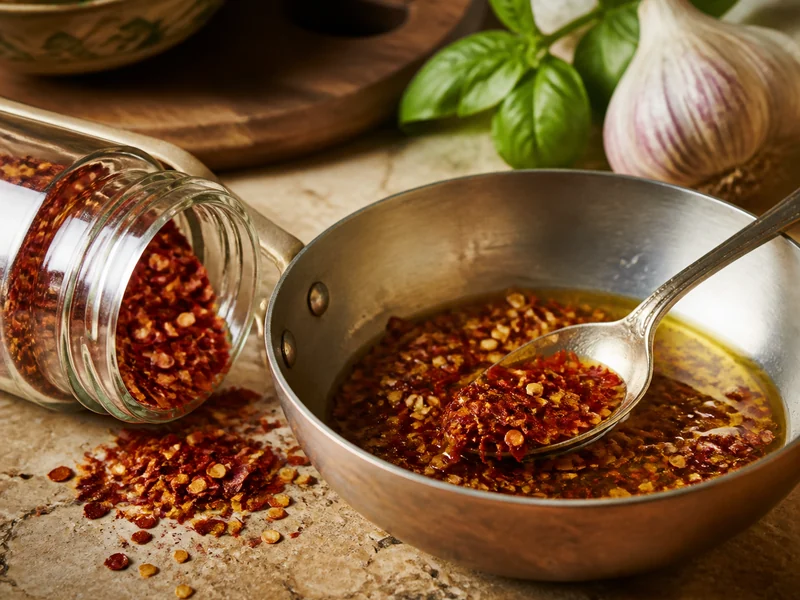
Quality varies considerably by brand. Look for flakes with visible red color and intact seeds, pale, uniform flakes have usually lost most of their volatile compounds.
Smell the jar if possible. Fresh flakes have a sharp, almost resinous aroma.
Store in a sealed container away from light and heat. A cabinet near the stove is convenient but shortens shelf life, heat and steam degrade potency fast.
Properly stored, flakes hold their heat for 12 to 18 months, though flavor fades before heat does.
Buy smaller quantities more frequently rather than a large jar that sits open for two years. Pre-ground flakes from specialty spice shops often outperform grocery store brands significantly.
Which Peppers Can Replace Red Pepper Flakes?
Direct comparisons show where flavor, form, and preparation differ in the Calabrian Chili vs Red Pepper Flakes and Cayenne vs Red Pepper Flakes matchups.
Compare Red Pepper Flakes with: Red Pepper Flakes vs Crushed Red
What Does Red Pepper Flakes Need to Grow Well?
Red pepper flakes aren't a single variety, they're a product. But growing the peppers that go into them is straightforward if you start with cayenne-type C. annuum varieties, which are the most common base.
Sow cayenne-type flake peppers indoors 8 to 10 weeks before the last expected frost. Germination is reliable at soil temperatures between 75 to 85°F.
Transplant after danger of frost passes, spacing plants 18 inches apart in full sun. These are warm-season crops that need at least 6 hours of direct light daily.
For flake production, the goal is full red ripeness, green or partially ripe pods won't dry with the right color or heat intensity. Most cayenne-type varieties reach maturity in 70 to 80 days from transplant.
Drying is the critical step. Hang whole pods in a warm, dry space with good airflow, or use a dehydrator set to 125 to 135°F until completely brittle.
Moisture left in the pods causes mold during storage. Once dry, crush with a spice grinder or mortar, leaving seeds in for more heat, removing for less.
The small, intensely hot piquin-type pepper is another candidate for homemade flakes if you want more punch in the final product.
Red Pepper Flakes FAQ


- Capsicum annuum L. - USDA GRIN Taxonomy
- USDA FoodData Central, Spices, pepper, red or cayenne
Species classification: C. annuum - based on published botanical taxonomy.