

KnowThePepper
What Does Gochugaru Taste Like? Smoke and Dried Fruit Before Gentle Heat
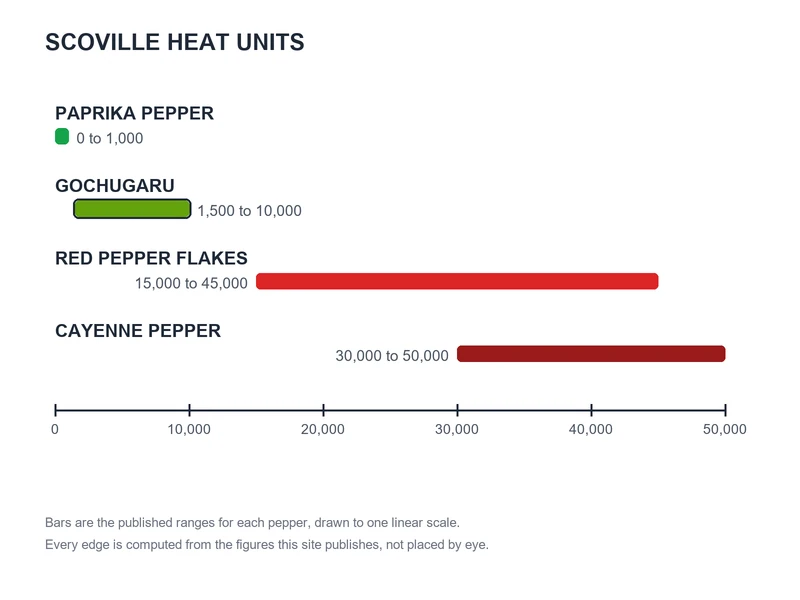
Gochugaru is the backbone of Korean cuisine, a sun-dried red pepper ground into coarse flakes with a flavor that hits smoky, sweet, and gently fruity before the heat registers. Ranging 1,500-10,000 SHU, it sits in the hot pepper zone but delivers warmth more than fire.
No Korean kitchen is complete without it.
- Species: C. annuum
- Heat tier: Hot (10K-100K SHU)
- Comparison: the same heat range as a jalapeño because their published ranges overlap
What Makes Gochugaru Different?
Gochugaru looks like crushed red pepper flakes but behaves nothing like them. The smell alone signals the difference, dried fruit and smoke rather than raw heat.
Gochugaru rewards a cook who notices that gap, because the flavour it delivers is not the one its appearance promises.
Gochugaru (C. annuum) is produced from elongated Korean red peppers that are sun-dried whole, then seeded and ground to varying textures, from coarse flakes to fine powder. The drying method matters enormously.
Sun-dried gochugaru develops a characteristic sweetness and mild smokiness that oven-dried versions simply don't replicate.
Heat sits between 1,500 and 10,000 SHU, roughly comparable to a Fresno's cultivation-dependent heat range - meaning the spice level varies by batch and brand. At the milder end, it's barely warmer than a strong paprika.
At the upper range, it has real presence without overwhelming.
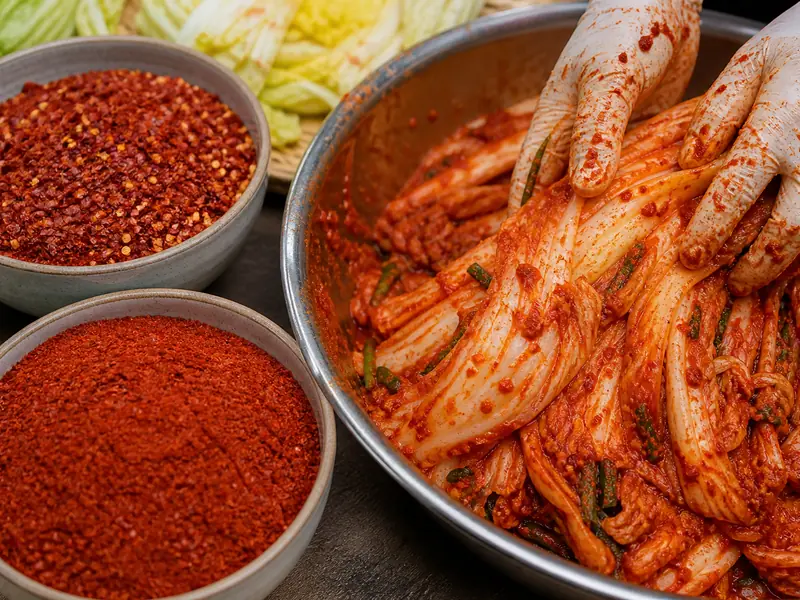
Color is one of gochugaru's most prized qualities. That vivid scarlet-orange hue transfers directly into kimchi, tteokbokki, and gochujang, making dishes visually striking.
Flavor-wise, expect sun-dried tomato-like sweetness layered with mild earthiness and a clean, lingering warmth, nothing like the sharp bite of gochugaru's moderate-heat dried flake form. It belongs to the broader the broader C. annuum family alongside paprika, jalapeños, and cayenne.
What Is the History of Gochugaru?
Peppers arrived in Korea via Portuguese traders around the late 16th century, likely through Japan following the Imjin War (1592-1598). Before that, Korean cuisine relied on black pepper, mustard, and ginger for heat.
The adoption was rapid. Within a century, red pepper had become central to Korean food culture, fundamentally reshaping dishes that had existed for centuries.
Kimchi as most people recognize it today, bright red, fermented, fiery, only became possible after gochugaru entered the pantry.
Korean farmers developed specific elongated pepper varieties suited to sun-drying, selecting for the sweet-smoky flavor profile now synonymous with the ingredient. The Korean pepper-growing tradition refined these varieties over generations, producing regional differences in heat and color that persist today.
Gochugaru remains one of the most consumed spices in Korea by volume.
How Hot Is Gochugaru? Heat and Flavor
The Gochugaru delivers 1.5K–10K Scoville Heat Units, placing it in the Hot tier (10K-100K SHU). That makes it roughly the same heat range as a jalapeño because their published ranges overlap.
Flavor notes: smoky and sweet.
What Nutrients Does Gochugaru Provide?
Gochugaru is nutritionally dense relative to how little you use. A 1-tablespoon serving delivers significant vitamin C and vitamin A (from beta-carotene), plus iron and small amounts of B vitamins.
Gochugaru's capsaicin content varies with heat level, and it contributes to the metabolic effects associated with chile consumption, increased thermogenesis and temporary appetite suppression. The red color comes from capsanthin, a carotenoid with antioxidant properties.
Calories are negligible at this serving size. The fermentation process in kimchi further enhances nutritional value, making gochugaru's contribution to fermented dishes more than just flavor.
Which Dishes Suit Gochugaru?
Gochugaru does things other dried peppers can't. The coarse grind holds texture in fermented dishes like kimchi, while the fine powder form dissolves smoothly into marinades and sauces.
Most Korean cooks keep both on hand.
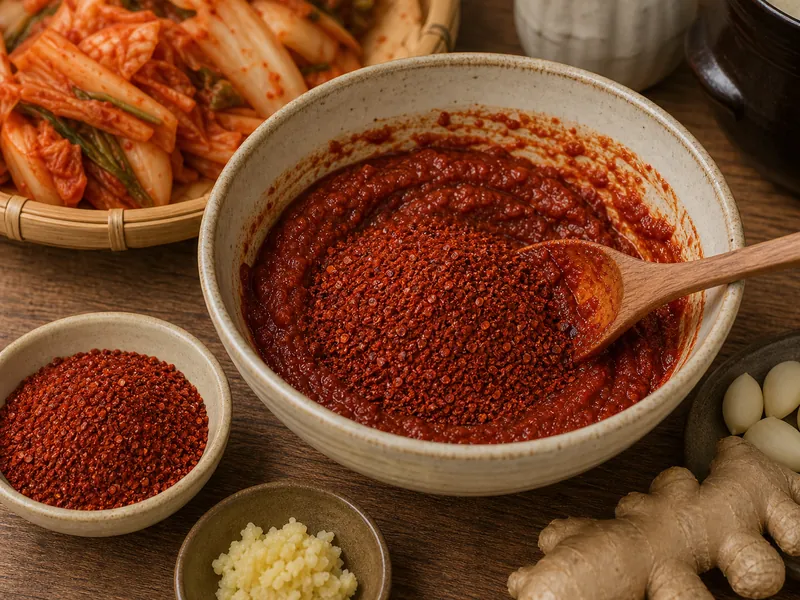
For making kimchi from scratch, coarse-ground gochugaru is non-negotiable, it coats cabbage leaves evenly and continues developing flavor through fermentation. Fine-ground works better in gochujang paste, soups like sundubu jjigae, and braised dishes.
Beyond Korean cooking, gochugaru works surprisingly well as a finishing spice on roasted vegetables, eggs, and pizza. The sweet-smoky character bridges the gap between smoked paprika and standard chili flakes.
If you're exploring Korean cooking, gochugaru is the essential starting point.
Heat comparison: gochugaru runs about 2x hotter than tabasco sauce at its upper range, but the sweetness softens the perception considerably. Compare it against morita chile and you'll notice gochugaru is fruitier and less earthy.
For a closer flavor match when gochugaru is unavailable, see the gochugaru vs cayenne or the gochugaru against paprika.
| Grind | What it does | Where it belongs |
|---|---|---|
| Coarse flakes | Holds texture and keeps working through fermentation | Kimchi, where it coats leaves evenly |
| Fine powder | Dissolves smoothly and colours the whole liquid | Gochujang, sundubu jjigae, marinades, braises |
| Either | Adds smoke and gentle warmth as a finishing spice | Roasted vegetables and eggs, outside Korean cooking |
Where Can You Buy Gochugaru, and How Do You Store It?
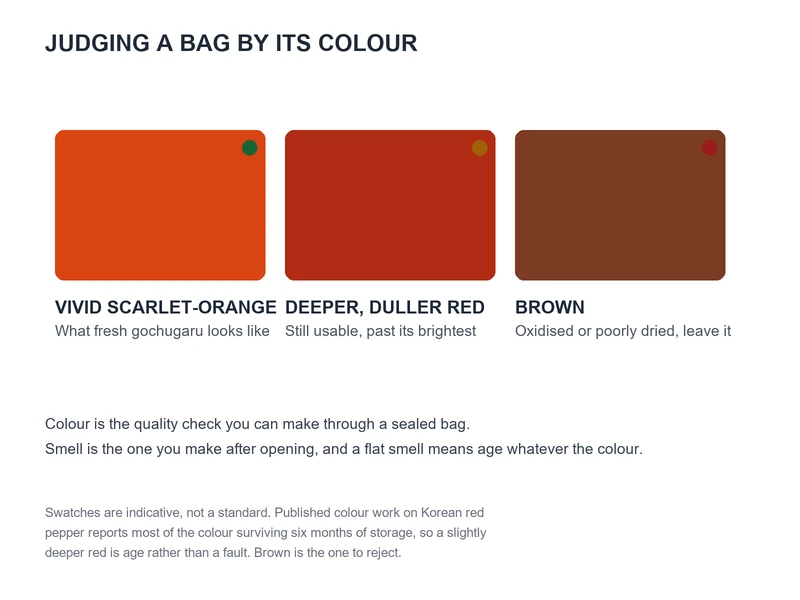
Look for gochugaru labelled sun-dried, taeyangcho, if you want the traditional process, though the measured colour gap against machine-dried is smaller than the price gap suggests. Color should be vivid scarlet-orange, not brown or dull red.
Brown color indicates oxidation or poor drying.
Korean grocery stores stock both coarse and fine grind. Most online retailers carry at least one.
Those shops also carry the brands worth using as a benchmark, Taekyung and Wang among them.
Store in an airtight container away from light. Refrigeration extends shelf life to 12-18 months and preserves color better than pantry storage.
Freezing works for long-term storage without quality loss. See gochugaru vs red pepper flakes if you're deciding what to stock.
What Can You Use Instead of Gochugaru?
Compare substitutes for Gochugaru by form, flavor, and heat before choosing a ratio. Measured adjustments must account for the dish and the concentration of the replacement.
Direct comparisons show where flavor, form, and preparation differ in the Aleppo vs Gochugaru and Gochugaru vs Kashmiri matchups.
Compare Gochugaru with: Gochugaru vs Urfa Biber
How Do You Grow Gochugaru at Home?
Growing gochugaru-style peppers is straightforward if you can give them a long, warm season. Start seeds indoors 8-10 weeks before last frost, these are C. annuum types that need consistent warmth to germinate, ideally soil temps around 80°F.
Transplant after all frost risk passes into full sun with well-draining soil. Plants reach 2-3 feet and produce heavily.
The elongated pods start green, then transition through yellow before reaching the deep red needed for drying. For a useful side-by-side on what to expect from the fresh green stage, the Korean green pepper shows how dramatically flavor shifts with ripeness.
Drying is where most home growers get tripped up. Traditional sun-drying requires consistent heat and low humidity over several weeks.
In humid climates, a food dehydrator at 125-135°F produces comparable results without mold risk. Peppers should feel leathery and pliable, not brittle.
For a complete growing peppers from seed, the process applies well to these varieties. Compared to something like the Black Hungarian, Korean red pepper types are more forgiving and higher-yielding for most home gardeners.
Gochugaru FAQ


- Kim et al., International Journal of Food Science and Technology 41(S1), effect of drying on antioxidant activity, ascorbic acid and colour in Korean red pepper
- Kim et al., International Journal of Food Science and Technology 43(5), pigment composition and colour value by harvesting time in Korean red pepper varieties
- Capsicum annuum L. - USDA GRIN Taxonomy
Species classification: C. annuum - based on published botanical taxonomy.