

KnowThePepper
What Is a Morita Pepper? A Softer, Fruitier Smoke-Dried Jalapeño
The morita pepper is a smoke-dried jalapeño produced primarily in Chihuahua, Mexico. Sitting at 5,000 to 10,000 SHU, it delivers about twice the heat of a fresh jalapeño with a distinctly fruity, tobacco-like smokiness.
Unlike its cousin the chipotle meco, moritas are dried shorter, keeping them pliable and deeply red-purple, a staple in Mexican mole sauces and salsas.
- Species: C. annuum
- Heat tier: Hot (10K-100K SHU)
- Comparison: the same heat range as a jalapeño because their published ranges overlap
What Kind of Pepper Is Morita Pepper?
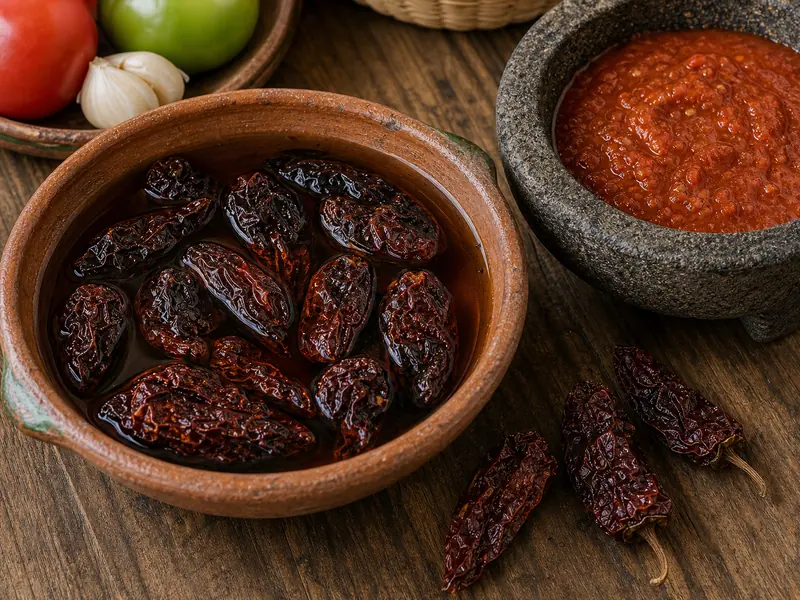
Moritas are jalapeños that have been smoked and dried to a leathery, dark reddish-purple state. The name means "little blackberry" in Spanish, a nod to both the color and the subtle fruity sweetness underneath all that smoke.
At 5,000 to 10,000 SHU, the heat sits in the hot-pepper heat band - noticeable but not aggressive. For comparison, a pequin pepper runs 40,000 to 60,000 SHU, making the morita considerably more approachable for everyday cooking.
The flavor is where moritas really separate themselves. The smoking process, typically done over pecan or oak, adds a deep, almost chocolatey tobacco note that no fresh pepper can replicate.
There's fruit underneath: dark cherry, dried plum, a hint of raisin.
That combination of smoke, fruit, and moderate heat makes moritas one of the more flexible dried chiles in the Mexican pepper tradition.
Morphologically, they start as standard jalapeños, tapered, 3 to 4 inches long - but the drying process shrinks and wrinkles them into something that looks almost like a dried berry. The skin stays pliable rather than brittle, which is a key quality indicator when buying.
They belong to the Capsicum annuum cultivar family, the same botanical family that includes bell peppers, the earthy dried mulato, and most of the peppers you'd find in a standard grocery store.
What Is the Origin of Morita Pepper?
Chipotle-style peppers, jalapeños smoked and dried for preservation, have roots stretching back to pre-Columbian Mesoamerica. The Aztecs smoked chiles as a preservation method long before Spanish contact, and the technique survived colonization largely intact.
The morita specifically emerged as a regional variation in northern Mexico, particularly in Chihuahua and Veracruz. The word "chipotle" itself comes from the Nahuatl chilpoctli, meaning smoked chile.
Moritas are technically a type of chipotle, distinguished from the chipotle meco by shorter smoke time, smaller size, and their characteristic pliable texture.
They entered American kitchens more broadly in the 1990s as interest in regional Mexican cooking grew. Today they appear alongside the mild earthiness of dried pasilla and other dried chiles in both home kitchens and restaurant prep across North America.
How Hot Is Morita Pepper, and What Does It Taste Like?
The Morita Pepper delivers 2.5K–10K Scoville Heat Units, placing it in the Hot tier (10K-100K SHU). That makes it roughly the same heat range as a jalapeño because their published ranges overlap.
Flavor notes: smoky and fruity.
Morita Pepper Nutrition Facts
Dried morita peppers are concentrated sources of several key nutrients. A 1-tablespoon serving of ground morita (roughly 7g) provides approximately 20 calories, 1g protein, 3g carbohydrates, and 1g fat.
Dried chiles are notably high in vitamin A (as beta-carotene) and vitamin C, though heat-sensitive vitamin C degrades somewhat during smoking. They also contribute iron, potassium, and dietary fiber - useful given how little you need to flavor a dish.
Capsaicin, the compound responsible for heat, has been studied for anti-inflammatory properties. The capsaicin explains why even small amounts affect the body systemically.
What Is Morita Pepper Best Used For?
Morita peppers work best when rehydrated. Soak them in hot water for 20 to 30 minutes, then blend into salsas, moles, or adobo sauces.
The soaking liquid is smoky gold, add it to braises or bean dishes rather than discarding it.
For a quick weeknight application, toast a couple of moritas in a dry skillet for 30 seconds per side, then blend with tomatoes, garlic, and onion for a smoky salsa roja. The smoke integrates differently than liquid smoke, more complex, less chemical.
They pair naturally with Pasilla de Oaxaca, and the two often appear together in complex mole negro. Moritas also work well in marinades for pork, chicken, or lamb, the fruit notes complement meat in ways that purely hot peppers don't.
For those who enjoy Gochugaru Flakes, moritas offer a Mexican parallel: a dried, processed pepper format that builds depth rather than just heat.
Ground morita powder can substitute for chipotle powder in any recipe. Use 1 teaspoon per 2 tablespoons of standard chili powder for a smokier profile.
They also work in pickling, see pickle peppers for techniques that preserve their fruity edge.
How Do You Buy and Store Morita Pepper?
Look for moritas at Latin grocery stores, specialty spice shops, or online retailers like Rancho Gordo or MexGrocer. Quality moritas should feel pliable and leathery - not brittle, not bone-dry.
Dark reddish-purple color indicates proper smoke time.
Pale brown suggests under-smoking or old stock.
Avoid bags with excessive dust or broken pieces, which signal age.
Store in an airtight container away from light and heat. Properly stored, they last 12 to 18 months at room temperature, or up to 3 years frozen.
Refrigeration works but can introduce moisture, use a well-sealed bag.
For fresh red alternatives with bright color and moderate bite, Fresno chiles are widely available at mainstream grocery stores when dried moritas aren't.
Which Peppers Can Replace Morita Pepper?
Compare substitutes for Morita Pepper by form, flavor, and heat before choosing a ratio. Measured adjustments must account for the dish and the concentration of the replacement.
Direct comparisons show where flavor, form, and preparation differ in the Chipotle vs Morita and Chipotle Meco vs Morita matchups.
How Do You Start and Grow Morita Peppers?
Moritas aren't a variety you grow, they're a processed product made from jalapeños. But growing the jalapeños yourself and smoking them at home is entirely achievable.
Jalapeños thrive in USDA zones 9 to 11 as perennials, but most gardeners grow them as annuals. Start seeds indoors 8 to 10 weeks before last frost.
Soil temperature for germination should reach 80 to 85°F - a heat mat makes a real difference for consistent sprouting.
Transplant outdoors once nighttime temps stay above 55°F. Space plants 18 inches apart in full sun.
They want consistent moisture but hate waterlogged roots, raised beds or containers with good drainage outperform compacted garden soil.
For home smoking, harvest jalapeños when they've turned fully red. Green jalapeños won't develop the same fruity depth.
Smoke over pecan or oak at low heat (180 to 200°F) for 4 to 6 hours, then continue drying until the skin is leathery but still pliable.
Compare this to Black Hungarian Pepper, which mature to deep colors but don't require the same post-harvest processing.
For heat tier context, jalapeños sit in the moderate heat classification before smoking, the morita's SHU reflects the dried, concentrated version.
Morita Pepper FAQ


- Varieties & Plant Breeding - Chile Pepper Institute, NMSU
- USDA FoodData Central - Dried Chile Peppers
- Diana Kennedy, The Art of Mexican Cooking - Chipotle and Morita Usage
-
Sourcing note: heat range is a widely cited figure, not an institutional measurement No university, government or research body publishes a Scoville measurement for this cultivar. The range given here is the figure growers and pepper references cite in common, and it has not been verified by a laboratory.
Species classification: C. annuum - based on published botanical taxonomy.