
Mexican Peppers by Fresh Form, Dried Form, and Use
Mexico is the birthplace of chili peppers. From mild poblanos to fiery habaneros, Mexican peppers form the backbone of one of the world's most influential cuisines.

All Mexican Peppers
Every variety in this collection, sorted by maximum Scoville heat rating. Click any card for the full profile with flavor notes, anatomy details, growing tips, and substitutes.
 Extra-Hot
Habanero
 Extra-Hot
White Habanero
 Extra-Hot
Orange Habanero
 Hot
Hot
Chiltepin
 Hot
Hot
Piquin Pepper
 Hot
Hot
Tabasco Pepper
 Hot
Hot
Aurora Pepper
 Hot
Hot
De Arbol
 Hot
Hot
Manzano Pepper
 Hot
Hot
Pasilla de Oaxaca
 Hot
Hot
Serrano Pepper
 Hot
Hot
Sport Pepper
 Hot
Hot
Morita Pepper
 Medium
Puya Pepper
 Medium
Jalapeño
 Medium
Chipotle
 Medium
Red Jalapeño
 Medium
Purple Jalapeño
 Medium
Jalafuego Pepper
View profile → Medium
Mirasol Pepper
 Medium
Costeño Pepper
 Medium
Guajillo Pepper
 Medium
Cascabel Pepper
 Medium
Mulato Pepper
 Medium
Pasilla Pepper
 Medium
Chilaca Pepper
 Medium
Chilhuacle Pepper
 Medium
Ancho Pepper
 Medium
Poblano Pepper
Species Breakdown
Mexico peppers span multiple Capsicum species. Each species has distinct characteristics, which the profiles below explain in detail.
What This Mexican Collection Includes
This page organizes 12 published Mexican pepper profiles for browsing, from serrano and chile de árbol to habanero, chiltepin, manzano, tabasco, and Pasilla de Oaxaca. It is a practical collection rather than a complete census of Mexico's landraces, market names, and dried chile traditions.
The old copy named Peppadew, Espelette, and Byadgi even though none belongs in the current inventory. Those unrelated peppers are removed here so the explanation, cards, species breakdown, and links describe the same set.
Fresh and Dried Names Change the Cooking Job
A Mexican chile name may describe a cultivar, a ripe stage, a dried form, or a regional preparation. Pasilla de Oaxaca is a dark dried chile with a smoky role, while fresh serrano is chosen for crisp texture and bright green flavor in salsa and garnishes.
Chile de árbol often reaches the kitchen as a slender dried red pod, but its name does not change between fresh and dried forms. Habanero is usually selected by ripe color and aroma, so drying every pepper into the same powder would erase the form differences that control a sauce.
Yucatan, Oaxaca, and Central Mexico Need Different Peppers
Mexico's official protected-origin system recognizes Chile Habanero de la Península de Yucatán, which ties the name to a defined peninsula and production specification. In this collection, ordinary, white, and orange habanero profiles provide the closest path into that aromatic Capsicum chinense branch.
Oaxaca leads to Pasilla de Oaxaca and its dark smoked character. Central and northern decisions more often begin with serrano, chile de árbol, piquín, or chiltepin, while manzano represents the thick-walled Capsicum pubescens branch with black seeds.
Habanero brings fruity Capsicum chinense aroma and high heat.
Pasilla de Oaxaca supplies dark color and smoked dried-chile depth.
Serrano, chile de árbol, piquín, and chiltepin cover fresh and dried decisions.
Heat Alone Cannot Choose a Mexican Chile
The published ranges run from the moderate serrano and manzano profiles through hotter piquín, tabasco, and chiltepin, then into the habanero group. Those numbers help set a safety boundary, but they do not tell a cook whether a pod is fresh, dried, smoked, thin-walled, thick-walled, grassy, fruity, or earthy.
Use the Scoville scale to rule out a pepper that is too hot, then make the final choice from form and flavor. One habanero is not a clean replacement for one dried Pasilla de Oaxaca even when both can make a sauce, because the first supplies fruity fresh heat and the second supplies dried smoky depth.
Choose the Pepper by Sauce and Texture
For a raw salsa, serrano supplies green flavor, crisp flesh, and direct heat without requiring rehydration. For a toasted table sauce or chile oil, dried chile de árbol contributes a narrow pod that can be toasted and broken into measured pieces.
Pasilla de Oaxaca belongs in sauces that need dark color and smoke, while habanero suits Yucatán-style preparations where fruit-forward aroma is part of the result. Manzano's thicker, juicier walls make it a different fresh-pepper decision, especially when visible pieces and texture matter.
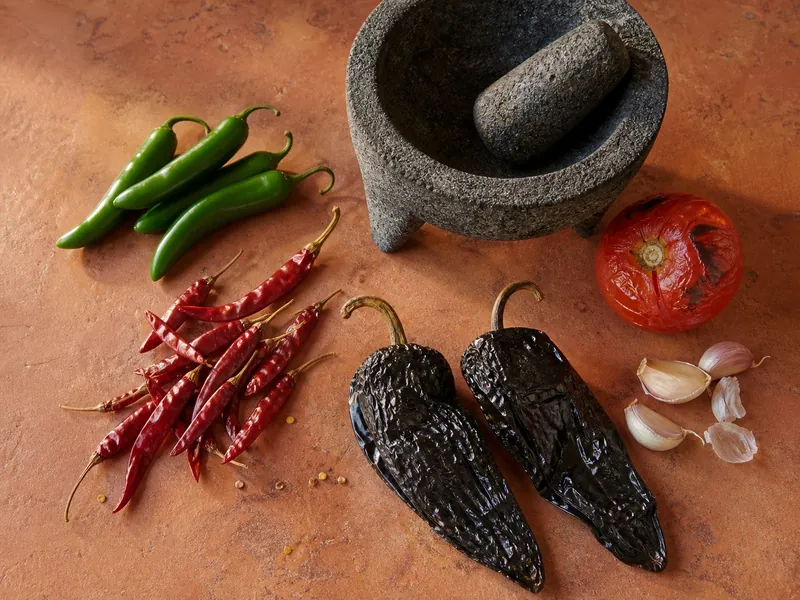
The image below keeps these forms in one real preparation scene. Fresh serranos, dried chile de árbol, dark Pasilla de Oaxaca, tomato, garlic, and a molcajete show why a single heat ranking cannot replace ingredient identification.
| Cooking job | Pepper | Reason |
|---|---|---|
| Raw salsa | Serrano | Fresh green flavor and crisp texture |
| Toasted table sauce | Chile de árbol | Slender dried pod and measured sharp heat |
| Dark smoky sauce | Pasilla de Oaxaca | Dried form, dark color, smoke |
| Fruity hot sauce | Habanero | High heat with Capsicum chinense aroma |
| Visible fresh pieces | Manzano | Thick, juicy walls |
Read the Name, Form, and Origin Together
Buy dried pods whole when identification matters because shape, skin texture, stem, and color remain visible. A bag labeled only Mexican chile powder does not reveal cultivar, smoke treatment, salt, or whether several peppers were blended.
For fresh pods, confirm the named cultivar and intended ripe color before using appearance alone. New Mexico State University's Chile Pepper Institute documents how diverse Capsicum can be, so a broad country label should open the comparison rather than end it.
Check the label before buying
- Look for the exact chile name, not only Mexican pepper.
- Confirm whether the product is fresh, whole dried, flakes, powder, or a blend.
- Check ripe color and pod shape against the individual profile.
- Treat a protected regional name and a generic market label differently.
Heat Level Distribution
How mexican peppers distribute across the Scoville scale. Click any tier to browse all peppers at that heat level.
Heat Range Comparison
Visual breakdown of where each variety falls on the Scoville scale. Wider bars show a larger documented SHU spread between individual pods.
The causes of pepper heat variation explain why pods from one cultivar do not always measure alike.
Related Comparisons
Side-by-side breakdowns of heat, flavor, and cooking uses. Each comparison covers Scoville ratings, pod anatomy, and substitution options.
 350K SHU
vs
8K SHU
350K SHU
vs
8K SHU
Habanero vs Jalapeno: Roughly 40x the Heat
The real split is not only heat. Habanero brings 100,000-350,000 SHU plus fruit and citrus. Jalapeno stays at 2,500-8,000 SHU with a… 350K SHU
vs
23K SHU
350K SHU
vs
23K SHU
Habanero vs Serrano: Salsa Heat or Fresh Crunch
Habanero is the fruit-forward extra-hot choice for mango salsa, Yucatan-style sauces, and small-dose hot sauce. Serrano is the crisp… 2.2M SHU
vs
350K SHU
2.2M SHU
vs
350K SHU
Carolina Reaper vs Habanero: A 10x Heat Leap
The Carolina Reaper and habanero share the same species and a fruity flavor base, but they sit in completely different heat… 50K SHU
vs
350K SHU
50K SHU
vs
350K SHU
Cayenne vs Habanero: Which Pepper Belongs in Your Dish?
Cayenne is the better choice for measured background heat, especially as powder. Habanero is much hotter and belongs in recipes that… 350K SHU
vs
100K SHU
350K SHU
vs
100K SHU
Habanero vs Thai Chili: Heat, Flavor, and Best Uses
Choose habanero when a sauce needs very high heat plus a fruity, citrus-like aroma. Choose Thai chili when small whole, sliced, or… 10K SHU
vs
350K SHU
10K SHU
vs
350K SHU
Fresno vs Habanero: Mild Red vs Searing Fruit
Use Fresno pepper when the dish needs visible red chile pieces, medium heat, pickles, or fresh salsa. Use habanero when a small…Browse all comparisons in our comparison hub, or use the pepper tools for calculators and finders.
Related Guides
Reference guides and recipes tied to the same pepper family, region, or use-case.


Explore Other Origins
Peppers evolved in the Americas and spread worldwide through the Columbian Exchange. Each region developed distinct varieties shaped by local cuisine and climate.
Frequently Asked Questions
Keep Reading
Jump into the wider database, heat tiers, comparisons, and substitute references without another card wall.