
Thai Peppers at 50,000–100,000 SHU, Told Apart by Name and Sold Form
Thai peppers deliver sharp, immediate heat that defines Southeast Asian cooking. Small but fierce, they're essential in curries, stir-fries, and dipping sauces.

All Thai Peppers
Every variety in this collection, sorted by maximum Scoville heat rating. Click any card for the full profile with flavor notes, anatomy details, growing tips, and substitutes.


Species Breakdown
Thailand peppers span multiple Capsicum species. Each species has distinct characteristics, which the profiles below explain in detail.
Prik Kee Noo Is the Tiny-Pod Decision
Prik Kee Noo is the tiny bird-chile path in this collection. A small pod can still deliver concentrated heat because physical size does not lower the listed 50,000 to 100,000 SHU range.
Use the full name when the dish or shopping list depends on this identity. Labels such as Thai chile or bird chile may describe a broad market category, so pod size alone is useful evidence but not complete cultivar proof.
Tiny pods are easy to overcount when several are chopped together. Count or weigh them before cutting, keep the trimmed stems visible until the batch is measured, and add only part of the prepared amount first.
Prik Jinda Provides a Longer Slender Pod
Prik Jinda is described in the database as elongated and red, with a bright, sharp flavor. That longer silhouette separates its visible lane from the smallest Prik Kee Noo pods even though both share the same published heat range.
The pod can be selected fresh for sliced chile texture or dried when a recipe needs a storable whole pepper. Changing from fresh to dried removes water and changes concentration, so equal pod counts do not guarantee equal impact.
When cutting a fresh pod, decide whether visible rounds, a fine mince, or a pounded paste best serves the dish. Smaller particles spread capsaicin and flavor more evenly, which makes the same measured pepper feel less localized in the finished food.
| Profile | Visible or label cue | Published heat |
|---|---|---|
| Prik Kee Noo | Tiny bird-chile lane | 50,000 to 100,000 SHU |
| Prik Jinda | Elongated red pod | 50,000 to 100,000 SHU |
| Thai Chili | Broad market name | 50,000 to 100,000 SHU |
| Thai Dragon | Named small elongated cultivar | 50,000 to 100,000 SHU |
Thai Chili Is an Umbrella Name That Needs Evidence
Thai Chili is the broadest name among these four profiles. It supports a general Thai-chile search, but it cannot settle a precise cultivar when a seed packet, comparison, or repeatable recipe requires one.
Check the package or market sign for an additional name, pod length, ripe color, origin, and sold form. If those details are absent, use the pepper for a general hot-chile role and avoid recording it as Prik Kee Noo, Prik Jinda, or Thai Dragon.
This boundary prevents a generic label from overwriting better evidence. It also helps explain why two products sold as Thai chiles can look different while still occupying a similar heat band.
Thai Dragon Needs the Named Cultivar Label
Thai Dragon is the named small, elongated red-pod profile in the inventory. Its 50,000 to 100,000 SHU range overlaps every other entry, so the words Thai Dragon on a reliable plant or product label carry more identity value than heat alone.
For gardeners, preserve the seed source and cultivar name through sowing, transplanting, and harvest notes. New Mexico State University’s Chile Pepper Institute treats cultivar identity separately from the broader Capsicum species, which supports keeping named seed records intact.
Do not infer this cultivar from any long red chile in a grocery bin. A visual match can narrow the search, but the supplier label and mature plant record are the stronger owners of identity.
Fresh, Dried, and Pounded Chile Need Different Doses
Fresh chile contributes water, crisp tissue, and a direct green or ripe flavor. A dried pod weighs less after moisture loss and can be toasted, infused, crushed, or ground, while a mortar spreads a fresh chile through a paste and increases contact across the dish.
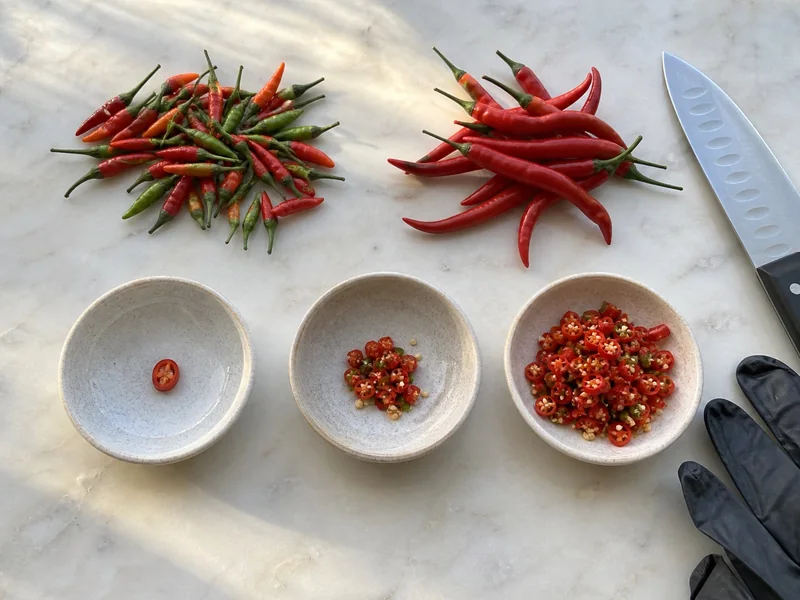
The in-post image shows a one-slice start, a small chopped portion, and a larger portion beside tiny and long pods. It teaches gradual escalation without pretending that the pictured bowls establish universal quantities for every diner or recipe.
Begin with the smallest practical portion, mix it through the full batch, then allow the heat to disperse before adding more. Record the named pepper, form, and amount when a result needs to be repeated.
Handle 50,000 to 100,000 SHU Peppers Deliberately
Wear gloves when cutting several pods, and keep the knife and board away from ready-to-eat food until washed. Capsaicin is concentrated in the inner placental tissue, so scraping out seeds alone does not remove every hot surface.
Avoid touching eyes and do not lean over smoke from toasted chiles. Ventilate the room, use moderate heat, and stop toasting when the pod becomes fragrant rather than waiting for visible smoke.
If the finished dish is too hot, adding plain bulk can lower the amount of chile per serving. A small spoon of sugar cannot remove capsaicin, and adding water may simply spread the same heat through a thinner dish.
Buy and Store the Exact Form You Need
Fresh pods should be firm, clean, and free of wet soft spots. University of Minnesota Extension recommends gentle handling and refrigeration after harvest, while dried peppers need an airtight container protected from moisture, heat, and light.
For dried pods, reject mold, insects, condensation, or a musty odor. For powder or flakes, check the ingredient list and date because a blend may contain salt, garlic, or other seasonings that alter a recipe.
Buy the smallest package that can be used while its aroma remains strong. Label any transferred container with the full pepper name and purchase date so Thai Dragon, Prik Jinda, and a generic Thai chile do not become anonymous red powder.
Keep the identity after purchase
- Record the full pepper or cultivar name.
- Mark fresh, whole dried, flakes, or powder.
- Write the purchase or harvest date.
- Store sealed away from moisture, heat, and light.
Heat Level Distribution
How thai peppers distribute across the Scoville scale. Click any tier to browse all peppers at that heat level.
Heat Range Comparison
Visual breakdown of where each variety falls on the Scoville scale. Wider bars show a larger documented SHU spread between individual pods.
The causes of pepper heat variation explain why pods from one cultivar do not always measure alike.
Related Comparisons
Side-by-side breakdowns of heat, flavor, and cooking uses. Each comparison covers Scoville ratings, pod anatomy, and substitution options.
 350K SHU
vs
100K SHU
350K SHU
vs
100K SHU
Habanero vs Thai Chili: Heat, Flavor, and Best Uses
Choose habanero when a sauce needs very high heat plus a fruity, citrus-like aroma. Choose Thai chili when small whole, sliced, or… 8K SHU
vs
100K SHU
8K SHU
vs
100K SHU
Jalapeno vs Thai Chili: Heat, Flavor, and Best Uses
Choose jalapeno when the pepper should provide crisp green flesh, rings, dice, or a stuffing cavity. Choose Thai chili when a small… 50K SHU
vs
100K SHU
50K SHU
vs
100K SHU
Cayenne vs Thai Chili: Heat, Forms and Best Uses
Cayenne is the easier dry seasoning, while Thai bird's-eye chile is the hotter fresh or dried pod for slicing, pounding, and frying… 50K SHU
vs
100K SHU
50K SHU
vs
100K SHU
Tabasco vs Thai Chili: Ferment or Fresh Fire
Tabasco pepper is the better choice for fermented mash, vinegar-forward sauce, and Gulf-style pickling. Thai chili is the better… 100K SHU
vs
23K SHU
100K SHU
vs
23K SHU
Thai Chili vs Serrano: Heat, Flavor and Substitutes
Thai chili and serrano are both members of C. annuum, but they land in very different places on the heat scale. Thai chili runs… 100K SHU
vs
100K SHU
100K SHU
vs
100K SHU
Thai Chili vs Bird's Eye: Are They the Same?
Thai chili and bird's eye chili often describe the same small hot pepper type in US references, but the labels are not precise…Browse all comparisons in our comparison hub, or use the pepper tools for calculators and finders.
Related Guides
Reference guides and recipes tied to the same pepper family, region, or use-case.


Explore Other Origins
Peppers evolved in the Americas and spread worldwide through the Columbian Exchange. Each region developed distinct varieties shaped by local cuisine and climate.
Frequently Asked Questions
Keep Reading
Jump into the wider database, heat tiers, comparisons, and substitute references without another card wall.