
Italian Peppers by Frying, Pickling, Drying, and Heat
Italian peppers tend toward mild-to-medium heat with sweet, fruity flavors. Calabrian chilis, pepperoncini, and Friggitello are kitchen staples across southern Italy.

All Italian Peppers
Every variety in this collection, sorted by maximum Scoville heat rating. Click any card for the full profile with flavor notes, anatomy details, growing tips, and substitutes.
 Hot
Hot
Peperoncino
 Medium
Long Hot Italian
 Mild
Mild
Pepperoncini
 Mild
Mild
Corno di Toro
 Mild
Mild
Jimmy Nardello
 Mild
Mild
Friggitello
 Mild
Mild
Marconi Pepper
 Mild
Mild
Bullhorn Pepper
 Mild
Mild
Sweet Italian Pepper
 Mild
Mild
Peperone di Senise
View profile →Species Breakdown
Italy peppers span multiple Capsicum species. Each species has distinct characteristics, which the profiles below explain in detail.
Eleven Profiles Cover Four Cooking Methods
This collection displays 11 Italian pepper profiles: Peperoncino, Long Hot Italian, Pepperoncini, Corno di Toro, Jimmy Nardello, Friggitello, Marconi, Bullhorn, Sweet Italian, Carmen, and Peperone di Senise. All are filed under Capsicum annuum, but their practical jobs divide into frying, roasting or stuffing, pickling, and drying.
Most profiles sit between zero and 500 SHU, while Long Hot Italian reaches 1,000 SHU and Peperoncino reaches 15,000 to 30,000 SHU. That distribution makes texture and processing at least as important as heat when choosing from the grid.
Friggitello and thin-walled sweet profiles blister and soften quickly.
Corno di Toro, Marconi, Bullhorn, Carmen, and related long pods need shape-level comparison.
Pepperoncini brings a mild whole-pod path shaped by brine.
Peperoncino brings heat while Peperone di Senise supports a crisp zero-heat tradition.
Peperoncino and Pepperoncini Are Different Searches
Peperoncino is the hot branch in this collection and points toward small red chiles used fresh, dried, or crushed. Pepperoncini is the mild pickling path at 100 to 500 SHU, commonly recognized as pale green or yellow-green whole peppers in brine.
The nearly matching words make a spelling-only purchase risky. Check whether the recipe wants dried heat or a tangy pickled whole pepper, then confirm the package form before choosing a profile.
| Name | Typical form decision | Published heat |
|---|---|---|
| Peperoncino | Fresh, dried, or crushed hot chile | 15,000 to 30,000 SHU |
| Pepperoncini | Mild whole pepper, often pickled | 100 to 500 SHU |
Frying Peppers Need Thin Walls and Tender Skin
Friggitello, Jimmy Nardello, and several sweet Italian profiles earn their place through pan behavior rather than Scoville intensity. A thin wall cooks quickly, blisters readily, and softens without requiring the long roasting time of a thick blocky pepper.
Use moderate heat and enough oil to coat the surface, then stop when the pod collapses and browns in spots. The goal is tender flesh and concentrated sweetness, not a uniformly black skin or a pepper boiled in its own moisture.
Horn Shapes Support Roasting and Stuffing
Corno di Toro, Bullhorn Pepper, Marconi Pepper, Sweet Italian Pepper, and Carmen Pepper occupy the long sweet-pod lane. Their tapered bodies create useful roasting strips and, when the cavity is broad enough, space for a narrow stuffed preparation.
Names such as horn, bullhorn, and sweet Italian can overlap in market language, so the individual profile and seed label should settle cultivar identity. Choose the actual wall thickness, pod width, and ripe color needed for the dish rather than treating every long red pepper as the same cultivar.
Peperone di Senise Is a Drying Decision
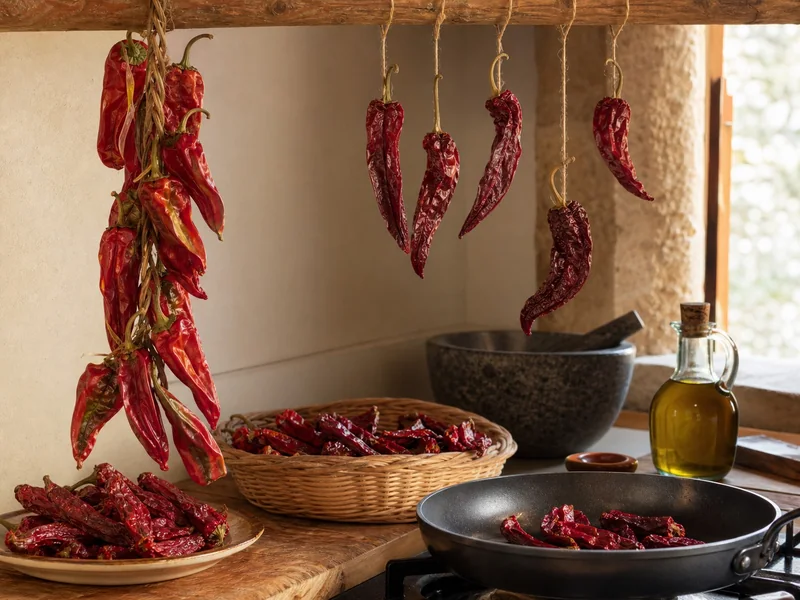
Peperone di Senise is the zero-heat profile whose thin walls support drying and the crisp pepper preparation called peperoni cruschi. The European Commission’s eAmbrosia register is the legal source for protected geographical names, so the exact protected label requires more evidence than a similar-looking dried pod.
Drying requires sound ripe fruit, airflow, and protection from moisture until the pod is brittle. A dried pod can then be crisped briefly in oil, but it is fragile and can burn quickly, which is why the in-post image shows the drying stage and the short pan step as one process.
Match the Pepper to the Pan, Jar, or Drying Rack
For pan frying, start with Friggitello or another thin-walled sweet profile. For roasting and stuffing, compare the horn-shaped group by cavity and wall thickness. Pepperoncini belongs in the brine decision, while Peperoncino supplies a hotter dried or crushed path.
These forms do not substitute at equal volume. Brine adds acid and salt, dried pods concentrate flavor and lose fresh texture, and crushed hot peperoncino disperses heat faster than a whole sweet frying pepper.
Choose by the cooking equipment
- Pan for thin-walled frying peppers.
- Roaster or stuffing dish for broad horn pods.
- Jar and brine for pepperoncini.
- Drying rack and brief oil finish for Senise-style pods.
Buy the Named Form and Store It Accordingly
Fresh peppers should be firm, clean, and free of soft wet spots, while pickled peppers need an intact seal and a label that identifies brine ingredients. Dried Senise-style or peperoncino pods should be dry rather than leathery with moisture, and flakes should be stored airtight away from heat and light.
If a shop label says only “Italian long pepper,” buy it for shape and general cooking use, not as proof of a named cultivar or protected origin. Preserve the package name when a recipe, comparison, or growing record depends on exact identity.
Heat Level Distribution
How italian peppers distribute across the Scoville scale. Click any tier to browse all peppers at that heat level.
Heat Range Comparison
Visual breakdown of where each variety falls on the Scoville scale. Wider bars show a larger documented SHU spread between individual pods.
The causes of pepper heat variation explain why pods from one cultivar do not always measure alike.
Related Comparisons
Side-by-side breakdowns of heat, flavor, and cooking uses. Each comparison covers Scoville ratings, pod anatomy, and substitution options.
 40K SHU
vs
30K SHU
40K SHU
vs
30K SHU
Calabrian Chili vs Peperoncino: Same or Different?
Peperoncino is a broad Italian word for hot chile, while Calabrian chili identifies a regional style or product claim. They can… 500 SHU
vs
1K SHU
500 SHU
vs
1K SHU
Banana vs Long Hot Italian: Pickle or Fry?
Banana pepper is the better pickling and sandwich pepper. Long Hot Italian is the better skillet pepper when olive oil, sausage, and… 500 SHU
vs
500 SHU
500 SHU
vs
500 SHU
Banana Pepper vs Pepperoncini: Sweet vs Tangy
Banana peppers and pepperoncinis look nearly identical in a grocery store pickle jar, and most people use the names interchangeably… 500 SHU
vs
500 SHU
500 SHU
vs
500 SHU
Friggitello vs Pepperoncini: Sweet vs Tangy
Friggitello and pepperoncini are both mild Italian peppers, but form and acidity decide the swap. Friggitello is a fresh, heatless… 500 SHU
vs
8K SHU
500 SHU
vs
8K SHU
Pepperoncini vs Jalapeño: Heat, Flavor, and Best Uses
Choose pepperoncini when a sandwich, salad, or braise needs gentle pepper flavor plus the sharpness of pickling brine. Choose jalapeño… 500 SHU
vs
500 SHU
500 SHU
vs
500 SHU
Corno di Toro vs Jimmy Nardello: Roast or Fry?
Choose Jimmy Nardello when you want a thin sweet pepper that blisters fast in olive oil. Choose Corno di Toro when you want more flesh…Browse all comparisons in our comparison hub, or use the pepper tools for calculators and finders.
Related Guides
Reference guides and recipes tied to the same pepper family, region, or use-case.


Explore Other Origins
Peppers evolved in the Americas and spread worldwide through the Columbian Exchange. Each region developed distinct varieties shaped by local cuisine and climate.
Frequently Asked Questions
Keep Reading
Jump into the wider database, heat tiers, comparisons, and substitute references without another card wall.