
Turkish Peppers: Dark Urfa and Isot Flakes or Brighter, Fruity Maras
Turkish peppers like Aleppo and Urfa biber bring fruity, sun-dried complexity. They're crushed into flakes that define Eastern Mediterranean seasoning.

All Turkish Peppers
Every variety in this collection, sorted by maximum Scoville heat rating. Click any card for the full profile with flavor notes, anatomy details, growing tips, and substitutes.


Species Breakdown
Turkey peppers span multiple Capsicum species. Each species has distinct characteristics, which the profiles below explain in detail.
Three Profiles Form Two Practical Flake Lanes
This collection displays three Turkish pepper profiles: Urfa Biber, Isot Pepper, and Maras Pepper. All are filed under Capsicum annuum and occupy a moderate 4,000 to 10,000 SHU band.
The useful split is product character. Urfa and Isot occupy the dark, smoky, earthy lane at 5,000 to 10,000 SHU, while Maras occupies a brighter red, fruity, earthy lane at 4,000 to 8,000 SHU.
Dark burgundy, smoky and earthy, with product texture worth checking.
An overlapping dark lane whose exact package wording should be preserved.
Brighter red, fruity and earthy, with a slightly lower published range.
Urfa Biber Is the Dark Burgundy Product Path
Urfa Biber is listed as an elongated, dark red pepper with smoky and earthy flavor. In flake form it is often selected for a deep burgundy color and a texture that may feel softer or slightly moist compared with very dry generic red pepper flakes.
That texture is a product cue, not permission to accept wet spoilage. The flakes should smell clean and peppery, remain free of visible mold, and arrive in a package that identifies ingredients, origin, and storage instructions.
Use a measured spoonful when first opening a new product because moisture and particle size change how densely the flakes fill a spoon. A darker color also cannot predict heat precisely inside the published 5,000 to 10,000 SHU range.
Isot and Urfa Can Overlap Without Erasing the Label
Isot Pepper carries the same 5,000 to 10,000 SHU range and the same smoky, earthy flavor description in this inventory. The route keeps Isot separate because shoppers may encounter that exact name, but the overlap means a label must do more work than color or heat.
Do not assume every package using Isot and Urfa Biber describes an identical cultivar, grind, moisture level, or processing claim. Preserve the exact wording from the producer when comparing products or trying to repeat a dish.
If one recipe says Urfa and another says isot, compare ingredient list, country or region statement, flake texture, and tasting description before deciding they can share the same measured starting amount. The article can map the overlap, while the package owns the contents of the specific bag.
Maras Is Brighter and Slightly Lower in Published Heat
Maras Pepper is listed at 4,000 to 8,000 SHU, with elongated red pods and fruity, earthy flavor. Its brighter red flake lane provides a different purchasing cue from the dark burgundy Urfa or isot style.
The narrower range does not make Maras sweet paprika or a heatless garnish. Start with a measured amount, mix it through the dish, and adjust after the fruitier red-pepper character and heat have dispersed.
Color still cannot prove regional identity. A generic bright red flake may look similar, but a named Maras product needs supplier evidence and, when a protected claim appears, the exact registered wording.
| Profile | Published heat | Product cue |
|---|---|---|
| Urfa Biber | 5,000 to 10,000 SHU | Dark burgundy, smoky, earthy |
| Isot Pepper | 5,000 to 10,000 SHU | Dark lane, exact package wording matters |
| Maras Pepper | 4,000 to 8,000 SHU | Brighter red, fruity, earthy |
Blooming Reveals Aroma Without Burning the Flakes
Warm oil can carry pepper aroma across a dish, but the oil should not be smoking. Add a small measured portion off the strongest heat, stir briefly, and move to the next ingredient before the flakes darken heavily.
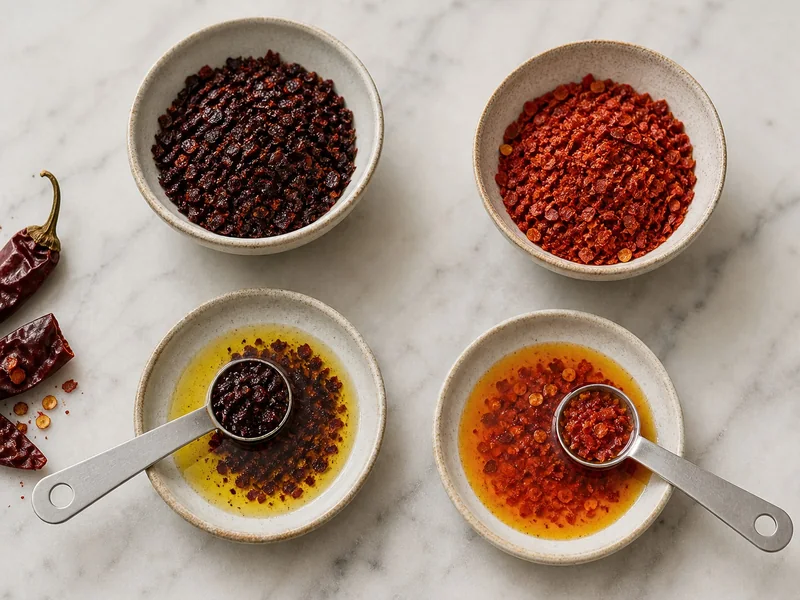
The in-post image keeps dark Urfa or isot-style flakes and bright Maras-style flakes in separate bowls and separate oil dishes. This shows how each colors the oil while preventing one product from being visually relabeled as the other.
Blooming is optional when dry flakes are needed as a finishing texture. Choose the technique according to whether the dish needs distributed aroma in fat or visible pepper particles at the table.
Whole Pods, Flakes, and Powder Do Not Dose Equally
A whole dried pod releases flavor more slowly and can be removed, coarse flakes remain visible, and fine powder disperses quickly. These forms have different surface area and packing density even when they came from the same named pepper.
Measure by weight when repeatability matters, especially after moving from coarse moist flakes to a fine dry product. If only volume is available, begin below the stated quantity after changing grind or moisture level.
A neutral crushed red pepper can supply heat when the named product is unavailable, but it may lack the dark processing character of Urfa or the fruitier lane of Maras. Treat that as a functional fallback rather than an identity match.
Regional and Protected Claims Need Exact Wording
The European Commission eAmbrosia register publishes protected geographical names and their official specifications. Use that record when a seller makes a protected-origin claim instead of deciding from pepper color, a city name printed decoratively, or a smoky aroma.
A product can still be useful when it does not carry a protected designation. The honest purchase decision is to record what the label actually establishes and avoid upgrading a general Turkish pepper flake into a certified regional product.
This evidence boundary also prevents the three profiles from collapsing into one generic red-flake page. Their overlapping heat is real, but name, processing, color, texture, and source remain separate comparison fields.
Buy Small Packages and Protect Their Texture
Check the seal, ingredients, origin statement, grind, moisture description, and date before buying. Reject packages with condensation, visible mold, insects, or a stale musty odor.
Store flakes airtight, cool, dark, and dry, away from steam above the stove. Use a clean dry spoon because introducing water into a softer flake product raises the spoilage risk and causes clumping.
Label any transferred container with the full product name and purchase date. Keeping Urfa Biber, Isot, and Maras visible on the container preserves the choice that this collection is designed to support.
Keep four details with the flakes
- Full product and regional name.
- Coarse flakes or fine powder.
- Moisture and storage instructions.
- Purchase date and intact seal.
Heat Level Distribution
How turkish peppers distribute across the Scoville scale. Click any tier to browse all peppers at that heat level.
Heat Range Comparison
Visual breakdown of where each variety falls on the Scoville scale. Wider bars show a larger documented SHU spread between individual pods.
The causes of pepper heat variation explain why pods from one cultivar do not always measure alike.
Related Comparisons
Side-by-side breakdowns of heat, flavor, and cooking uses. Each comparison covers Scoville ratings, pod anatomy, and substitution options.
 10K SHU
vs
10K SHU
10K SHU
vs
10K SHU
Aleppo vs Urfa Biber: Bright Flake or Dark Cure?
Choose Aleppo-style pepper for a brighter, redder finishing flake with tart fruit and a loose texture. Choose Urfa biber when a dish… 10K SHU
vs
10K SHU
10K SHU
vs
10K SHU
Aleppo vs Gochugaru: Finish Flake or Kimchi Flake?
Aleppo pepper is the better flake for finishing eggs, yogurt, hummus, lamb, vegetables, and olive oil. Gochugaru is the better flake… 10K SHU
vs
8K SHU
10K SHU
vs
8K SHU
Aleppo vs Maras: Two Mild Middle Eastern Flakes
Aleppo pepper is usually brighter, fruitier, and better as a finishing flake, while Maras pepper tends darker and works well when… 10K SHU
vs
40K SHU
10K SHU
vs
40K SHU
Aleppo vs Calabrian: Flake or Hot Paste?
Aleppo pepper is usually a fruity, mildly hot flake for finishing food, while Calabrian chili is a hotter regional ingredient sold in… 10K SHU
vs
4K SHU
10K SHU
vs
4K SHU
Aleppo vs Espelette: Flake Depth or Basque Finish?
Aleppo pepper is the better choice for oily, fruity flakes in beans, lamb, yogurt sauces, and tomato dishes. Espelette pepper is the… 10K SHU
vs
2K SHU
10K SHU
vs
2K SHU
Aleppo vs Kashmiri: Color, Heat and Best Uses
Choose Kashmiri chili when the recipe needs deep red color and almost no heat. Choose Aleppo pepper when you want fruity flakes you…Browse all comparisons in our comparison hub, or use the pepper tools for calculators and finders.
Related Guides
Reference guides and recipes tied to the same pepper family, region, or use-case.


Explore Other Origins
Peppers evolved in the Americas and spread worldwide through the Columbian Exchange. Each region developed distinct varieties shaped by local cuisine and climate.
Frequently Asked Questions
Keep Reading
Jump into the wider database, heat tiers, comparisons, and substitute references without another card wall.