Dried Peppers Rehydrate in One to Two Hours, Then Belong in the Fridge
Dried peppers rehydrate in about one to two hours, and any soak running longer than that belongs in the refrigerator rather than on the counter. Toasting first deepens aroma on thick-walled pods, the soaking liquid is worth keeping, and rehydrated peppers become perishable leftovers with a 3 to 4 day refrigerated window.
How long does it take to rehydrate dried peppers?
Clemson Extension puts it at one to two hours for dried vegetables, and dried chiles sit inside that window rather than outside it.
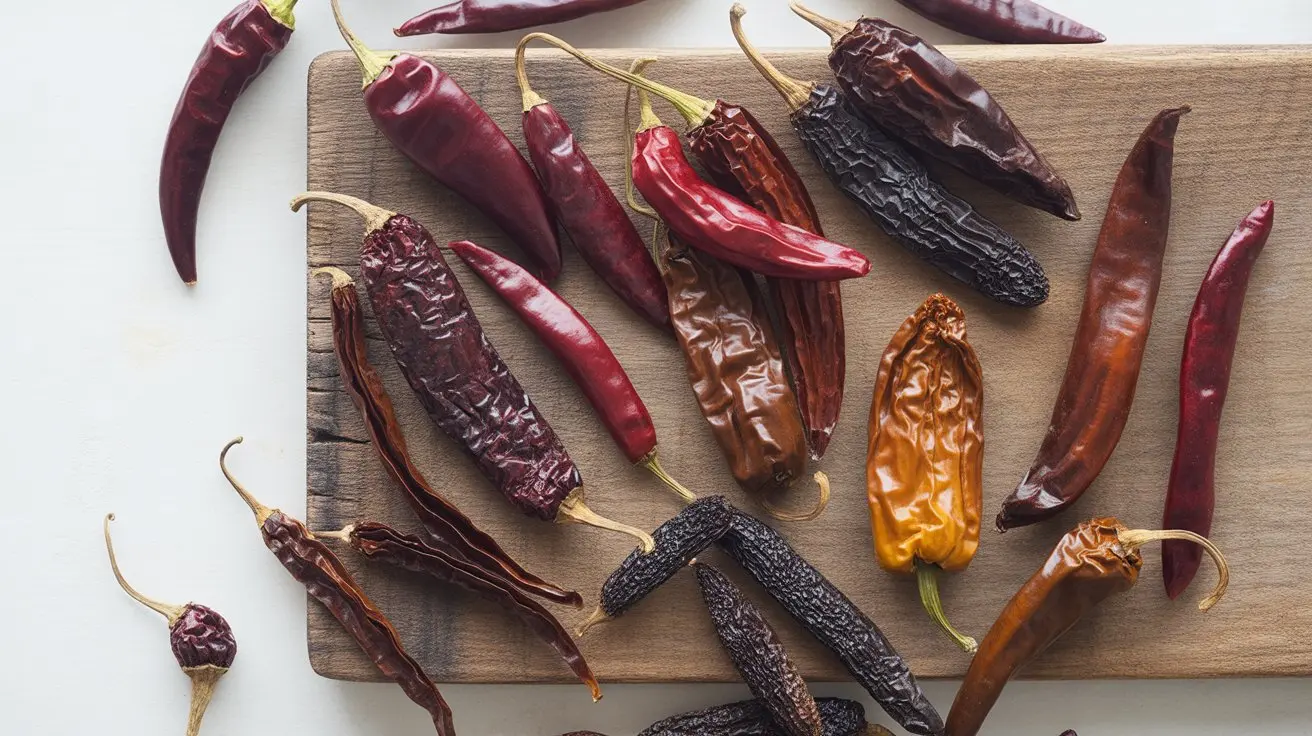
Wall thickness moves you within the range instead of past it. A thin de árbol softens near the short end, while a thick ancho or mulato wants the long end and a weight to hold it under.
The number that matters more is the cutoff. The same Clemson guidance is explicit that peppers soaked for more than two hours, or overnight, should be refrigerated.
That is a food-safety line, not a quality preference.
A bowl of peppers in water is a perishable food. UC Master Food Preservers give the rule as no more than two hours at room temperature, or one hour above 90 °F, with food left out past that limit discarded.
Any soak longer than two hours belongs in the refrigerator from the start.
Most recipes that call for an overnight soak were written without that rule in mind. Moving the bowl to the fridge costs nothing and changes nothing about the result.
Should you toast dried peppers before soaking?
A dry skillet over medium heat wakes up aromatic compounds that have been dormant since the pepper was dried. Work by smell rather than by a timer, because pod thickness decides how fast it happens.
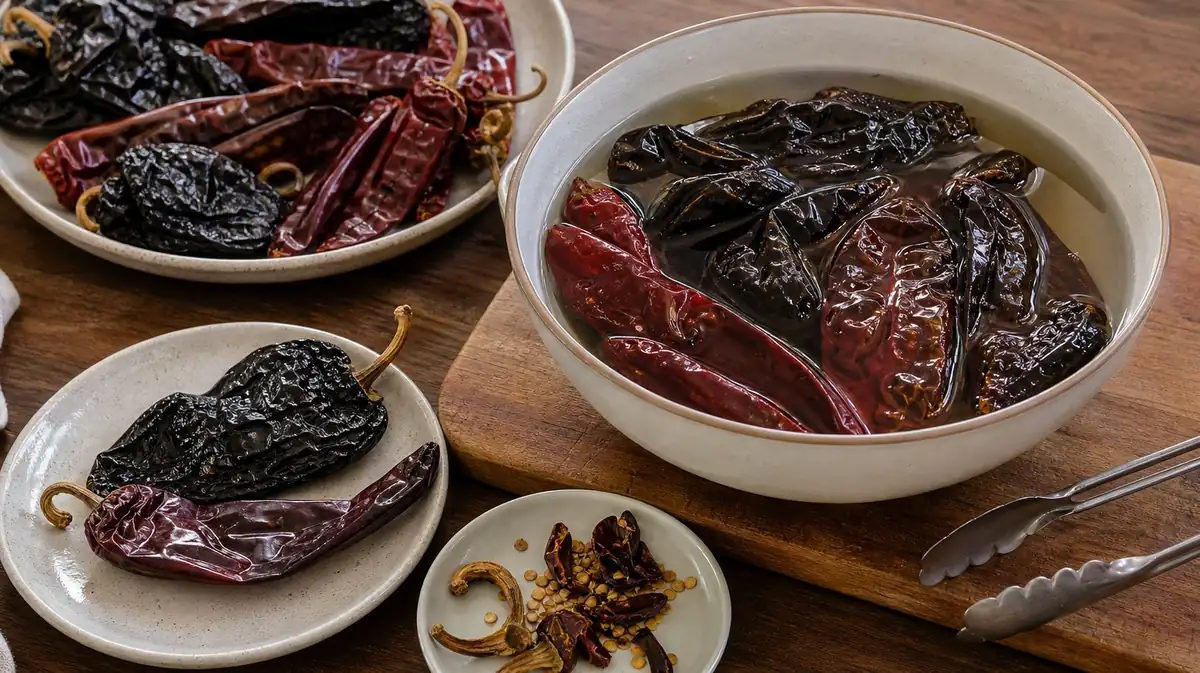
- Heat a dry skillet to medium, with no oil in it.
- Press the pod flat against the pan with a spatula so the whole surface makes contact.
- Pull it the moment it blisters slightly and smells nutty and smoky.
- Stem it, and shake the seeds out if you want less heat.
Step three is the one that goes wrong. Scorched skin turns bitter, and that bitterness carries straight into the sauce with no way to take it back out.
Toasting pays off most on thick-walled pods such as ancho and mulato, where the extra aroma has somewhere to go.
Thin, brittle chiles can skip it. Their flavor is delicate enough that a hot pan takes more than it gives.
Three soaking methods, and when each one fits
The three differ in what they preserve and what they cost you in time, not in how well they soften the pod.
Hot soak
Bring water to just under a boil, pour it over the stemmed peppers in a heatproof bowl, and weigh them down with a plate so nothing floats.
Skip the rolling boil. Violent heat toughens the skins into something rubbery rather than pliable, which is the opposite of what the soak is for.
The water turns dark and complex as it works. That is your soaking liquid, and it belongs in the sauce base, braise, or soup rather than the drain.
Taste it before committing it to a delicate dish, and discard it only if the bitterness is sharp, which usually means the toast went too far.
Water is the default, not the requirement. Soaking in stock, or in the tomato liquid the sauce is heading into anyway, puts the chile flavour straight into the dish instead of into a bowl you then have to make a decision about.
The trade is control. Plain water lets you taste what the pods actually gave up before anything else is in the pan.
Cold soak, in the refrigerator
Room-temperature water preserves floral and fruity notes that hot water drives off, and it leaves the flesh slightly firmer for slicing rather than blending.
Start it on the counter if you like, then move the bowl to the refrigerator once you pass the two-hour mark.
A long cold soak run at room temperature is the version to avoid. Cold soaking is worth doing, and it is worth doing in the fridge.
Toast, soak, then blend warm
For mole and sauce work, the full sequence gives the deepest result. Toast, hot soak, then blend the softened pods with some of their liquid while everything is still warm.
Warmth keeps fats from setting and helps the sauce emulsify smooth.
Add the soaking liquid gradually rather than all at once, starting with just enough to get the blades moving. Too much liquid early leaves you reducing the sauce later to recover the concentration you began with.
Pass the finished sauce through a fine-mesh sieve if the texture still reads gritty. If the sauce will be cooked further, strain before that step rather than after, since cooking concentrates the skin fragments along with everything else.
Skins are the other texture decision, and taking them off beats straining them out. Slipping the skin from the softened flesh before blending gives a smoother sauce than a sieve can, at the cost of a few minutes and a little colour.
Whatever the sieve does catch is worth keeping. Skins, seed fragments and the pulp left behind still hold flavour, and most kitchens tip them straight into the bin.
Spread that pulp thin on a dehydrator tray, take it back to dry, then grind it into a coarse seasoning that behaves like a rougher, fruitier chile flake.
Dry it at the same ceiling as anything else. Dehydrating peppers covers why 140 °F is the limit, and the recipe sites that suggest 125 °F for pulp are working below the finishing range the extension sources give.
How many pods a dish needs is what recipes answer worst, because pod size varies far more than a count suggests.
Our pepper conversion calculator converts between fresh pods, dried pods and teaspoons of powder as a starting point, then you add in stages and taste.
Handling hot dried peppers
Drying removes water and leaves the capsaicin behind, so a dried pod delivers its heat in a smaller package than the fresh one did. Rehydrating spreads that heat back through the flesh without reducing any of it.
The soaking liquid carries it too, which is the part people underestimate.
Wear gloves with hot dried chiles, and treat the soaking liquid as capsaicin-bearing rather than as plain water. Blend in a ventilated kitchen, hold a towel firmly over the blender lid for the first seconds so hot liquid cannot lift it, and keep your face away when you take the lid off.
Portion conservatively on the first attempt with an unfamiliar chile. One rehydrated pod blended into a quart of sauce can be enough to make the batch hard to eat.
The seeds are worth a note here, because they are commonly blamed for heat they do not carry. UC Agriculture and Natural Resources places the highest concentration of capsaicin in the white pithy parts around the seeds, and states there is almost none of it in the seeds themselves.
Removing seeds still reduces heat, but only because capsaicin from that pith clings to them on the way out.
How can you tell a dried pepper is still good?
Three checks, done with the pod in your hand before it ever meets water.
- Flex it. A good pod bends before it snaps. One that crumbles to dust was dried too hard or stored too long, and its aroma went with the moisture.
- Read the colour. Deep reds, dark browns and rich burgundies mean the pod was kept away from light. Faded, dusty skin points to a shelf near heat or a window.
- Smell it. Earthy and faintly sweet is what you want. Musty or hay-like means moisture reached the pod, and that can mean mould inside a pepper whose outside still looks sound.
Smell is the one that catches the real problems, because the other two can both pass on a pod that has gone quietly wrong inside.
Matching the method to the dish
The recipe decides the soak rather than the other way round.
- Sauces and moles. Toast, hot soak, then blend warm with the soaking liquid.
- Stews and braises. Hot soak, rough chop or leave whole, and add straight to the pot.
- Marinades. Cold soak in the refrigerator, then blend smooth for a cleaner flavor.
- Stuffed preparations. Hot soak until fully pliable, handling gently to keep the pod intact.
- Pastes and rubs. Hot soak, drain well, then blend with minimal liquid.
The soaking liquid changes role along with the method. A long braise mellows any bitterness, so pour it in freely, while a delicate sauce deserves a taste first.
Mild pods such as pasilla and ancho give a liquid you can use almost without thinking.
Guajillo gives one with noticeably more edge, and de árbol more again.
Those three, with ancho, are the ancho, guajillo and pasilla trinity that most Mexican sauce recipes assume is already in the cupboard.
How long do rehydrated peppers keep?
Once a pepper takes on water it is perishable again, and the shelf life it had as a dried pod is gone.
Illinois Extension gives refrigerated leftovers 3 to 4 days, and frozen leftovers 3 to 4 months. Rehydrated peppers and the sauces made from them sit under those figures rather than beyond them.
The longer windows that circulate for rehydrated chiles, five days in the fridge or a week for a blended sauce, have no extension source behind them.
Get leftovers into the refrigerator within two hours of serving, and reheat to 165 °F before eating, which is the temperature Illinois Extension names for killing bacteria that may be present.
Soaking liquid freezes well in ice cube trays, which is the one part of this worth doing in bulk. Each cube drops straight into a soup or braise over the following months.
Keep the peppers you have not soaked yet in their dry state as long as possible. Whole dried peppers hold aroma far longer than anything already rehydrated, so soak what the recipe needs rather than the whole bag.
Dried Peppers Rehydrate in One to Two Hours, Then Belong in the Fridge FAQ
- Drying Vegetables - Clemson Home and Garden Information Center
- Observe the 2-Hour Rule - UC Master Food Preservers
- Leftovers - Illinois Extension Food Safety
- Hot Peppers - UC Agriculture and Natural Resources