The Mexican Dried Chile Trinity: Ancho, Guajillo & Pasilla
The Mexican dried chile trinity is ancho, guajillo and pasilla, which are dried poblano, mirasol and chilaca. Ancho gives sweet body, guajillo gives bright fruit and most of the colour, and pasilla gives cocoa and earth. All three are mild, so they are chosen for flavour layering rather than heat.
What is the Mexican dried chile trinity?
Ancho, guajillo, and pasilla are the foundation of Mexican chile cookery, not because someone declared them important, but because generations of cooks kept reaching for them first.
These three dried chiles appear together in more classic Mexican sauces than any other combination. Mole negro, adobo marinades, enchilada sauces, pozole broth, the trinity shows up across regions, across centuries, across family kitchens and professional ones alike.
Understanding what each one does individually is the key to understanding why they work so well together.
What do ancho, guajillo, and pasilla taste like?
Set the numbers aside for a moment, because these three chiles sit at different points on the flavour spectrum, and that difference is what makes the combination so effective.
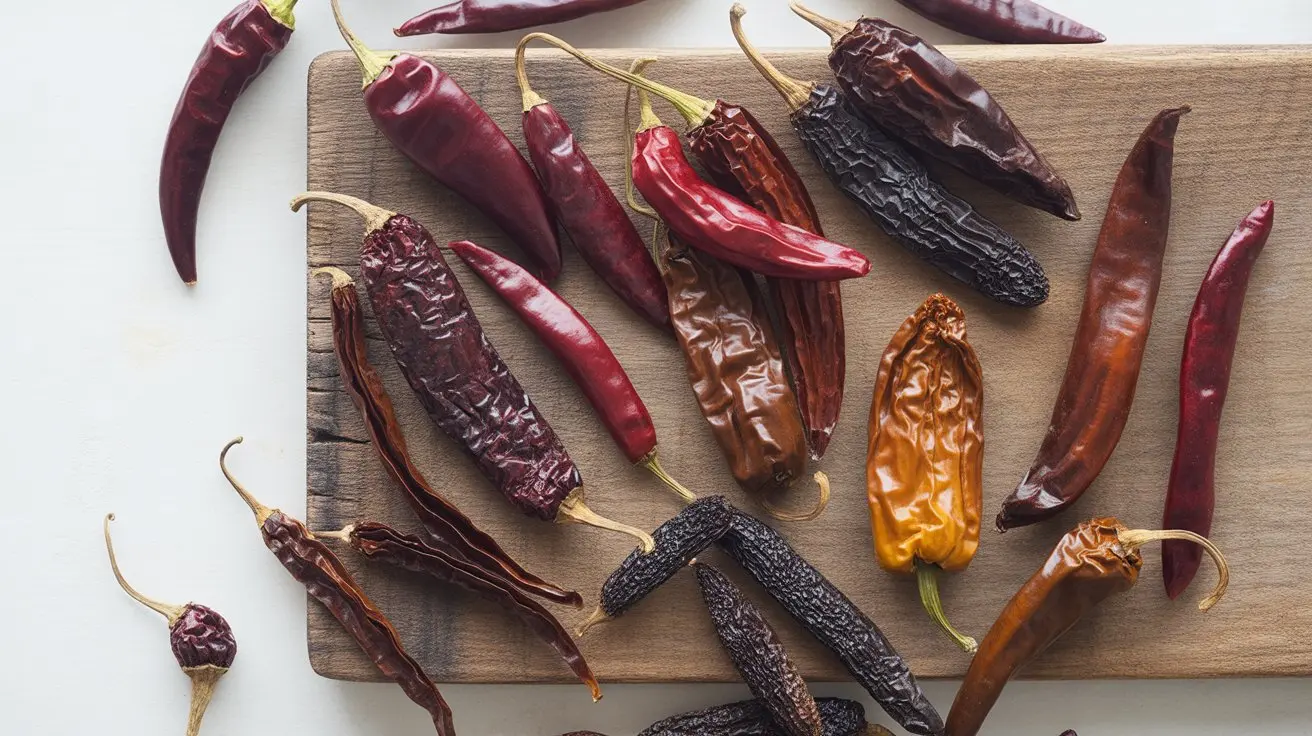
The ancho anchors a sauce, it contributes body and a dried-fruit richness that reads almost like chocolate at the back of the palate. It comes from the poblano pepper, dried until dark and wrinkled, and it carries the gentlest heat of the three.
The guajillo cuts through that sweetness with a more assertive, almost cranberry-like acidity. Its skin is tougher than the other two, but once properly rehydrated, it delivers a vivid red color and a clean, forward heat.
The pasilla sits somewhere between the two, darker and more complex than the ancho, with notes of dried herbs and a subtle bitterness that gives finished sauces their backbone.
Together, they cover sweetness, brightness, and depth. No single chile does all three at once.
The trinity at a glance
Every heat figure below is the range this site carries on that chile's own profile, and the fresh names are the ones the same pepper is sold under before drying.
| Dried name | Fresh form | SHU | What it brings |
|---|---|---|---|
| Ancho | Poblano | 1,000-2,000 | Sweet body, raisin and plum, the base layer |
| Pasilla | Chilaca | 1,000-2,500 | Cocoa and earth, the darker note |
| Guajillo | Mirasol | 2,500-5,000 | Bright red fruit and tang, the colour |
Read the table top to bottom and you have the order most recipes build in, body first, depth second, brightness last.
How hot are ancho, guajillo, and pasilla?
None of these chiles are heat-forward, which is part of why they work as sauce bases. The heat is present and it never drowns the flavour.
Ancho measures 1,000 to 2,000 SHU, which is mild territory and the same range this site carries for the fresh poblano it comes from.
Most people with any tolerance will read it as warmth rather than fire.
Guajillo runs 2,500 to 5,000 SHU, comparable to a mild jalapeño at the lower end. It has a noticeable but approachable heat, enough to feel present without dominating.
Pasilla falls between them at roughly 1,000 to 2,500 SHU. The earthy complexity tends to make it read as milder than the numbers suggest, since the flavor is doing a lot of the work.
For reference, a typical jalapeño runs 2,500 to 8,000 SHU, meaning even the hottest guajillo barely reaches jalapeño territory. These are medium-mild peppers built for flavor, not heat competition.
Why the fresh and dried names differ
All three are Capsicum annuum, the same species as bell peppers, jalapenos, and cayenne.
That species runs from no heat at all to scorching, and the trinity sits at its gentler, more complex end.
Each chile has a fresh counterpart, set out in the table above, and the pairing is the part that trips people at the market.
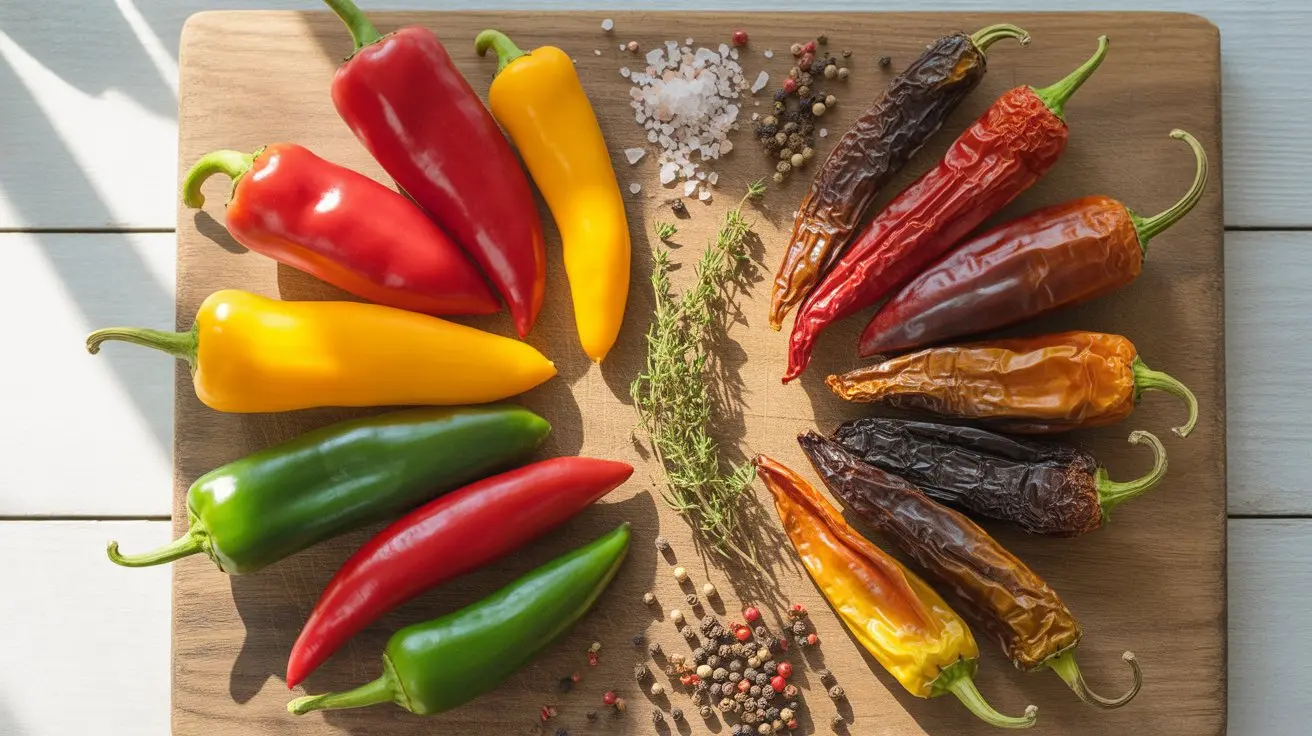
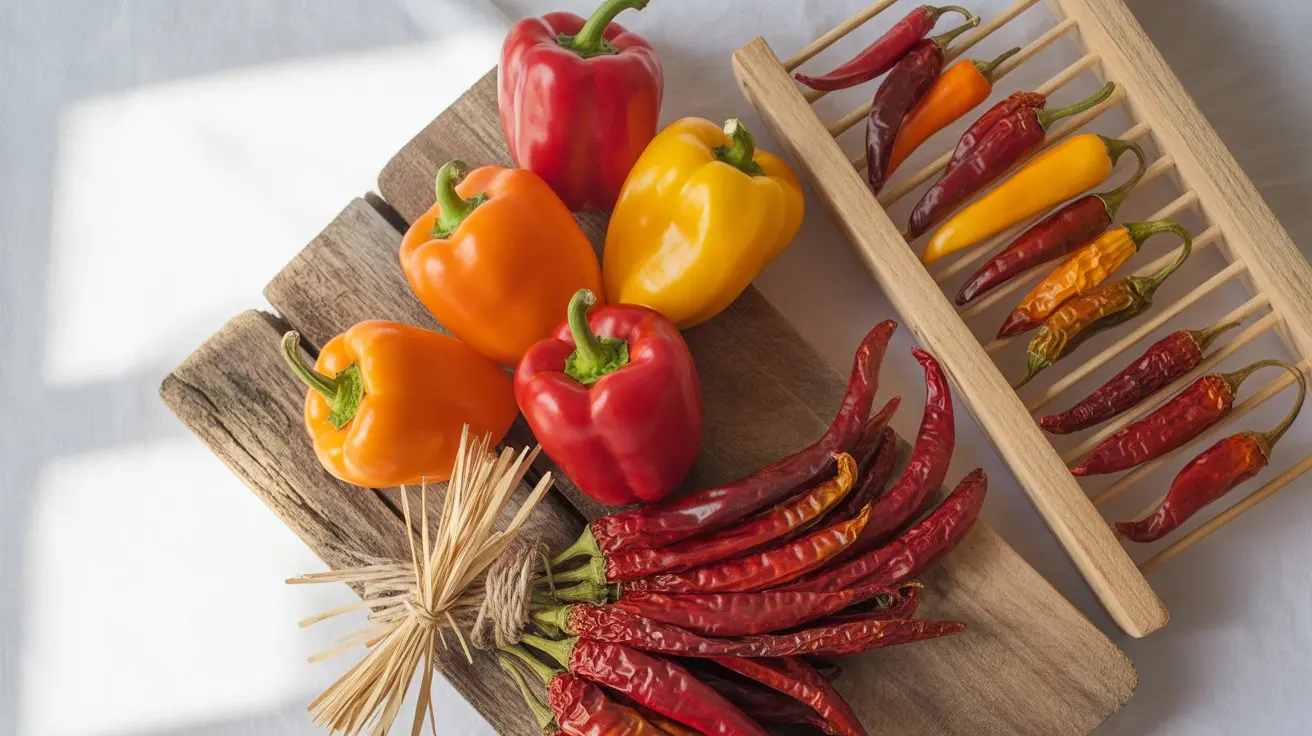
The drying process concentrates sugars, intensifies flavor compounds, and shifts the color from bright green or red to the deep burgundy-brown characteristic of these chiles.
This is why the names matter. "Ancho" refers specifically to the dried form while "poblano" refers to the fresh pepper, and using them interchangeably causes real confusion at the market.
Mexico's broader tradition of dried chile cultivation spans hundreds of varieties, but these three have achieved something like universal status, recognized and used from Oaxaca to the northern border states.
How should you toast and prepare dried chiles?
The most common mistake with dried chiles is skipping the toasting step. A quick pass over dry heat, a comal, cast iron pan, or directly over a gas flame, wakes up the volatile oils and adds a layer of complexity that rehydrating alone won't give you.
- Wipe the chile surface clean with a dry cloth.
- Remove the stem and shake out the seeds (keep some if you want more heat).
- Press flat on a dry, medium-hot pan for 15 to 30 seconds per side, until fragrant and slightly puffed. Don't scorch them. Bitterness follows quickly.
- Transfer to hot water and soak for 20 to 30 minutes until fully pliable.
- Drain, reserving the soaking liquid, it carries flavor and can be added back to sauces in small amounts.
Guajillo's tougher skin sometimes benefits from a longer soak, or blending with extra liquid and then straining through a fine mesh sieve to remove any remaining fibrous bits.
The soak itself is where most of the flavour is won or lost, and our rehydrating dried peppers guide covers the timing and the refrigeration rule.
Which dishes use ancho, guajillo, and pasilla?
The most famous application is mole negro, where all three appear alongside charred tomatoes, spices, and sometimes chocolate. Each chile contributes a distinct layer, the ancho's sweetness, the guajillo's acidity, the pasilla's earthy depth, and the result is a sauce that tastes like none of them individually.
Adobo marinades typically lean on guajillo and ancho together with vinegar, garlic, and cumin. The acid in the guajillo helps tenderize meat.
The ancho adds color and body. This combination is the base for chile colorado, birria, and red pozole.
Enchilada sauce is often where home cooks first encounter the trinity. A simple sauce of rehydrated guajillo and ancho blended with garlic and chicken broth produces something so much more complex than anything from a can that it changes how you think about the dish.
Pasilla tends to feature more prominently in Oaxacan cooking, mole negro oaxaqueno uses it heavily, and in chile negro sauces where the darker, more bitter notes are specifically desired.
Which chile labels get confused at the market?
Knowing the trinity is only half the job. The other half is getting handed the right chile, and the naming around these three is the worst in the Mexican pantry.
Poblano sold as pasilla
In California and parts of the Southwest, fresh poblano is routinely sold under the name pasilla. The two are not the same pepper and not even the same plant.
The tell is physical and immediate. A poblano is fresh, green, and heart-shaped with shoulders wide enough to stuff, while a real pasilla is a dried pod, long and narrow, in the same chocolate brown as an ancho.
If the sign says pasilla and the box holds glossy green peppers, you are looking at poblano. Our pasilla pepper vs poblano pepper works through where that habit came from and what it costs a recipe.
Mulato sold as ancho
These two are far easier to confuse, because both are dried poblano-family pods with the same wrinkled skin, the same chocolate colour, and a habit of being stacked side by side at the market.
The difference shows up in the pot rather than in the bin. This site carries mulato at 2,500 to 3,000 SHU against ancho at 1,000 to 2,000, so a blind swap roughly doubles the heat floor and pushes the flavour darker and more liquorice-like.
That is a good trade in a dark mole and a bad one in a mild enchilada sauce.
Ancho against mulato sets out which one each dish wants.
Pasilla de Oaxaca sold as pasilla
This is the one that actually hurts. Pasilla de Oaxaca is a smoked chile from a different tradition, and this site carries it at 15,000 to 25,000 SHU.
Set that against the 1,000 to 2,500 of an ordinary pasilla and you are holding something close to ten times hotter, with smoke on top of it.
Reach for it deliberately and it is superb. Grab it because the label said pasilla and you have changed the dish beyond recognition.
How should you balance the three chiles in a blend?
Recipes give you counts. What they rarely give you is the reasoning, which is what lets you adjust when your chiles are older, hotter, or simply different from the ones the recipe author had.
Work in the order the table sets out. Ancho lays the sweet body that everything else sits on, guajillo supplies the red and the brightness, and pasilla adds the dark edge that stops the sauce tasting flat.
Ancho usually leads on count because its job is volume rather than accent. Guajillo follows, since it carries most of the colour and a thin guajillo presence gives you a brown sauce rather than a red one.
Pasilla is the one to hold back, because its earthiness compounds as a sauce reduces and a blend that tasted balanced in the blender can turn bitter by the time it has simmered down.
Taste at the soaking-liquid stage rather than at the end, because that is the last point where you can change the ratio without cooking another batch of base.
When one of the three is missing entirely, our ancho substitutes guide covers what the usual stand-ins give up. Pasilla is the harder gap, and pasilla substitutes works through why nothing quite replaces the dark edge.
What can you substitute for ancho, guajillo, or pasilla?
When one member of the trinity is unavailable, the substitution logic follows flavor profile more than heat level.
For ancho, mulato chile is the closest swap, sharing the dried-poblano lineage and a similar sweetness in a slightly darker register. Dried mulato is sometimes sold alongside ancho in Mexican markets.
Guajillo is harder to replace because of its distinctive tang. In a pinch, New Mexico red chile provides similar color and mild heat, though without the berry-like brightness.
Neither swap gives you guajillo. Both give you colour and a mild heat, and you make up the brightness elsewhere in the dish.
Pasilla substitutes are tricky. Ancho can stand in for it in most recipes, though you lose the earthy, slightly bitter quality that makes pasilla distinctive.
Some cooks use a combination of ancho and a small amount of dried mulberry or prune to approximate the flavor.
What gives them their colour
The colour these chiles give a sauce is not incidental, and it is worth knowing what produces it.
Red Capsicum fruit takes its colour from capsanthin and capsorubin, the carotenoids research identifies as conferring the red, and yellow and orange varieties are described as devoid of them entirely.
Most carotenoids in ripe chile fruit are esterified with fatty acids, which makes them liposoluble. That is the reason a chile sauce bloomed in oil develops a deeper, more saturated colour than the same chiles simmered in water.
Capsaicin, the compound responsible for heat, is present in all three but at low concentrations relative to hotter chiles. The capsaicin explains why the same SHU number can feel different depending on how a chile is prepared and what it's combined with.
Buying and storing dried chiles
Quality matters more with dried chiles than most people expect, and all of it can be judged before you pay.
- Bend it. A good pod flexes rather than snapping, and one that cracks is past its best.
- Look at the skin. A slight sheen means the oils are still there, while dusty and matt means they are not.
- Smell it. Rich and fruity is what you want, and flat or musty is a pod that has been stored warm or damp.
- Check the colour. Deep chocolate or deep red, not faded, which is the sign of a shelf near a window.
Mexican grocery stores and Latin markets almost always carry better-quality dried chiles than general supermarkets, often at lower prices. Look for chiles sold loose or in clear bags where you can assess color and flexibility.
Store them in an airtight container in a cool, dark place. Colorado State Extension gives six to 12 months for properly stored dried vegetables, and dried chiles sit inside that window rather than beyond it.
Freezing in vacuum-sealed bags extends shelf life significantly without affecting quality.
Buy in modest quantities unless you cook with them frequently. A large bag of guajillo that sits in a warm cabinet for two years is worth less than a small, fresh batch purchased seasonally.
Why the trinity works
The combination isn't arbitrary. Each chile covers a different flavor dimension, sweetness, acidity, earthiness, and all three sit in a heat range that lets the flavor do the work without the burn taking over.
Individually, any one of them makes a good sauce. Together, they make something that tastes like it has been cooking for hours even when it hasn't, because the complexity is already built into the ingredients.
That's the real lesson of the trinity: Mexican chile cookery isn't about maximizing heat. It's about layering flavor with precision, using ingredients that have been refined over centuries of daily cooking.
The ancho, guajillo, and pasilla are the foundation because they're the most versatile, the most forgiving, and the most rewarding to learn.
The Mexican Dried Chile Trinity: Ancho, Guajillo & Pasilla FAQ
- Biochemistry and Molecular Biology of Carotenoid Biosynthesis in Chili Peppers (Capsicum spp.)
- Drying Vegetables - Colorado State University Extension