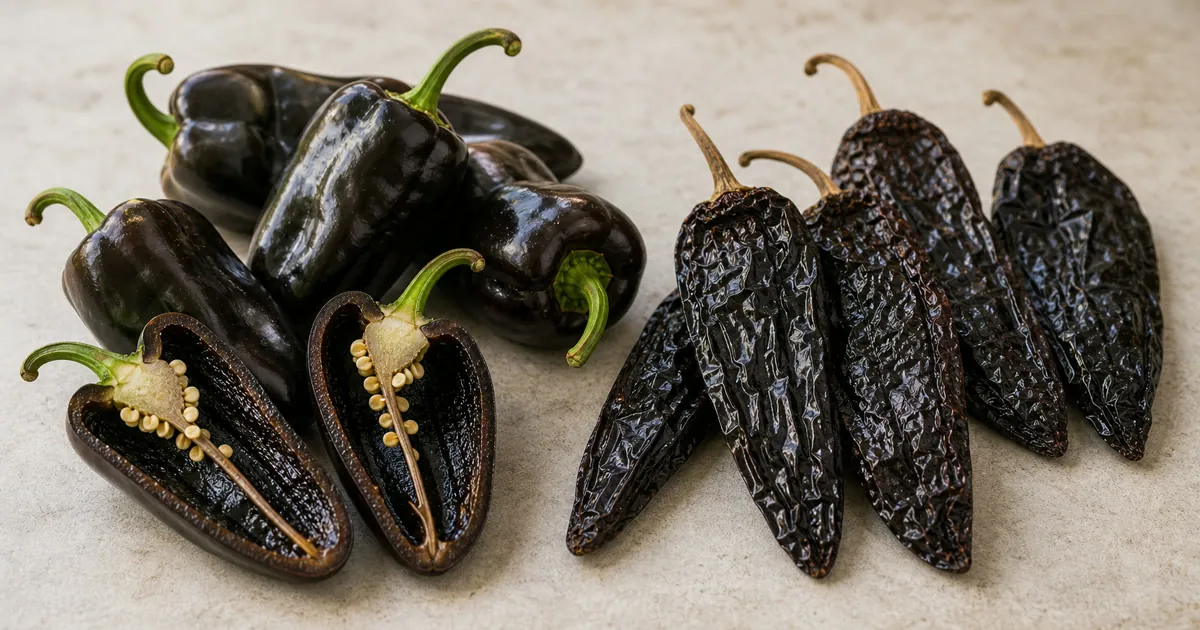
Choose pasilla pepper when the recipe needs a long dark dried chile for toasting, soaking, and blending. Choose poblano when the recipe needs a fresh broad green pepper for roasting, stuffing, or slicing. The biggest problem on this page is not heat. It is the market name trap that makes two different peppers sound interchangeable.
Comparison Contributor·Updated Jun 30, 2026·
Reviewed by
Karen Liu
Quick Comparison
Pasilla Pepper measures 1K–3K SHU while Poblano Pepper registers 1K–2K SHU. That makes Pasilla Pepper about 1.3x hotter by upper SHU range. Pasilla Pepper is known for its earthy and rich flavor (C. annuum), while Poblano Pepper offers earthy and rich notes (C. annuum).
Pasilla Pepper
1K–3K SHU
Medium · earthy and rich
Poblano Pepper
1K–2K SHU
Medium · earthy and rich
Heat difference: Pasilla Pepper is about 1.3× hotter by upper SHU range
Species: Both are C. annuum
Best for: Pasilla Pepper excels in everyday cooking and salsas, Poblano Pepper in fresh salsas and mild recipes
Pasilla Pepper is
about 1.3× hotter than Poblano Pepper.
Pasilla Pepper spans 1K–3K SHU.
Poblano Pepper spans 1K–2K SHU.
Use the ranges to decide whether the recipe needs a measured dose, a mild overlap, or a hard substitution limit.
Tools: Scoville chart and SHU calculator.
Pasilla sits in the medium heat intensity range - warm enough to notice, gentle enough to let flavor lead. The heat arrives slowly, more like a lingering warmth in the back of the throat than a sharp bite.
Fresh, the pepper is called chilaca - a long, slender, dark green to near-black pod that can reach 8-10 inches. The name "pasilla" (meaning "little raisin" in Spanish) refers specifically to the dried form, which wrinkles and darkens to a deep brown-black.
Poblano Pepper
earthyrichC. annuum
The poblano is Mexico's most important large fresh chile - the backbone of chiles rellenos, the base of mole negro, and the fresh pepper that most closely bridges mild bell peppers and the heat of jalapeños. At 1,000–2,000 SHU, most poblanos sit just at or below the lower range of jalapeños, though heat varies by growing conditions.
The pods are heart-shaped to elongated, typically 4–5 inches long, with thick walls that make them ideal for stuffing and roasting. That thick flesh holds up under heat without turning mushy, peels cleanly after charring, and carries a distinctly earthy, slightly fruity flavor that dried versions (anchos) concentrate into one of the most important chile flavors in Mexican cooking.
Both peppers belong to C. annuum, so they share some underlying flavor chemistry. However, Pasilla Pepper’s earthy and rich notes contrast with Poblano Pepper’s earthy and rich character.
Pasilla Pepper brings earthy and rich notes, so it fits recipes where that flavor should remain visible.
Poblano Pepper leans earthy and rich, which can change the sauce, filling, marinade, or garnish even when the heat range looks close.
Culinary Uses for Pasilla Pepper and Poblano Pepper
Pasilla Pepper
Dried pasilla chiles need rehydration before most uses. Toast them briefly in a dry skillet - 30 seconds per side until fragrant - then soak in hot water for 15-20 minutes.
The rehydrated flesh blends into mole negro, enchilada sauce, and adobo marinades. Its earthiness pairs naturally with chocolate, cumin, and dried fruit.
For mole negro, pasilla typically combines with mulato and ancho. Each contributes differently: pasilla handles the earthy bass note, ancho the sweetness, mulato the mid-range depth.
Poblano Pepper
Roasting and peeling is the starting point for most poblano applications. Hold the pepper over a gas flame or under a broiler, turning until the skin chars black on all sides - usually 8–12 minutes total.
For chiles rellenos, the roasted, peeled pepper gets a lengthwise slit, the seeds and placenta are removed (reducing heat to near zero), and the cavity is stuffed with cheese or picadillo. The key technique is keeping the stem attached - it holds the stuffed pepper together through battering and frying.
Mole negro uses dried ancho chiles as its primary body - typically 3–4 dried anchos per serving for 4–6 people, soaked in hot water for 20 minutes, then blended with chocolate, spices, and multiple additional ingredients. Fresh poblanos contribute a different flavor than dried anchos; they are not interchangeable in mole recipes.
Start near 1:1 by amount. The heat ranges are close enough that flavor, form, and recipe role matter more than a strict Scoville conversion.
Growing Pasilla Pepper vs Poblano Pepper
Growing notes
Pasilla Pepper
Pasilla plants are tall growers, often reaching 24-36 inches with good support. Start seeds indoors 8-10 weeks before last frost - the long growing season (roughly 80-85 days to maturity) means early starts matter.
Transplant after soil temperatures stabilize above 60°F. Space plants 18-24 inches apart - they branch outward as they mature, and crowding invites fungal issues on the dense foliage.
Water consistently but avoid waterlogged soil. These plants are somewhat drought-tolerant once established, but irregular watering during pod development causes blossom drop and misshapen fruit.
Growing notes
Poblano Pepper
Poblanos grow well in most North American climates given a full growing season. Start seeds indoors 8–10 weeks before last frost at 75–85°F soil temperature.
Transplant spacing: 18–24 inches apart in full sun with 6–8 hours of direct light daily. Poblanos are slightly more shade-tolerant than most hot peppers, though full sun produces better yield and more developed flavor.
Poblanos take 65–80 days from transplant to green maturity - the standard harvest stage for fresh cooking. Leaving them to ripen to red takes another 2–3 weeks and transforms the flavor toward sweetness.
Where They Come From
Origin & background
Pasilla Pepper
Mexico · C. annuum
Pasilla peppers trace back centuries in central and southern Mexico, particularly Oaxaca and Michoacán, where dried chiles formed the foundation of complex regional sauces. The deep-rooted Mexican pepper tradition embraced pasilla as an essential mole ingredient long before Spanish contact documented it.
One persistent naming confusion: in California and parts of the American Southwest, fresh poblano peppers are sometimes mislabeled "pasilla." In traditional Mexican usage, pasilla refers strictly to the dried chilaca.
Origin & background
Poblano Pepper
Mexico · C. annuum
The poblano takes its name from Puebla, the central Mexican state where it has been cultivated for centuries. Puebla is one of Mexico's most culinarily significant regions - home to mole poblano, the complex sauce built around dried anchos (dried poblanos) that represents one of Mexico's most celebrated culinary achievements.
Pre-Columbian cultivation of large C. annuum varieties in Mesoamerica is well-documented archaeologically. The poblano's size, mild heat, and thick flesh suggest it was bred over generations for culinary versatility - the thick walls that survive stuffing and roasting are agricultural decisions, not accidents.
Buying & Storage
Whether you’re shopping for Pasilla Pepper or Poblano Pepper, the same quality indicators apply. Fresh peppers should feel firm and heavy for their size, with taut, glossy skin and no soft or wet spots. Minor stem cracks known as “corking” are perfectly normal and often indicate a mature, flavorful pod.
Selection
What to look for
Firm pods with taut skin and consistent color
Should feel heavy relative to size
Minor stem cracks (“corking”) are normal
Avoid anything soft, shriveled, or with dark wet spots
Storage
How to store them
Fresh: Paper bag, crisper drawer, 1 to 2 weeks
Frozen: Wash, dry, freeze on sheet pan, 6+ months
Dried: Airtight and away from light, up to 1 year
Mistakes to avoid
Common misses
Pasilla Pepper
Equating green with unripe. Different products.
Overcooking. Cell walls break down fast.
Sealed plastic storage. Causes rot. Use paper bags.
Common misses
Poblano Pepper
Equating green with unripe. Different products.
Overcooking. Cell walls break down fast.
Sealed plastic storage. Causes rot. Use paper bags.
Final call
Pasilla Pepper vs Poblano Pepper
Pasilla Pepper and Poblano Pepper
sit in the same heat tier but serve different roles. Pasilla Pepper delivers about 1.3× more upper-range heat with its distinctive earthy and rich character.
Poblano Pepper, with its earthy and rich profile, excels in everyday cooking.
Heat gap about 1.3× by upper rangePasilla Pepper earthy and richPoblano Pepper earthy and rich
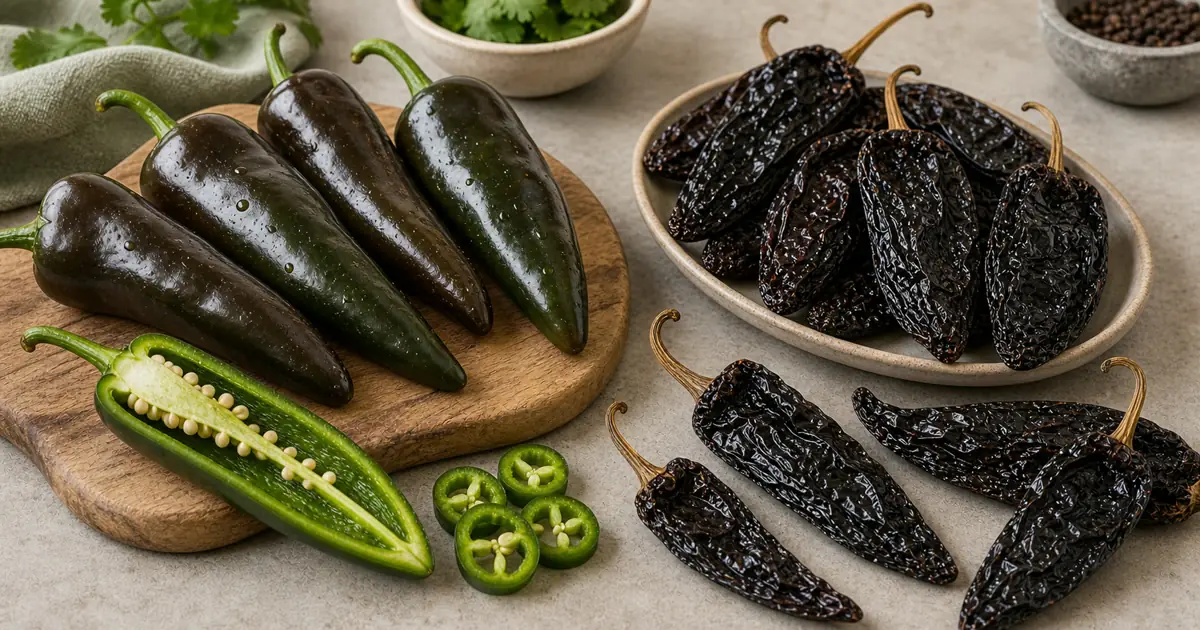
Start with the correction. True pasilla is the dried form of chilaca, not a dried poblano. Poblano is a fresh broad chile that becomes ancho when dried ripe. That means pasilla and poblano are not a fresh-versus-dried version of the same pepper.
This confusion gets worse in some U.S. stores because fresh poblanos are sometimes labeled "pasilla peppers." If you buy from the sign alone, you can leave with the right heat range and the wrong ingredient.
So the first decision is visual, not numerical. A real pasilla is a long, narrow, dark dried pod. A poblano is a fresh, broad-shouldered green pepper with enough body to roast and stuff.
Once you lock that in, the rest of the page gets easier. Pasilla belongs in the dried-chile pantry. Poblano belongs in the produce section.
Long Dried Pod Or Broad Fresh Wall
Form changes everything here. Pasilla usually runs about 1,000 to 2,500 SHU, while poblano usually runs about 1,000 to 2,000 SHU. That overlap is real, but it does not answer the cooking question.
Pasilla is thin, wrinkled, and dry enough that the usual prep starts with a quick toast and a soak. Poblano is thick-walled and moist enough to char, peel, slice, or fill. One enters the blender. The other often enters the broiler.
Their textures after prep stay far apart too. Rehydrated pasilla adds dark sauce body and dissolved flavor. Roasted poblano still feels like a pepper on the plate, even when the flesh softens.
That is why heat numbers mislead beginners in this comparison. Two peppers can sit near the same SHU zone and still solve opposite kitchen problems.
What The Flavor Does In A Recipe
Pasilla tastes dark, earthy, and a little raisin-like once toasted and blended. It works best when the flavor has room to spread through a sauce, braise, adobo, or mole-style base.
Poblano tastes greener and richer in a fresh way. Roasting gives it smoke and depth, but the pepper still reads as a vegetable instead of a dried spice. That is why it works in rajas, chiles rellenos, creamy roasted sauces, and chopped fillings.
The easy shortcut is this: pasilla darkens a sauce from inside, while poblano changes the shape and feel of the dish. The fresh-dried split inside the poblano family belongs closer to ancho vs poblano. Pasilla stays separate because it comes from chilaca, not poblano.
Recipe Verbs Pick The Winner
Read the verbs before you shop. If the recipe says toast, soak, puree, blend, or strain, pasilla is probably the right move. If it says char, peel, stuff, slice, or roast whole, poblano is usually the better fit.
That is why pasilla shows up in darker red sauces and blended chile bases, while poblano shows up in roasted strips, stuffed peppers, and skillet dishes. Even when both end up in Mexican cooking, they do not enter the pan at the same moment or with the same job.
Cooks who want to follow pasilla back to its fresh form can use chilaca vs pasilla pepper. This comparison stays on the kitchen choice between a dried dark pod and a fresh broad green chile.
When a cook ignores the verbs and shops by color or mildness alone, the dish usually ends up flatter, greener, or clumsier than the recipe planned.
Swap Only If The Method Still Makes Sense
Swapping poblano for pasilla rarely works cleanly. A fresh poblano adds water, bulk, and a greener flavor to a sauce that expected a dark dried chile. You can roast it first and reduce liquid elsewhere, but the result still will not taste like pasilla.
Swapping pasilla for poblano fails for the opposite reason. Rehydrated pasilla can help flavor a blended sauce, but it cannot replace a whole stuffed pepper or a roasted strip in rajas. The pepper already lost the walls and fresh weight that those dishes rely on.
The narrow exception is a blended soup or sauce that only needs some earthy chile depth. In that kind of pot, pasilla and poblano can share space. Outside that narrow case, the safer rule is simple: do not swap across forms unless you are willing to rebuild the method, not just the teaspoon count.
This is also where label confusion does the most damage. A cook who thinks pasilla means fresh poblano can follow the recipe exactly and still get the wrong dish.
Shop Dried Or Fresh
Buy pasilla when the dried pods look long, dark, and flexible enough to bend without crumbling. Buy poblano when the fresh peppers feel heavy, glossy, and broad enough for the job, especially if stuffing is involved.
Store pasilla like a dried chile. Keep whole pods airtight, dark, and dry until you need to toast them. Store poblano like fresh produce. Keep the pods cold and dry, then roast or use them while the skin still feels tight.
If the label says pasilla but the pepper in front of you is fresh and broad, stop and check the recipe again. That one market habit causes more mistakes in this comparison than heat ever will.
Fact-Checked & Expert Reviewed
Editorial Standards: Head-to-head comparisons include blind tasting when applicable. Heat levels cross-referenced with multiple sources. All substitution ratios tested side-by-side.
Review Process:
Written by
James Thompson
(Lead Comparison Reviewer)
, reviewed by
Karen Liu
(Lead Fact-Checker & Science Editor)
. Last updated June 30, 2026.
Pasilla Pepper vs Poblano Pepper FAQ
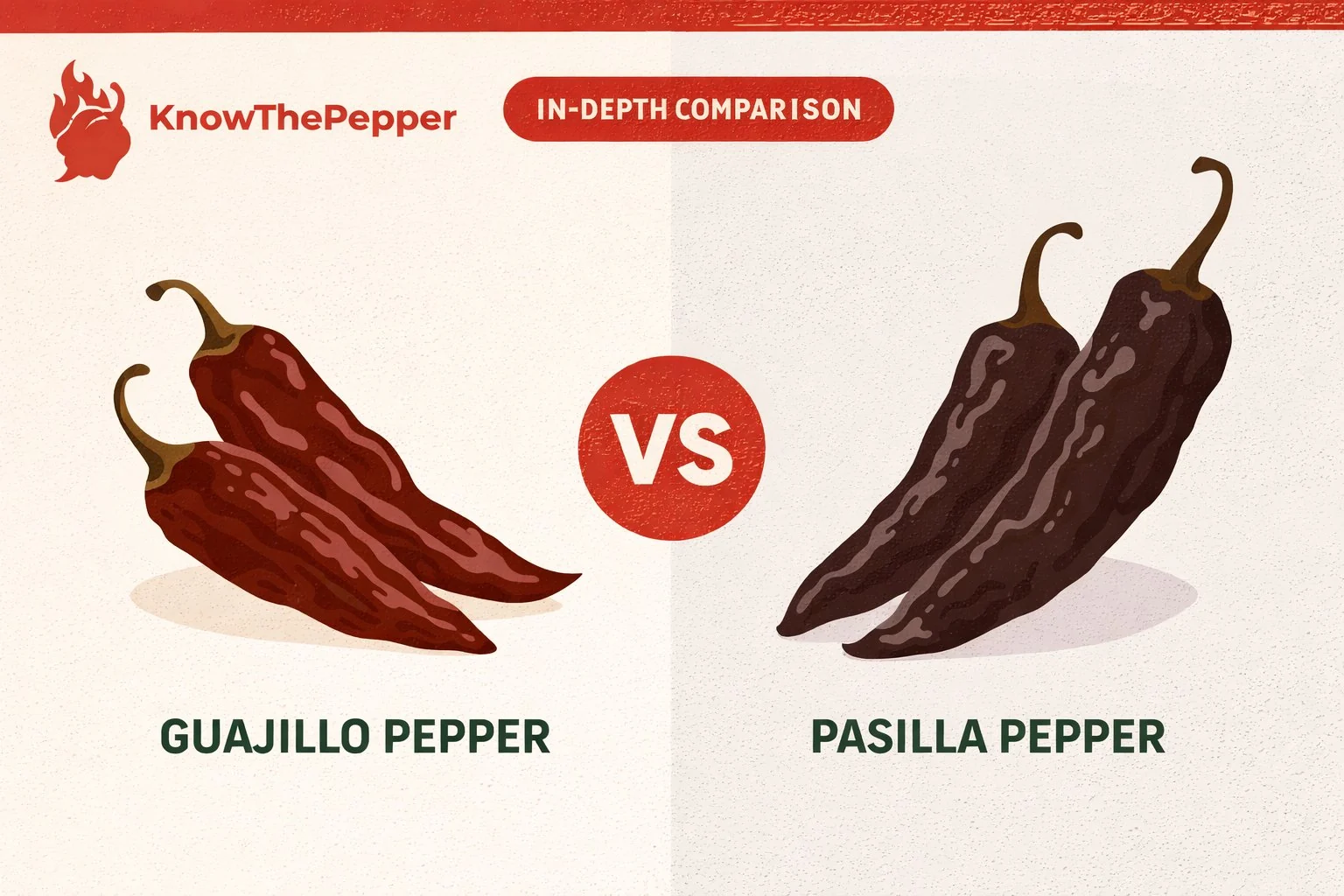
No. Pasilla is the dried form of chilaca. Poblano is a fresh pepper that becomes ancho when dried ripe, so pasilla and poblano are different peppers with different kitchen roles.
It is a common U.S. labeling shortcut, not a true botanical match. The safest move is to shop by pod form and the recipe method instead of trusting the sign alone.
Only if you are ready to roast the poblano first and rebuild the sauce around extra moisture and a greener flavor. It will not taste like a true pasilla-based sauce.
Poblano by far. Pasilla is a dried chile for blending and sauce work, while poblano has the thick fresh walls needed for stuffed and roasted dishes.