

KnowThePepper
Poblano Pepper: Fresh Chile, Dried Ancho, Same Pod
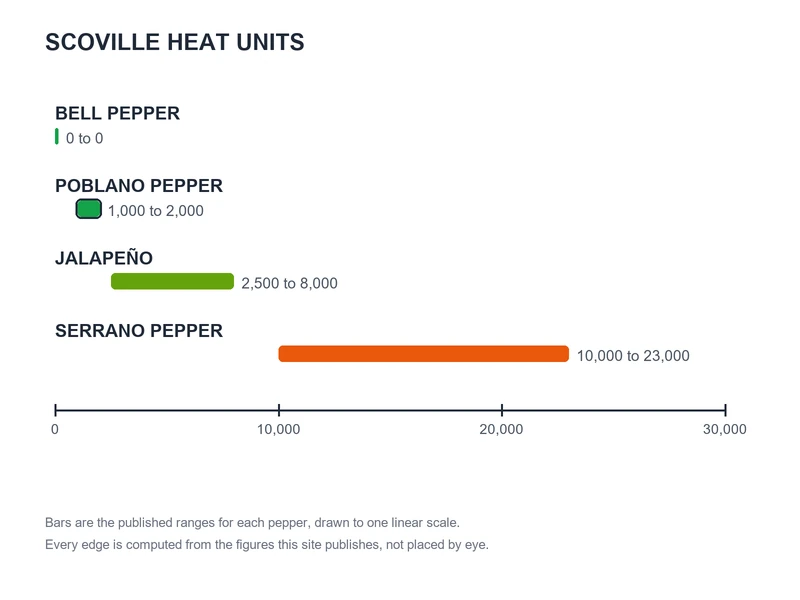
The poblano pepper sits at 1,000-2,000 SHU - a gentle warmth that reads more as depth than fire. Heart-shaped, thick-walled, and deeply earthy, it's the go-to for chiles rellenos and roasted sauces.
Dried, it becomes the ancho, transforming into something richer and more complex. A rewarding garden plant and a kitchen essential across Mexican cooking.
- Species: C. annuum
- Heat tier: Medium (1K-10K SHU)
What Is Poblano Pepper?
The poblano is Mexico's most important large fresh chile, the backbone of chiles rellenos, the base of mole negro, and the fresh pepper that most closely bridges mild bell peppers and the heat of jalapeños. At 1,000 to 2,000 SHU, most poblanos sit just at or below the lower range of jalapeños, though heat varies by growing conditions.
The pods are heart-shaped to elongated, typically 4 to 5 inches long, with thick walls that make them ideal for stuffing and roasting. That thick flesh holds up under heat without turning mushy, peels cleanly after charring, and carries a distinctly earthy, slightly fruity flavor that dried versions (anchos) concentrate into one of the most important chile flavors in Mexican cooking.
As a Capsicum annuum variety, poblanos share their botanical family with jalapeños, serranos, and bells. Unlike many hot peppers, the poblano is nearly always consumed cooked rather than raw, its thick skin benefits from roasting and peeling, and heat softens the slightly bitter raw edge.
The Mulato is a closely related variety, often confused with the poblano. Mulato peppers are a distinct cultivar that ripens brown-to-chocolate rather than red, with a sweeter, chocolatey flavor at 2,500 to 3,000 SHU - slightly hotter than standard poblanos.
When dried, mulatos produce mulato negro chiles used alongside anchos in complex moles. Standard poblanos, when dried red, become anchos.
For cooks moving from bell peppers toward hotter territory, the poblano is the natural first step, enough heat to notice, enough flavor to justify the pepper on its own terms. The poblano and bell pepper shows why the flavor profile makes them non-interchangeable despite the similar size.
| Name | What it is | Where you meet it |
|---|---|---|
| Poblano | The fresh green pod | Chiles rellenos, roasted strips, fresh sauces |
| Ancho | The same pod, ripened red and dried | Mole, adobo, dried chile blends |
| Mulato | A different dried pepper from fruit ripened darker | Mole negro, where its deeper chocolatey note is the point |
| Anaheim | A different fresh pepper of similar mildness | The usual stand-in when poblanos are unavailable, with thinner walls |
Where Does Poblano Pepper Come From?
The poblano takes its name from Puebla, the central Mexican state where it has been cultivated for centuries. Puebla is one of Mexico's most culinarily significant regions, home to mole poblano, the complex sauce built around dried anchos (dried poblanos) that represents one of Mexico's most celebrated cooking achievements.
Pre-Columbian cultivation of large C. annuum varieties in Mesoamerica is well-documented archaeologically. The poblano's size, mild heat, and thick flesh suggest it was bred over generations for cooking versatility, the thick walls that survive stuffing and roasting are agricultural decisions, not accidents.
When the pepper dries, it transforms. Fresh green poblanos become ancho chiles when left to ripen to red and dried, a transformation that concentrates sugars and creates the raisin-like, dried-fruit flavors central to complex Mexican mole sauces.
The word 'ancho' means 'wide' in Spanish, describing the flat, wrinkled shape of the dried chile.
Chiles en nogada, a dish of stuffed poblanos in walnut cream sauce, decorated with pomegranate seeds, has been made in Puebla since at least the 19th century and represents one of the region's most culturally significant festival foods, prepared in September around Mexican independence celebrations.
How Hot Is Poblano Pepper, and What Does It Taste Like?
The Poblano Pepper delivers 1K–2K Scoville Heat Units, placing it in the Medium tier (1K-10K SHU).
Flavor notes: earthy and rich.
How Nutritious Is Poblano Pepper?
A 100g serving of raw poblano provides approximately 27 calories, with notable vitamin C content, around 95 to 100mg per 100g, approaching full daily value. Compared to bell peppers, poblanos offer similar vitamin C with modestly more capsaicin-derived compounds, even at their low SHU range.
Dried anchos, concentrated from fresh poblanos, provide significantly more nutritional density per gram: higher fiber, more concentrated vitamins A and C, and more capsaicin relative to their serving size. 1 dried ancho (roughly 20g) contributes meaningful iron, vitamin B6, and potassium.
The low heat level means poblanos can be consumed in larger quantities than most hot peppers, making their nutritional contribution to a meal more significant than for high-SHU varieties where the serving size is measured in grams. For heat-source context, see our methodology and data caveats.
How Do You Cook With Poblano Pepper?
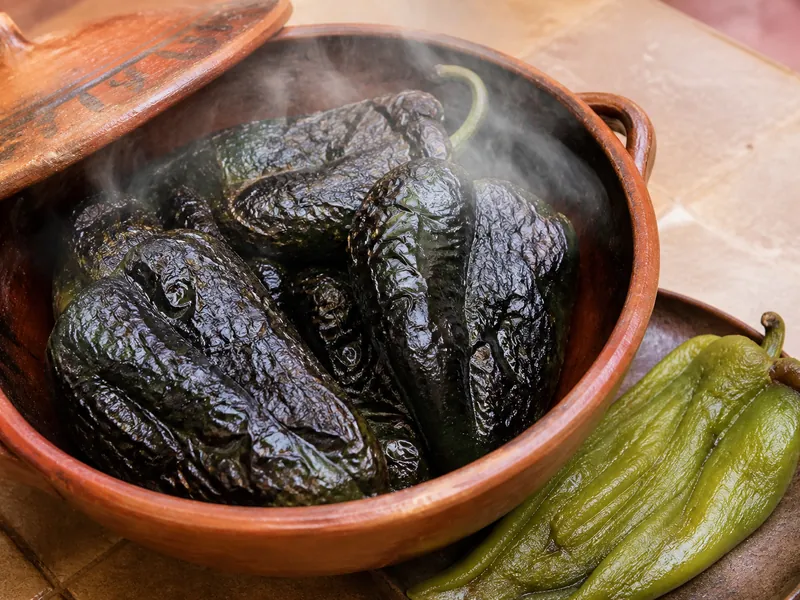
Roasting and peeling is the starting point for most poblano applications. Hold the pepper over a gas flame or under a broiler, turning until the skin chars black on all sides, usually 8 to 12 minutes total.
Transfer to a bowl, cover with plastic wrap for 10 minutes (steam loosens the skin), then peel under cool running water. The char adds depth the raw pepper lacks.
For chiles rellenos, the roasted, peeled pepper gets a lengthwise slit, the seeds and placenta are removed (reducing heat to near zero), and the cavity is stuffed with cheese or picadillo. The key technique is keeping the stem attached, it holds the stuffed pepper together through battering and frying.
Mole negro uses dried ancho chiles as its primary body, typically 3 to 4 dried anchos per serving for 4 to 6 people, soaked in hot water for 20 minutes, then blended with chocolate, spices, and multiple additional ingredients.
Fresh poblanos contribute a different flavor than dried anchos. They are not interchangeable in mole recipes.
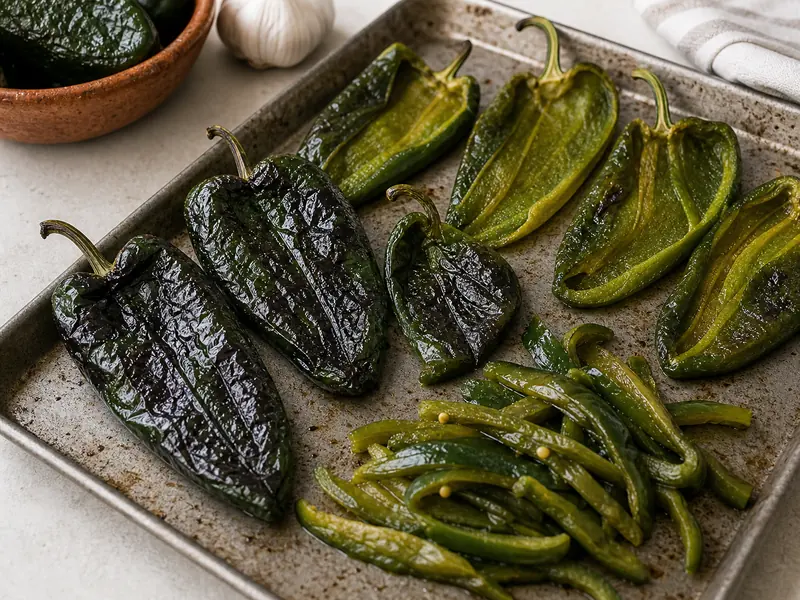
Rajas, roasted poblano strips sautéed with onion and cream, appear as a taco filling, enchilada topping, and side dish across Mexican cooking. The preparation concentrates the earthy, slightly smoky flavor that roasting creates.
When fresh poblanos aren't available, the best substitutes for poblano peppers are Anaheim chiles - similar heat, slightly thinner walls, or cubanelle peppers for milder applications. The jalapeño vs poblano shows the heat and flavor differences for cook planning purposes.
Roasting and peeling, in order
- Char over a gas flame or under a broiler, turning until every side is black, 8 to 12 minutes
- Move straight to a bowl and cover, so the trapped steam loosens the skin
- Wait ten minutes, which is the step most people cut short
- Peel under cool running water, where the skin slides rather than tears
- Slit and seed last, so the pod keeps its shape for stuffing
Where Can You Buy Poblano Pepper, and How Do You Store It?
This is one of the easy ones. Latin grocery stores and most well-stocked supermarkets carry poblanos year-round.
Look for firm, glossy, deep green pods without soft spots, blemish-free skin is important because imperfections become more pronounced after roasting.
Size matters for stuffing applications: look for pods 4 to 5 inches long with a wide shoulder and straight body. Narrower or more curved pods are harder to fill evenly.
At farmers markets in fall, you'll sometimes find ripe red poblanos, these are sweeter and worth grabbing for fresh cooking or home drying.
Store fresh poblanos unwashed in a paper bag in the refrigerator crisper for 1 to 2 weeks. Roasted and peeled poblanos freeze well, pack in portions with the stem removed and store for up to 6 months.
This makes sense if you find a good deal on in-season poblanos in September.
Dried anchos from fresh red poblanos can be made at home: dehydrate at 135°F for 10 to 14 hours or air-dry for 3 to 5 weeks in a warm, dry environment. Properly dried anchos keep in a sealed container for up to 12 months.
Which Peppers Can Replace Poblano Pepper?
Compare substitutes for Poblano Pepper by form, flavor, and heat before choosing a ratio. Measured adjustments must account for the dish and the concentration of the replacement.
Direct comparisons show where flavor, form, and preparation differ in the Jalapeño vs Poblano and Anaheim vs Poblano matchups.
Compare Poblano Pepper with: Poblano Pepper vs Ancho · Poblano Pepper vs Pasilla · Poblano Pepper vs Cubanelle · Poblano Pepper vs Hatch Chile · Poblano Pepper vs Chilaca · Poblano Pepper vs Serrano
How Do You Grow Poblano Peppers?
Poblanos grow well in most North American climates given a full growing season. Start seeds indoors 8 to 10 weeks before last frost at 75 to 85°F soil temperature.
They germinate in 10 to 21 days - somewhat more reliably than superhot varieties because their heat requirements are more moderate.
Transplant spacing: 18 to 24 inches apart in full sun with 6 to 8 hours of direct light daily. Poblanos are slightly more shade-tolerant than most hot peppers, though full sun produces better yield and more developed flavor.
Poblanos take 65 to 80 days from transplant to green maturity, the standard harvest stage for fresh cooking. Leaving them to ripen to red takes another 2 to 3 weeks and transforms the flavor toward sweetness.
Dried red poblanos become anchos. The transition is visible as the skin transitions from waxy green to deep, wrinkled red.
A healthy plant produces 4 to 8 large pods per season - fewer per plant than most smaller hot peppers, but the pods are substantially larger and heavier. Regular harvesting once fruits reach full green size keeps the plant producing.
Poblanos are susceptible to pepper blight in wet conditions, good airflow and avoiding overhead watering reduces risk. They perform well in containers with a 5-gallon minimum, though the large fruit size means the container needs staking support once pods develop.
Poblano Pepper FAQ


- Capsicum annuum L. - USDA GRIN Taxonomy
- University of Minnesota Extension, growing peppers
- USDA FoodData Central, Peppers, pasilla, raw
Species classification: C. annuum - based on published botanical taxonomy.