Poblano vs Serrano: A Mild Pepper to Stuff or a Much Hotter One for Salsa
Poblano is the mild, broad pepper for roasting, peeling, stuffing, and adding vegetable body. Serrano is the smaller, much hotter pepper for fresh salsa, guacamole, relishes, and any dish that needs concentrated green heat.

Poblano Pepper
MediumSerrano Pepper
HotQuick Comparison
| Attribute | Poblano Pepper | Serrano Pepper |
|---|---|---|
| Scoville evidence | 1K-2K SHU | 10K-23K SHU |
| Heat Tier | Medium | Hot |
| vs Jalapeño | n/a | 3x hotter |
| Flavor | earthy and rich | bright and crisp |
| Species | C. annuum | C. annuum |
| Origin | Mexico | Mexico |
How Much Hotter Is Serrano Than Poblano?
Poblano is the mild choice at 1,000 to 2,000 SHU, while serrano sits at 10,000 to 23,000 SHU. Their canonical ranges do not overlap, so changing from poblano to serrano is a real heat change rather than a minor adjustment.
The low end of serrano is five times the upper end of poblano. That gap is large enough that equal piece counts are a poor substitution rule.
Pod size widens the practical difference. One poblano contributes much more flesh to a dish, while one slender serrano concentrates its heat in a smaller amount of pepper.
Start serrano by finely chopped volume and taste the finished mixture before adding more. Removing the pale internal ribs reduces the strongest capsaicin-bearing tissue, but it does not turn a serrano into a poblano.
How Do Poblano and Serrano Taste Different?
Poblano tastes earthy, dark green, and slightly fruity after roasting. Serrano tastes brighter and more grassy, with a clean fresh-chile aroma that remains noticeable in raw salsa.
Heat changes how those flavors register. Poblano can supply a large portion of the vegetable body without dominating the mouth, while serrano usually works as concentrated seasoning.
Ripeness changes both peppers. Green pods emphasize vegetal notes, while fully ripe red fruit develops more sweetness and loses some of the sharp green character.
Dried ripe poblano becomes ancho, which has a dried-fruit profile and a different kitchen job. A recipe asking for ancho is not asking for a fresh poblano or a dried serrano.
Which Dishes Use Poblano and Which Use Serrano?
Poblano belongs in dishes that need a pepper large enough to roast, peel, slit, or fill. Chiles rellenos, rajas, soups, and roasted sauces use the flesh as part of the dish rather than as a small heat dose.
Serrano belongs in pico de gallo, salsa verde, guacamole, relishes, and table sauces that need compact fresh heat. Its thin walls and small diameter make fine, even dicing easier.
Both peppers can enter a cooked salsa, but they build different bases. Roasted poblano gives volume and a rounded charred note, while serrano supplies a sharper heat that can remain distinct after blending.
A cook can use both when each has a separate job. Poblano can form the roasted base and a measured amount of serrano can set the heat.
Verdict
Choose poblano when the recipe needs mild roasted chile flesh, a cavity for stuffing, or substantial pepper volume. Choose serrano when the recipe needs fresh green heat in a small dose.
For a swap, match the pepper's job before matching its name. Texture and bulk need one correction, while heat needs another.
Size And Wall Thickness Change The Job
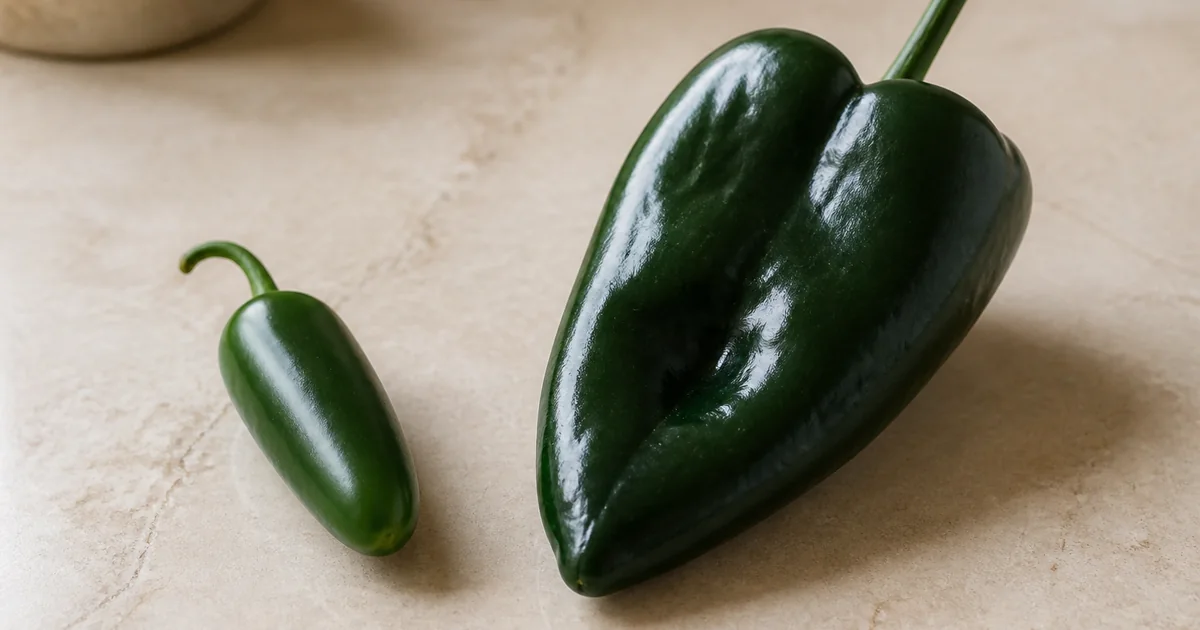
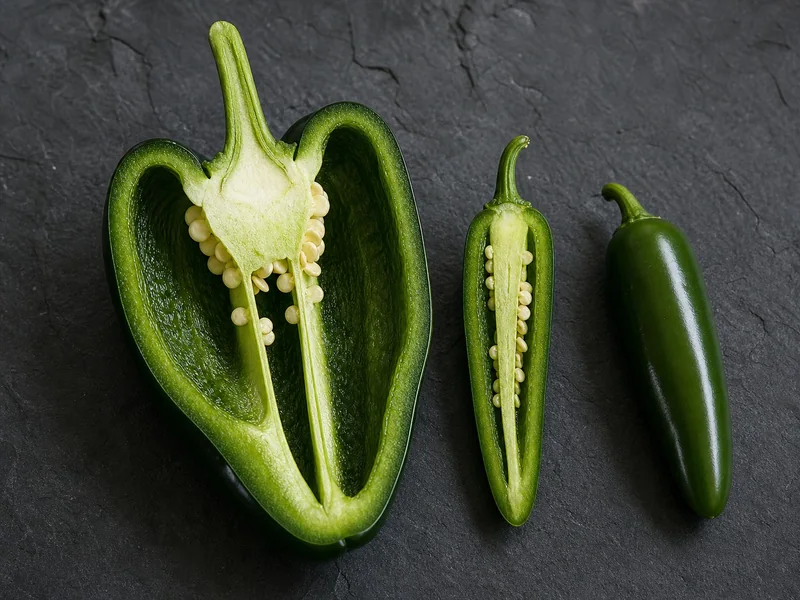
The most important physical difference is scale. A poblano is a broad, thick-walled pod commonly used as a vegetable portion, while a serrano is a narrow, thin-walled pod used more like a fresh seasoning.
| Kitchen task | Poblano | Serrano |
|---|---|---|
| Stuff whole | Strong choice because the cavity holds filling | Too small for a comparable stuffed portion |
| Roast and peel | Thick flesh remains after the skin chars | Thin flesh can soften or scorch quickly |
| Dice raw | Mild, larger pieces with more vegetable texture | Small pieces spread sharper heat evenly |
| Blend into salsa | Adds body and an earthy base | Adds heat with little extra volume |
| Slice as garnish | Broad strips or rings alter texture | Fine rings deliver concentrated bites |
The difference matters before the knife touches the pepper.
A recipe that calls for four poblanos may need their combined flesh to form the sauce or filling. Four serranos cannot replace that bulk, even if the cook reduces the heat by removing the ribs.
The reverse substitution also fails by count. One poblano can overwhelm a small batch of pico de gallo with wet vegetable volume while still leaving it milder than intended.
Roasting Favors Poblano, Raw Salsa Favors Serrano
Roasting is a poblano method because the broad pod gives the cook enough flesh to char and peel. The process softens its raw green edge and develops a deeper flavor without requiring intense heat.
Place whole poblanos under a broiler or over a flame until the skin blisters on every side. Rest them covered briefly, then peel without rinsing away all of the roasted juices.
Why serrano usually stays unpeeled
Serrano skin is not normally peeled for salsa because the pod is small and the walls are thin. Charring is useful when a salsa needs roasted flavor, but the pepper can move from blistered to dried out quickly.
For a raw preparation, mince serrano just before mixing. Smaller pieces distribute heat more evenly than large rounds, which can create isolated hot bites.
Where the two methods meet
A roasted tomatillo salsa can use poblano for body and serrano for heat. Roast the poblano until peelable, then roast the serrano only until spotted and softened.
Blending time also changes the result. A smooth blend hides the textural difference, but the flavor and heat gap remain.
Can You Substitute Serrano for Poblano?
A direct swap works only when pepper bulk is not structural. Soups, blended sauces, eggs, beans, and some salsas allow correction because the cook can add body, heat, and green flavor as separate variables.
Using serrano instead of poblano
Keep another mild pepper or vegetable in the recipe when poblano supplies substantial volume. Add serrano gradually for heat rather than trying to replace every poblano with a serrano.
For a blended sauce, roasted Anaheim or another mild green chile can supply the missing flesh. A small amount of serrano can then raise the heat without changing the sauce into a thin, intensely hot puree.
Using poblano instead of serrano
Use a smaller volume than the recipe's serrano volume when extra moisture or large pieces would disrupt the food. Poblano will bring green chile flavor, but it will not reproduce serrano's heat.
Add a separate hotter chile only when the dish truly needs that heat. Hot sauce can change acid and salt, so it is not a neutral correction in fresh salsa.
Cases where the swap should stop
Do not replace the shell of a stuffed poblano with serrano. Do not replace serrano in a small-batch raw salsa with a whole poblano and expect the same texture.
Ancho-based mole is another boundary because dried poblano has changed form. Fresh serrano cannot provide the dried-fruit flavor or thickening behavior of ancho.
Choose By The Dish In Front Of You
The best choice follows the food's missing property. Use the dish, not a universal ranking, to decide.
| Dish | Better starting point | What the pepper contributes |
|---|---|---|
| Chiles rellenos | Poblano | A broad cavity and mild flesh that survives roasting |
| Rajas with cream | Poblano | Roasted strips, earthy flavor, and substantial texture |
| Pico de gallo | Serrano | Fine fresh heat without excess vegetable volume |
| Guacamole | Serrano | Small pieces that season a dense avocado base |
| Roasted green sauce | Poblano or both | Poblano builds body and serrano can set the heat |
| Fresh salsa verde | Serrano | Bright chile heat beside tart tomatillo |
| Soup or stew | Poblano | Mild roasted chile can become part of the broth's body |
| Table relish | Serrano | Concentrated heat works in a small serving |
For a family meal with mixed heat tolerance, build flavor with poblano first. Offer minced serrano separately so each serving can receive its own heat dose.
For a salsa meant to taste hot from the first bite, serrano is the cleaner starting point. Poblano can still add roasted depth, but it should not be expected to carry the same heat.
Availability can decide the final choice.
Choose firm, glossy pods without soft spots, and store them dry and unwashed in the refrigerator until use. Freeze roasted poblano for cooked dishes, while whole frozen serrano remains useful when future texture is less important than flavor and heat.
How Do You Cook for Diners With Different Heat Tolerance?
Poblano gives the cook a mild base that most diners can share, while serrano is easier to reserve as a separate heat adjustment. This division is more reliable than trying to make one pot satisfy every tolerance.
Build the common base first
Roast and peel poblano for the sauce, soup, beans, or taco filling. Its flesh can carry green chile flavor through the whole batch without making every serving depend on the heat of one serrano pod.
Finish the common base before deciding how much serrano it needs.
Taste a tiny piece from the serrano that will enter the dish because pods from the same package can vary. Finely mince a small amount, stir it into one portion, and wait long enough for the heat to spread before increasing it.
Keep the hotter adjustment measurable
A bowl of minced serrano lets each diner add small amounts to tacos, soup, eggs, or beans. A separate serrano salsa can do the same job, but its acid and salt should be counted as part of the meal rather than treated as pure heat.
For a blended salsa, record the number and approximate size of serranos that produced a comfortable batch. The next batch still needs tasting, but the note gives a safer starting point than memory.
Dairy and starch can soften the way capsaicin feels, but they do not remove it from the food. Add crema, cheese, avocado, rice, or beans because they fit the dish, not as a promise that a very hot batch has become mild.
Prevent accidental transfer
Capsaicin left on a knife, board, blender lid, or fingers can move into food that was meant to stay mild. Prepare the mild components first or wash the tools thoroughly before they touch another ingredient.
Wear gloves when handling several hot pods, and avoid touching the eyes or face. Ventilate the kitchen when charring serranos because heated chile residue can irritate the nose and throat.
How to Pick Poblanos and Serranos at the Store
Choose the pod that fits the intended method rather than buying by color alone. A good poblano for stuffing needs broad shoulders, an intact stem, and walls that feel firm under light pressure.
A poblano for sauce can be curved or irregular because it will be roasted and blended. Soft spots, leaking areas, and collapsed skin are still reasons to leave it behind.
Green and red are stages, not separate heat guarantees
Green poblanos and serranos emphasize fresh vegetal flavor. Red fruit has ripened longer and commonly tastes sweeter, but color alone cannot tell the exact capsaicin level of an individual pod.
A red poblano becomes ancho only after drying.
That name change matters because drying concentrates flavor and removes the fresh pepper's water and texture. A red serrano remains a fresh serrano unless it also undergoes a preservation process.
Store according to the next use
Keep fresh pods dry and unwashed in the refrigerator, then wash them immediately before cutting. Trapped moisture speeds surface deterioration and makes it harder to judge whether the skin remains sound.
Roast and peel extra poblanos before freezing when their next job is a sauce, soup, or filling. Serranos can be frozen whole for later cooked food, but thawed flesh will not reproduce the snap of a fresh raw garnish.
Label frozen packages by pepper and preparation. A dark roasted poblano strip and a frozen green serrano may be obvious in separate bags, but the label prevents an accidental heat change months later.