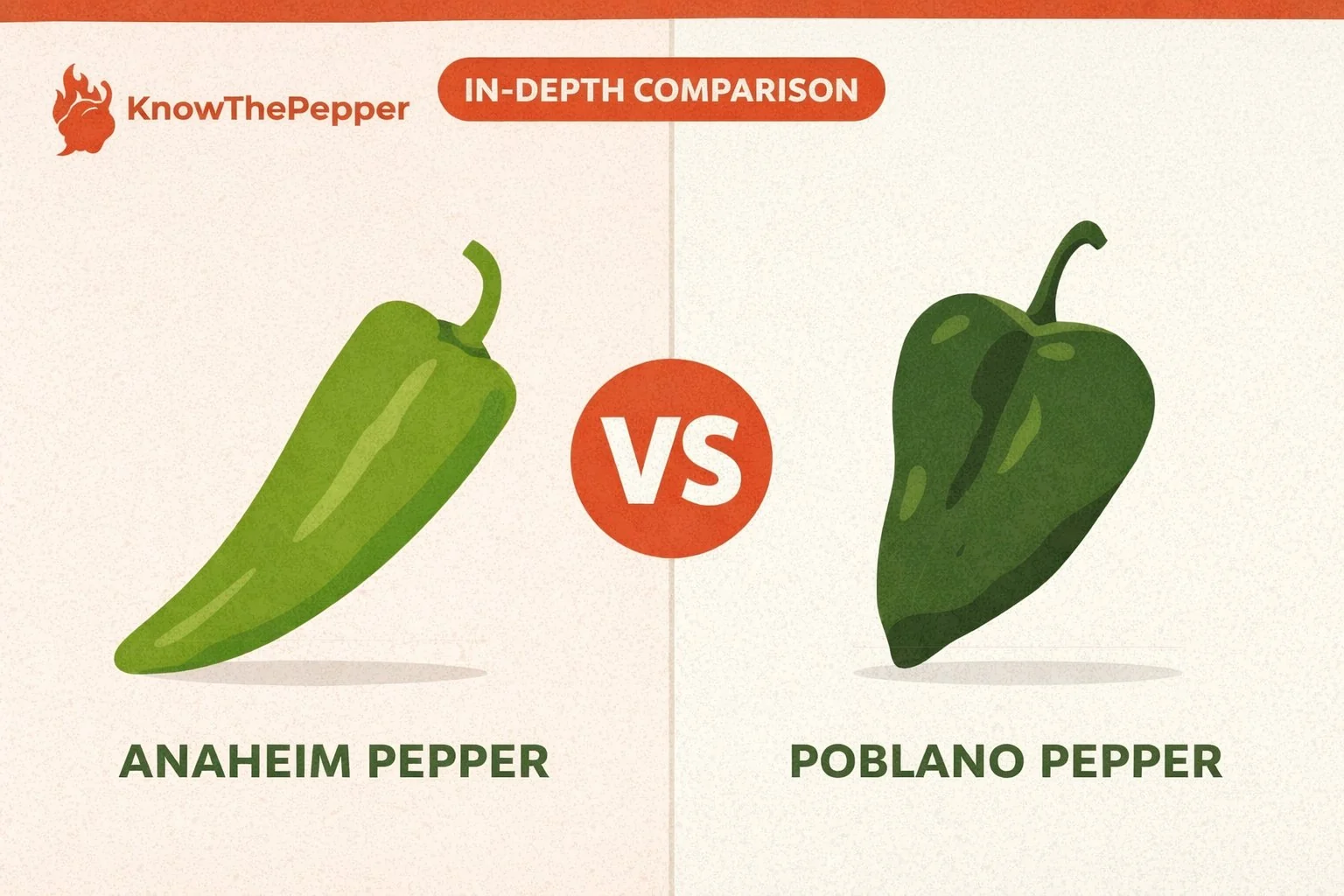
Ancho vs Poblano: Same Pepper, Different Job

Ancho and poblano come from the same pepper, but they are not the same ingredient in the pan. Use poblano when the recipe needs a fresh pepper you can char, peel, slice, or stuff. Use ancho when the recipe needs a dried chile you toast, soak, and blend for sauce.

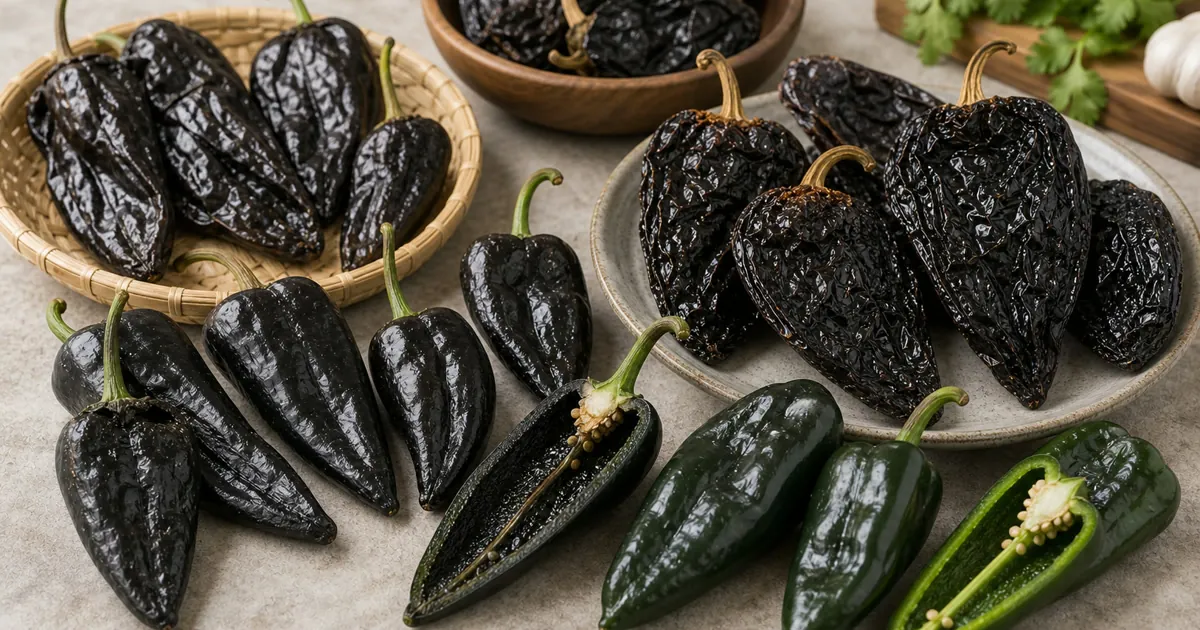
Ancho Pepper and Poblano Pepper side by side for a heat and flavor comparison
Quick Comparison

Ancho Pepper measures 1K–2K SHU while Poblano Pepper registers 1K–2K SHU. Their upper SHU ranges are close enough to treat as the same heat bracket. Ancho Pepper is known for its sweet, raisin-like, earthy, lightly cocoa-like flavor (C. annuum), while Poblano Pepper offers earthy and rich notes (C. annuum).

Ancho Pepper
1K–2K SHU
Medium · sweet, raisin-like, earthy, lightly cocoa-like
Poblano Pepper
1K–2K SHU
Medium · earthy and rich
  • Species: Both are C. annuum
  • Best for: Ancho Pepper excels in everyday cooking and salsas, Poblano Pepper in fresh salsas and mild recipes

Ancho Pepper vs Poblano Pepper Comparison

Attribute Ancho Pepper Poblano Pepper
Scoville (SHU) 1K–2K 1K–2K
Heat Tier Medium Medium
vs Jalapeño n/a n/a
Flavor sweet, raisin-like, earthy, lightly cocoa-like earthy and rich
Species C. annuum C. annuum
Origin Mexico Mexico

Ancho Pepper vs Poblano Pepper Heat Levels

Position on the Scoville Scale
Ancho
Poblano
0 SHU3.2M SHU

Ancho Pepper is in the same practical heat bracket.

Ancho Pepper spans 1K–2K SHU. Poblano Pepper spans 1K–2K SHU. Use the ranges to decide whether the recipe needs a measured dose, a mild overlap, or a hard substitution limit. Tools: Scoville chart and SHU calculator.

Flavor Profile Comparison

Ancho Pepper
sweet raisin-like earthy C. annuum

Ancho pepper is the dried form of a ripe poblano chile. It belongs to C. annuum dried chile varieties, but its kitchen identity comes from drying: the fresh pod ripens red, loses water, darkens, flattens, and turns broad and wrinkled.

UF/IFAS lists poblano at 1,000-2,000 SHU and states that ripened, dried poblanos are called ancho. That puts ancho in KTP's lower medium SHU range, although most dishes read it as mild because the chile is usually seeded, soaked, and blended into a sauce.

Poblano Pepper
earthy rich C. annuum

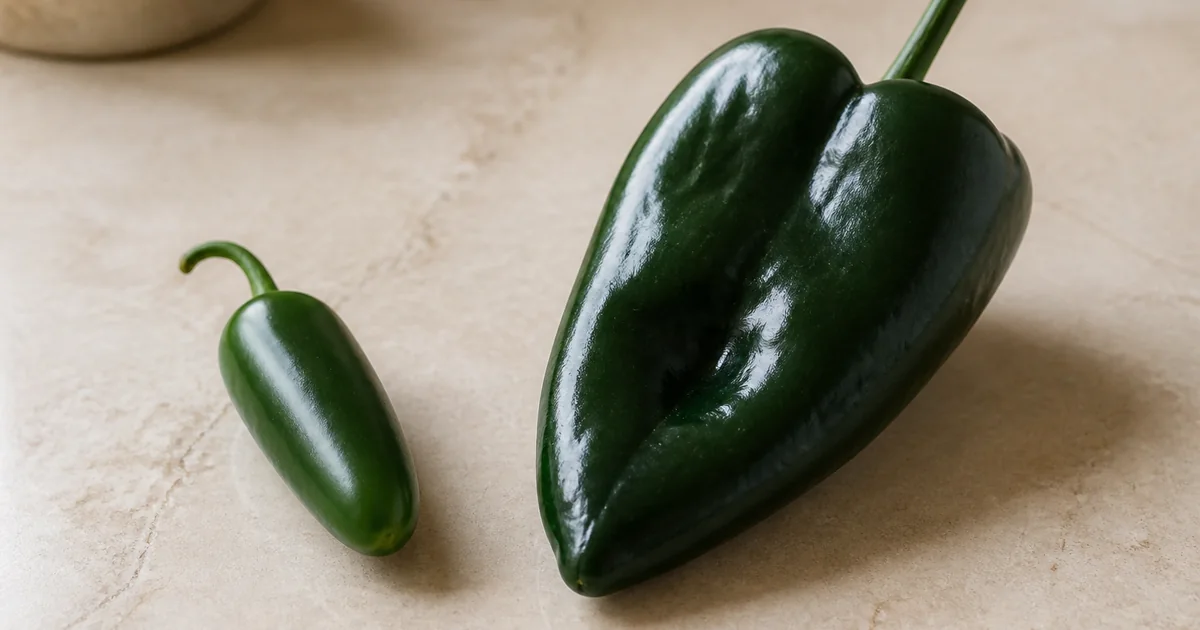
The poblano is Mexico's most important large fresh chile - the backbone of chiles rellenos, the base of mole negro, and the fresh pepper that most closely bridges mild bell peppers and the heat of jalapeños. At 1,000–2,000 SHU, most poblanos sit just at or below the lower range of jalapeños, though heat varies by growing conditions.

The pods are heart-shaped to elongated, typically 4–5 inches long, with thick walls that make them ideal for stuffing and roasting. That thick flesh holds up under heat without turning mushy, peels cleanly after charring, and carries a distinctly earthy, slightly fruity flavor that dried versions (anchos) concentrate into one of the most important chile flavors in Mexican cooking.

Both peppers belong to C. annuum, so they share some underlying flavor chemistry. However, Ancho Pepper’s sweet, raisin-like, earthy, lightly cocoa-like notes contrast with Poblano Pepper’s earthy and rich character.

Ancho Pepper brings sweet, raisin-like, earthy, lightly cocoa-like notes, so it fits recipes where that flavor should remain visible. Poblano Pepper leans earthy and rich, which can change the sauce, filling, marinade, or garnish even when the heat range looks close.

Ancho Pepper and Poblano Pepper comparison

Culinary Uses for Ancho Pepper and Poblano Pepper

Ancho Pepper

Most ancho cooking starts with a simple sequence: stem, seed, toast, soak, then blend. Toast the chile in a dry skillet only until aromatic, usually a few seconds per side.

Soak toasted pods in hot water until pliable, then blend them with fresh water, stock, tomatoes, tomatillos, garlic, onion, spices, or nuts depending on the dish. The soaking liquid can be useful, but taste it first because some batches turn bitter.

Ancho is a backbone chile for mole-style sauces, adobo, enchilada sauce, salsa roja, braised beef, beans, pozole-style broths, tamale sauces, and dry rubs. It gives dark fruit and body without pushing the dish into high heat.

Poblano Pepper

Roasting and peeling is the starting point for most poblano applications. Hold the pepper over a gas flame or under a broiler, turning until the skin chars black on all sides - usually 8–12 minutes total.

For chiles rellenos, the roasted, peeled pepper gets a lengthwise slit, the seeds and placenta are removed (reducing heat to near zero), and the cavity is stuffed with cheese or picadillo. The key technique is keeping the stem attached - it holds the stuffed pepper together through battering and frying.

Mole negro uses dried ancho chiles as its primary body - typically 3–4 dried anchos per serving for 4–6 people, soaked in hot water for 20 minutes, then blended with chocolate, spices, and multiple additional ingredients. Fresh poblanos contribute a different flavor than dried anchos; they are not interchangeable in mole recipes.

Which Should You Choose?

Best fit

Choose Ancho Pepper if…

You want milder heat
You prefer sweet, raisin-like, earthy, lightly cocoa-like flavors
You need a C. annuum variety

Best fit

Choose Poblano Pepper if…

You want milder, more approachable heat
You prefer earthy and rich flavors
You need a C. annuum variety

Can You Substitute One for the Other?

Start near 1:1 by amount. The heat ranges are close enough that flavor, form, and recipe role matter more than a strict Scoville conversion.

Growing Ancho Pepper vs Poblano Pepper

Growing notes

Ancho Pepper

Growing ancho means growing poblano and drying ripe pods after harvest. The plant phase produces the pepper; the drying phase creates the ancho flavor.

Use the pepper seed-starting workflow for trays, warmth, light, hardening off, and transplant timing. University of Minnesota Extension recommends starting pepper seed about eight weeks before outdoor planting and transplanting after cold nights have passed.

Give poblano plants full sun, warm soil, steady moisture, and enough space for broad pods. Harvest green pods if you want fresh poblanos.

Growing notes

Poblano Pepper

Poblanos grow well in most North American climates given a full growing season. Start seeds indoors 8–10 weeks before last frost at 75–85°F soil temperature.

Transplant spacing: 18–24 inches apart in full sun with 6–8 hours of direct light daily. Poblanos are slightly more shade-tolerant than most hot peppers, though full sun produces better yield and more developed flavor.

Poblanos take 65–80 days from transplant to green maturity - the standard harvest stage for fresh cooking. Leaving them to ripen to red takes another 2–3 weeks and transforms the flavor toward sweetness.

Where They Come From

Origin & background

Ancho Pepper

Mexico · C. annuum

Ancho belongs to Mexico's dried-chile pantry because it starts as poblano, a Mexican pepper tied closely to Puebla and central Mexican cooking. Drying ripe chiles preserved the harvest and changed the flavor into something deeper than the fresh pod.

Food & Wine's Diana Kennedy chile guide gives the clearest reader-facing naming point: the fresh poblano becomes ancho when dried. That matters because grocery labels often confuse ancho, pasilla, and poblano.

Origin & background

Poblano Pepper

Mexico · C. annuum

The poblano takes its name from Puebla, the central Mexican state where it has been cultivated for centuries. Puebla is one of Mexico's most culinarily significant regions - home to mole poblano, the complex sauce built around dried anchos (dried poblanos) that represents one of Mexico's most celebrated culinary achievements.

Pre-Columbian cultivation of large C. annuum varieties in Mesoamerica is well-documented archaeologically. The poblano's size, mild heat, and thick flesh suggest it was bred over generations for culinary versatility - the thick walls that survive stuffing and roasting are agricultural decisions, not accidents.

Buying & Storage

Whether you’re shopping for Ancho Pepper or Poblano Pepper, the same quality indicators apply. Fresh peppers should feel firm and heavy for their size, with taut, glossy skin and no soft or wet spots. Minor stem cracks known as “corking” are perfectly normal and often indicate a mature, flavorful pod.

Selection

What to look for

  • Firm pods with taut skin and consistent color
  • Should feel heavy relative to size
  • Minor stem cracks (“corking”) are normal
  • Avoid anything soft, shriveled, or with dark wet spots

Storage

How to store them

  • Fresh: Paper bag, crisper drawer, 1 to 2 weeks
  • Frozen: Wash, dry, freeze on sheet pan, 6+ months
  • Dried: Airtight and away from light, up to 1 year

Mistakes to avoid

Common misses

Ancho Pepper

  • Equating green with unripe. Different products.
  • Overcooking. Cell walls break down fast.
  • Sealed plastic storage. Causes rot. Use paper bags.

Common misses

Poblano Pepper

  • Equating green with unripe. Different products.
  • Overcooking. Cell walls break down fast.
  • Sealed plastic storage. Causes rot. Use paper bags.
Final call

Ancho Pepper vs Poblano Pepper

Ancho Pepper and Poblano Pepper sit in the same heat tier but serve different roles. Ancho Pepper delivers its distinctive sweet, raisin-like, earthy, lightly cocoa-like character. Poblano Pepper, with its earthy and rich profile, excels in everyday cooking.

Heat gap same bracket Ancho Pepper sweet, raisin-like, earthy, lightly cocoa-like Poblano Pepper earthy and rich
Additional Ancho Pepper and Poblano Pepper comparison view

Same Pepper Different Cooking Job

Start with the identity fix. Ancho is the dried ripe form of the poblano. The fresh green or red pepper is a poblano. Once that ripe pod is dried, it enters the pantry as ancho.

That shared lineage explains the overlapping 1,000 to 2,000 SHU range. It does not mean the two ingredients are interchangeable. Drying pulls out water, concentrates sugars, darkens the flavor, and turns a sturdy fresh chile into a sauce chile.

So the first question is not heat. It is job. If the dish needs a pepper you can roast, peel, slice, or stuff, buy poblano. If the dish needs a chile you toast, soak, and blend, buy ancho.

That simple rule saves more recipes than any Scoville chart. The same pepper plant can create two very different cooking tools.

Water Loss Changes Flavor And Texture

Fresh poblano tastes green, earthy, and slightly bitter in a good way. After roasting, the flesh softens and picks up smoke, but it still behaves like a vegetable with walls, weight, and moisture.

Ancho tastes sweeter, darker, and more concentrated. People often call out raisin, cocoa, prune, or dried-fruit notes because drying shifts the pepper away from fresh grassiness and toward depth. The skin also changes. It needs soaking or long simmering before it can blend smoothly.

That water loss changes sauce body too. Ancho helps build thick mole, enchilada sauce, adobo, and braising liquids. Poblano brings chunks, strips, and roasted flesh that you can still see and bite.

So even when the flavors feel related, the mouthfeel does not. Poblano fills space. Ancho melts into it.

The Recipe Verb Tells You Which One

Recipe verbs give away the right form. Words like char, peel, stuff, slice, dice, and saute point to poblano. Words like toast, soak, blend, puree, and strain point to ancho.

That is why stuffed poblanos, rajas, roasted strips, and creamy poblano sauces start with fresh pods. The pepper has to survive fire and handling before it becomes part of the dish.

Mole, red enchilada sauce, adobo, and many braised chile bases start with ancho because the pepper needs to dissolve into the liquid, not stand there as a piece of produce. The common prep is stem, seed, toast briefly, soak until pliable, then blend.

Powder complicates the picture. Fresh and dried peppers are not a 1:1 swap, and ancho powder is even farther from fresh poblano because it has already lost both moisture and pod structure.

When A Swap Can Work

Fresh poblano is a poor backup for ancho in most sauce recipes unless you rebuild the method. You would need to roast or fry the fresh pepper, reduce extra water elsewhere, and accept a greener flavor. Even then, the sauce usually loses the dried-fruit depth that ancho brings.

Ancho is just as awkward in a fresh poblano job. A rehydrated ancho can help flavor a blended sauce, but it cannot stand in for a whole stuffed pepper or a roasted strip in rajas. The walls are gone. The pepper has already crossed into another format.

The workable middle ground is blended dishes. If a creamy soup, dip, or sauce only needs the poblano flavor family, a small amount of rehydrated ancho can add depth. If a braise only needs ancho character, roasted red poblano can sometimes help, but the sauce will be fresher and lighter.

Powder sits even farther from the fresh pepper than a whole dried pod does. A spoon of ancho powder can help color a sauce, but it cannot copy the texture, moisture, or mild bitterness that fresh poblano brings to a skillet or stuffing recipe.

So the question is not "can I swap them?" It is "does the dish still make sense after the form changes?" Often the honest answer is no.

Buy Pods For The Step

Buy poblanos that feel heavy, dark green, and broad at the shoulders if you plan to stuff or roast them. Buy anchos that are flexible, fragrant, and dark red-brown rather than dusty and brittle. Whole pods are better than powder when the sauce depends on aroma and body because you can judge freshness before you toast them.

If the recipe starts with soaking liquid, blender work, or straining, whole ancho is worth the extra step. If the recipe starts with fire, peeling, or stuffing, fresh poblano is worth the trip to the produce section. Shopping by process is more reliable than shopping by name alone.

Red Poblanos And Home Drying

A ripe red poblano sits in the middle of this story. It is still a fresh pepper, but it has moved toward the sweetness that makes ancho useful. If you find red poblanos at a market, they are great for roasting or for home drying.

Home drying does not have to be fancy, but the goal is the same one the pantry ancho already solved. You are taking a moist chile and turning it into a shelf-stable sauce ingredient. Once that happens, you stop cooking with it like a fresh poblano.

The result will not always match a professionally dried ancho exactly. Pod thickness, harvest ripeness, and storage time all shape how sweet or dark the final chile tastes. Still, the home version teaches the core lesson of this page: the pepper changes more from form than from lineage.

For related dried-chile questions, ancho vs guajillo handles sauce color and body, while this page stays focused on the fresh-versus-dried split inside one pepper family.

Fact-Checked & Expert Reviewed
Editorial Standards: Head-to-head comparisons include blind tasting when applicable. Heat levels cross-referenced with multiple sources. All substitution ratios tested side-by-side.
Review Process: Written by James Thompson (Lead Comparison Reviewer) , reviewed by Karen Liu (Lead Fact-Checker & Science Editor) . Last updated June 30, 2026.

Ancho Pepper vs Poblano Pepper FAQ
Yes. Ancho is the dried ripe form of the poblano pepper. They come from the same pepper, but drying changes the flavor, texture, and cooking role.

Not for dishes that need a whole or sliced pepper. Ancho powder can help flavor a sauce, soup, or braise, but it cannot replace the moisture and structure of fresh poblano.

Drying concentrates the pepper's sugars and moves the flavor away from green bitterness toward dried-fruit and earthy notes. The fresh poblano still carries more vegetal moisture.

Yes. Fully ripe red poblanos dry into the same flavor family as store-bought ancho, though thickness, drying method, and age will affect the final strength.

Sources & References
KL
Fact-checked by Karen Liu
Research Contributor
SHU Verified
Sources Cited
Expert Reviewed
All Comparisons Browse Peppers Scoville Scale