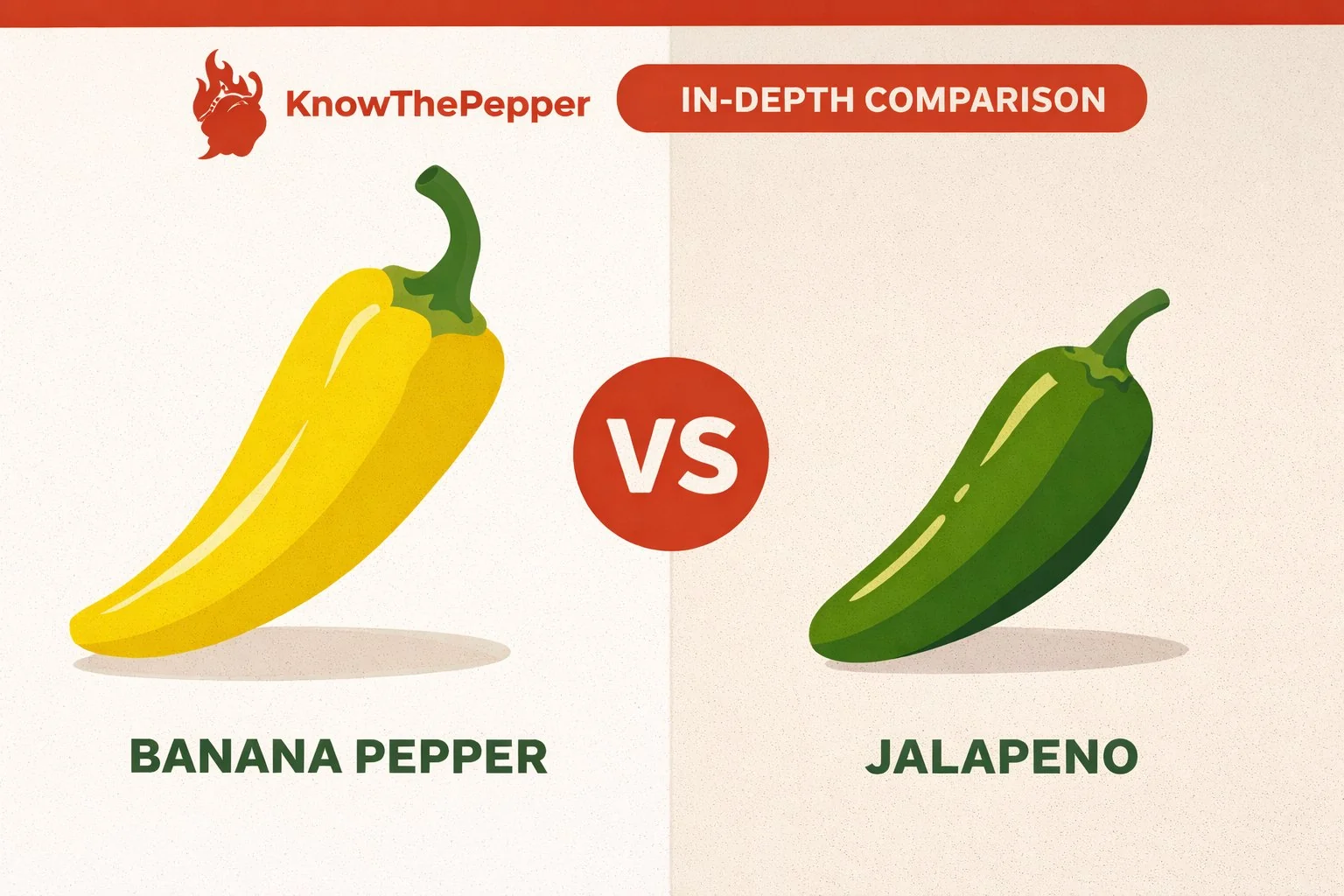
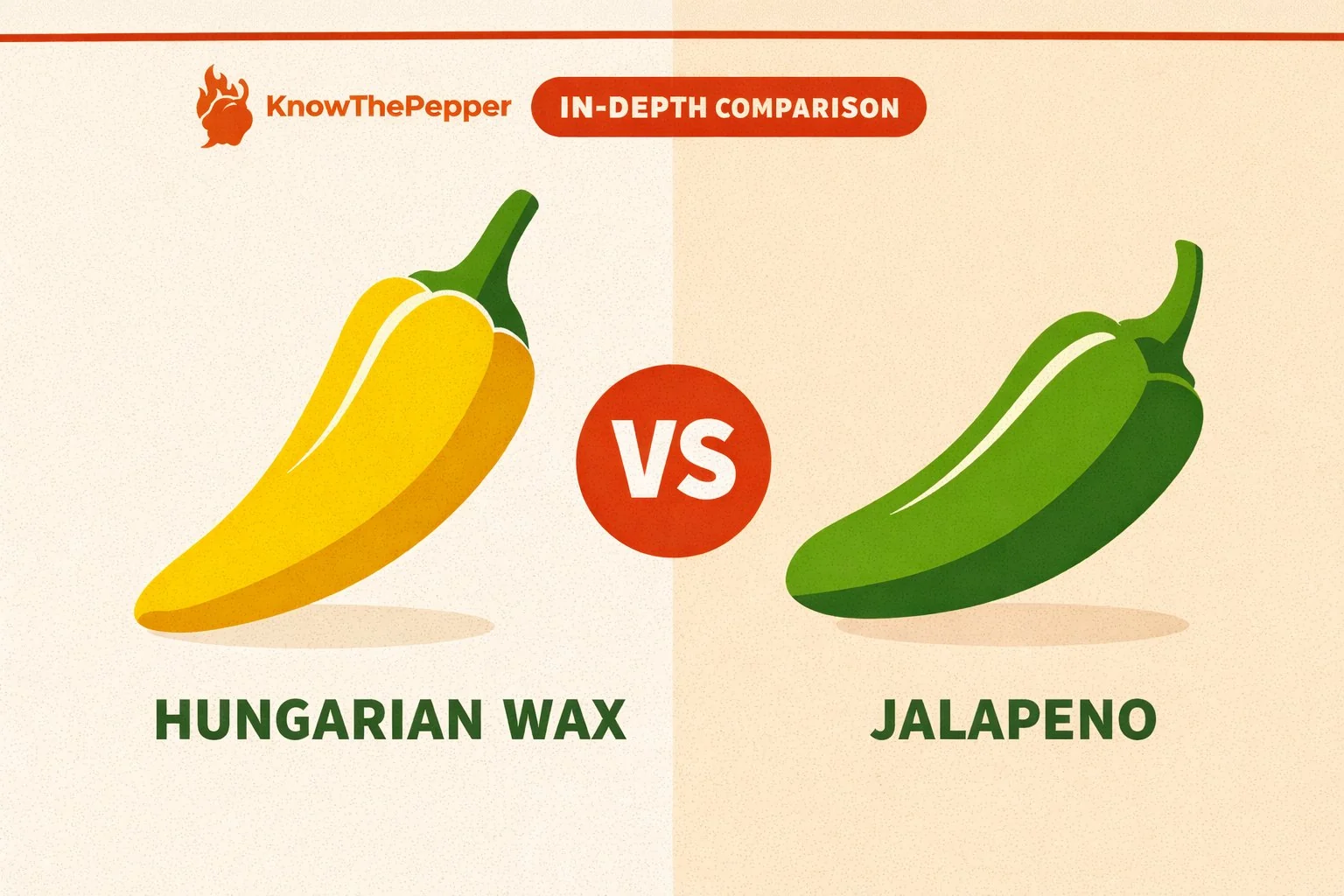
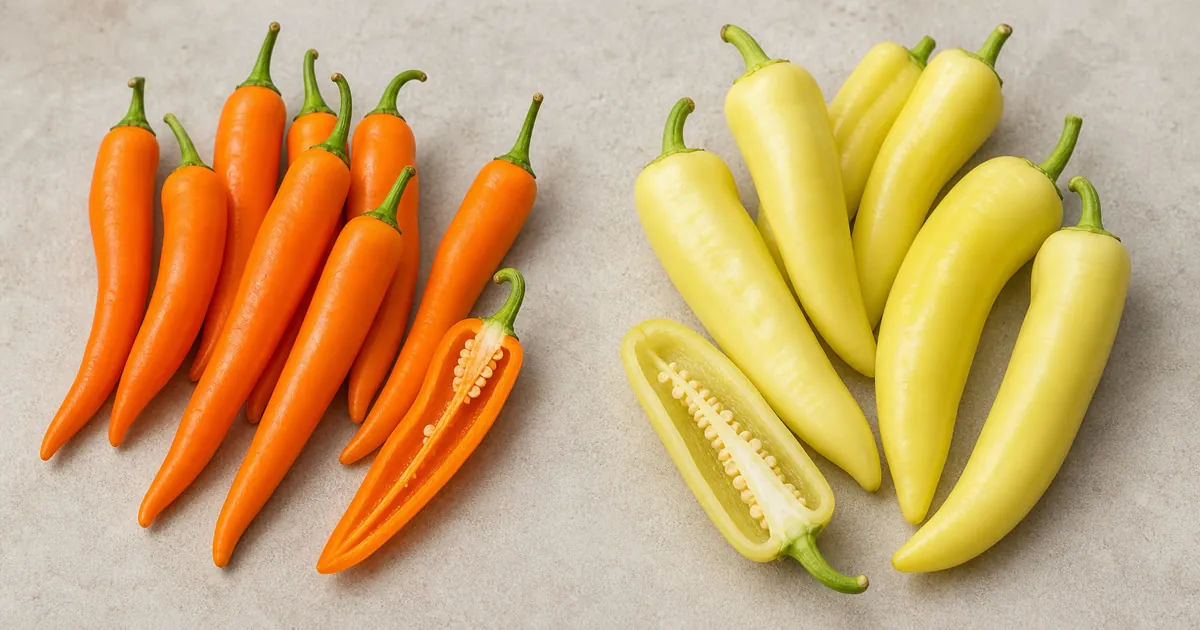
Banana pepper is the low-risk choice for mild pickled rings, sandwiches, salads, and pizza. Hungarian wax looks similar but can run much hotter, so it fits firmer pickles, stuffing, frying, and hotter jars.
Comparison Contributor·Updated Jun 29, 2026·
Reviewed by
Karen Liu
Quick Comparison
Banana Pepper measures 0–500 SHU while Hungarian Wax registers 2K–15K SHU. That makes Hungarian Wax about 30x hotter by upper SHU range. Banana Pepper is known for its mild, tangy, slightly sweet flavor (C. annuum), while Hungarian Wax offers tangy and bright notes (C. annuum).
Banana Pepper
0–500 SHU
Mild · mild, tangy, slightly sweet
Hungarian Wax
2K–15K SHU
Hot · tangy and bright
Heat difference: Hungarian Wax is about 30× hotter by upper SHU range
Species: Both are C. annuum
Best for: Banana Pepper excels in everyday cooking and salsas, Hungarian Wax in fresh salsas and mild recipes
Hungarian Wax is
about 30× hotter than Banana Pepper.
They fall in different heat tiers: Banana Pepper is classified as mild while Hungarian Wax sits in the hot range.
Banana Pepper spans 0–500 SHU.
Hungarian Wax spans 2K–15K SHU, about 2× a jalapeño at the upper end.
Use the ranges to decide whether the recipe needs a measured dose, a mild overlap, or a hard substitution limit.
Tools: Scoville chart and SHU calculator.
The fresh flavor is crisp, tangy, and lightly sweet. It is not a bell pepper substitute in every dish because the walls are thinner and the acidity reads brighter.
Hungarian Wax
tangybrightC. annuum
Pull a Hungarian Wax from the plant when it's still pale yellow and you get something tangy, crisp, and moderately hot. Let it ripen to orange or red and the sweetness deepens while the heat stays roughly the same - 5,000–15,000 SHU depending on growing conditions and individual pod variation.
The waxy skin is the giveaway. Thick and glossy, it holds up beautifully under heat, which is why this pepper has been a pickling staple across Central Europe for generations.
Both peppers belong to C. annuum, so they share some underlying flavor chemistry. However, Banana Pepper’s mild, tangy, slightly sweet notes contrast with Hungarian Wax’s tangy and bright character.
Banana Pepper brings mild, tangy, slightly sweet notes, so it fits recipes where that flavor should remain visible.
Hungarian Wax leans tangy and bright, which can change the sauce, filling, marinade, or garnish even when the heat range looks close.
Culinary Uses for Banana Pepper and Hungarian Wax
Banana Pepper
Pickling is the banana pepper's strongest kitchen role. The National Center for Home Food Preservation publishes a tested yellow pepper rings formula that explicitly includes yellow banana peppers and uses 5% vinegar for water-bath processing.
Fresh banana peppers work best where crunch and acidity help the dish: sandwiches, hoagies, salads, pizza, eggs, grain bowls, and slaws. Slice them thin when raw.
For cooking, treat banana pepper as a thin-walled mild pepper. It sautees quickly, softens faster than a bell pepper, and loses crunch if baked too long.
Hungarian Wax
The Hungarian Wax is one of those peppers that actually rewards attention to ripeness stage. Yellow pods bring tang and brightness - ideal for pickling, fresh slicing onto hoagies, or layering into antipasto.
Pickling is where this pepper has historically shined. The thick waxy walls don't turn mushy in brine the way thin-skinned varieties do, so rings stay firm and snappy even after months in the jar.
For stuffed preparations, the 5–8 inch tapered shape is nearly perfect. Fill with cream cheese and herbs, or go savory with ground meat and rice in the Hungarian tradition.
Start near 1:1 by amount. The heat ranges are close enough that flavor, form, and recipe role matter more than a strict Scoville conversion.
Growing Banana Pepper vs Hungarian Wax
Growing notes
Banana Pepper
Grow sweet banana peppers with the same warm-season rules used for other C. annuum peppers. University of Minnesota Extension recommends starting pepper seed about eight weeks before outdoor planting and transplanting after nighttime lows are above 50 degrees F. Warm soil and steady moisture matter more than heavy fertilizer.
Choose seed or starter plants labeled sweet banana if your goal is mild pickling rings. Hot banana, Hungarian wax, and mixed wax-pepper seed can look close at the seedling stage, so tag plants early if you grow more than one yellow wax type.
A hot fruit on a plant sold as sweet banana pepper is not proof that today's flower cross-pollinated into a hot fruit. Cross-pollination mainly matters when saved seed is planted in a later generation.
Growing notes
Hungarian Wax
Hungarian Wax is a reliable producer that suits most North American growing climates. Start seeds indoors 8–10 weeks before last frost - the plants need a long season to hit full production.
Transplanting outdoors after soil temperatures reach 60°F gives roots the warmth they need to establish quickly. Follow solid pepper plant spacing guidelines - about 18 inches between plants keeps air circulation adequate and reduces fungal pressure on those thick waxy pods.
The plants reach 18–24 inches tall and can carry a heavy pod load. Some growers skip pruning entirely, but selectively pruning pepper plants during the season redirects energy to fruit development and can improve pod size in shorter growing seasons.
Where They Come From
Origin & background
Banana Pepper
Origin data pending · C. annuum
Banana pepper has a weaker documented origin trail than named landraces or university-bred cultivars. The sources used for this profile support the species and market type, but they do not support a precise single breeder, town, or year.
The broader pepper species has deep roots in the Americas, while banana pepper as shoppers know it is tied to fresh-market and pickling use in North American gardens, delis, and grocery jars. That distinction matters: a species-origin claim is not the same as a cultivar-origin claim.
Origin & background
Hungarian Wax
Hungary · C. annuum
Hungary's pepper culture runs deep - the country gave the world paprika, and the Hungarian Wax emerged from that same agricultural tradition. Brought to Europe through Ottoman trade routes in the 16th century, peppers adapted quickly to Central European growing conditions and culinary habits.
The Hungarian Wax specifically became a fixture in home gardens and market stalls throughout Hungary and neighboring countries, prized for its thick walls and pickling suitability. It arrived in North America with Eastern European immigrants and gained commercial traction in the United States by the mid-20th century.
Buying & Storage
Whether you’re shopping for Banana Pepper or Hungarian Wax, the same quality indicators apply. Fresh peppers should feel firm and heavy for their size, with taut, glossy skin and no soft or wet spots. Minor stem cracks known as “corking” are perfectly normal and often indicate a mature, flavorful pod.
Selection
What to look for
Firm pods with taut skin and consistent color
Should feel heavy relative to size
Minor stem cracks (“corking”) are normal
Avoid anything soft, shriveled, or with dark wet spots
Storage
How to store them
Fresh: Paper bag, crisper drawer, 1 to 2 weeks
Frozen: Wash, dry, freeze on sheet pan, 6+ months
Dried: Airtight and away from light, up to 1 year
Mistakes to avoid
Common misses
Banana Pepper
Equating green with unripe. Different products.
Overcooking. Cell walls break down fast.
Sealed plastic storage. Causes rot. Use paper bags.
Common misses
Hungarian Wax
Blaming the seeds. Membranes hold most capsaicin.
Adding heat too early. Capsaicin breaks down with cooking.
Not tasting individual pods. Heat varies 30%+.
Final call
Banana Pepper vs Hungarian Wax
Banana Pepper and Hungarian Wax
occupy very different positions on the heat spectrum. Hungarian Wax delivers about 30× more upper-range heat with its distinctive tangy and bright character.
Banana Pepper, with its mild, tangy, slightly sweet profile, excels in everyday cooking.
Heat gap about 30× by upper rangeBanana Pepper mild, tangy, slightly sweetHungarian Wax tangy and bright
Do not swap these by shape. Banana pepper is usually a mild, tangy ring pepper; Hungarian wax can look nearly identical and still land with real heat.
That matters most when the pepper is served raw or pickled. A jar of banana rings can go straight onto a sandwich. A jar of Hungarian wax rings should be tasted before it covers the whole sub.
The practical answer is simple: choose banana pepper when heat must stay gentle, and choose Hungarian wax when the same yellow pod shape needs bite.
Heat Label Trap
Heat is the failure point. Banana pepper usually sits around 0 to 500 SHU; Hungarian wax is commonly listed around 1,500 to 15,000 SHU.
Pickle Or Stuff
Pickling favors both peppers for different reasons. Banana pepper rings give acid, crunch, and a mild yellow snap, which is why they work on hoagies, pizza, antipasto plates, and salads.
Hungarian wax has thicker waxy walls, so the rings can stay firmer in brine. The tradeoff is heat range; one batch can taste mild, while another can feel closer to jalapeno territory.
Stuffing changes the answer. Banana peppers are thin and better as small snack peppers. Hungarian wax pods are better for cheese, herbs, rice, meat fillings, and baked dishes because the walls hold shape.
For jar safety, use a tested vinegar process rather than adjusting brine by taste. Pickled banana peppers covers mild rings, while pepper pickling covers broader brine handling.
Fresh Use And Service
Fresh banana pepper belongs where crunch and tang matter more than burn: cold sandwiches, chopped salads, eggs, grain bowls, and mild relishes.
Fresh Hungarian wax belongs where the pepper is part of the heat structure: sausage skillets, fried rings, hotter relish, and stuffed peppers.
Substitution Rule
The risky direction is Hungarian wax into a banana-pepper recipe. Use fewer rings, remove the pale ribs if needed, and taste the brine before serving it to heat-sensitive eaters.
The boring direction is banana pepper into a Hungarian-wax dish. The heat and firmness drop, so add a little jalapeno or another medium chile if the skillet, stuffing, or relish expected bite.
A long hot Italian pepper changes the problem again: more frying-pan identity, more heat, and less mild pickled-ring safety. That is why banana pepper vs long hot Italian pepper is the closer comparison for sausage-and-pepper dishes.
Fact-Checked & Expert Reviewed
Editorial Standards: Head-to-head comparisons include blind tasting when applicable. Heat levels cross-referenced with multiple sources. All substitution ratios tested side-by-side.
Review Process:
Written by
James Thompson
(Lead Comparison Reviewer)
, reviewed by
Karen Liu
(Lead Fact-Checker & Science Editor)
. Last updated June 29, 2026.
Banana Pepper vs Hungarian Wax FAQ
No. They look similar, but banana peppers are usually very mild, while Hungarian wax peppers can be much hotter and firmer.
Hungarian wax is hotter. Banana pepper usually runs about 0 to 500 SHU; Hungarian wax commonly runs about 1,500 to 15,000 SHU.
Yes, but taste first and use less. The shape works, but the heat can change a mild sandwich, salad, or pickle jar quickly.
Hungarian wax is usually better for stuffing because the walls are firmer and the pods hold shape better through baking.