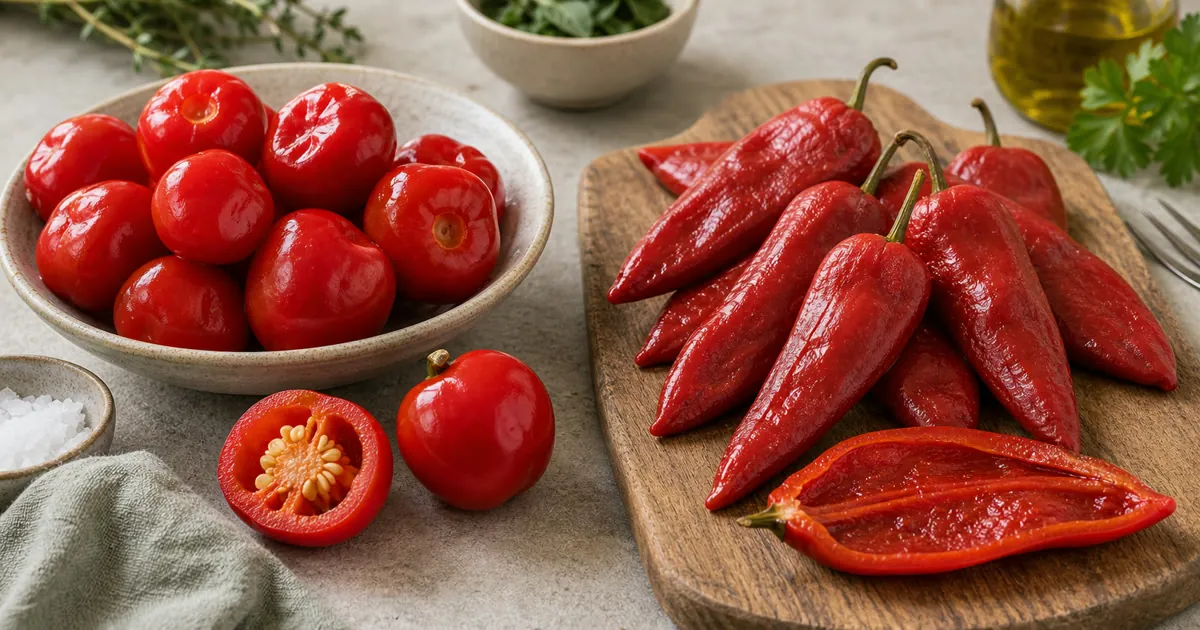
Biquinho vs Peppadew: Heat, Flavor & Key Differences

Biquinho and Peppadew are two visually distinctive mild peppers, but the current KTP rows put them in different heat bands. Biquinho now uses an Embrapa-backed 80-500 SHU range with sweet, lightly tangy flavor, while Peppadew brings a sweeter deli-style bite and a little more heat. Choose Biquinho for lighter pickled garnish work and Peppadew for thicker-walled stuffed or antipasto uses.

Quick Comparison

Biquinho Pepper measures 80–500 SHU while Peppadew Pepper registers 280–650 SHU. They are roughly equal in heat. Biquinho Pepper is known for its sweet, aromatic, and lightly tangy flavor (Capsicum chinense), while Peppadew Pepper offers sweet, tangy, and lightly brined notes (C. baccatum).

Biquinho Pepper
80–500 SHU
Mild · sweet, aromatic, and lightly tangy
Peppadew Pepper
280–650 SHU
Mild · sweet, tangy, and lightly brined
  • Species: Capsicum chinense vs C. baccatum
  • Best for: Biquinho Pepper excels in everyday cooking and salsas, Peppadew Pepper in fresh salsas and mild recipes

Biquinho Pepper vs Peppadew Pepper Comparison

Attribute Biquinho Pepper Peppadew Pepper
Scoville (SHU) 80–500 280–650
Heat Tier Mild Mild
vs Jalapeño n/a n/a
Flavor sweet, aromatic, and lightly tangy sweet, tangy, and lightly brined
Species Capsicum chinense C. baccatum
Origin Brazil South Africa

Biquinho Pepper vs Peppadew Pepper Heat Levels

Both peppers sit so low on the heat scale that the sensation is closer to a soft warmth than a real burn. Biquinho now uses the stronger Embrapa-backed 80-500 SHU range, which keeps it firmly inside the mild pepper zone and much gentler than a Fresno pepper.

Peppadew still lands slightly higher at 1,100-1,200 SHU, so it usually brings the clearer tingle. In blind tasting, though, the difference still matters less than the fruit shape, wall thickness, and sweetness.

The practical distinction is consistency. Peppadew's commercial production keeps the heat range tight, while Biquinho still behaves like a mild Brazilian pepper first and a measured heat source second.

Related Bird's Eye Chili vs Cayenne Pepper: What's the Difference?

Flavor Profile Comparison

Biquinho Pepper
80–500 SHU
sweet aromatic and lightly tangy
Capsicum chinense

The biquinho pepper is one of the gentlest peppers in the mild heat tier, with Embrapa placing it at 80-500 SHU.

Peppadew Pepper
280–650 SHU
sweet tangy and lightly brined
C. baccatum

The Peppadew pepper is best understood as a branded sweet piquante pepper, not as a generic grocery-store chile.

Heat aside, flavor is where these two peppers genuinely diverge , and where choosing between them actually matters in the kitchen.

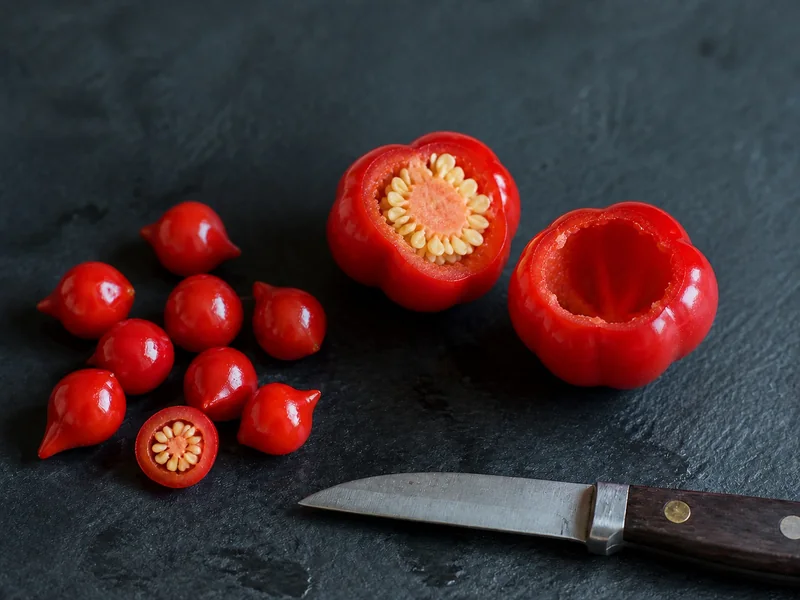
Biquinho (Portuguese for "little beak," named for its teardrop shape) has a flavor that leans sweet and subtly fruity, with a thin skin and juicy flesh that releases quickly when bitten. Its Brazilian pepper heritage shows in the way it balances a mild fruitiness against almost no bitterness. Raw, it tastes closer to a cherry tomato than a traditional pepper. Pickled, it becomes bright and tangy while holding onto that gentle sweetness.

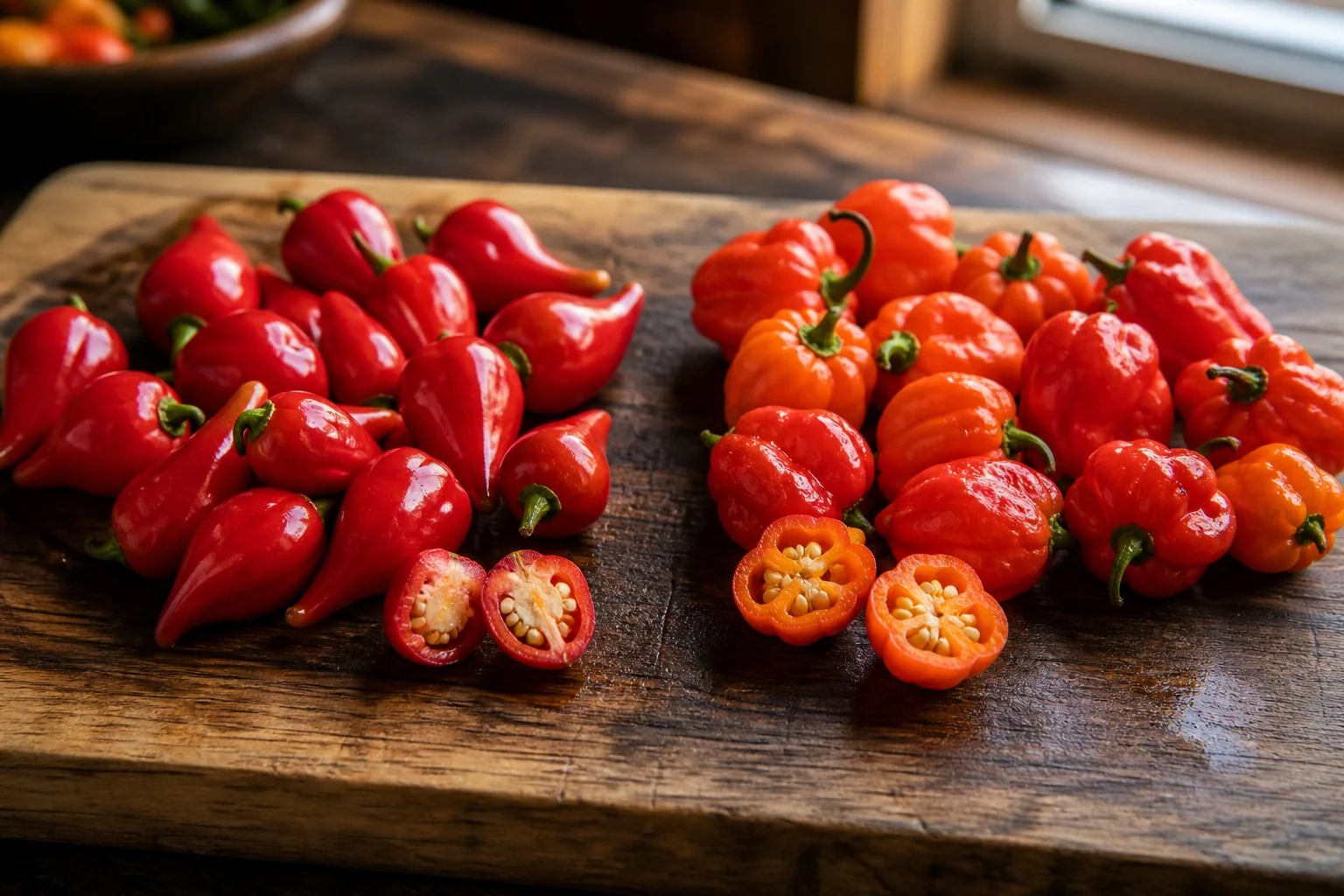
Peppadew , technically a trademarked product from South Africa's pepper-growing tradition , is processed and sold in brine or oil, giving it a flavor profile that is simultaneously sweet, tangy, and slightly acidic from the pickling process. Fresh Peppadew has a crisp, apple-like sweetness that is more assertive than Biquinho's softer fruitiness. The flesh is thicker and holds its shape better under heat or when stuffed.

When comparing the two side by side, Biquinho reads as more delicate and wine-like in its sweetness, while Peppadew delivers a bolder, more candy-like sweetness backed by that pickling acidity most consumers associate with the brand. Aroma-wise, Biquinho has a light floral note common to many C. chinense varieties; Peppadew's aroma is more neutral, with the brine often dominating in its jarred form.

For raw applications, Biquinho's thin skin gives it an almost melt-in-your-mouth quality. Peppadew's firmer walls make it better for stuffing without falling apart.

Culinary Uses for Biquinho Pepper and Peppadew Pepper

Biquinho Pepper
Mild

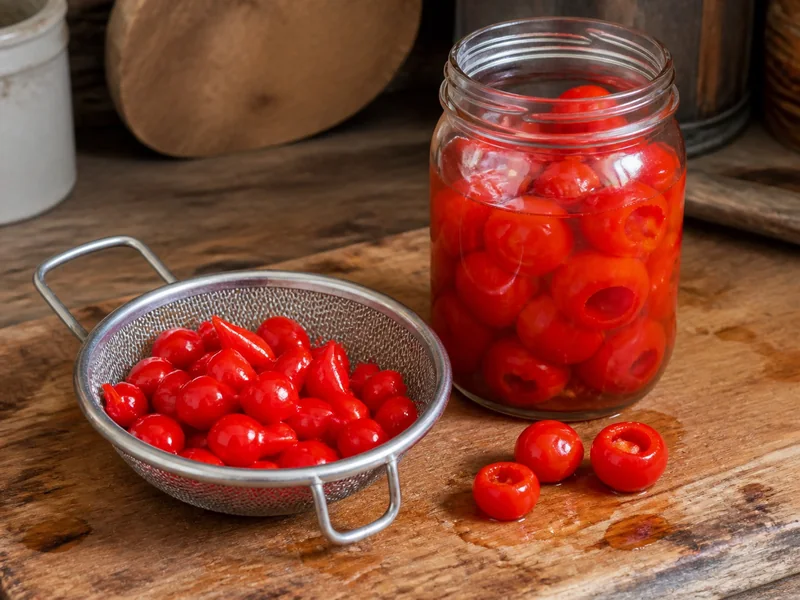
Biquinho earns its reputation in jars first. Embrapa lists salads, sandwiches, cooked vegetables, grilled foods, meats, fish, rice, pasta, farofa, jellies, pickles, and sauces as natural uses, which tells you this pepper is valued for versatility rather than raw firepower.

View full profile
Peppadew Pepper
Mild

Most cooks meet Peppadew in a jar, and that is the right starting point. The sweet brine and mild heat are the whole point of the eating experience.

View full profile

Both peppers punch above their weight in the kitchen precisely because their low heat lets other flavors come forward , but they suit different preparations.

Biquinho shines in Brazilian churrascaria spreads, where it appears alongside grilled meats as a pickled condiment. Drop a handful on a charcuterie board and they disappear fast. Their small size (roughly 1-2 cm) makes them ideal for whole-pepper applications: cocktail garnishes, antipasto plates, or dropped whole into a martini in place of an olive. In Brazil, they are commonly preserved in oil with garlic and herbs. The sweet, low-heat profile compared to aji dulce is worth understanding if you are sourcing for Latin-inspired dishes , both are gentle, but Biquinho carries more moisture and a thinner skin.

Peppadew was practically designed for stuffing. Their hollow interior (about 3-4 cm across) fits a teaspoon of cream cheese or goat cheese perfectly, making them the go-to for easy appetizers. They also work sliced on flatbreads, chopped into egg salads, or layered in sandwiches where their firm flesh holds texture without going mushy. The flavor contrast between Peppadew and cherry pepper preparations is a useful reference if you are deciding between jarred options at a grocery store , Peppadew tends sweeter, cherry peppers more acidic.

Substitution guidance: Swap Biquinho for Peppadew at a 1:1 ratio in most recipes, but expect a slightly less assertive sweetness and thinner texture. Going the other direction , Peppadew for Biquinho , works well in stuffed applications but may feel too firm in dishes where Biquinho's delicate skin is part of the appeal. For a broader side-by-side look at Peppadew against piquillo-style peppers, the key variable is roasted depth versus fresh sweetness.

Both peppers are available jarred year-round, which makes them pantry staples rather than seasonal ingredients. Fresh Biquinho is harder to source outside of Brazil or specialty markets.

Related Bird's Eye Chili vs Jalapeño – Heat & Flavor Compared

Which Should You Choose?

If you want a pepper that disappears into a dish with gentle warmth and delicate sweetness, Biquinho is the call. Its thin skin, juicy flesh, and near-zero heat make it ideal for pickled condiments, charcuterie, and any application where subtlety matters. The C. chinense lineage gives it a faint tropical undertone that more assertive peppers would bulldoze.

Peppadew wins when structure matters. The thicker walls hold up to stuffing, grilling, and longer cooking without turning to mush. Its sweetness is more pronounced , almost candy-like , and the commercial pickling process means consistent flavor every time you open a jar. If you are feeding a crowd with stuffed pepper appetizers or building a composed salad that needs textural integrity, Peppadew is the more reliable tool.

For heat, the difference is negligible , both sit so low that choosing based on SHU alone makes no sense. Choose based on texture and sweetness intensity instead. Keep both in your pantry if you can; they are not interchangeable so much as complementary.

Can You Substitute One for the Other?

Yes. Direct substitution works. Biquinho Pepper and Peppadew Pepper are close enough in heat to swap at roughly 1:1. The main difference will be flavor. For more swap options, explore ranked alternatives with conversion ratios.

Growing Biquinho Pepper vs Peppadew Pepper

If you’re deciding which pepper to grow at home, consider your climate and patience level. Biquinho Pepper and Peppadew Pepper have different maturation times and temperature preferences. Hotter varieties generally need a longer, warmer growing season to develop their full capsaicin content. Our zone-based planting date tool can pinpoint the best sowing window for your area.

Biquinho Pepper

UMN Extension recommends starting pepper seed indoors about eight weeks before planting outside, with warm soil and night temperatures above 50 to 55 degrees Fahrenheit before transplanting. That advice maps well to biquinho, which Embrapa also describes as heat-loving and sensitive to low temperatures.

BRS Moema reaches about 60 cm tall with a broad, productive habit, so biquinho stays practical for patios and small beds. If you need spacing, watering, and transplant timing basics, our grow-jalapenos guide covers the same pepper-growing workflow in plain steps.

Consistent moisture matters because UMN calls out blossom-end rot risk when pepper plants cycle between dry and wet conditions. Our pepper blossom end rot guide is the right follow-up if fruit quality drops or the first pods scar at the blossom end.

Peppadew Pepper

Growing true Peppadew is less straightforward than growing a standard garden pepper because the brand and licensing history complicate seed sourcing. For home growers, the practical question is usually whether you can source a sweet piquante or Juanita-type seed line and whether your season is long enough to finish the fruit properly.

Oregon State University Extension lists Sweet Piquante under Capsicum baccatum and notes that baccatum peppers benefit from warmth and season extension in cooler climates. That tracks with the Rutgers proceedings work on Peppadew production in New Jersey, which reported roughly 120 days for the gold line and a much longer 160-day production period for the red piquante line.

Treat it like a warm-season, long-run crop. Start seed indoors 8 to 10 weeks before the last frost, transplant only after settled warmth, and give the plants the brightest spot you have.

History & Origin of Biquinho Pepper and Peppadew Pepper

Both peppers carry centuries of culinary heritage. Biquinho Pepper traces its roots to Brazil, while Peppadew Pepper originates from South Africa. Understanding their backstory helps explain why each pepper developed its distinctive traits.

Biquinho Pepper · Brazil
Embrapa says biquinho began reaching the Brazilian market through the Triangulo Mineiro in the early 2000s before spreading across the country. That makes it a modern commercial success story inside a much older South American pepper tradition rather than a newly invented novelty cultivar. The pepper is still tied closely to Brazilian food culture, especially Minas Gerais style snack tables, conservas, and casual bar food.
Peppadew Pepper · South Africa
The official PEPPADEW materials place the discovery story in South Africa in the mid 1990s. Their FAQ says the brand was created after the discovery of the Piquante Pepper, and their product page repeats the same broad timeline. That is the cleanest brand-owned version of the story, and it is the safest starting point for readers trying to understand what Peppadew actually is.

Buying & Storage

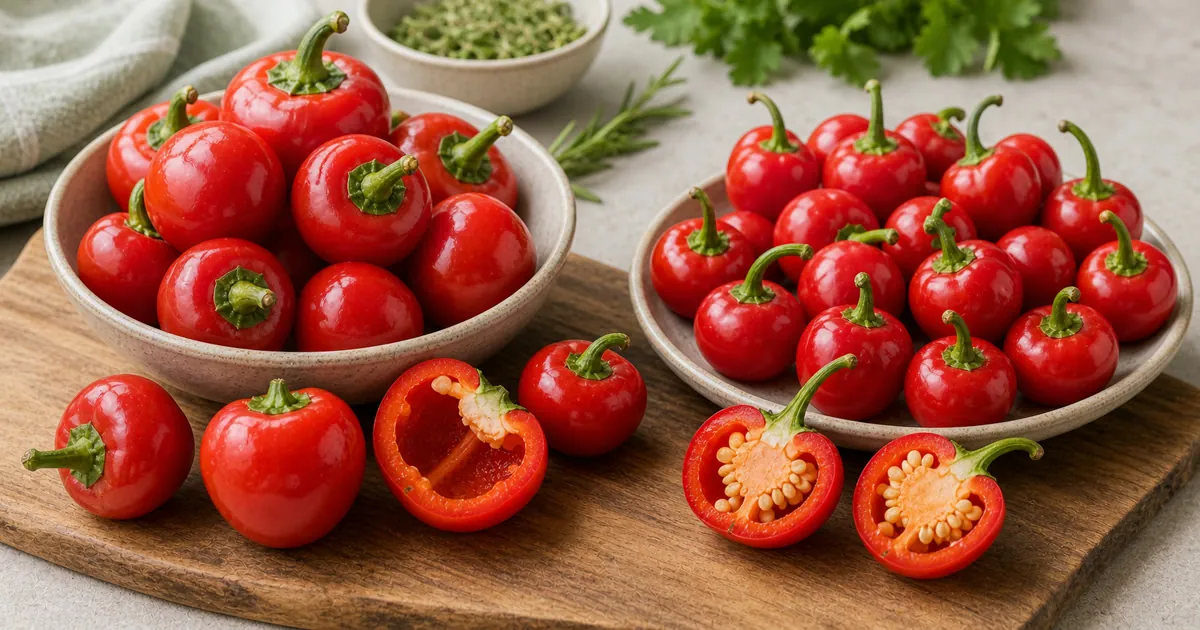
Whether you’re shopping for Biquinho Pepper or Peppadew Pepper, the same quality indicators apply. Fresh peppers should feel firm and heavy for their size, with taut, glossy skin and no soft or wet spots. Minor stem cracks known as “corking” are perfectly normal and often indicate a mature, flavorful pod.

What to Look For
  • Firm pods with taut skin and consistent color
  • Should feel heavy relative to size
  • Minor stem cracks (“corking”) are normal
  • Avoid anything soft, shriveled, or with dark wet spots
How to Store
  • Fresh: Paper bag, crisper drawer, 1 to 2 weeks
  • Frozen: Wash, dry, freeze on sheet pan, 6+ months
  • Dried: Airtight and away from light, up to 1 year
Mistakes to Avoid
Biquinho Pepper
  • Equating green with unripe. Different products.
  • Overcooking. Cell walls break down fast.
  • Sealed plastic storage. Causes rot. Use paper bags.
Peppadew Pepper
  • Equating green with unripe. Different products.
  • Overcooking. Cell walls break down fast.
  • Sealed plastic storage. Causes rot. Use paper bags.

The Verdict: Biquinho Pepper vs Peppadew Pepper

Biquinho Pepper and Peppadew Pepper sit in the same heat tier but serve different roles. Peppadew Pepper delivers its distinctive sweet, tangy, and lightly brined character. Biquinho Pepper, with its sweet, aromatic, and lightly tangy profile, excels in everyday cooking.

Full Biquinho Pepper Profile → Full Peppadew Pepper Profile →
Fact-Checked & Expert Reviewed
Editorial Standards: Head-to-head comparisons include blind tasting when applicable. Heat levels cross-referenced with multiple sources. All substitution ratios tested side-by-side.
Review Process: Written by Marco Castillo (Founder & Lead Reviewer) , reviewed by Karen Liu (Lead Fact-Checker & Science Editor) . Last updated May 19, 2026.

Frequently Asked Questions

They work as 1:1 substitutes in most cold applications like charcuterie boards or antipasto, but the texture difference becomes noticeable in stuffed preparations. Peppadew's thicker walls hold fillings better, while Biquinho's thinner skin makes it better for whole-pepper garnishes or pickled condiments.

Peppadew typically tastes sweeter, partly due to the commercial pickling process that concentrates its natural sugars. Biquinho has a softer, more delicate fruitiness that reads as sweet but less candy-like than Peppadew's assertive flavor.

Yes , both are mild enough to eat raw without any preparation. Biquinho is juicier and more delicate raw, while Peppadew has a firmer, apple-like crunch that holds up better in fresh salads or sliced applications.

Biquinho is still grown across different farms and cultivar lines, so a source-backed mild range like 80-500 SHU reflects that natural spread. Peppadew is a trademarked commercial pepper with a tighter published range, so the heat feels more standardized from jar to jar.

Yes , both Biquinho and habaneros belong to Capsicum chinense, which makes Biquinho's near-zero heat unusual for the species. Most C. chinense varieties sit much higher on the heat scale, but Biquinho is a rare exception that stayed mild despite its genetic lineage.

Sources & References

Sources pending verification.

Karen Liu
Fact-checked by Karen Liu
Contributing Editor & Food Scientist
SHU Verified
Kitchen Tested
Expert Reviewed
All Comparisons Browse All Peppers