
Bird's Eye Chili vs Jalapeño: Concentrated Heat or Thick, Crunchy Flesh?
Choose bird's eye chili for concentrated heat and jalapeño for crunch, roasted flesh, or visible green pieces. Their published ranges are 50,000 to 100,000 SHU and 2,500 to 8,000 SHU, so a pod-for-pod swap is unreliable.

Bird's Eye Chili
HotJalapeño
MediumQuick Comparison
| Attribute | Bird's Eye Chili | Jalapeño |
|---|---|---|
| Scoville evidence | 50K-100K SHU | 2.5K-8K SHU |
| Heat Tier | Hot | Medium |
| vs Jalapeño | 13x hotter | 1x hotter |
| Flavor | sharp, peppery, bright heat | Grassy, crisp, lightly sweet when red |
| Species | C. annuum | C. annuum |
| Origin | Mexico, Central America, or South America; now grown in South and Southeast Asia | Mexico |
How Much Hotter Is Bird's Eye Chili Than Jalapeño?
Bird's eye chili is the hotter choice by a wide margin. UF/IFAS lists the Thai pepper type sold as bird's eye chili at 50,000 to 100,000 SHU, while Clemson Cooperative Extension lists jalapeño at 2,500 to 8,000 SHU.
Comparing the ends of those published ranges gives a gap from about 6 times to 40 times. The exact gap for two pods cannot be predicted from their names because cultivar, maturity, and growing conditions change capsaicinoid concentration.
Pod count hides that difference. One bird's eye pod is much smaller than one jalapeño, yet it can deliver more heat to the same bowl, so add it in fractions or one pod at a time.
The useful heat ratio is a range
Published endpoints put bird's eye chili at roughly 6 to 40 times hotter than jalapeño. Dose the actual pepper gradually instead of treating one midpoint as a promise.
Size And Identity
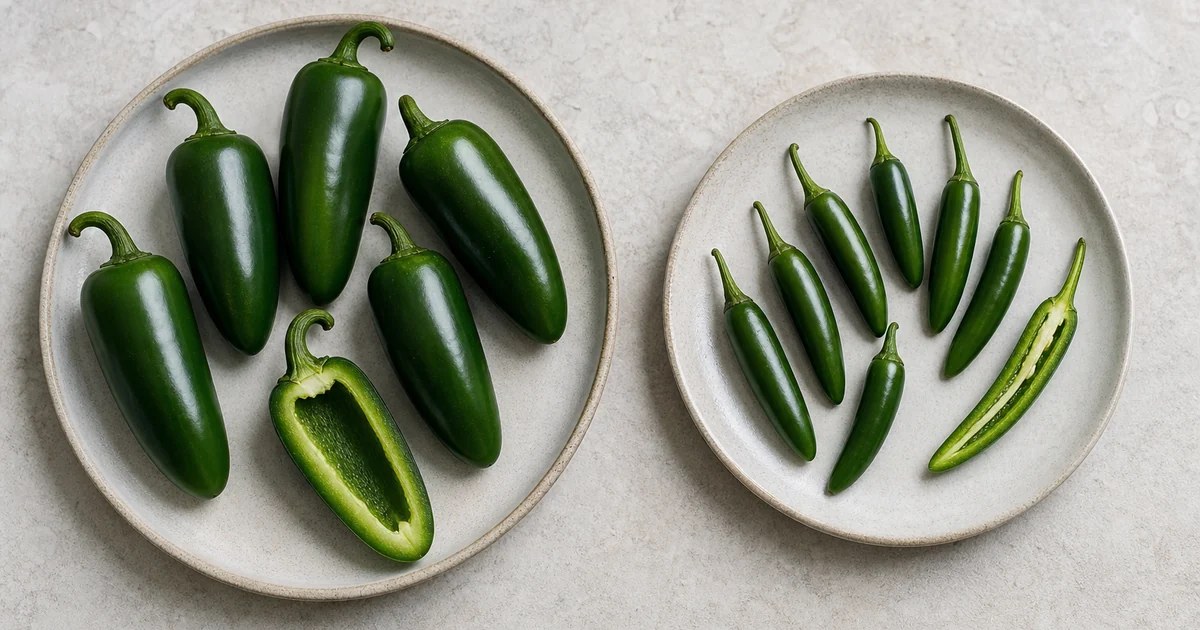
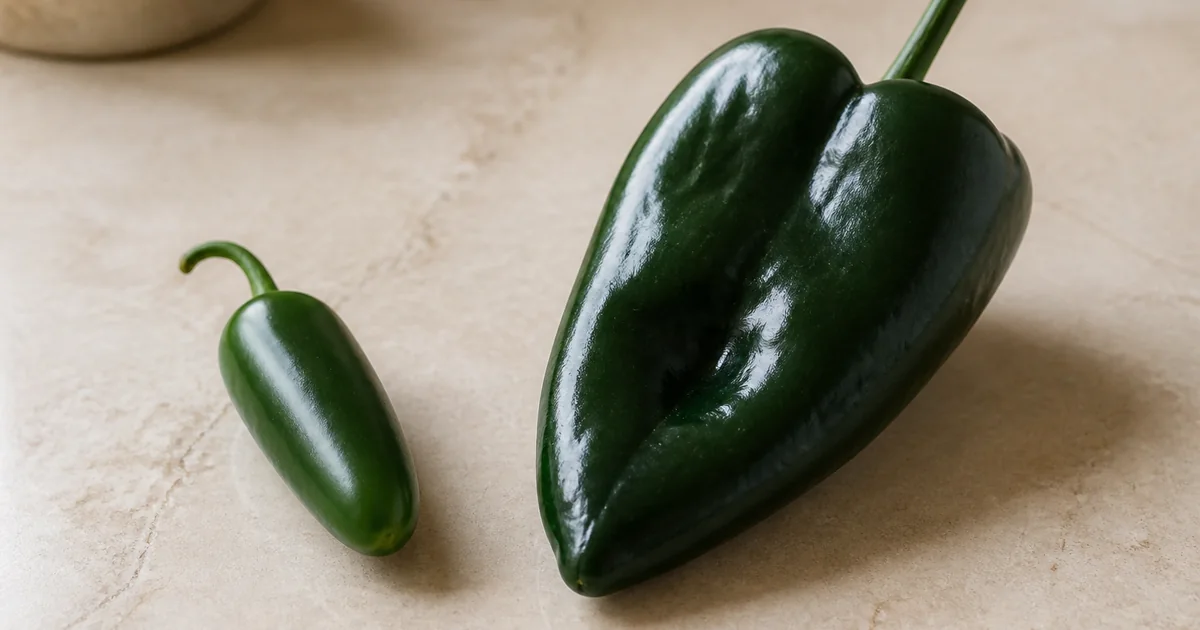
Both peppers are commonly placed in Capsicum annuum, but species membership does not make them interchangeable. UF/IFAS describes the bird's eye or Thai type as a small tapering pod around 1 inch long, while jalapeño has much thicker walls and more usable flesh.
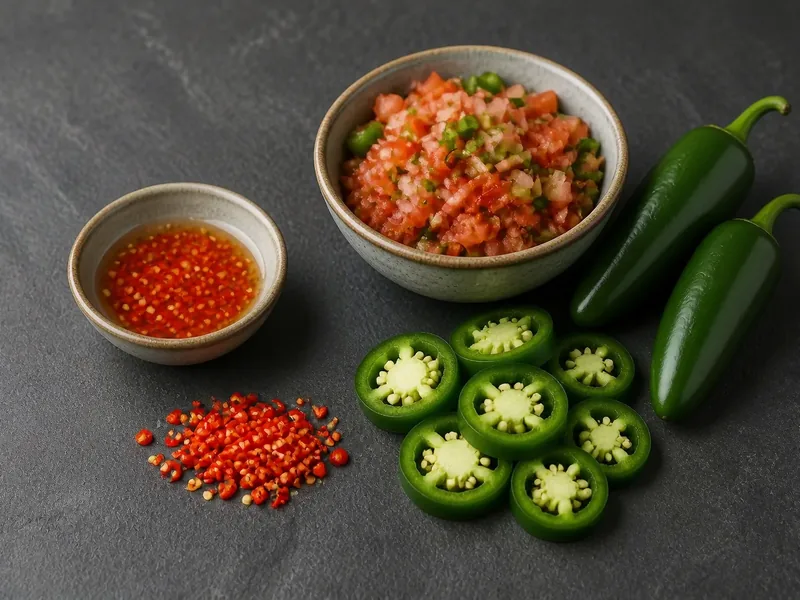
That construction changes the dish before heat is considered. Bird's eye disappears into a mince or paste, while jalapeño remains a visible ring, dice, roasted strip, or stuffing shell.
How Do Bird's Eye Chili and Jalapeño Taste Different?
Bird's eye chili brings sharp, peppery heat with little vegetable mass. It works when the chile should season a liquid or paste without adding much water or crunch.
Green jalapeño tastes grassy and juicy, with walls thick enough to remain crisp when raw or soften under a broiler. A ripe red jalapeño becomes sweeter, but it still contributes more flesh than a bird's eye pod.
Choose by texture as well as aroma. A salsa that needs green dice loses body with bird's eye, while a thin dipping sauce becomes bulky when several jalapeños replace one small hot chile.
Culinary Uses
Use bird's eye chili in fish-sauce dips, curry pastes, chile vinegar, soups, and stir-fries that need concentrated heat. Mince or pound it finely so one hot piece does not become a surprise bite.
Use jalapeño for pico de gallo, pickled rings, roasted salsa, poppers, sandwiches, and creamy green sauce. Its mild-to-medium heat leaves room for a larger portion, so the pepper can function as an ingredient rather than a dose.
Cuisine is useful context, but the physical job decides the choice. A Thai-style condiment usually benefits from bird's eye, while a stuffed pepper or chunky Mexican-style salsa needs jalapeño's size and walls.
| The dish needs | Better choice | Reason |
|---|---|---|
| Concentrated heat with little bulk | Bird's eye | A small mince seasons sauce or paste. |
| Crunchy slices or green dice | Jalapeño | Thick walls remain part of the bite. |
| A pepper to roast or stuff | Jalapeño | Bird's eye is too small and thin. |
| Thai-style dipping sauce or curry paste | Bird's eye | Sharp heat fits the form without excess flesh. |
Cut Size And Control
Cut size controls distribution, not the pepper's underlying range. A fine bird's eye mince spreads heat through a sauce, while coarse pieces create concentrated bites.
The pale placenta carries much of a pod's capsaicinoid tissue, so trimming it can lower the dose. It cannot turn a 50,000 to 100,000 SHU bird's eye into a jalapeño.
Wear gloves when preparing several bird's eye chilies, wash the knife and board, and keep your hands away from eyes and contact lenses. NMSU identifies capsaicinoids as the compounds responsible for chile heat, which is why clean handling matters even when the pieces are tiny.
Which Should You Use, Bird's Eye Chili or Jalapeño?
Choose bird's eye chili when the dish needs fast heat from a very small amount of pepper. It is the stronger fit for thin sauces, pounded pastes, stir-fries, and condiments where jalapeño flesh would change the texture.
Choose jalapeño when the pepper must provide crunch, roasted flesh, a stuffing cavity, or visible green pieces. It is easier to dose for a mixed table because its published heat range is far lower.
For a substitution, decide whether the missing ingredient supplied heat or vegetable bulk. That question prevents the common mistake of matching pod count while changing both texture and intensity.
Substitution
Do not exchange these peppers 1:1 by pod count. Published heat ranges overlap too little, and pod sizes differ too much for a universal conversion.
When replacing jalapeño with bird's eye, first replace the missing jalapeño bulk with bell pepper or another mild thick-walled pepper if the dish needs it. Add bird's eye separately in small increments until the heat fits the dish.
When replacing bird's eye with jalapeño, expect a greener, wetter, and much milder result. Mince the jalapeño finely, add only as much flesh as the recipe can absorb, and accept that matching bird's-eye heat may require a closer hot pepper instead.
The bird's eye substitute choices preserve concentrated heat more closely, while jalapeño substitutes preserve thick green flesh and medium heat.
Bird's Eye Chili vs Jalapeño FAQ
- UF/IFAS Gardening Solutions - Peppers Ranked by Heat
- Clemson Cooperative Extension - Pepper
- New Mexico State University - Chile Pepper Cultivars