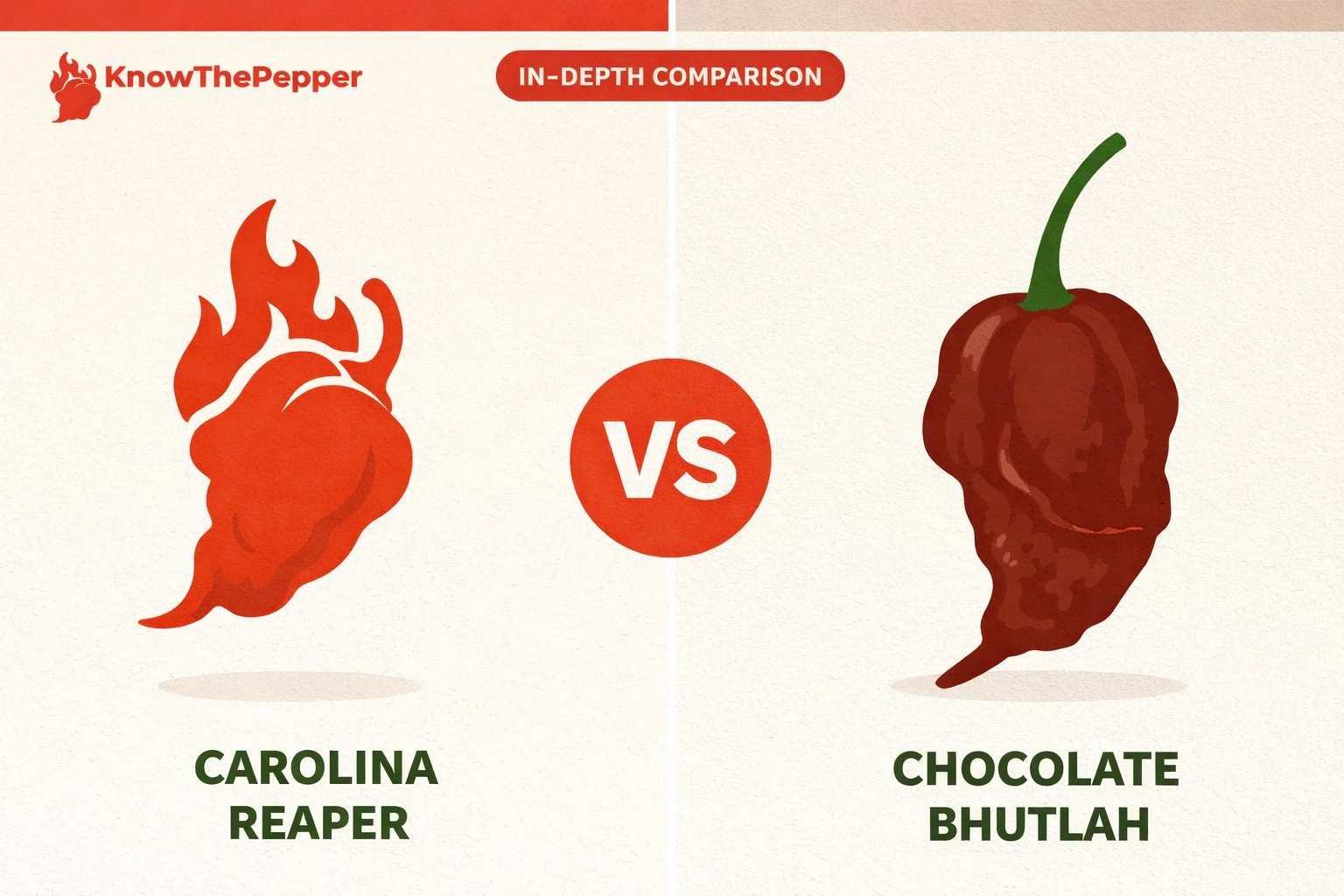
Carolina Reaper vs Ghost Pepper: Hotter Reaper, Earthier Ghost for Cooking
The Carolina Reaper tops the Scoville scale at 1,400,000-2,200,000 SHU, making it one of the most intense peppers ever measured.
The Ghost Pepper (Bhut Jolokia) was once the world's hottest, clocking around 1,000,000 SHU before being dethroned. Both belong to the extreme end of heat, but the Reaper hits harder, faster, and with a different flavor character entirely.

Carolina Reaper
Super-HotGhost Pepper
Super-HotQuick Comparison
| Attribute | Carolina Reaper | Ghost Pepper |
|---|---|---|
| Scoville evidence | 1.4M-2.2M SHU | 855K-1M SHU |
| Heat Tier | Super-Hot | Super-Hot |
| vs Jalapeño | 275x hotter | 130x hotter |
| Flavor | fruity and sweet | smoky and sweet |
| Species | C. chinense | C. chinense |
| Origin | USA | India |
How Much Hotter Is Carolina Reaper Than Ghost Pepper?
The Carolina Reaper sits firmly in the super-hot category where sustained burn defines the experience, with a certified range of 1,400,000 to 2,200,000 SHU. The Ghost Pepper, measured around 855,000 to 1,041,427 SHU in peer-reviewed studies, is genuinely ferocious, but the Reaper can deliver roughly twice the capsaicin load.
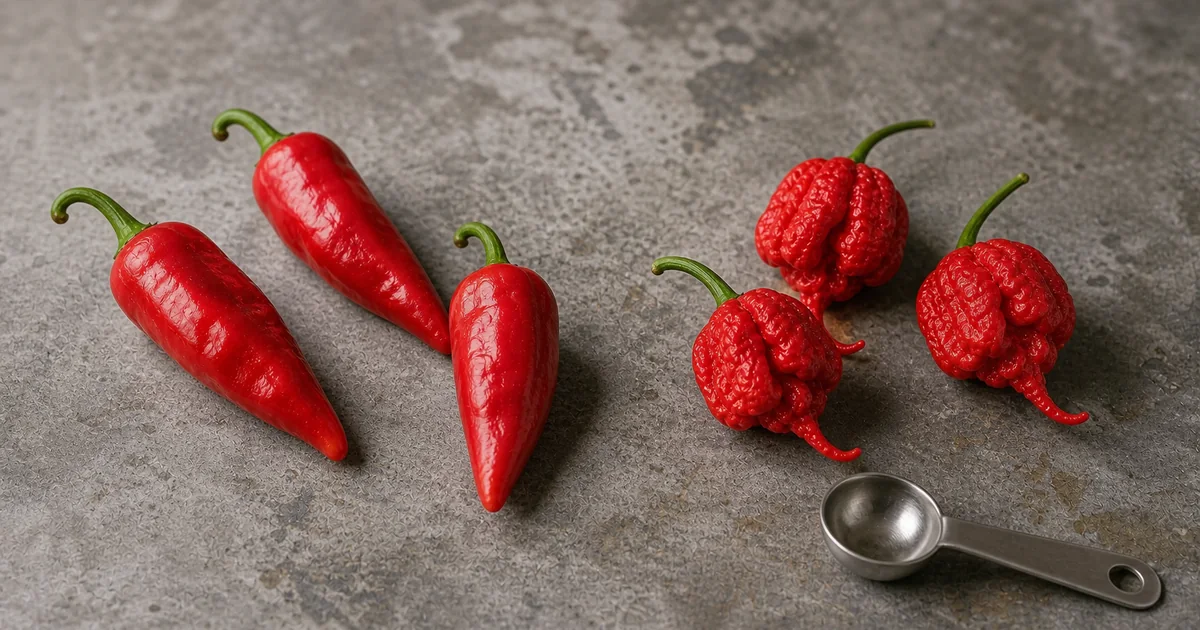
To put this in terms of something most kitchens recognize: a Fresno pepper sits at roughly 2,500-10,000 SHU.
The Ghost Pepper is 85 to 400 times hotter than a Fresno. The Reaper,
Anywhere from 140 to 880 times hotter, depending on the specific pod and growing conditions.
The heat character also differs. Ghost Pepper burn builds slowly, there's a delay of 30-45 seconds before the full wave hits, then it lingers.
The Reaper front-loads its attack.
The initial bite is intensely fruity, almost deceptively pleasant, then the capsaicin floods in fast and hard. Both peppers activate TRPV1 receptors throughout the mouth and throat, but the Reaper's higher capsaicin concentration means the biological reason peppers create pain signals plays out more aggressively.
For context on the Carolina Reaper's position on the full rating scale, it held the Guinness World Record from 2013 through 2023, when Pepper X claimed the title.
Ghost Pepper held the record from 2007 to 2011. Both are legitimate record-holders, just from different eras.
How Do Carolina Reaper and Ghost Pepper Taste Different?
Strip away the heat for a moment, and these two peppers taste nothing alike.
The Carolina Reaper carries a genuinely fruity, almost tropical sweetness, notes of peach and chocolate come through in the first second before the burn overwhelms everything. That flavor is why serious hot sauce makers prize it.
There's actual complexity underneath the pain.
The Ghost Pepper's flavor profile is earthier and more vegetal.
Some describe a slight smokiness, others pick up a faint floral quality. It lacks the candy-sweet front note that defines the Reaper.
Raw, the Ghost Pepper smells faintly of fruit, but it's more restrained than its C. chinense relatives like habaneros or Scotch bonnets.
Both peppers are botanically C.
chinense (or closely related), which typically produces the fruity-floral aromatics that distinguish this species from the grassier C. annuum varieties.
The Reaper expresses those characteristics more intensely, it was selectively bred by Ed Currie in South Carolina specifically to maximize both heat and flavor.
In dried form, the differences sharpen. Dried Ghost Pepper takes on a deeper, almost tobacco-like earthiness that works well in spice blends.
Dried Reaper retains more of its fruit character, though the sweetness becomes more concentrated and complex. Neither pepper is subtle in any form, the question is whether you want fruity-sweet heat or earthy-smoky heat layered under the burn.
Culinary Uses
Ghost Pepper Salsa Verde is where the Ghost Pepper genuinely shines, its slower heat build and earthy undertones complement tomatillos and roasted garlic without the fruit-forward sweetness of the Reaper pulling the flavor in unexpected directions.
The Reaper belongs in hot sauces where you want both flavor and heat to carry the product. A small amount, often a single pod per batch, delivers enough fruity sweetness to balance vinegar-heavy bases.
Many commercial Carolina Reaper hot sauce recipes use the pepper as a flavor anchor, not just a heat source.
For cooking with either pepper, the math is straightforward: one Ghost Pepper roughly equals the heat of 100-150 Fresno peppers. One Reaper can replace 200+ Fresnos in heat terms.
Both should be treated as seasoning agents, not vegetables.
Substitution between them is possible but imperfect. Swapping Ghost Pepper for Reaper means using 1.5 to 2 Ghost Peppers to approximate one Reaper's heat, but you'll lose the fruity sweetness.
Going the other direction, use half a Reaper in place of one Ghost Pepper, and expect a brighter, sweeter heat profile.
Dried and powdered, Ghost Pepper is more versatile as an everyday spice. Its earthiness integrates into dry rubs and marinades without announcing itself as a novelty ingredient.
Reaper powder is exceptional in small doses for chocolate desserts, the fruit notes bridge surprisingly well with dark cocoa.
Both peppers work in fermented hot sauces. The long fermentation process mellows the raw heat slightly while developing complexity.
Which Should You Choose, Carolina Reaper or Ghost Pepper?
The Carolina Reaper wins on heat, it's not close. If maximum Scoville rating is the goal, the Reaper is the answer, full stop.
But the Ghost Pepper is the more practical choice for actual cooking.
Ghost Pepper's slower heat build, earthier flavor, and slightly lower intensity make it easier to incorporate into real dishes without obliterating every other ingredient. It's the better everyday extreme pepper, if such a thing exists.
Bottom line: Ghost Pepper for cooking, Reaper for heat records and hot sauce character. Neither is casual.
Service Examples
Choose the Reaper when the recipe is intentionally built around extreme heat: tiny-dose hot sauce, challenge wings, pepper mash, or a sauce where one pod seasons a large batch.
The Reaper has a sweet red-fruit start, but the burn ramps hard and can dominate everything around it. In practical cooking, it is a dosing ingredient more than a flavor base.
Choose ghost pepper when the recipe needs super-hot heat with more smoke, earth, and slow-building warmth.
Ghost pepper works better in curry, chili oil, dry rubs, and ghost pepper hot sauce where the pepper flavor has room to show before the burn peaks. It is still extreme, but it is easier to place in savory food.
For a one-quart hot sauce, a half ghost pepper can be manageable for heat-focused eaters.
A half Reaper may push the same volume into stunt territory. That difference matters more than the headline SHU number.
Can You Swap Carolina Reaper and Ghost Pepper?
Carolina Reaper can replace ghost pepper only with a major dose cut.
Start with one-quarter Reaper for one ghost pepper, then adjust after blending and resting because super-hot sauces often feel hotter the next day. Do not make this swap by pod count.
Ghost pepper can replace Carolina Reaper at a higher dose, but it will not reach the same ceiling unless you add more pods.
Use 2 ghost peppers for 1 Reaper when the recipe is already designed for extreme heat, then taste carefully. The flavor will shift toward smoke and earth rather than Reaper's sweeter red-fruit edge.
Both peppers belong in the super-hot heat tier, so gloves and ventilation are practical cooking controls, not optional drama. The better choice is the one that fits the dish: Reaper for maximum heat, ghost for food that still needs chile flavor.
Buying And Prep Notes
Both peppers should be bought with a clear use plan.
Reapers are often sold as whole dried pods, powder, mash, or novelty sauce. Ghost peppers are easier to find as dried pods, flakes, powder, and prepared hot sauce.
Powder is convenient, but it is also the easiest form to overdose.
Fresh pods should be handled with gloves, a clean cutting board, and good airflow. For dried pods, cut or crush only what the recipe needs, then seal the rest immediately.
Airborne powder from either pepper can irritate eyes and lungs.
For sauce testing, blend a small pilot batch before committing the full pot. Super-hot sauces change after resting overnight, and vinegar can make the burn feel sharper.
A sauce that tastes barely controlled when warm may feel much hotter the next day.
Use Reaper where maximum heat is the actual target. Use ghost pepper where the dish still needs smoke, earth, and slow-building chile flavor.
That distinction keeps the comparison useful in cooking rather than turning it into a heat ranking only.
Quick Choice Matrix
Use Carolina Reaper when maximum heat is the main design goal. It is the better pick for challenge sauces, tiny-dose hot sauce, mash, and recipes where one pod seasons a large volume.
Use ghost pepper when the dish still needs super-hot chile flavor. It is the better pick for curry, chili oil, savory hot sauce, dry rubs, and recipes that can use smoke and earth.
Do not choose by ranking alone. Choose Reaper for heat ceiling and ghost pepper for a more food-friendly super-hot profile.
Common Mistake
The common mistake is choosing Carolina Reaper because it ranks hotter, even when the recipe needs ghost pepper flavor.
Super-hot cooking still needs flavor design. If a curry, rub, or savory sauce depends on smoke and earth, ghost pepper often gives a better food result than a smaller amount of Reaper.
Ratio Note
Use one-quarter Reaper for one ghost pepper as a starting point in sauce. Use two ghost peppers for one Reaper only when the recipe is already meant for extreme heat and can absorb more chile flavor.