
Apollo Pepper vs Carolina Reaper: Heat Claim or Proven Record?
Apollo's reported 2.5M-3M SHU range sits above Carolina Reaper's practical 1.4M-2.2M range. Carolina Reaper's measured record history makes it the better-documented pepper, while Apollo remains the higher but provisional heat claim.

Apollo Pepper
Super-HotCarolina Reaper
Super-HotQuick Comparison
| Attribute | Apollo Pepper | Carolina Reaper |
|---|---|---|
| Scoville evidence | 2.5M-3M SHU | 1.4M-2.2M SHU |
| Heat Tier | Super-Hot | Super-Hot |
| vs Jalapeño | 375x hotter | 275x hotter |
| Flavor | reported sweet heat, earthy finish | fruity and sweet |
| Species | C. chinense | C. chinense |
| Origin | USA | USA |
Is Apollo Hotter Than Carolina Reaper?
Apollo has the higher reported range at 2.5M-3M SHU. Carolina Reaper occupies a practical 1.4M-2.2M SHU range, and Guinness confirmed a 2013 average of 1,569,300 Scoville Heat Units.
The decisive difference is evidence quality, not an 800,000-point gap between two catalog ceilings.
PuckerButt says Ed Currie bred Apollo from prized Carolina Reaper and Pepper X strains.
Its Apollo product page does not publish a standalone lab certificate, tested batch average, or specimen count for the pepper.
That missing measurement trail means we treat Apollo's range as provisional. Guinness gives the Reaper a named average and identifies it as the previous record holder, so its heat has a firmer public reference point.
A simple endpoint calculation puts Apollo's claimed ceiling about 1.36 times above the Reaper's listed ceiling. That calculation compares two upper limits, not two tested pods, and it cannot predict the difference between products.
Both peppers remain in the super-hot category. A lower published ceiling does not make Carolina Reaper suitable for an unmeasured bite, and Apollo's uncertain number does not justify calling it an official record holder.
How Do Apollo and Carolina Reaper Taste?
PuckerButt describes Apollo as combining Carolina Reaper sweetness with Pepper X earthiness.
That description belongs to the breeder's commercial product source, so it is useful context rather than an independent sensory result.
Guinness described Carolina Reaper as fruity and sweet, with cinnamon and chocolate undertones, when it confirmed the 2013 record. The description gives Reaper a clearer public flavor reference than Apollo currently has.
Both peppers belong to Capsicum chinense, but shared species and related breeding do not guarantee identical flavor.
Pod maturity, growing conditions, drying, and sauce formulation can change which aroma survives the heat.
Product format matters even more here. The Last Dab Apollo contains fresh Apollo pepper, powder, distillate, vinegar, and concentrated pepper oil, while a fresh Reaper or plain Reaper powder presents a different ingredient system.
For a fruit-forward fresh pepper note, Carolina Reaper is the clearer choice. For an earthy-sweet Apollo product whose formula is already known, use the Apollo label and serving size as the practical reference.
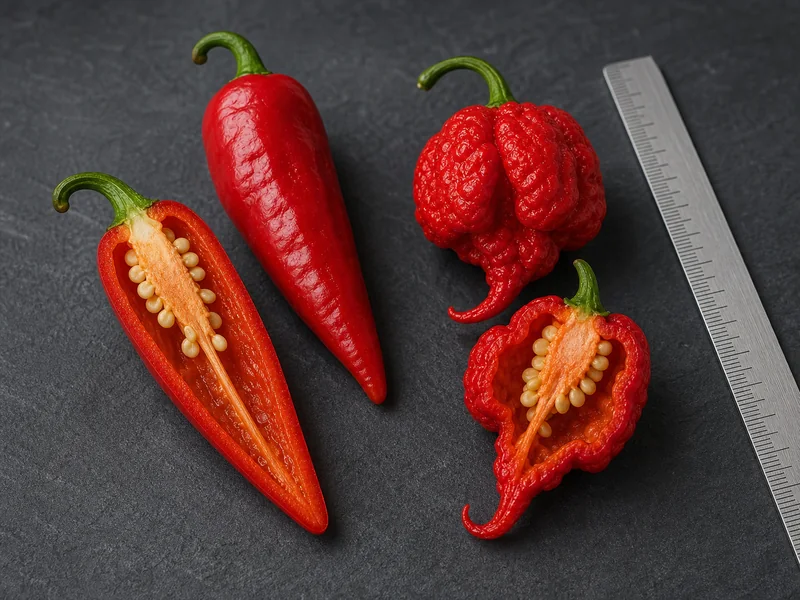
When Should You Cook With Apollo or Carolina Reaper?
Choose Carolina Reaper when a recipe calls for a traceable fresh pod or plain powder. Its documented identity makes weighed dosing easier to repeat across hot sauce, pepper mash, tomato sauce, and fruit-based sauce.
Choose Apollo when the recipe specifically uses an Apollo sauce or seasoning, because the product label then defines the ingredient more clearly than the provisional cultivar range does.
Our editorial judgment favors Reaper in mango, pineapple, peach, carrot, or tomato bases where a brief fruit note supports the sauce. Apollo's breeder-described earthiness points toward dark barbecue sauce, beans, chili, or smoky ferments, but the exact result depends on the Apollo product.
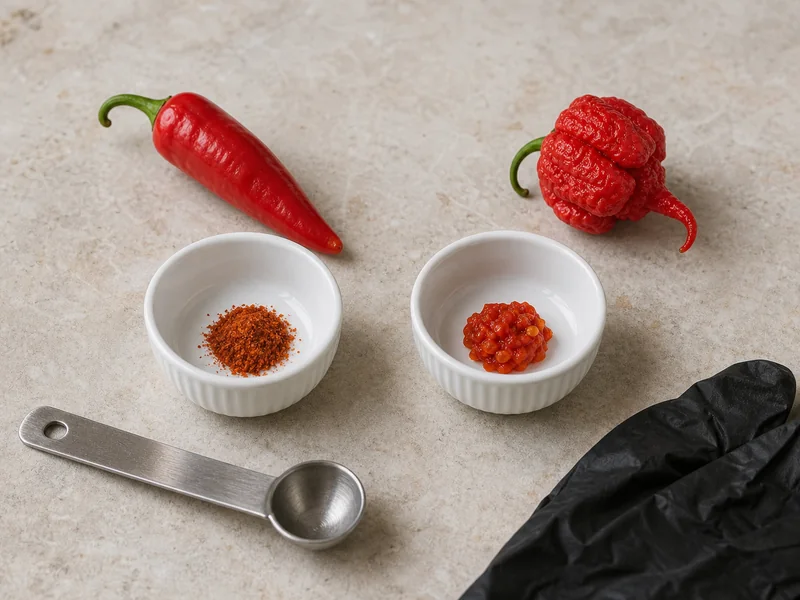
For making hot sauce at home, measure either pepper into the full batch instead of tasting a concentrated spoonful. Wait before adding more because capsaicin heat can build after the first contact.
Use intact disposable gloves before opening pods, powder, mash, or sauce.
The National Center for Home Food Preservation gives the same glove warning for hot peppers, and it advises thorough hand washing before touching the face.
Ventilation matters when heat or steam can move capsaicin residue into the air. If exposure occurs, the pepper burn steps depend on whether the contact reached skin, eyes, or mouth.
Which Should You Choose, Apollo or Carolina Reaper?
Carolina Reaper is the better default ingredient, while Apollo is the specialist product choice.
Reaper wins when you need a public measurement trail, a known former record, or a fresh-pod reference. Apollo wins only when the higher reported range or its specific earthy-sweet product character is the reason for choosing it.
The source difference should guide the purchase.
PuckerButt's cited Apollo evidence is a finished sauce page, while Guinness documents Carolina Reaper as a tested cultivar with a named average.
Neither pepper is the current Guinness record holder. The Carolina Reaper versus Pepper X record changed in 2023, when Guinness certified Pepper X at an average of 2,693,000 SHU.
Treat Apollo's higher number as a provisional comparison point. Treat Reaper's documented average as the stronger basis for a repeatable decision.
Substitution
Do not swap Apollo and Carolina Reaper pod for pod. Apollo lacks a public batch average comparable to the Reaper's Guinness measurement, and Apollo sauce may include powder and distillate in addition to fresh pepper.
Use the SHU calculator only when both ingredients provide credible heat values for the same form.
A calculation based on Apollo's reported midpoint and the Reaper's record average is illustrative, not a safe recipe ratio.
| Swap | Best starting rule | Why |
|---|---|---|
| Reaper pod to Apollo pod | Avoid an exact conversion | Apollo pod identity and batch heat are harder to verify publicly. |
| Reaper powder to Apollo powder | Start below one-quarter of the listed amount | This conservative editorial starting point limits an overshoot when the Apollo label lacks a lab value. |
| Apollo sauce to Reaper sauce | Compare ingredients and serving size first | Vinegar, pepper concentration, powder, and distillate can outweigh cultivar heat. |
| Apollo flavor to Reaper flavor | Expect less earthiness | Guinness describes Reaper as fruity-sweet, while PuckerButt describes Apollo as earthy-sweet. |
Blend each test dose through the full batch and wait before adjusting. With either pepper, under-seasoning is recoverable and an excessive dose usually is not.
Apollo Pepper vs Carolina Reaper FAQ
- PuckerButt Pepper Company - The Last Dab Apollo
- Guinness World Records - Confirmed: Smokin Ed's Carolina Reaper sets new record for hottest chilli
- Guinness World Records - Pepper X dethrones Carolina Reaper as world's hottest chilli pepper
- National Center for Home Food Preservation - Pickled Hot Peppers