Carolina Reaper vs Chocolate Bhutlah: Superhot Choice

Choose Carolina Reaper when you need a better-documented red superhot with record history and a fruity flash in tiny doses. Choose Chocolate Bhutlah when the recipe can use darker smoke, earth, and brown-pod depth. The heat ranges overlap, but the buying risk and cooking role do not.

Carolina Reaper and Chocolate Bhutlah peppers side by side with sliced cross sections
Quick Comparison

Carolina Reaper measures 1.4M–2.2M SHU while Chocolate Bhutlah registers 1M–2M SHU. Their upper SHU ranges are close enough to treat as the same heat bracket. Carolina Reaper is known for its fruity and sweet flavor (C. chinense), while Chocolate Bhutlah offers smoky and intense notes (C. chinense).

Carolina Reaper
1.4M–2.2M SHU
Super-Hot · fruity and sweet
Chocolate Bhutlah
1M–2M SHU
Super-Hot · smoky and intense
  • Species: Both are C. chinense
  • Best for: Carolina Reaper excels in hot sauces and extreme dishes, Chocolate Bhutlah in hot sauces and spicy dishes

Carolina Reaper vs Chocolate Bhutlah Comparison

Attribute Carolina Reaper Chocolate Bhutlah
Scoville (SHU) 1.4M–2.2M 1M–2M
Heat Tier Super-Hot Super-Hot
vs Jalapeño 275x hotter 250x hotter
Flavor fruity and sweet smoky and intense
Species C. chinense C. chinense
Origin USA USA

Carolina Reaper vs Chocolate Bhutlah Heat Levels

Position on the Scoville Scale
Carolina
Chocolate
0 SHU3.2M SHU

Carolina Reaper is in the same practical heat bracket.

Carolina Reaper spans 1.4M–2.2M SHU, roughly 275× a jalapeño at the upper end. Chocolate Bhutlah spans 1M–2M SHU, about 250× a jalapeño at the upper end. Use the ranges to decide whether the recipe needs a measured dose, a mild overlap, or a hard substitution limit. Tools: Scoville chart and SHU calculator.

Flavor Profile Comparison

Carolina Reaper
fruity sweet C. chinense

The Carolina Reaper is a super-hot Capsicum chinense pepper bred by Ed Currie of PuckerButt Pepper Company in South Carolina. For practical kitchen use, treat it as a 1,400,000 to 2,200,000 SHU pepper, with one important record caveat: Guinness confirmed the Reaper as the hottest chilli pepper in 2013 at 1,569,300 SHU, and Guinness later reported Pepper X as the current record holder in 2023.

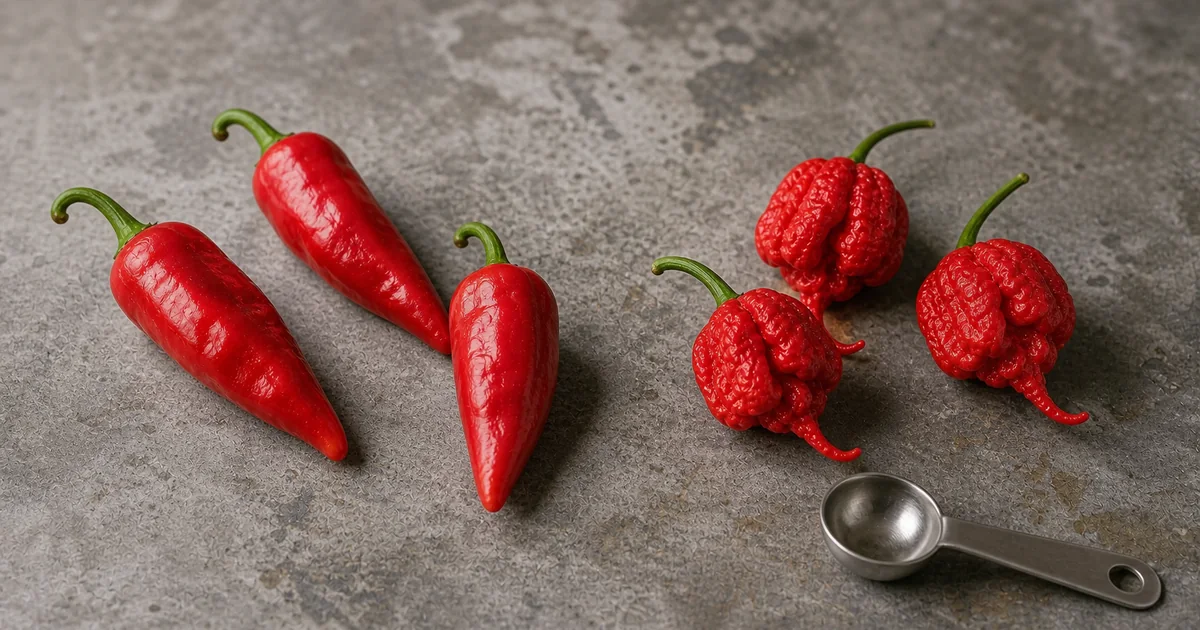
The pod is small, wrinkled, usually red at full maturity, and often ends in a pointed tail. That shape matters for identification because many ordinary red C. chinense peppers are sold with aggressive names, while a true Reaper normally shows a rough surface, broad shoulder, and narrow stinger-like end.

Chocolate Bhutlah
smoky intense C. chinense

Before the numbers even come up, the Chocolate Bhutlah announces itself through smell - a dark, almost tobacco-like smokiness that sets it apart from the sharp, fruity blast you get from something like the Reaper's intense culinary heat. The flavor has genuine depth: chocolate, earth, and a slow-building burn that doesn't peak for a full minute after contact.

Botanically, this is a the chinense pepper species variety - the same species responsible for most of the world's most extreme peppers. The pods grow wrinkled and lumpy, turning from green to a deep chocolate brown at full maturity, typically reaching 2-3 inches in length.

Both peppers belong to C. chinense, so they share some underlying flavor chemistry. However, Carolina Reaper’s fruity and sweet notes contrast with Chocolate Bhutlah’s smoky and intense character.

Carolina Reaper brings fruity and sweet notes, so it fits recipes where that flavor should remain visible. Chocolate Bhutlah leans smoky and intense, which can change the sauce, filling, marinade, or garnish even when the heat range looks close.

Carolina Reaper and Chocolate Bhutlah comparison

Culinary Uses for Carolina Reaper and Chocolate Bhutlah

Carolina Reaper

The Carolina Reaper's culinary value is concentrated heat with a short fruity-sweet note, not pod-sized eating. In a sauce, start around one quarter of a fresh pod per 2 cups of base, blend completely, wait a full minute, and then taste a tiny amount.

Fruit, vinegar, tomato, carrot, and roasted garlic can make the pepper's aroma easier to perceive, but they do not neutralize the heat. A mango or pineapple sauce may taste balanced at first and still become punishing after the capsaicin catches up.

If a recipe only asks for extreme heat, the Carolina Reaper substitute guide is the better page because it can give ratio logic. If the question is whether a habanero can stand in, use the habanero comparison route.

Chocolate Bhutlah

Working with the Chocolate Bhutlah requires restraint - a single pod can carry enough capsaicin to dominate a full pot of sauce. Gloves are non-negotiable, and good ventilation matters when you're cutting into them.

The smoky, earthy flavor profile makes this pepper genuinely useful in dark hot sauces, chocolate-based mole-style preparations, and dry rubs for smoked meats. The depth pairs well with ingredients that can hold their own: dark chocolate, roasted garlic, smoked paprika, black beans, and aged vinegars.

For hot sauce production, a ratio of one pod per quart of sauce base is a reasonable starting point for experienced makers. The flavor contribution is real - unlike some extreme peppers that taste like pure heat and nothing else, the Bhutlah adds something worth keeping.

Which Should You Choose?

Best fit

Choose Carolina Reaper if…

You want maximum heat
You prefer fruity and sweet flavors
You need a C. chinense variety

Best fit

Choose Chocolate Bhutlah if…

You want milder, more approachable heat
You prefer smoky and intense flavors
You need a C. chinense variety

Can You Substitute One for the Other?

Hotter replacement

Replacing Chocolate Bhutlah with Carolina Reaper

Use slightly less by weight. Start below the recipe amount and adjust after tasting.

Milder replacement

Replacing Carolina Reaper with Chocolate Bhutlah

Increase gradually, but expect the flavor balance to change before the heat matches exactly.

Growing Carolina Reaper vs Chocolate Bhutlah

Growing notes

Carolina Reaper

Carolina Reaper plants need a long, warm season and consistent care. Start seed indoors early, use warm germination conditions, harden plants off after frost risk, and give mature plants full sun with well-drained soil.

For spacing and calendar detail, use the full Carolina Reaper growing guide. For seed-start timing and transplant sequencing, use the Carolina Reaper planting guide.

Harvest with gloves. The same capsaicin that makes the pepper useful in sauce can transfer from pods to fingers, tools, towels, and cutting boards.

Growing notes

Chocolate Bhutlah

The Chocolate Bhutlah grows like most extreme the Capsicum chinense species varieties - slowly, demandingly, and with significant reward for patient gardeners. Start seeds 10-12 weeks before last frost indoors; germination at soil temperatures of 80-85°F typically takes 14-21 days.

Transplant outdoors only after nighttime temperatures stay consistently above 60°F. These plants need full sun - 8+ hours daily - and warm soil to perform.

Feed with a balanced fertilizer through vegetative growth, then shift to a lower-nitrogen, higher-phosphorus formula once flowers appear. Inconsistent watering causes blossom drop, which is the most common frustration with this variety.

Where They Come From

Origin & background

Carolina Reaper

USA · C. chinense

Guinness World Records confirmed Smokin' Ed's Carolina Reaper as the hottest chilli pepper in 2013. Guinness reported an average of 1,569,300 SHU for that certification and described the pepper as a cross connected to Ed Currie's South Carolina breeding work.

That distinction fixes the main factual risk on older Reaper articles. A page can say the Reaper was the Guinness record holder.

Origin & background

Chocolate Bhutlah

USA · C. chinense

The Chocolate Bhutlah emerged from American superhot breeding circles in the early 2010s, created by crossing the Bhut Jolokia (ghost pepper) with the deep chocolatey burn of the 7 Pot Douglah. The goal was specific: combine the Douglah's dark, complex flavor with the ghost pepper's structural ferocity.

This kind of deliberate hybridization became common as the the American pepper-growing tradition shifted from preservation to innovation. Breeders began treating superhots as raw material for new varieties rather than endpoints.

Buying & Storage

Whether you’re shopping for Carolina Reaper or Chocolate Bhutlah, the same quality indicators apply. Fresh peppers should feel firm and heavy for their size, with taut, glossy skin and no soft or wet spots. Minor stem cracks known as “corking” are perfectly normal and often indicate a mature, flavorful pod.

Selection

What to look for

  • Firm pods with taut skin and consistent color
  • Should feel heavy relative to size
  • Minor stem cracks (“corking”) are normal
  • Avoid anything soft, shriveled, or with dark wet spots

Storage

How to store them

  • Fresh: Paper bag, crisper drawer, 1 to 2 weeks
  • Frozen: Wash, dry, freeze on sheet pan, 6+ months
  • Dried: Airtight and away from light, up to 1 year

Mistakes to avoid

Common misses

Carolina Reaper

  • Skipping gloves. Capsaicin absorbs through skin.
  • Using too much. Start with a quarter pod.
  • Drinking water for the burn. Use dairy instead.

Common misses

Chocolate Bhutlah

  • Skipping gloves. Capsaicin absorbs through skin.
  • Using too much. Start with a quarter pod.
  • Drinking water for the burn. Use dairy instead.
Final call

Carolina Reaper vs Chocolate Bhutlah

Carolina Reaper and Chocolate Bhutlah sit in the same heat tier but serve different roles. Carolina Reaper delivers its distinctive fruity and sweet character. Chocolate Bhutlah, with its smoky and intense profile, excels in everyday cooking.

Heat gap same bracket Carolina Reaper fruity and sweet Chocolate Bhutlah smoky and intense
Additional Carolina Reaper and Chocolate Bhutlah comparison view

Record Vs Dark Hybrid

Carolina Reaper has the stronger paper trail. Guinness confirmed Smokin' Ed Currie's pepper in 2013, and the row here lists it at 1,400,000-2,200,000 SHU, so it is easier to explain when a sauce label or recipe note needs a documented superhot benchmark.

Chocolate Bhutlah is the more niche choice. The DB range runs 1,000,000-2,000,000 SHU, and its identity depends more on seed-source trust because it comes from American superhot breeding circles rather than one famous record claim. That makes it attractive for a dark sauce project, but less convenient when consistency matters.

Sauce Color Decision

Color changes the food before anyone tastes it. Carolina Reaper keeps a red-orange sauce looking bright, while Chocolate Bhutlah pushes a mash toward brown, brick, or molasses tones.

That matters in fruit sauces. Mango, carrot, pineapple, peach, and vinegar bases usually keep their visual promise with Reaper; Bhutlah can make the same base look muddier even when the flavor is good.

Use Bhutlah when the food already welcomes dark notes: smoked tomato sauce, cocoa-leaning mole, black bean chili, barbecue glaze, or a dried rub for meat. In those lanes the brown pod is not a flaw. It is part of the point.

Dose Math Without Bravery

The midpoint math is close enough to fool people. Reaper averages around 1.8 million SHU from the DB range, while Bhutlah averages around 1.5 million. That does not make either one friendly.

Measure by sliver, powder pinch, or grams. For a quart of sauce, we would rather start below a quarter fresh pod than try to rescue a finished batch later.

The burn also arrives after the decision has already been made. Superhot capsaicin can build slowly, so tasting and adding more in the same minute creates a false read.

Gloves, ventilation, and a separate cutting board are not drama with either pepper. They are the difference between controlled heat and capsaicin on your fingers, towel, and sink handle.

Powder And Ferment Lanes

Powder is where Bhutlah earns attention. A tiny amount can darken chili, dry rub, or cocoa-spice blends without making the flavor taste like generic red heat.

Fermentation gives Reaper the cleaner lane. Its fruit note holds up well with carrot, garlic, vinegar, and tropical fruit, while Bhutlah works better when the mash includes roasted tomato, smoked salt, molasses, or another ingredient that can carry its darker edge.

Seed And Label Risk

The label risk is different. Reaper seed and powder sellers often point to PuckerButt, Guinness history, or a named red phenotype; Bhutlah sellers may use looser wording around chocolate superhot crosses.

That does not mean Bhutlah is fake. It means the buyer has to read the vendor. Look for the full cultivar name, pod photos, generation notes when available, and reviews that mention brown pods rather than generic superhot heat.

If you need a clean comparison against Moruga Scorpion's record-level heat or the super-hot heat tier, Reaper is the simpler reference. If you already own the safety process and want a darker sauce voice, Bhutlah has the more specific flavor job.

Fact-Checked & Expert Reviewed
Editorial Standards: Head-to-head comparisons include blind tasting when applicable. Heat levels cross-referenced with multiple sources. All substitution ratios tested side-by-side.
Review Process: Written by James Thompson (Lead Comparison Reviewer) , reviewed by Karen Liu (Lead Fact-Checker & Science Editor) . Last updated June 29, 2026.

Carolina Reaper vs Chocolate Bhutlah FAQ
The published ranges overlap. This DB lists Carolina Reaper at 1,400,000-2,200,000 SHU and Chocolate Bhutlah at 1,000,000-2,000,000 SHU. Reaper has the higher top end and stronger record documentation, but both require measured dosing.

Yes, but start below the recipe amount and expect a darker flavor. Chocolate Bhutlah can make red fruit sauces taste smokier and look browner, so it works best in barbecue sauce, chili, dark hot sauce, and powder blends.

Carolina Reaper is easier for bright fruit hot sauce because its red color and fruity flash stay clear. Chocolate Bhutlah is better for darker sauces with roasted tomato, smoked salt, molasses, cocoa, or savory barbecue notes.

Usually, yes. Carolina Reaper has a stronger public identity and record history. Chocolate Bhutlah is more dependent on specialty seed or pod sellers, so check cultivar photos, vendor notes, and whether the pods are truly chocolate-brown.

Sources & References
KL
Fact-checked by Karen Liu
Research Contributor
SHU Verified
Sources Cited
Expert Reviewed
All Comparisons Browse Peppers Scoville Scale