
Chilhuacle vs Guajillo: A Mole Negro Specialist and an Everyday Red Chile
Guajillo is the better everyday chile for red adobos and broths, while chilhuacle is the specialist choice for dark Oaxacan mole depth. Guajillo has a documented 3,000-5,000 SHU commercial range, but comparable laboratory data for chilhuacle remain limited.

Chilhuacle Pepper
MediumGuajillo Pepper
MediumQuick Comparison
| Attribute | Chilhuacle Pepper | Guajillo Pepper |
|---|---|---|
| Scoville evidence | 1.5K-2.5K SHU | 2.5K-5K SHU |
| Heat Tier | Medium | Medium |
| vs Jalapeño | n/a | 1x hotter |
| Flavor | smoky and complex | tangy and sweet |
| Species | Capsicum annuum | C. annuum |
| Origin | Mexico | Mexico |
Is Guajillo Hotter Than Chilhuacle?
Guajillo usually brings more measurable heat, but both chiles stay in the mild end of a dried-chile sauce. The UNECE commercial standard places dried guajillo at 3,000-5,000 SHU, enough for warmth without dominating a mole or adobo.
Chilhuacle is harder to quantify because the 2017 International Journal of Agronomy review lists Scoville data for several Mexican chiles but marks the chilhuacle value as unavailable.
Commercial references commonly place chilhuacle negro near 1,500-2,500 SHU. We treat that as a buying reference rather than a laboratory specification, because growing conditions and the chilhuacle color type can change pungency.
The evidence gives guajillo a documented commercial band, while chilhuacle's mild reputation rests more strongly on regional descriptions than on a standardized SHU result.
Heat rule: do not adjust a mole recipe on Scoville numbers alone. Taste the soaked puree before adding it, because dried pods vary by crop, storage, and seed lot.
The New Mexico State University Chile Pepper Institute explains that modern heat testing measures capsaicinoids with high-performance liquid chromatography. A published range describes a category, not the exact bag on your counter.
In a sauce built with several chiles, the dose matters more than the small gap between these two ranges. One guajillo blended into four cups of broth will feel gentler than several chilhuacles concentrated into a thick paste.
Removing the placenta and loose seeds can reduce capsaicin carried into the blender because Iowa State University Extension identifies the internal placental tissue, rather than the seeds, as the main source.
Neither chile belongs in the same heat decision as chile de arbol. Choose between chilhuacle and guajillo for sauce character first, then correct the finished heat with a hotter chile only when the recipe calls for it.
For most diners, expect mild warmth from either pod, with guajillo more likely to supply the clearer and better documented rise in heat.
The Wiley review also documents chilhuacle as a threatened local crop with limited cultivation in Oaxaca, so its price reflects production pressure as well as flavor. That scarcity supports careful use in dishes that depend on it, not casual replacement in every mild-chile recipe.
That uncertainty is a reason to taste, not a reason to invent precision: published SHU figures cannot predict the heat of an untested bag from a particular harvest, producer, or storage history.
How Do Chilhuacle and Guajillo Taste Different?
Chilhuacle tastes darker and rounder, while guajillo tastes redder, brighter, and more direct. INIFAP describes chilhuacle negro with fruit notes resembling prune plus tobacco and bitter chocolate, a combination closely tied to Oaxacan mole negro.
The same INIFAP reference describes guajillo as a smooth-skinned, reddish-brown dried chile whose thinner wall and clean red-fruit character suit a vivid sauce.
Chilhuacle also names a family rather than one identical pod. Negro, rojo, and amarillo types differ in color and traditional mole use, so a package labeled only "chilhuacle" leaves an important flavor question unanswered.
For this comparison, chilhuacle negro is the useful baseline. It contributes dark dried-fruit, toasted, and gently bitter notes that sit beneath nuts, seeds, spices, and charred vegetables instead of pushing a bright chile flavor to the front.
Guajillo's light tannic quality can sharpen tomato, vinegar, citrus, and meat juices in adobos, marinades, pozole rojo, and red enchilada sauces.
Aroma gives you an early check after soaking. A sound chilhuacle should smell earthy and fruity without mustiness, while guajillo should smell clean, lightly sweet, and distinctly chile-like rather than dusty.
Bitterness can come from the ingredient or from poor preparation. Chilhuacle has a natural bitter edge, but blackened skin or scorched seeds make either chile harsh and can bury the fruit notes the recipe needs.
After blending, INIFAP advises straining guajillo puree because pieces of its epidermis can remain, while thicker chilhuacle can add body to a long-cooked sauce.
That body does not make chilhuacle a universal upgrade. A thin red marinade may become muddy and heavy, while a mole designed around toasted nuts and spices can benefit from the added depth.
Guajillo is the easier flavor to recognize in a quick sauce. Chilhuacle becomes most useful when several ingredients need a dark base that holds together through a longer simmer.
The sensory test keeps guajillo in the lead for red color and clean fruit, while prune, tobacco, and bitter-cocoa depth earn chilhuacle the larger share.
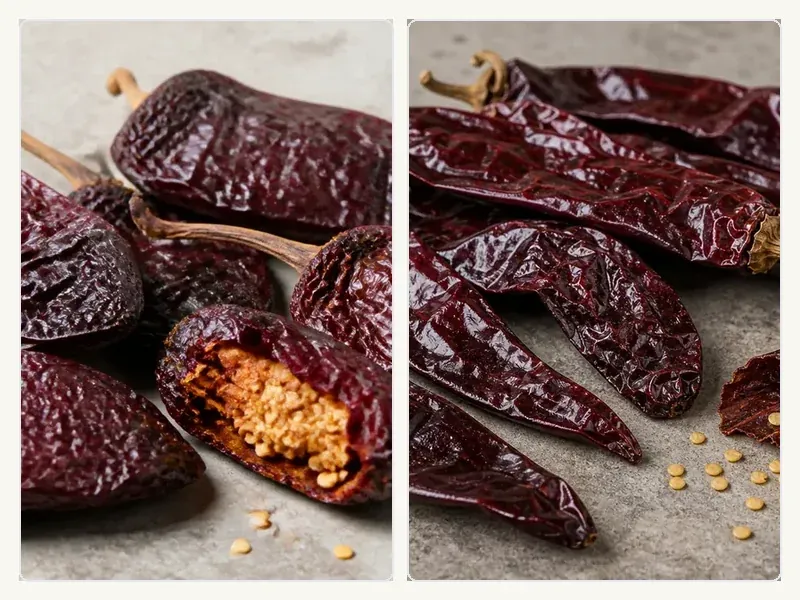
Color provides another useful cue, but it cannot replace the label. Chilhuacle negro dries nearly black, while guajillo keeps an intense red to dark-red appearance under the UNECE quality standard.
When Should You Use Chilhuacle or Guajillo?
Choose chilhuacle for a mole in which the chile must deepen the sauce, and choose guajillo for a red sauce in which the chile should remain visible in color and flavor. Their traditional uses overlap, but their strongest jobs are different.
Research published in Agro Productividad identifies huacle as a central ingredient in Oaxacan mole negro. The same study records its use in red and yellow moles, chiles rellenos, and chile caldo around San Juan Bautista Cuicatlan.
The historical record corrects a common mix-up because chilhuacle is not named for chilaquiles, and chilaquiles are not its defining dish.
INIFAP calls guajillo a fundamental ingredient in moles, adobos, and sauces served with red or white meat. Its national reach is much broader than chilhuacle's concentrated Oaxacan production.
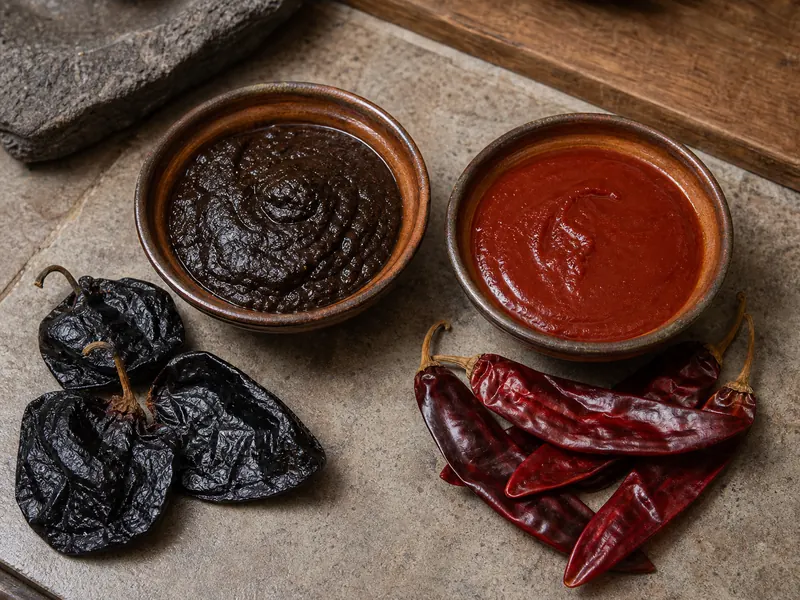
For mole negro and dark bean sauce, chilhuacle is the better first choice because dark fruit, tobacco, and bitter-cocoa notes support toasted spices. Its thicker puree also suits slow cooking.
For pozole rojo, birria adobo, and quick enchilada sauce, guajillo keeps the broth or puree red and readable. It is also easier to source, soak, blend, and strain consistently.
Preparation starts by discarding pods with visible mold or a stale basement smell, then wiping away dust before removing stems and loose seeds.
Toast each chile only until it becomes fragrant and slightly pliable. A hot dry skillet can take a thin guajillo from aromatic to scorched within seconds, while chilhuacle's darker skin makes visual burning harder to judge.
Cover the toasted pods with hot water until flexible, usually about 15-20 minutes for guajillo and somewhat longer for a thick chilhuacle. Keep the water below a boil so the skins soften without pulling excessive bitterness into the soaking liquid.
Blend with fresh liquid when the soaking water tastes harsh, then strain guajillo puree through fine mesh because INIFAP notes that skin residue remains after grinding.
A mixed base can use both strengths without pretending the chiles are identical. For a sauce that normally uses three guajillos, replace one with chilhuacle when darker color and deeper toasted flavor suit the dish.
That blend is a starting point, not a traditional formula. The final ratio should follow the recipe's regional identity and the specific chilhuacle type named by the cook.
Guajillo belongs in a general Mexican pantry, while chilhuacle is worth buying for a dish that justifies its scarcity, price, and Oaxacan character.
Sun drying is part of the traditional production context recorded in huacle research. It concentrates the pod for storage, but the finished chile still needs protection from humidity because dried fruit can absorb moisture and support mold.
A smooth puree should support the dish rather than announce rough skin fragments. Pressing guajillo through fine mesh takes an extra minute, yet it produces a cleaner broth and a more even coating on meat.
Which Should You Buy, Chilhuacle or Guajillo?
Guajillo is the better everyday purchase, while chilhuacle is the better specialist chile for Oaxacan mole depth. That recommendation follows availability and sauce function rather than a claim that one pod is universally better.
Use guajillo for brick-red color and repeatable market availability in adobo, enchilada sauce, pozole rojo, birria, and marinades that should avoid dark bitterness.
Use chilhuacle when the recipe specifically names negro, rojo, or amarillo, or when mole-style depth is the central goal. INIFAP reports that the three colors take distinct roles in Oaxacan moles, so the package label matters.
A missing chilhuacle can be replaced, but the repair needs more than extra guajillo. Start with an equal volume of guajillo, then add a small amount of ancho or mulato only if the recipe welcomes raisin-like sweetness and a darker finish.
Do not add chocolate automatically because it can sweeten a mole without restoring chilhuacle's tobacco, fruit, and gentle bitter notes.
The reverse swap has a narrower safe range. Chilhuacle can replace part of the guajillo in a braise or mole, but a full replacement can dull a red marinade and make a thin sauce heavier.
Choose guajillo for red color, broad availability, marinades, broth, and quick sauces. Choose chilhuacle for Oaxacan mole identity, dark fruit, thicker puree, and long simmering.
Combine them when guajillo should lead the color and chilhuacle should deepen the base, but keep looking for the named chilhuacle type when a culturally specific dish depends on it.
Buying quality can undo the right choice. Select guajillos with flexible, glossy red-brown skins, and select chilhuacles that match the named color type without damp spots, webbing, or a musty smell.
Although brittle pods may only need a longer soak, reject any chile with a dusty gray coating, damp patch, or sour odor.
Store either dried chile in an airtight container away from heat and direct light. Whole pods retain their aroma better than powder because less surface area is exposed to oxygen.
Buy guajillo as the reliable red-sauce staple, then buy chilhuacle when its regional identity and dark flavor make a difference that another mild chile cannot copy.
If you can buy only one bag, choose guajillo because it covers more weekday uses at a lower sourcing cost. Add chilhuacle later when a mole recipe names it or when dark chile depth is the specific missing element.
Chilhuacle Pepper vs Guajillo Pepper FAQ
- INIFAP, Cultivo del chile en Mexico
- Garcia-Gaytan et al., The Chilhuacle Chili in Mexico, International Journal of Agronomy (2017)
- Lopez-Lopez and Perez-Bennetts, El chile huacle en Oaxaca, Agro Productividad (2015)
- UNECE Standard for Whole Dried Chilli Peppers
- New Mexico State University, Measuring Chile Pepper Heat