
De Arbol vs Tien Tsin: De Arbol for Blended Sauces, Tien Tsin for Wok Oil
De Arbol fits Mexican sauces, salsa, and chile oil when you want nutty red heat. Tien Tsin runs hotter and works better as a whole dried chile in wok oil, Kung Pao-style dishes, and sharp Chinese chile oil. They look alike, but the safer choice comes from the cooking method first.

De Arbol
HotTien Tsin
HotQuick Comparison
| Attribute | De Arbol | Tien Tsin |
|---|---|---|
| Scoville evidence | 15K-30K SHU | 50K-75K SHU |
| Heat Tier | Hot | Hot |
| vs Jalapeño | 4x hotter | 9x hotter |
| Flavor | smoky and nutty | sharp and smoky |
| Species | C. annuum | C. annuum |
| Origin | Mexico | China |
Which Is Hotter, De Arbol or Tien Tsin?
Tien Tsin is the hotter choice. The New Mexico State University Chile Pepper Institute explains that Scoville Heat Units estimate capsaicinoid concentration, and the reference ranges used for these dried chiles put Tien Tsin at 50,000-75,000 SHU and De Arbol at 15,000-30,000 SHU.
Those endpoints make Tien Tsin about 1.7 to 5 times hotter than De Arbol, depending on which pods you compare, and the wide multiplier is more useful than a single average because crops and individual pods move within each published range.
A practical batch comparison starts with total chile weight and finished dish volume, not pod count. Ten grams spread through a liter of soup behaves differently from the same amount concentrated in a small bowl of salsa.
Heat delivery changes with technique because a whole Tien Tsin pod fried briefly in oil transfers capsaicinoids into the fat, while a De Arbol pod toasted, soaked, and blended distributes its heat through the full salsa.
A sliced pod exposes more inner membrane to the oil than an intact pod, so cut Tien Tsin releases heat faster. Removing loose seeds changes texture more reliably than it reduces heat because the Chile Pepper Institute identifies the inner placental tissue as the main capsaicinoid site.
That distinction explains why the hotter chile may feel controlled in a wok yet become overwhelming in a small blended sauce, and it also shows why pod count is unreliable across the two methods.
Both chiles belong to Capsicum annuum according to USDA Agricultural Research Service Capsicum resources, but species does not make their heat interchangeable. Cultivar, growing conditions, drying, storage age, and the amount of inner membrane left on a pod all affect the result.
For a dish that should stay firmly hot without dominating every bite, De Arbol offers more adjustment room, while Tien Tsin fits a recipe that expects a sharp burst from whole dried chiles spread through oil or other ingredients.
How Do De Arbol and Tien Tsin Taste Different?
De Arbol tastes rounder and nuttier, while Tien Tsin tastes sharper and more direct. A quick, careful toast brings out De Arbol's earthy aroma, but scorching the thin skin adds bitterness before it adds useful depth.
Rick Bayless uses toasted and rehydrated dried Mexican chiles as the foundation of blended sauces, a method that suits De Arbol's clean red-chile flavor because tomato, tomatillo, garlic, vinegar, or broth can carry that flavor without hiding it.
Fuchsia Dunlop describes whole dried chiles as an aromatic foundation in Sichuan cooking, where they are fried briefly so they perfume the oil. Tien Tsin fits that technique because its compact pod gives the oil a bright, concentrated heat while ginger, garlic, scallion, vinegar, and Sichuan peppercorn remain distinct.
Tien Tsin does not reproduce the numbing sensation associated with Sichuan peppercorn because the dried chile supplies heat while the peppercorn contributes a different compound and the characteristic tingling quality.
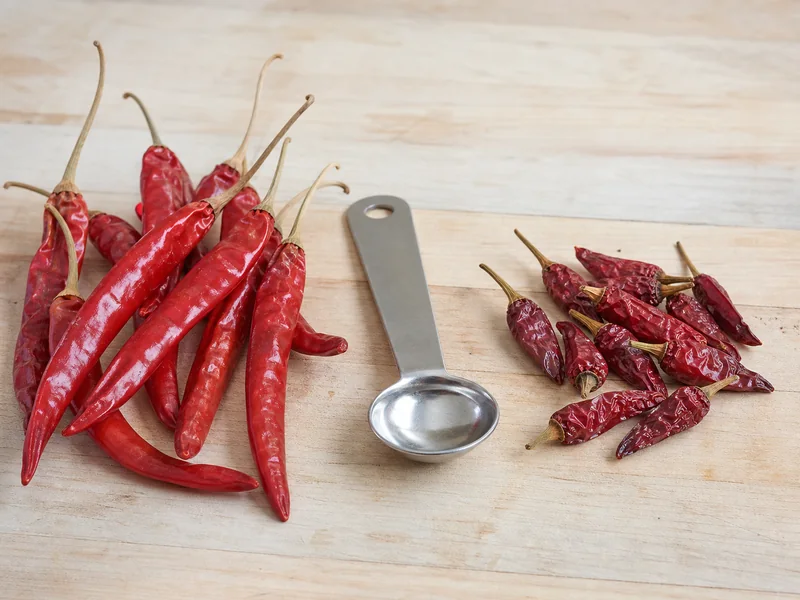
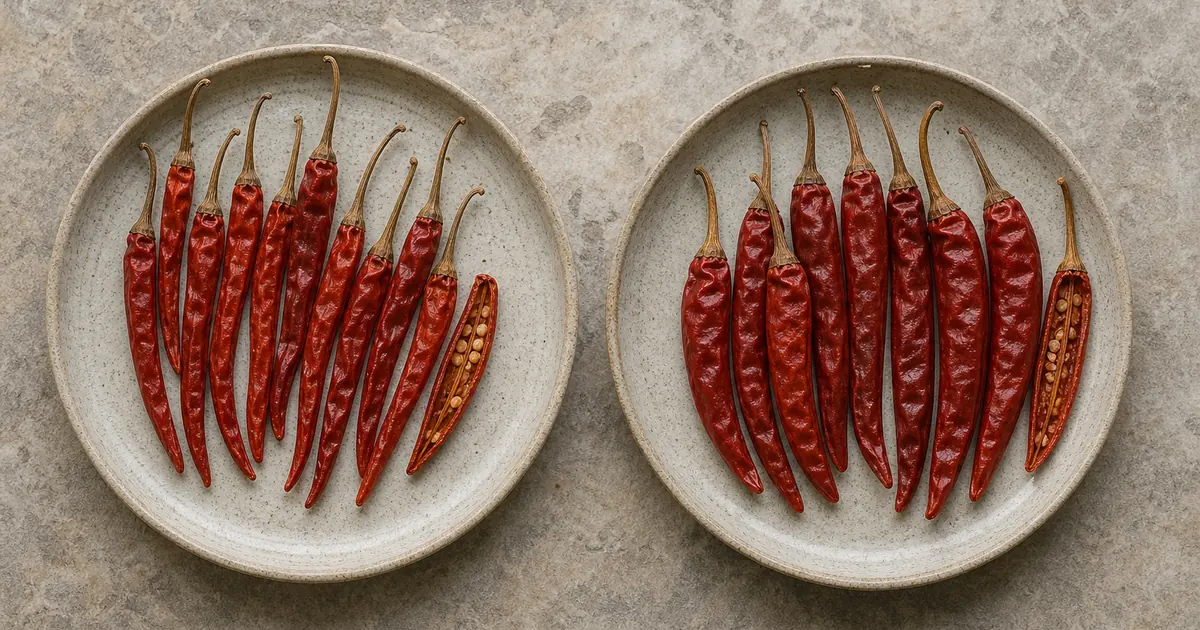
The two peppers can look deceptively similar when a market sells them loose. De Arbol is usually longer, often 2-3 inches, with a comparatively smooth, slender body, while Tien Tsin is commonly shorter, around 1-2 inches, and more tightly wrinkled.
Color alone is a poor identification test because both may deepen from bright red to brick red with age, so use the cuisine named on the package, pod length, surface texture, and the recipe's cooking method together.
Storage changes flavor before the pod looks spoiled. Buy dried chiles with a clean aroma and flexible skin, then keep them airtight away from light and stove heat so the volatile aromas fade more slowly.
Which Dishes Suit De Arbol and Which Suit Tien Tsin?
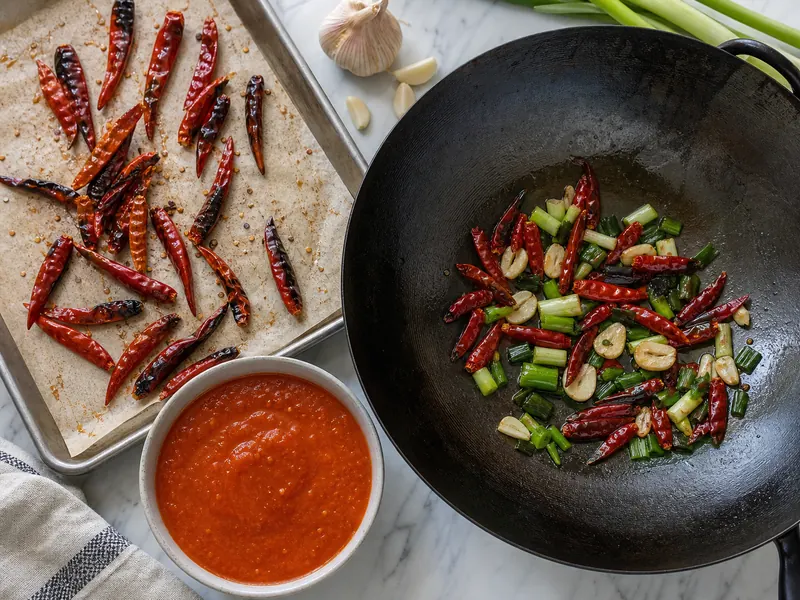
Choose De Arbol when the chile becomes part of the finished sauce. It is well suited to salsa de árbol, thin table sauces, enchilada sauces, pozole garnish, hot sauce, and Mexican-style chile oil because the toasted pod can be soaked and blended smoothly.
For salsa, remove the stems, toast the pods for only a few seconds per side, soak them until pliable, and blend with the recipe's liquid so heat disperses evenly instead of collecting in dry fragments.
Choose Tien Tsin when whole dried chiles season hot oil at the beginning of cooking. Fuchsia Dunlop's Sichuan technique calls for watching the color and aroma closely because dried chiles can move from fragrant to scorched quickly.
In a stir-fry, fry the whole or cut pods briefly before adding aromatics and the main ingredients, using a whole pod for slower extraction or cut segments for faster membrane exposure and a quicker rise in heat.
Diners commonly leave whole pods uneaten, so remove them before serving when guests may mistake them for a tender vegetable.
Keep the pan moving and use kitchen ventilation because a scorched hot chile can release irritating fumes. Discard blackened pods rather than blending their bitter flavor into the dish.
Texture separates the choices because De Arbol contributes solids to a blended salsa, while Tien Tsin usually gives up aroma and capsaicin to the oil and remains a distinct pod.
A recipe that calls for chile flakes needs another decision. De Arbol flakes give soups, tacos, beans, and sauces an earthy Mexican profile, while Tien Tsin flakes are a better fit for dumpling sauce, noodles, and Chinese-style hot oil.
The nearby comparison with Facing Heaven pepper is useful when you want a Chinese dried chile with a different balance of fragrance and heat. Cayenne is the more relevant comparison when you need a familiar ground-pepper alternative to De Arbol.
Verdict
Pick De Arbol for blended Mexican sauces and Tien Tsin for whole-pod wok cooking. That rule answers the practical question more reliably than matching the peppers by color or pod count.
De Arbol is easier for cooks who want to raise heat gradually because its 15,000-30,000 SHU range leaves room to add another pod after tasting, especially when tomato, stock, or vinegar increases the sauce volume.
Tien Tsin is the stronger choice when a Chinese recipe starts by frying dried chiles in oil. Its 50,000-75,000 SHU range supplies a sharper result with fewer pods, but the cook must stop the frying step before the skin blackens.
Neither pepper is a universal replacement, so match the cooking process first, adjust quantity for heat, and then correct flavor with the dish's existing aromatics.
What Names Are De Arbol and Tien Tsin Sold Under?
At a Latin market, look for chile de árbol, sometimes written without the accent, rather than relying on a generic bag marked dried red chile. Good pods are slender, mostly intact, aromatic, and red rather than dusty brown.
At an Asian market, Tien Tsin may appear as Tianjin chile, Chinese dried red chile, or another regional transliteration, so compare its short pod size and wrinkled surface with the package cooking instructions instead of treating a vague label as proof of cultivar.
Avoid bags with heavy condensation, visible mold, webbing, or a stale cardboard smell. Broken pods are still usable for grinding, but a bag full of powder and loose seeds makes it harder to judge age and measure consistent heat.
The Mexican pepper reference provides context for De Arbol while the Chinese pepper reference helps decode broader Tien Tsin labels, and separately marking the bags at home prevents confusion after the original packaging is gone.
Can You Substitute Tien Tsin for De Arbol?
For a sauce that calls for De Arbol, begin with one-third to one-half as many Tien Tsin pods. Blend, wait for the heat to spread through the sauce, then taste before adding more.
| Cooking process | Starting swap | Expected change |
|---|---|---|
| Blended sauce | 1/3 to 1/2 as much Tien Tsin | Sharper, hotter result |
| Wok oil | About 2 times as much De Arbol by weight | Milder, nuttier result |
| Ground flakes | Start below a 1:1 weight swap | Grind size changes spoon volume |
That starting ratio follows the published heat ranges rather than equal pod counts, and a weight-based substitution is more repeatable when pod sizes differ even though natural heat still requires tasting.
When De Arbol replaces Tien Tsin in a wok, start with roughly twice as many pods by weight for a noticeable but not identical result. Fry them briefly and expect a nuttier aroma with less of Tien Tsin's sharp bite.
Do not compensate for lower heat by burning De Arbol because scorched chile turns acrid, while adding more chile or a measured pinch of a hotter compatible pepper preserves the intended flavor.
For chile oil, test a small batch before scaling. Oil extracts capsaicinoids efficiently, and the finished oil may taste hotter after the solids settle and the flavor disperses.
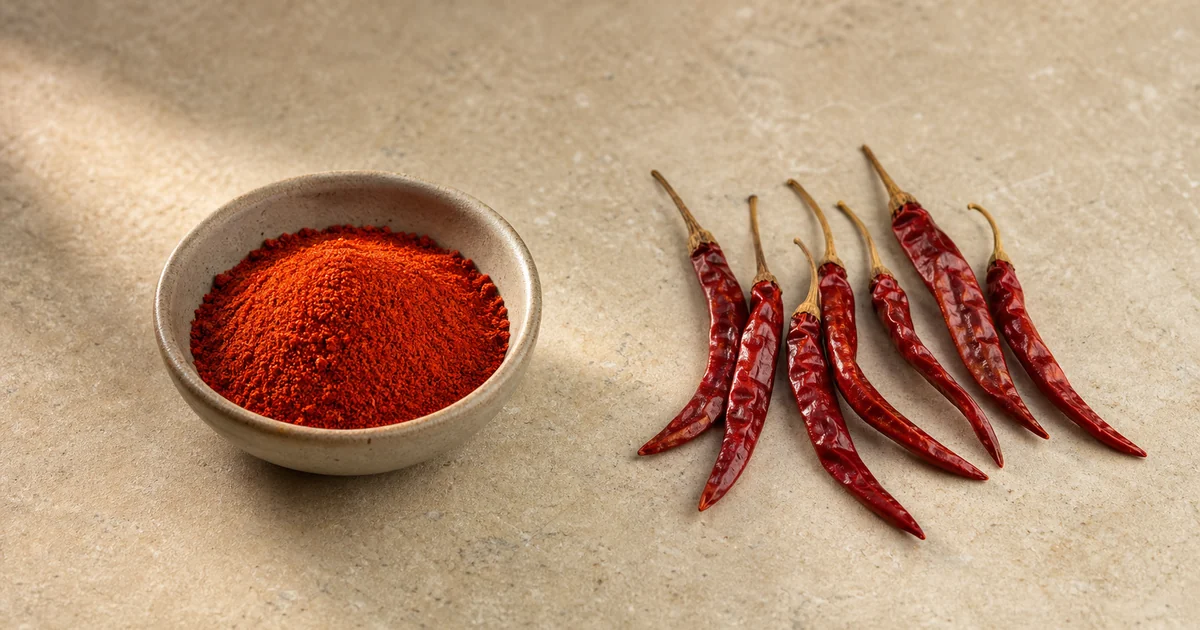
For flakes, compare by weight rather than spoon volume because the pod sizes grind differently, and keep the first addition below the recipe amount when Tien Tsin replaces De Arbol in a soup or salsa that is difficult to dilute.
Handling Safety
Capsaicin residue from either dried chile can move from your fingers to your eyes or nose. Use gloves for a large batch, avoid touching your face, and wash the knife and board with dish detergent after prep.
Because hot oil carries capsaicin and can splatter, keep damp ingredients away from the wok until the recipe calls for them and add ingredients from a safe distance.
The Chile Pepper Institute advises treating very hot peppers with care, and ventilation matters when dried pods meet high heat. If a pod blackens and produces harsh fumes, turn off the heat and move away from the pan until the air clears.
Keep dried chiles and finished chile oil where children and pets cannot reach them, and label any oil clearly so another cook does not mistake it for a mild finishing oil.
If pepper residue reaches an eye, Poison Control advises rinsing with room-temperature water for 15-20 minutes and removing contact lenses. Seek medical guidance if pain, redness, or vision problems continue after rinsing.
Milk may ease a burning mouth because its protein and fat help move capsaicin away from receptors, but breathing difficulty, chest pain, or a severe reaction needs urgent medical care rather than a kitchen remedy.
De Arbol vs Tien Tsin FAQ
- Chile Pepper Institute - New Mexico State University
- Capsicum - USDA GRIN Taxonomy
- Fuchsia Dunlop - Sichuan Cooking
- Rick Bayless - Mexican Cooking
- Poison Control - Capsaicin and Hot Pepper Exposure