

KnowThePepper
Tien Tsin: The Tianjin-Named Chili of Sichuan and Cantonese Kitchens
Tien Tsin is a slender Chinese chili clocking in at 50,000-75,000 SHU - roughly 5x hotter than a serrano. Sharp, smoky heat with minimal sweetness makes it a staple in Sichuan and Cantonese kitchens.
It grows prolifically in warm gardens and dries beautifully on the vine, which is half the reason growers keep coming back to it.
- Species: C. annuum
- Heat tier: Hot (10K-100K SHU)
- Comparison: 6-30x hotter than a jalapeño, depending on where the jalapeño falls in its 2,500-8,000 SHU range
What Makes Tien Tsin Different?
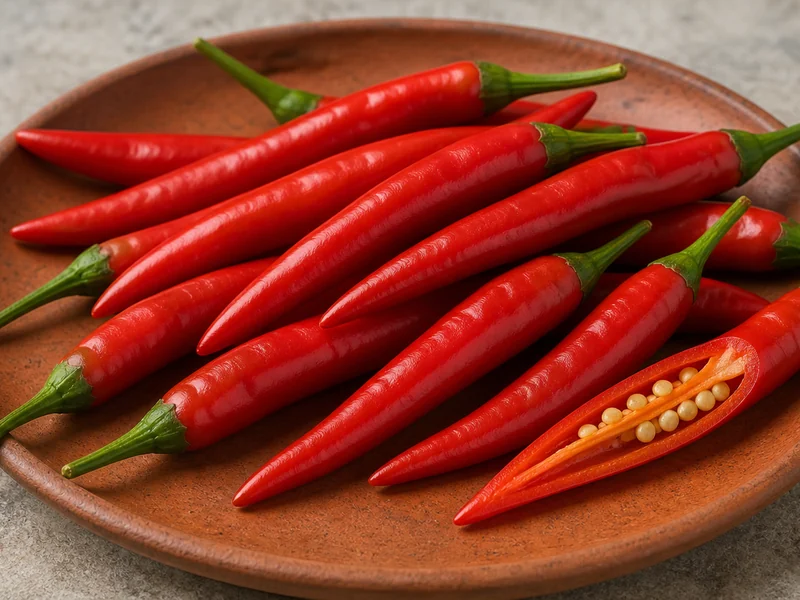
Named after the northern Chinese city now spelled Tianjin, this slender C. annuum variety has been central to Chinese cooking for centuries. The pods grow 2-3 inches long, tapering to a fine point, and ripen from green to a vivid red that deepens as they dry.
At 50,000-75,000 SHU, Tien Tsin sits firmly in the hot pepper heat range - that sustained burn zone where heat lingers on the palate rather than fading quickly. Compare that to a serrano at around 10,000-23,000 SHU and you get a sense of the gap.
The flavor itself is sharp and distinctly smoky, without the fruity undertones you'd find in something like the bright-colored peach-toned chili from South America.
What sets Tien Tsin apart from other Asian hot peppers is its dual role: fresh pods add raw bite to stir-fries, while dried pods develop a concentrated smokiness that whole-dried cooking depends on. The thin walls mean pods dehydrate quickly and evenly, making home drying practical without special equipment.
The broader Chinese pepper tradition has always favored this type, small, hot, and flexible enough to go from wok to spice grinder without missing a beat. Tien Tsin belongs to the Capsicum annuum botanical lineage, which explains the plant's reliable productivity and adaptability across growing zones.
What Is the History of Tien Tsin?
Tien Tsin chilies take their name from Tianjin, a major port city in northeastern China. Trade routes through that region in the 19th century helped distribute the variety widely, both within China and eventually to Western markets where Chinese cooking ingredients were increasingly sought after.
In Chinese cuisine, small dried red chilies of this type have appeared in records going back several hundred years, particularly in Sichuan and Hunan provinces where the regional pepper tradition built entire flavor profiles around their sharp heat. The pepper gained wider Western recognition as Chinese-American restaurants popularized dishes like Kung Pao chicken, which relies on whole dried Tien Tsin pods for its characteristic heat.
Today the variety is grown both in China and by home gardeners worldwide who value its productivity and drying characteristics.
How Spicy Is Tien Tsin, and How Does It Taste?
The Tien Tsin delivers 50K–75K Scoville Heat Units, placing it in the Hot tier (10K-100K SHU). That makes it roughly 6-30x hotter than a jalapeño, depending on where the jalapeño falls in its 2,500-8,000 SHU range.
Flavor notes: sharp and smoky.
What Nutrients Does Tien Tsin Provide?
Dried Tien Tsin pods are concentrated sources of capsaicin, which research links to anti-inflammatory effects and metabolic support, the capsaicin explains both the burn and the potential benefits.
Dried chilies of this type are high in vitamin C (though some degrades during drying), vitamin A from carotenoid pigments, and iron.
A small serving of dried pods, about 5 grams, contributes meaningful amounts of these nutrients without significant calories. The general pepper health benefits documented across Capsicum species apply here, with the higher capsaicin load amplifying some of the metabolic effects.
Which Dishes Suit Tien Tsin?
Kung Pao chicken is the dish most people associate with Tien Tsin, those whole dried red pods charred briefly in hot oil until they just begin to blacken. That quick char is the technique: the pods release their smoky heat into the oil, which then coats every other ingredient in the wok.
Beyond stir-fries, dried Tien Tsin pods work in chili oils, Sichuan braises, and any preparation where whole dried chilies are toasted and infused. For homemade hot sauce, the dried pods rehydrate well and produce a sauce with clean, sharp heat rather than the rounded sweetness of fresher varieties.
Fresh pods can be sliced thin for pickles or chopped into dipping sauces, though most cooking use is in the dried form. The thin flesh means they can be ground into flakes or powder without a dehydrator, just air-dry them in a warm spot for a week.
Compared to the tangy punch of Tabasco-style peppers, Tien Tsin reads smokier and drier. For dishes needing that specific Chinese-kitchen heat without fruity distraction, few peppers in the hot Scoville range position deliver as cleanly.
How Do You Buy and Store Tien Tsin?
Tien Tsin pods are sold dried in most Asian grocery stores, often labeled simply as 'Chinese red peppers' or 'dried red chilies.' Look for pods with deep red color and no visible mold or gray patches.
Store dried pods in an airtight container away from light and heat, a pantry cabinet works fine for up to a year. For longer storage, a sealed bag in the freezer preserves both color and volatiles.
Ground Tien Tsin flakes lose potency faster than whole pods, so grind as needed rather than in bulk.
What Can Replace Tien Tsin in a Recipe?
Compare substitutes for Tien Tsin by form, flavor, and heat before choosing a ratio. Measured adjustments must account for the dish and the concentration of the replacement.
Direct comparisons show where flavor, form, and preparation differ in the De Arbol vs Tien Tsin and Facing Heaven vs Tien Tsin matchups.
How Do You Grow Tien Tsin at Home?
Tien Tsin is a rewarding garden pepper once it gets established, though germination requires patience.
Start seeds indoors 8-10 weeks before last frost. Soil temperature should hit 80-85°F for reliable sprouting, a heat mat under the tray makes a real difference.
Transplant outdoors after all frost risk passes, spacing plants 18 inches apart in full sun.
The plants grow to about 2-3 feet tall and tend to branch heavily, which means good airflow matters. Crowded plants invite fungal issues, particularly in humid climates.
For a complete seed-starting germination walkthrough for hot pepper varieties, the basics apply here: consistent moisture without waterlogging, bright light from the start, and hardening off over 7-10 days before outdoor planting.
Pods set heavily once the plant matures, and this is where Tien Tsin really shines compared to thicker-walled varieties. Growers who want a big dried harvest appreciate that the pods can be left on the plant to begin drying naturally, just watch for rot if rain is frequent.
If you enjoy growing compact, productive hot peppers, the small-statured ornamental-leaning heat of Prairie Fire makes an interesting companion planting comparison.
Tien Tsin is less ornamental but outproduces most similar varieties on raw pod count. Harvest pods when fully red for maximum heat.
Tien Tsin FAQ


- Capsicum - USDA GRIN Taxonomy
- Capsicum annuum L. - USDA GRIN Taxonomy
- Peppers - UC Small and Organic Farm Advisor, UC ANR
Species classification: C. annuum - based on published botanical taxonomy.