

KnowThePepper
Jwala Pepper: The 'Flame' Chili of Indian Kitchens, Used Green or Red
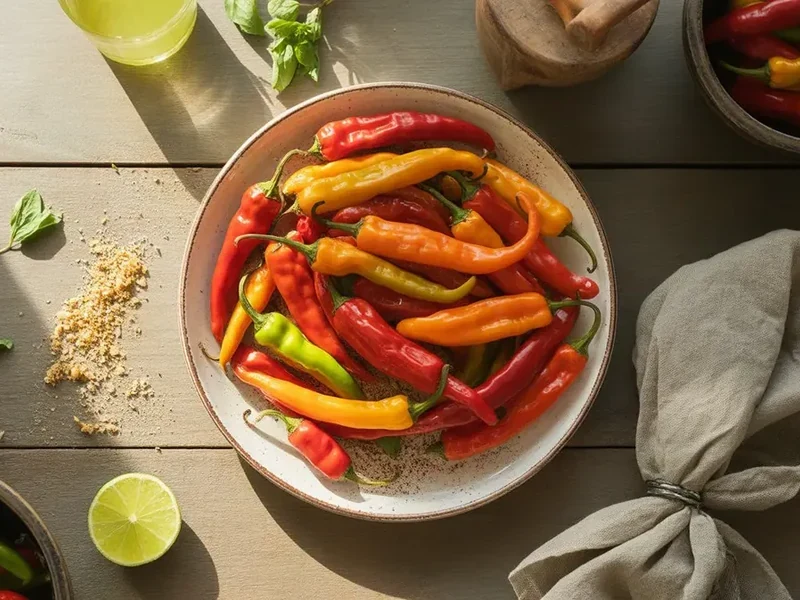
The Jwala pepper is India's most widely grown chili, hitting 20,000 to 30,000 SHU with a sharp, pungent bite that defines the flavor backbone of countless Indian dishes. Thin-walled and elongated, it turns from green to red at maturity.
At roughly 6x hotter than a jalapeño, it delivers serious heat without the fruity notes common to many hot varieties.
- Species: C. annuum
- Heat tier: Hot (10K-100K SHU)
- Comparison: 3-12x hotter than a jalapeño, depending on where the jalapeño falls in its 2,500-8,000 SHU range
What Is Jwala Pepper?
In Indian kitchens, the Jwala is less a specialty ingredient and more a daily staple, the pepper that most households reach for first. Its name translates roughly to 'flame' in Hindi, which tells you something about how central it is to the subcontinent's cooking identity.
The pods are slender and elongated, typically 3 to 4 inches long, tapering to a point. They ripen from pale green to bright red, though green Jwalas are harvested and used extensively before full maturity.
The skin is thin enough that these dry quickly and grind into powder without much fuss.
Flavor-wise, expect sharp and pungent rather than fruity or floral. There's no sweetness buffering the heat, it hits directly and lingers.
That directness is part of the appeal.
The 20,000 to 30,000 SHU range puts it in the same bracket as peppers with sharp citrus-forward heat and Japones Pepper, though Jwala's flavor profile is distinctly its own.
As a C. annuum species member, Jwala shares its botanical family with bell peppers and jalapeños, though you'd never guess it from the heat. It's firmly in the hot pepper classification - enough to demand respect but not so extreme that it overwhelms a dish.
Where Did Jwala Pepper Originate?
Jwala originates from Gujarat, a state in western India, and has been cultivated there for centuries. It spread throughout the subcontinent and became the dominant fresh chili in Indian markets, a position it still holds today.
India is now the world's largest producer and exporter of chili peppers, and Jwala sits at the center of that industry. The variety's adaptability to India's diverse growing regions helped it spread from its Gujarati origins across Rajasthan, Maharashtra, and beyond.
The pepper's role in India's regional pepper traditions goes deeper than commerce. It appears in temple offerings, medicinal preparations, and preservation techniques that predate modern food processing.
Unlike many heritage varieties that have faded with industrialization, Jwala has remained commercially dominant precisely because it performs so reliably in both the field and the kitchen.
How Hot Is Jwala Pepper? Heat and Flavor
The Jwala Pepper delivers 20K–30K Scoville Heat Units, placing it in the Hot tier (10K-100K SHU). That makes it roughly 3-12x hotter than a jalapeño, depending on where the jalapeño falls in its 2,500-8,000 SHU range.
Flavor notes: sharp and pungent.
What Nutrients Does Jwala Pepper Provide?
Like most hot peppers, Jwala delivers vitamin C in significant quantities, fresh green pods contain more vitamin C by weight than citrus fruit. Red-ripe pods add beta-carotene and other carotenoids to that profile.
The heat itself comes from capsaicin, which triggers the TRPV1 receptor pathway, the capsaicin is well-documented in research. At 20,000 to 30,000 SHU, Jwala contains enough capsaicin to show measurable anti-inflammatory effects in dietary studies.
Calories are negligible. A typical serving of 2 to 3 fresh pods contributes meaningful potassium and vitamin B6 alongside the vitamins above.
How Do You Cook With Jwala Pepper?
Jwala peppers are used at virtually every stage of Indian cooking, whole in tempering oil, sliced into curries, ground into chutneys, or dried and powdered for spice blends. The green pods carry the sharpest, most vegetal punch.
The red-ripe version is slightly sweeter but still intensely hot.
For fresh preparations, split a Jwala lengthwise and remove seeds to temper the heat slightly. Whole pods dropped into hot oil alongside mustard seeds and curry leaves create the aromatic base that starts dozens of South and West Indian dishes.
Dried Jwala powder is a reasonable substitute for generic Indian chili powder in most recipes. The heat level is comparable to Aleppo Pepper but without the fruity complexity, Jwala is all heat and pungency.
If you're cooking Indian food and want something with a bit more visual drama on the plate, Bishop's Crown makes an interesting garnish, though it won't replicate Jwala's flavor. For heat-matching purposes, Manzano Pepper can sometimes substitute in fresh preparations.
Pairing Jwala with dairy, yogurt, paneer, ghee, is the traditional way to balance its sharpness. Coconut milk works equally well in South Indian preparations.
How Should You Buy and Store Jwala Pepper?
Fresh Jwala peppers appear in Indian grocery stores across North America and the UK, typically labeled simply as 'Indian green chili' or 'jwala chili.' Look for firm, unblemished pods with tight skin, avoid any showing soft spots or yellowing around the stem.
Dried Jwala and Jwala-based chili powder are easier to find online than fresh. Store fresh pods in a paper bag in the refrigerator for up to 10 days.
For longer storage, freeze whole pods without blanching, they hold their heat well and work fine in cooked applications straight from frozen.
Dried pods keep 12+ months in an airtight container away from light.
What Can You Use Instead of Jwala Pepper?
No dedicated substitute guidance is published for Jwala Pepper yet.
What Does Jwala Pepper Need to Grow Well?
Jwala is a productive, relatively forgiving plant that rewards growers with heavy yields of thin-walled pods. Start seeds indoors 8 to 10 weeks before last frost - the indoor seed-starting approach works well here since Jwala wants a long warm season to hit peak production.
Germination happens fastest at 80 to 85°F soil temperature.
Once transplanted outdoors, plants establish quickly in warm weather and can reach 2 to 3 feet tall with good support. Space them 18 inches apart to allow airflow, thin-walled varieties like Jwala are susceptible to fungal issues in humid conditions.
Full sun is non-negotiable.
Jwala grown in partial shade produces fewer pods with noticeably less heat. Consistent watering matters most during fruit set.
Irregular moisture causes blossom drop.
Compared to Chiltepin, Jwala is considerably easier to grow in temperate climates, it doesn't require the same extended season. Pods are ready to harvest green in 70 to 80 days from transplant.
For red-ripe pods, add another 2 to 3 weeks.
The plants continue producing until frost, making them excellent candidates for container growing if you can move them indoors.
Jwala Pepper FAQ


Species classification: C. annuum - based on published botanical taxonomy.