

KnowThePepper
Aleppo Pepper: Lightly Oiled Syrian Flakes, Fruity and Tart at 10,000 SHU
Aleppo pepper is the coarse, lightly oiled flake made from red Halaby chile, a Capsicum annuum pepper associated with Aleppo, Syria. Serious Eats lists it at 10,000 SHU with fruity, tart, sweet-hot flavor, so it gives eggs, dips, beans, grilled meat, and tomato dishes more flavor and less sharp heat than generic red pepper flakes.
- Species: C. annuum
- Heat tier: Hot (10K-100K SHU)
- Comparison: 1-4x hotter than a jalapeño, depending on where the jalapeño falls in its 2,500-8,000 SHU range
What Is Aleppo Pepper?
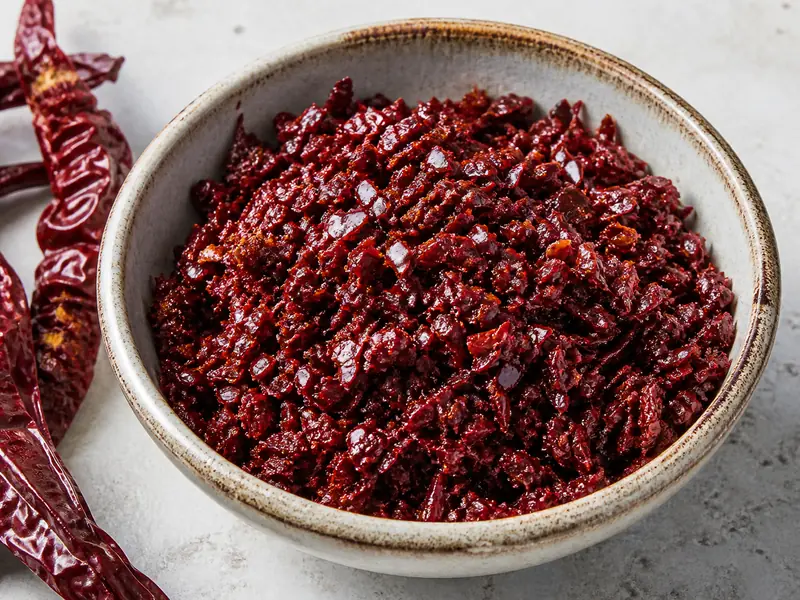
Aleppo pepper is the form in which most cooks encounter the Syrian Halaby chile, made from ripe red pods that Serious Eats describes as partly sun-dried, ground, and mixed with salt and neutral oil to produce coarse, soft flakes rather than a dry powder.
Botanically, Halaby belongs to Capsicum annuum. Processing matters more at the stove because removing most seeds and adding a little oil changes the texture, seasoning, and way the heat spreads through food.
Serious Eats gives Halaby pepper a value of 10,000 Scoville Heat Units, and Claremont Spice lists the same figure, placing Aleppo at the lower edge of the hot tier, above many jalapeños but far below habanero heat.
The flakes often feel gentler than the number suggests. Serious Eats connects that softer impression partly to seed removal, while New Mexico State University explains that laboratory heat values measure capsaicinoids rather than the exact sensation of one teaspoon in a finished dish.
Serious Eats describes the flavor as fruity, tart, and sweet-hot. Based on those descriptors and the flake's processing, our editorial tasting map starts with red-fruit acidity, moves into a warm chile glow, and finishes with mild salt and oil-carried richness instead of a sharp powdery burn.
A useful jar should look deep brick red and feel slightly pliable and glossy, not pale, dusty, or dominated by bitter seeds.
Maras pepper is the closest Turkish neighbor, Urfa biber is darker and more raisin-like, and Korean gochugaru is normally drier and brighter.
| Label | What it indicates | What to verify |
|---|---|---|
| Aleppo or Halaby | The Syrian pepper tradition | Growing region, seed removal, salt, and oil |
| Aleppo-style | A flavor and texture target, not a guarantee of Syrian origin | Pepper variety, country of production, and flake texture |
| Maras or Marash | A closely related Turkish flake style | Whether the seller distinguishes it from Halaby |
What Is the History of Aleppo Pepper?
Serious Eats traces the larger Capsicum story to the Americas and describes peppers moving through Europe, North Africa, and the Ottoman Empire after transatlantic contact. The Halaby chile developed within that later regional history, so Aleppo pepper belongs to a Middle Eastern pepper tradition rather than an ancient Old World species.
The name connects the spice to Aleppo and to Halab, the Arabic name for the city, while Serious Eats reports that ground Halaby pepper became established in local markets before English-language sellers adopted both Aleppo and Halaby for jars and seed packets.
Modern sourcing has blurred the commercial line between Aleppo and Maras. Serious Eats reports that Syria's war reduced exports sharply and shifted much production to Turkey, where producers may use Syrian seed lines or the closely related Marash pepper.
Aleppo-style does not guarantee Syrian origin. It can describe a soft, fruity flake made in Turkey, while Halaby identifies the pepper tradition more specifically.
What Does Aleppo Pepper Taste Like, and How Hot Is It?
The Aleppo Pepper delivers 10K Scoville Heat Units, placing it in the Hot tier (10K-100K SHU). That makes it roughly 1-4x hotter than a jalapeño, depending on where the jalapeño falls in its 2,500-8,000 SHU range.
Flavor notes: fruity, tart, sweet-hot, lightly earthy.
How Nutritious Is Aleppo Pepper?
Aleppo pepper nutrition needs serving context because most cooks use a pinch to one teaspoon, far less than the 100-gram basis used by many dried-chile panels.
USDA FoodData Central provides nutrient data for generic dried red chile, but it does not provide one universal entry for every salted or oil-treated Aleppo product. Brand formulas can therefore differ in sodium, oil, and concentration even when the front label uses the same pepper name.
Aleppo's heat comes from capsaicinoids at a moderate chile concentration. The capsaicin explainer covers how those compounds trigger heat sensation, while this profile treats the flakes as a seasoning rather than a supplement or health treatment.
How Do You Cook With Aleppo Pepper?
Use Aleppo pepper when a dish needs red color, fruit, and rounded heat instead of the abrupt sting of generic crushed red pepper flakes. Saveur's muhammara recipe uses 2 1/2 teaspoons with roasted red pepper, walnuts, pomegranate molasses, lemon, and garlic, a combination that makes the tart-fruit side of the spice useful rather than incidental.
Serious Eats describes an Armenian harissa preparation in which Aleppo is bloomed in browned butter and olive oil, a method that carries its color and aroma across the dish.
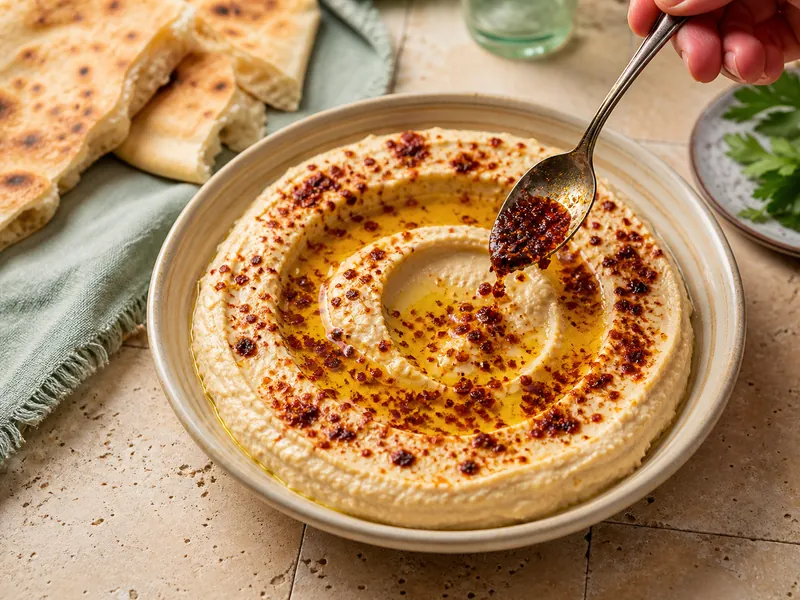
For a finishing oil, warm olive oil or butter gently, stir in Aleppo, and remove the pan before the fine pieces darken. Spoon it over hummus, yogurt, lentils, eggs, roasted carrots, potatoes, or grilled lamb.
For marinades, our editorial pairing is lemon, garlic, yogurt, cumin, tomato, pomegranate molasses, or olive oil. These ingredients support the pepper's tart fruit and leave its mild burn in the background rather than forcing it to imitate a high-heat sauce.
When Aleppo is unavailable, the Aleppo substitute guide gives dish-specific ratios. The Aleppo-gochugaru choice comes down to soft oily texture versus a drier, brighter flake, not red color alone.
Kashmiri chile contributes vivid color and a cleaner dried-chile finish. An Aleppo-Kashmiri swap therefore changes texture and acidity even when either option keeps the dish in a moderate heat range.
How Do You Keep Aleppo Pepper Fresh?
Serious Eats recommends looking for dark, vibrant red flakes that are small, soft, and slightly shiny from oil. A seed-heavy, faded, dusty jar is a poor match for the traditional flake because the seeds add bitterness and weaken the red color.
Tureng translates pul biber as the English phrase flaked red pepper, so treat it as a description of form and check which pepper the producer used instead of assuming every package contains Syrian Halaby.
Read beyond Aleppo, Halaby, Aleppo-style, Turkish Aleppo, or Maras-adjacent on the front label. A useful seller identifies the growing region, pepper type, and whether salt or oil was added.
Taste the dish before adding salt because formulas vary. This matters most when the flakes sit on eggs, hummus, yogurt, salad, or finishing oil, where every grain remains noticeable.
Keep the jar airtight in a cool, dark, dry cupboard away from the stove and steam. Serious Eats says good flakes stay fresh for about a year before flavor starts to fade, so a small jar is the better purchase for occasional use.
For home-processed flakes, dry the pepper pieces fully before storage and add oil only to a small near-term batch. A damp, oil-treated homemade mixture needs a tested preservation method rather than an assumption that a commercial product's shelf life applies.
Five checks before you buy
- Deep, vibrant brick-red color
- Soft, coarse flakes with a light oil sheen
- Very few visible pale seeds
- Growing region or country of production disclosed
- Salt and added oil stated on the label
What Is a Good Substitute for Aleppo Pepper?
Compare substitutes for Aleppo Pepper by form, flavor, and heat before choosing a ratio. Measured adjustments must account for the dish and the concentration of the replacement.
Direct comparisons show where flavor, form, and preparation differ in the Aleppo vs Urfa Biber and Aleppo vs Gochugaru matchups.
Compare Aleppo Pepper with: Aleppo Pepper vs Calabrian Chili · Aleppo Pepper vs Espelette
How Do You Grow Aleppo Pepper at Home?
Grow Halaby as a warm-season Capsicum annuum plant for ripe red fruit and drying, using the 80 to 90 days to maturity and final seed-ripe red color listed by Truelove Seeds as planning markers.
Truelove advises starting seed indoors 8 to 10 weeks before the last frost and transplanting well after frost danger. University of Minnesota Extension gives the same general timing logic for peppers because cold soil and cold nights slow establishment.
Give the plants full sun, steady water, and airflow around the canopy. Truelove reports best productivity with regular irrigation, while the pepper pest and disease guide covers the leaf and fruit problems that can reduce the clean red harvest needed for drying.
Wait until pods reach their final red color before harvesting for flakes or seed. Short-season growers should use the pepper seed-starting method early enough that the 80-to-90-day fruiting window does not run into autumn cold.
After harvest, use the home pepper-drying method until no soft pockets remain. Remove most seeds before crushing for the smoother Aleppo-style texture, then season only the amount you plan to use soon unless a tested storage process specifies otherwise.
Aleppo Pepper FAQ


- Claremont Spice and Dry Goods - Aleppo Pepper
- New Mexico State University Circular 706 - Measuring chile pepper heat
- University of Minnesota Extension - Growing peppers in home gardens
- Truelove Seeds - Aleppo Pepper
- USDA FoodData Central
- Saveur - Muhammara (Red Pepper and Walnut Dip)
- Tureng Turkish-English Dictionary - pul biber
Species classification: C. annuum - based on published botanical taxonomy.