

KnowThePepper
Black Hungarian Pepper: When to Pick the Dark Pods
The black hungarian pepper is a dark-fruited Capsicum annuum that usually lands in the 2,500-10,000 SHU range, so the heat overlaps the upper jalapeno role without drifting into super-hot territory. Seed Savers and Baker Creek both frame it as a jalapeno-shaped pepper with strong ornamental appeal, while current growers prize the purple flowers, near-black pods, and the way the fruit still works for roasting, pickling, and salsa.
- Species: Capsicum annuum
- Heat tier: Hot (10K-100K SHU)
- Comparison: the same heat range as a jalapeño because their published ranges overlap
What Is Black Hungarian Pepper Known For?
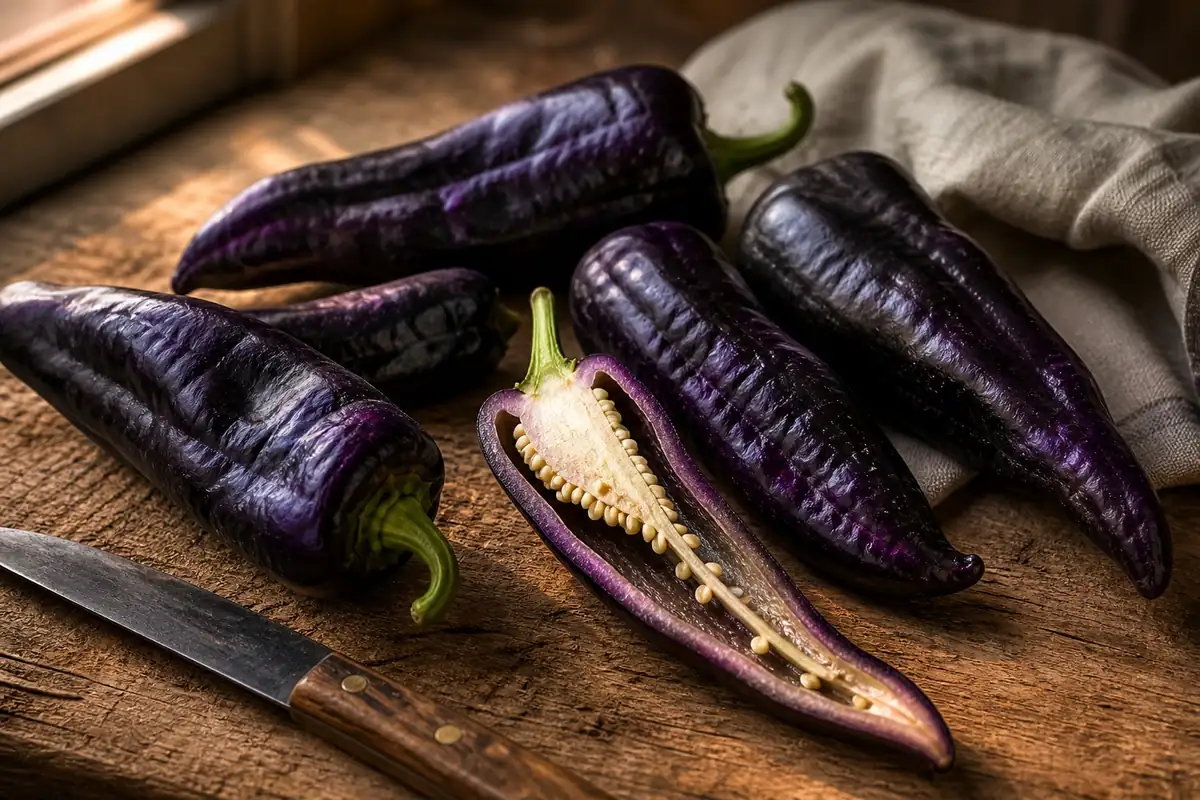
The black hungarian pepper earns attention before you cook it because the pods ripen through a dramatic purple-black stage that most peppers never show. Seed Savers describes the fruit as jalapeno-like in shape, about 4 inches long, and good enough in the kitchen to substitute for jalapeño's familiar medium heat.
Heat is the second reason it stands out. The current evidence set puts the cultivar at 2,500-10,000 SHU, which means it can overlap Fresno's medium heat and sometimes climb toward the low end of the hot pepper range.
In real cooking that feels less punishing than a hot serrano and more like a fruitier jalapeno with darker skin.
This is still a Capsicum annuum pepper, so the flavor stays in the grassy-sweet family rather than turning floral or tropical. What changes the experience is the anthocyanin-rich dark skin, the purple flowers, and the way the pods later turn red.
That makes the pepper useful both as a garden showpiece and as a cooking pepper you can actually use by the handful.
If your real question is whether Black Hungarian is mostly ornamental or mostly for cooking, the honest answer is both. It looks dramatic on the plant, but the thick flesh and manageable heat make it more practical than many decorative peppers that stop being interesting once you taste them.
| Pod stage | What it tells you | Best fit |
|---|---|---|
| Glossy purple-black | Edible before full red maturity | Fresh slices and high-contrast pickles |
| Black with red patches | Ripening is underway | Roasting and relish |
| Fully red | Mature fruit with fuller ripe flavor | Sauce, seed saving, and preserving |
What Is the History of Black Hungarian Pepper?
Black Hungarian sits inside the long Hungarian pepper tradition that shaped everything from paprika types to pickling peppers. The exact breeder trail is not well documented, but the cultivar clearly belongs to the Central European pattern of selecting peppers for both kitchen use and visual identity.
That dual-purpose identity is why the variety persists in modern seed catalogs. Seed Savers highlights the pepper as both ornamental and useful, while university plant-sale material keeps calling out the same combination of dark fruit, purple flowers, and approachable heat.
The pepper did not survive because it was novel only once. It stayed in circulation because growers kept finding it productive and cooks kept finding real uses for it.
In practical terms, Black Hungarian now lives as a garden-catalog heirloom more than a supermarket pepper. That makes Black Hungarian less about supermarket familiarity and more about helping growers and cooks understand what they are getting when they choose a dark-fruited Hungarian annuum instead of a standard green jalapeno or red frying pepper.
How Spicy Is Black Hungarian Pepper, and How Does It Taste?
The Black Hungarian Pepper delivers 2.5K–10K Scoville Heat Units, placing it in the Hot tier (10K-100K SHU). That makes it roughly the same heat range as a jalapeño because their published ranges overlap.
Flavor notes: sweet, grassy, and gently smoky.
What's in Black Hungarian Pepper? Nutrition Facts
USDA hot-pepper data is still the best general nutrition reference for a pepper like Black Hungarian: low calories, strong vitamin C, useful vitamin A precursors, and the usual water-rich fresh-pepper profile. In practice, that means the pepper contributes more than color even when you use it in modest amounts.
What makes this cultivar a little different is the dark stage. The near-black color points to anthocyanin pigments, which is why growers keep comparing the fruit to purple basil or dark ornamental peppers instead of ordinary green jalapenos.
That color will shift as the pepper ripens red, so the visual and antioxidant profile changes across the harvest window.
Heat is still moderate enough that flavor matters more than capsaicin bravado. If you want the chemistry behind that burn, capsaicin chemistry is the right follow-up.
On this page, the bigger nutrition story is that you are getting a real edible pepper with the visual drama people usually expect only from ornamentals.
How Do You Use Black Hungarian Pepper in the Kitchen?
Black Hungarian works best when you treat it like a dark, slightly sweeter cousin to a jalapeno. Seed Savers explicitly calls it a good substitute for jalapenos, and that tracks in the kitchen because the pods are thick enough for stuffing, firm enough for pickling, and hot enough to register without taking over the dish.
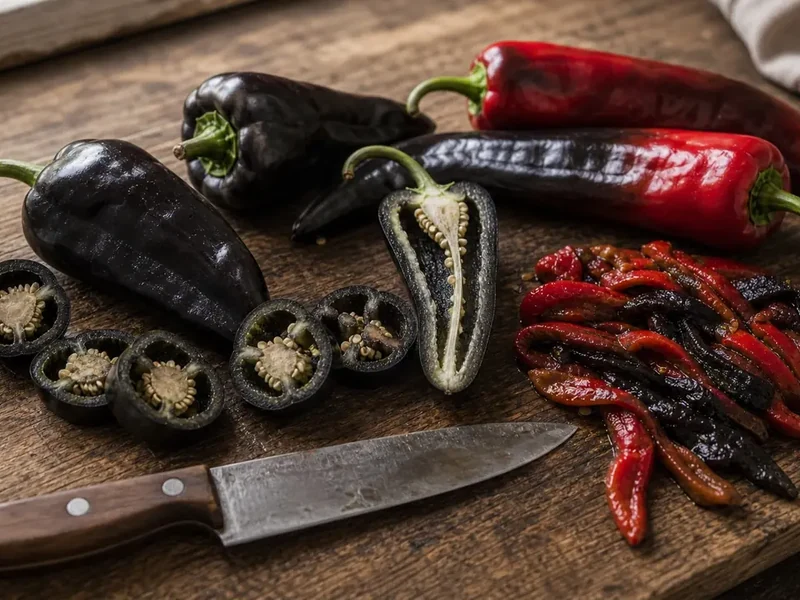
Roasting is one of the easiest wins. The dark skin blisters well, the flesh softens without collapsing, and the flavor turns sweeter and deeper in a way that fits sandwiches, relishes, egg dishes, and pepper spreads.
If you want more direct heat and acidity, Tabasco pepper's sharper heat will push further, but Black Hungarian keeps more flesh and a calmer burn.
Fresh use makes sense too, especially when the pods are still dark and glossy. Sliced raw into salsa or salads, they bring more color drama than thin cayenne pods and more usable bulk than many thin-walled hot peppers.
Baker Creek also positions the pepper as mild to medium-hot rather than punishing, which matches the way most cooks actually use it.
Pickling may be the best all-around application. The pods hold texture, the dark stage looks distinctive in a jar, and the heat stays in the friendly range where you can snack on the finished peppers instead of treating them like a condiment only.
How Should You Buy and Store Black Hungarian Pepper?
Fresh Black Hungarian peppers are easiest to find through specialty growers, pepper-heavy farmers markets, or your own garden. Seed and transplant access is much easier than retail pod access, which is why most people encounter the variety in catalogs before they ever see the fruit on a store shelf.
When buying fresh pods, look for firm skin, heavy fruit, and a clean dark sheen at the purple-black stage or even red coloring at full maturity. Avoid soft spots, wrinkling, or a dull surface that suggests the pepper has already started drying out.
Store fresh pods dry in the refrigerator and use them within about 1 to 2 weeks. If you roast more than you need right away, freezing is a better fit than trying to hold fresh peppers too long in the crisper.
For cooks who want pantry use, pickling and drying both work, but the dramatic dark color is most memorable in fresh or pickled form.
What Can Replace Black Hungarian Pepper in a Recipe?
No dedicated substitute guidance is published for Black Hungarian Pepper yet.
How Do You Grow Black Hungarian Pepper at Home?
Baker Creek recommends starting Black Hungarian indoors 8 to 12 weeks before the last expected frost, while Seed Savers suggests about 8 weeks. Those windows fit the general UMN pepper rule: start early enough to transplant into reliably warm soil, because peppers stall when spring temperatures stay cold.
The variety is productive but not sprawling. Seed Savers describes prolific plants around 3 feet tall, and the UW-Green Bay variety sheet also treats it as an early pepper at about 75 days.
That combination makes it practical for raised beds and for container growing if you want ornamental impact on a patio without moving to a huge plant.
Full sun matters here because the dark foliage and dark pods are part of the appeal. You still want steady moisture and warm soil, and the same spacing, transplant, and seed-starting rhythm from the jalapeño growing schedule applies cleanly to this cultivar.
Once the harvest comes in, plan for staged picking. The dark pods are usable before they turn red, and the red stage gives you a slightly fuller ripe-pepper flavor.
If you grow more than you can use fresh, freezing peppers is the easiest way to hold the roasted flesh without losing the crop.
Black Hungarian Pepper FAQ


- Seed Savers Exchange: Black Hungarian Pepper (Organic)
- Baker Creek Heirloom Seeds: Hot Pepper Seeds, Black Hungarian
- UW-Green Bay 2024 Variety Descriptions PDF
- University of Minnesota Extension: Growing peppers in home gardens
- USDA FoodData Central, SR Legacy 170106, Peppers, hot chili, red, raw
Species classification: Capsicum annuum - based on published botanical taxonomy.