
Hungarian Peppers Split Into Fresh Wax Pods and Peppers for Paprika
Hungary transformed the pepper into paprika, its national spice. Hungarian wax peppers and paprika cultivars range from sweet to fiery.

All Hungarian Peppers
Every variety in this collection, sorted by maximum Scoville heat rating. Click any card for the full profile with flavor notes, anatomy details, growing tips, and substitutes.
 Hot
Hot
Hungarian Wax
 Hot
Hot
Hungarian Hot Wax
 Hot
Hot
Black Hungarian Pepper
 Medium
Alma Paprika
 Medium
Paprika Pepper
Species Breakdown
Hungary peppers span multiple Capsicum species. Each species has distinct characteristics, which the profiles below explain in detail.
Five Profiles Cover Two Different Ingredient Paths
The current collection displays five Hungarian pepper profiles after duplicate-name records are collapsed: Hungarian Wax, Hungarian Hot Wax, Black Hungarian, Alma Paprika, and Paprika Pepper. All belong to Capsicum annuum, but the useful first split is fresh whole pod versus a ripe pepper intended for drying and grinding.
That split prevents the word “paprika” from doing too much work. It can point to a pepper selected for color and drying, the ground spice made from that fruit, or a protected regional product whose label carries a more exact specification.
Hungarian Wax, Hungarian Hot Wax, and Black Hungarian keep whole-pod texture central.
Alma Paprika and Paprika Pepper lead toward ripe color, drying, and ground spice.
Hungarian Wax Names Need the Full Label
Hungarian Wax and Hungarian Hot Wax occupy the same published 1,500 to 15,000 SHU span in this database. Their pale yellow tapered pods can also resemble banana peppers, so color and general shape alone cannot confirm which seed line or heat level you bought.
Use the full cultivar name from the packet or produce label, then choose by the individual profile rather than assuming that “wax” means mild. A broad range also means one maximum cannot promise how every pod from a plant will taste.
Black Hungarian and Alma Solve Different Problems
Black Hungarian is the dark-ripening branch, moving from near-black purple toward red and carrying a published 2,500 to 10,000 SHU range. Its changing color makes it useful for an ornamental edible planting, but ripe color and exact seed identity still matter when cooking.
Alma Paprika takes a round, apple-like form and stays much gentler at 500 to 1,000 SHU. Choose Alma when a thick, compact pod and paprika direction fit the task, not as a shape substitute for a long wax pepper.
| Profile | Shape and color cue | Published range |
|---|---|---|
| Black Hungarian | Dark purple-black fruit ripening red | 2,500 to 10,000 SHU |
| Alma Paprika | Round apple-shaped pod | 500 to 1,000 SHU |
| Hungarian Wax types | Pale yellow tapered pod | 1,500 to 15,000 SHU |
Paprika Begins With Ripe Fruit and Controlled Drying
Paprika Pepper represents the low-heat drying-and-grinding path, with a published ceiling of 1,000 SHU. New Mexico State University notes that paprika quality depends heavily on red fruit color and color stability during drying, which explains why ripe material and careful processing matter as much as raw heat.
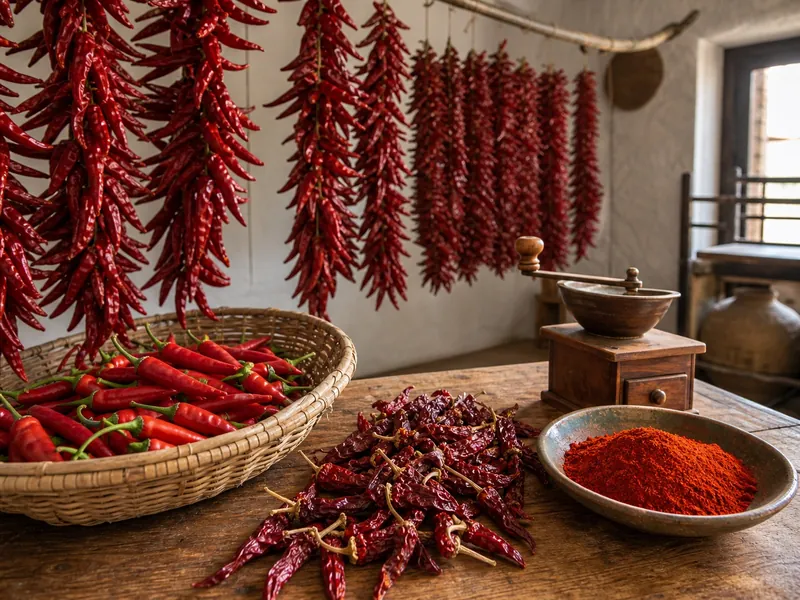
Dry sound ripe pods with steady airflow until they are fully brittle, then grind only the amount you can store well. Moisture invites spoilage, while heat, light, and oxygen gradually weaken the spice’s vivid color and aroma.
Choose Fresh Pod or Powder by the Dish
Use a fresh wax pepper when a recipe needs slices, stuffing space, or a crisp pickled piece. Use paprika powder when the goal is even color and dispersed pepper flavor in a sauce, stew, fat, or seasoning blend, because powder cannot reproduce the texture of a fresh pod.
Bloom paprika gently in fat and avoid scorching it, since a fine powder heats much faster than a whole pepper. When a recipe specifies sweet, hot, smoked, or a named regional paprika, match that label instead of substituting any red powder by color.
Match the form before substituting
- Fresh slices for texture and pickling.
- Whole pods for stuffing or roasting.
- Powder for even color and dispersed flavor.
- Named paprika style when the recipe specifies one.
Harvest Color Does Not Prove Final Heat
University of Minnesota Extension notes that Hungarian wax peppers can be harvested yellow, while peppers more broadly may also be left to reach later ripe colors. Harvest stage changes color, sweetness, texture, and storage behavior, but it does not turn an uncertain seed line into a verified mild or hot cultivar.
Start seed indoors about eight weeks before transplanting and wait until nighttime temperatures stay above 50°F (10°C), following extension guidance. Clip mature pods cleanly, wear gloves for hot types, and record the cultivar when several Hungarian peppers share the same garden.
Heat Level Distribution
How hungarian peppers distribute across the Scoville scale. Click any tier to browse all peppers at that heat level.
Heat Range Comparison
Visual breakdown of where each variety falls on the Scoville scale. Wider bars show a larger documented SHU spread between individual pods.
The causes of pepper heat variation explain why pods from one cultivar do not always measure alike.
Related Comparisons
Side-by-side breakdowns of heat, flavor, and cooking uses. Each comparison covers Scoville ratings, pod anatomy, and substitution options.
 15K SHU
vs
8K SHU
15K SHU
vs
8K SHU
Hungarian Wax vs Jalapeno: Pickling or Salsa?
Choose Hungarian Wax for long pickling slices, frying, or stuffed whole pods. Choose jalapeño for salsa, poppers, and thick-walled… 500 SHU
vs
15K SHU
500 SHU
vs
15K SHU
Banana vs Hungarian Wax: Mild Ring or Hot Pod?
Banana pepper is the low-risk choice for mild pickled rings, sandwiches, salads, and pizza. Hungarian wax looks similar but can run… 30K SHU vs 15K SHUBulgarian Carrot vs Hungarian Wax: Pickle or Fire?
Choose Hungarian Wax when the recipe needs firm pickled rings, stuffed yellow pods, or a tangy pepper that stays manageable. Choose… 2K SHU
vs
1K SHU
2K SHU
vs
1K SHU
Kashmiri vs Paprika: Two Peppers Prized for Color
Kashmiri chili is the better choice when a dish needs deep red color with noticeable mild heat, while sweet paprika suits color-first… 0 SHU
vs
1K SHU
0 SHU
vs
1K SHU
Bell vs Paprika: The Pepper Behind the Powder
Choose bell pepper for fresh structure and paprika for concentrated dry seasoning. Sweet paprika is usually nonpungent, but paprika… 1K SHU
vs
50K SHU
1K SHU
vs
50K SHU
Paprika vs Cayenne: Heat, Color, Uses
Paprika and cayenne are both red pepper powders, but they do different jobs. Paprika is mostly color, sweet pepper flavor, and mild…Browse all comparisons in our comparison hub, or use the pepper tools for calculators and finders.
Related Guides
Reference guides and recipes tied to the same pepper family, region, or use-case.


Explore Other Origins
Peppers evolved in the Americas and spread worldwide through the Columbian Exchange. Each region developed distinct varieties shaped by local cuisine and climate.
Frequently Asked Questions
Keep Reading
Jump into the wider database, heat tiers, comparisons, and substitute references without another card wall.