

KnowThePepper
Alma Paprika: Named for the Hungarian Word for Apple, and Barely Hot
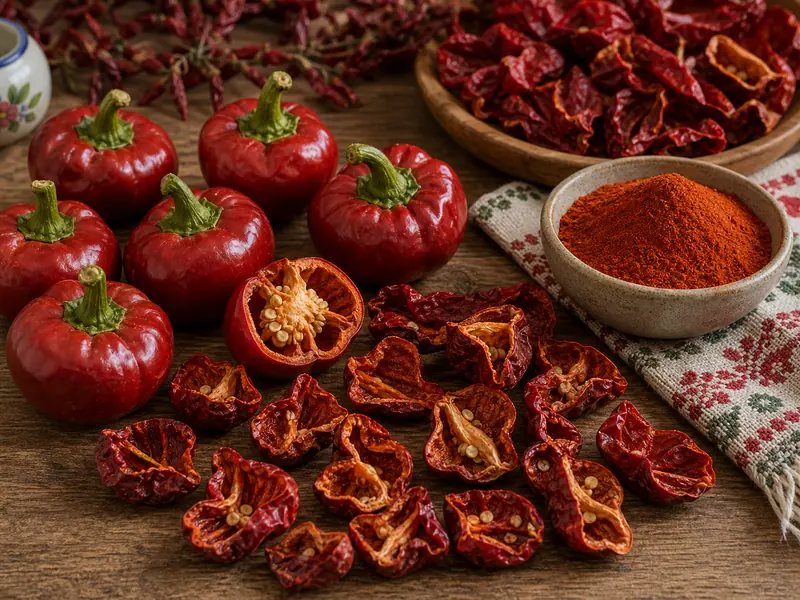
The Alma Paprika is a Hungarian heirloom pepper registering 500 to 1,000 SHU - sitting at the mild end of pepper heat with a distinctly sweet, fruity character. Its round, apple-shaped pods mature from pale yellow-green to vivid red.
Grown for centuries in Hungary, it is prized both fresh and dried into powder, delivering rich color and depth without any meaningful burn.
- Species: C. annuum
- Heat tier: Medium (1K-10K SHU)
What Is Alma Paprika?
Named after the Hungarian word for apple, the Alma Paprika earns that name honestly, the pods are nearly spherical, roughly the size of a crabapple, and carry the same blushed-red color when fully ripe.
At 500 to 1,000 SHU, this Capsicum annuum sits well below a serrano, which typically runs 10,000 to 23,000 SHU. Heat is barely a factor here.
What you notice instead is a thick-walled sweetness with a faint earthy undertone that deepens significantly when the pepper is dried and ground.
Hungary's paprika tradition is inseparable from peppers like this one. The Alma type belongs to the broader sweet paprika family - varieties selected over generations for color, sugar content, and drying quality rather than capsaicin.
The pods are meaty enough to hold up to stuffing, yet their thin skin dries evenly without tough spots.
Fresh Alma Paprika has a crisp bite and mild sweetness that works well raw. Dried and ground, the powder takes on a deeper, almost caramelized richness.
That dual-use quality, fresh vegetable or spice ingredient, makes it one of the more flexible Hungarian pepper varieties in the home garden.
For Alma Paprika, the heat lives in the placenta - the white inner membrane, not the seeds. Scraping out the placenta and seeds reduces heat by about 50%, while leaving them in keeps the full 500-1,000 SHU intensity.
Where Does Alma Paprika Come From?
Paprika peppers arrived in Hungary via Ottoman trade routes in the 16th century, and over the following two centuries Hungarian farmers systematically bred them for sweetness and color rather than heat. The Alma type emerged from this selective pressure, its round shape distinguishing it from the longer, tapered varieties more common in Spain or Italy.
By the 19th century, the Kalocsa and Szeged regions of Hungary had developed paprika into a national cooking identity. Alma Paprika was among the heirloom types preserved through this period, valued specifically for its thick walls and high sugar content.
It belongs to the same Capsicum annuum botanical lineage as bell peppers and most commercial paprika varieties, but its particular shape and flavor profile reflect distinctly Hungarian breeding priorities.
How Spicy Is Alma Paprika, and How Does It Taste?
The Alma Paprika delivers 500–1K Scoville Heat Units, placing it in the Medium tier (1K-10K SHU).
Flavor notes: sweet and mild.
How Nutritious Is Alma Paprika?
Like most sweet red peppers, Alma Paprika is a strong source of vitamin C - red pods contain significantly more than green ones due to continued development during ripening. A 100g serving of fresh red paprika pepper provides roughly 150mg vitamin C, exceeding the daily recommended intake.
Red Alma pods also supply beta-carotene and other carotenoids responsible for their vivid color, along with modest amounts of vitamin B6, folate, and potassium. Calorie count is low, approximately 30 to 40 calories per 100g fresh.
Dried and ground, the nutrient concentration increases substantially per gram.
How Do You Cook With Alma Paprika?
Alma Paprika's round shape was practically designed for stuffing. The cavity is generous, the walls thick enough to hold their structure through a long braise, and the flavor sweet enough to complement rather than compete with rice, meat, or cheese fillings.
Dried and ground, it produces a paprika powder with deep red color and a slightly fruity sweetness, closer in character to the mild, sweet depth of traditional dried paprika than to the Smoked Paprika (Pimentón). If you're making goulash or paprikash, grinding your own Alma powder from home-dried pods gives noticeably more complexity than most commercial blends.
Fresh, the pepper slices cleanly and holds up in sautés without turning mushy. It pairs well with onions, garlic, and sour cream, the classic Hungarian flavor base.
For those who enjoy the Piquillo Pepper, Alma roasts similarly well, with skin that peels cleanly after charring.
Substitute it anywhere a recipe calls for a sweet frying pepper with more body than a standard bell.
How Do You Buy and Store Alma Paprika?
Fresh Alma Paprika appears at farmers markets and specialty grocers in late summer through early fall, when Hungarian and Eastern European heirloom varieties peak. Outside that window, seeds from Baker Creek or specialty Hungarian seed suppliers are the most reliable choice.
Look for firm, unblemished pods with glossy skin. Soft spots indicate moisture loss or early rot.
Store fresh peppers in the refrigerator crisper drawer for up to two weeks.
For drying, string pods in a warm, well-ventilated space or use a dehydrator at 125°F until completely brittle. Ground powder stores in an airtight jar away from light for up to one year with reasonable potency.
What Can Replace Alma Paprika in a Recipe?
No dedicated substitute guidance is published for Alma Paprika yet.
How Do You Grow Alma Paprika Peppers?
Alma Paprika is one of the more rewarding peppers for gardeners who want to dry their own spice. The plants are compact and productive, and the round pods dry evenly, an advantage over elongated types that can develop moisture pockets.
Start seeds indoors 8 to 10 weeks before last frost.
Germination is reliable at 75 to 85°F soil temperature. Transplant after all frost risk passes, spacing plants 18 to 24 inches apart, see practical guidance on pepper plant spacing for row configurations that maximize airflow.
This is also one of the easiest peppers to grow for beginners, given its forgiving nature and consistent production.
Full sun is non-negotiable for good color development. The pods start pale yellow-green and pass through orange before reaching the deep red stage where sugar content peaks.
Harvest at red for drying.
Harvest earlier if using fresh.
Plants tolerate heat well and are less prone to blossom drop than thinner-walled varieties. Consistent moisture during fruit set improves wall thickness.
For comparison, the low-maintenance growing style of ají dulce shares similar requirements, both reward steady watering over irregular deep soaks.
Turning a harvest into your own paprika
- Pick at full red maturity, 75 to 90 days from transplant; yellow-green pods are usable but not yet sweet
- String the pods in a warm ventilated space, or run a dehydrator at 125 F
- Dry until completely brittle, not merely leathery
- Grind in a spice mill and store in an airtight jar away from light
Alma Paprika FAQ


- Alma Paprika Pepper
- Baker Creek Heirloom Seeds - Alma Paprika
- USDA FoodData Central - Sweet Red Pepper
Species classification: C. annuum - based on published botanical taxonomy.