

KnowThePepper
Rocotillo Pepper: Scalloped Caribbean Pods With Heat Closer to a Poblano
The rocotillo is a mild, scallop-shaped Caribbean pepper with almost no heat and a sweet, fruity flavor. Originating in the Caribbean and South America, it sits firmly in the mild pepper classification and is prized for fresh salsas, ceviche, and sofrito.
Its flattened, ribbed form makes it immediately recognizable at Latin markets.
- Species: Capsicum baccatum / Capsicum chinense
- Heat tier: Medium (1K-10K SHU)
- Comparison: the same heat range as a jalapeño because their published ranges overlap
What Is Rocotillo Pepper Known For?
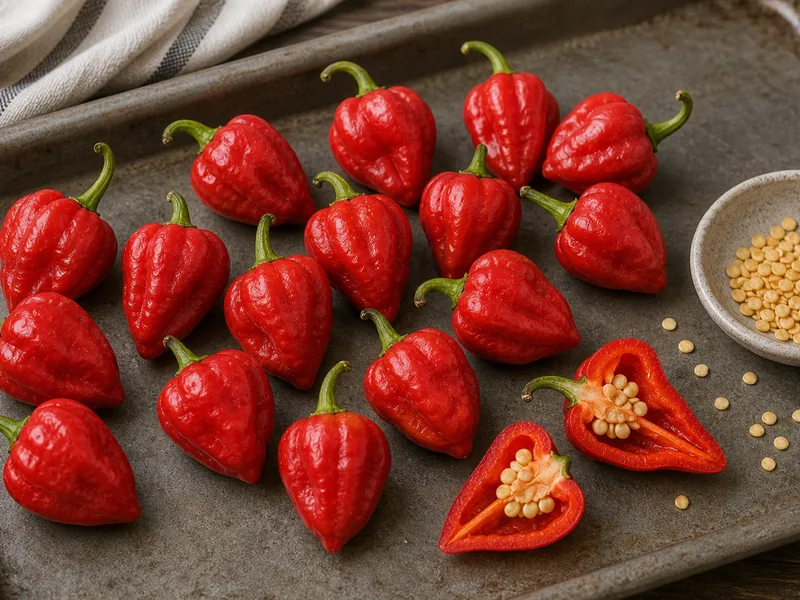
Shaped like a tiny flying saucer, the rocotillo turns heads before it ever reaches your tongue. The pepper is small, typically 1 to 2 inches across, with deep lobes and a flattened profile that looks almost decorative.
Colors range from pale yellow-green through orange to deep red at full maturity.
Heat is mild, not absent. The rocotillo usually lands around 1,500-2,500 SHU, closer to poblano territory than to habanero or scotch bonnet heat.
That makes it useful when you want a fruity, slightly tangy pepper with only a small burn.
The pepper is closely associated with Caribbean and South American cooking, where it functions as an aromatic base rather than a heat source. Puerto Rican cooks rely on it heavily in sofrito, the foundational cooking sauce that anchors rice, beans, and stewed meats.
Cuban and Dominican kitchens use it similarly.
Fresh rocotillo has a thin, almost delicate wall that breaks down quickly when cooked, which is actually a feature in slow-simmered sauces. Raw, the crisp texture and sweet-tart flavor work beautifully in ceviches and fresh salsas where you want pepper character without any burn.
Finding rocotillo outside Caribbean communities can be a project. Specialty Latin grocery stores and farmers markets in Florida, New York, and other areas with large Caribbean populations are your best bets.
Where Does Rocotillo Pepper Come From?
The rocotillo's roots trace back to the Caribbean basin, where indigenous communities cultivated small, mild peppers long before European contact. Spanish colonizers encountered it throughout the islands and coastal South America, and it became woven into the food traditions of Puerto Rico, Cuba, and the Dominican Republic over subsequent centuries.
In Puerto Rico, the pepper became so central to cooking that it earned a place in sofrito - the aromatic blend that defines the island's flavor identity. This wasn't an imported technique.
It reflected how thoroughly the rocotillo had embedded itself in local food culture.
The pepper's precise botanical classification has been debated. Some sources place it within Capsicum chinense, the same species as habaneros, which explains its fruity aromatic notes despite the absent heat.
Its regional pepper tradition reflects centuries of Caribbean agricultural selection toward flavor over fire.
What Does Rocotillo Pepper Taste Like, and How Hot Is It?
The Rocotillo Pepper delivers 1.5K–2.5K Scoville Heat Units, placing it in the Medium tier (1K-10K SHU). That makes it roughly the same heat range as a jalapeño because their published ranges overlap.
What's in Rocotillo Pepper? Nutrition Facts
Like most sweet peppers, rocotillo delivers solid nutritional value with minimal calories. A 100g serving provides roughly 25-30 calories, with meaningful amounts of vitamin C - sweet peppers in this category often supply 100-200% of daily vitamin C needs per serving.
The absence of capsaicin means none of the metabolism-boosting effects associated with hot peppers, but the antioxidant profile from carotenoids, particularly in red-ripe fruits, remains strong. Vitamin A precursors increase as the pepper ripens from green to red.
Fiber content is modest at around 1-2g per 100g. The thin walls mean lower water content than thick-walled bells, concentrating flavors slightly.
How Do You Use Rocotillo Pepper in the Kitchen?
Rocotillo's real value is aromatic. When you sauté it with onion, garlic, and culantro for a classic Puerto Rican sofrito, the kitchen fills with a sweet, almost floral scent that no crisp, sweet bell pepper flavor quite replicates.
For fresh applications, slice rocotillo thin into ceviches or chop it into pico de gallo. The thin walls mean it releases juice quickly, so add it close to serving time if you want texture to hold.
Cooked applications are where it truly shines. Stewed into rice dishes like arroz con pollo or simmered into black beans, the pepper essentially dissolves and contributes depth rather than visible pieces.
This is intentional, rocotillo acts more like an herb than a vegetable in these contexts.
It pairs naturally with Sweet Italian Pepper in mixed pepper dishes, and the two together make an excellent base for a mild roasted pepper sauce.
Substitution note: if rocotillo is unavailable, the sweet, heart-shaped pimento's mild fruitiness comes closest in terms of heat level and sweetness, though the texture differs. The round, sweet cherry pepper's snacking appeal also works in a pinch for fresh preparations.
For the aromatic quality specifically, nothing substitutes perfectly.
How Do You Buy and Store Rocotillo Pepper?
Latin grocery stores in Caribbean communities are the primary source. Look for firm, glossy fruits without soft spots or wrinkled skin.
Color can range from pale yellow to deep red depending on ripeness, all stages are usable.
Fresh rocotillo is perishable. Refrigerate unwashed in a paper bag for up to one week.
The thin walls mean they deteriorate faster than thick-walled peppers, so plan to use them within a few days of purchase.
For longer storage, rocotillo freezes reasonably well after washing and removing seeds. Texture suffers but flavor holds for cooked applications like sofrito.
Some cooks blend and freeze sofrito directly, which is the most practical preservation method.
What Is a Good Substitute for Rocotillo Pepper?
No dedicated substitute guidance is published for Rocotillo Pepper yet.
How Do You Grow Rocotillo Peppers?
The hardest part of growing rocotillo isn't germination, it's managing the plant's need for consistent warmth and humidity throughout the season. This is a Caribbean pepper that genuinely struggles when nighttime temperatures drop below 60°F.
In zones 9 and above, outdoor growing is straightforward.
Elsewhere, plan for containers you can move, or commit to a greenhouse setup.
For those interested in practical guidance on growing bell peppers as a comparison baseline, rocotillo demands similar but slightly more tropical conditions, think higher humidity and less tolerance for cool nights.
Start seeds indoors 8-10 weeks before last frost. Transplant only after soil temperature holds above 65°F consistently.
Plants reach 2-3 feet tall and tend toward a bushy, spreading habit.
The Corno di Toro grows under similar conditions if you want a companion planting that shares irrigation and fertilization schedules.
Full sun is non-negotiable, at least 6 hours daily. Consistent moisture matters more than heavy feeding.
Rocotillo plants stressed by drought produce fewer fruits with tougher walls.
Fruits are ready to harvest from yellow-green through full red, typically 75-85 days from transplant.
Rocotillo Pepper FAQ


- CooksInfo - Rocotillo Chiles
- Pepper Production, Vegetable Production Handbook of Florida - UF/IFAS EDIS
Species classification: Capsicum baccatum / Capsicum chinense - based on published botanical taxonomy.