

KnowThePepper
Gypsy Pepper: A Heat-Free Sweet Hybrid for Salads, Roasting, and Stuffing
The Gypsy pepper is a sweet, thin-walled Capsicum annuum hybrid that All-America Selections named a winner in 1981. Its crisp texture and fruity sweetness suit it to raw salads, roasting whole, and stuffing, with no heat to work around.
- Species: Capsicum annuum
- Heat tier: Mild (0-999 SHU)
What Kind of Pepper Is Gypsy Pepper?
The Gypsy pepper is aromatic before it is anything else, a clean grassy sweetness with bright fruity notes behind it and no heat most people can detect. All-America Selections classifies it as a sweet pepper, which puts it below even a pepperoncini.
The walls are thin and the flesh is tender, so the fruit softens quickly under heat. Roasted, the sugars concentrate into something almost jammy.
Raw, the crunch and sweetness make it an easy snacking pepper straight off the plant. As a Capsicum annuum it shares a species with the subtly smoky depth of pimenton.
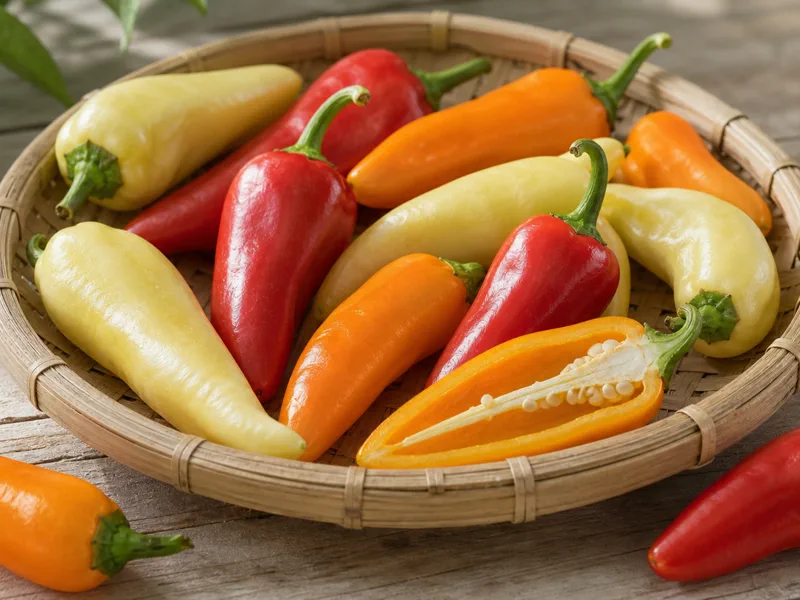
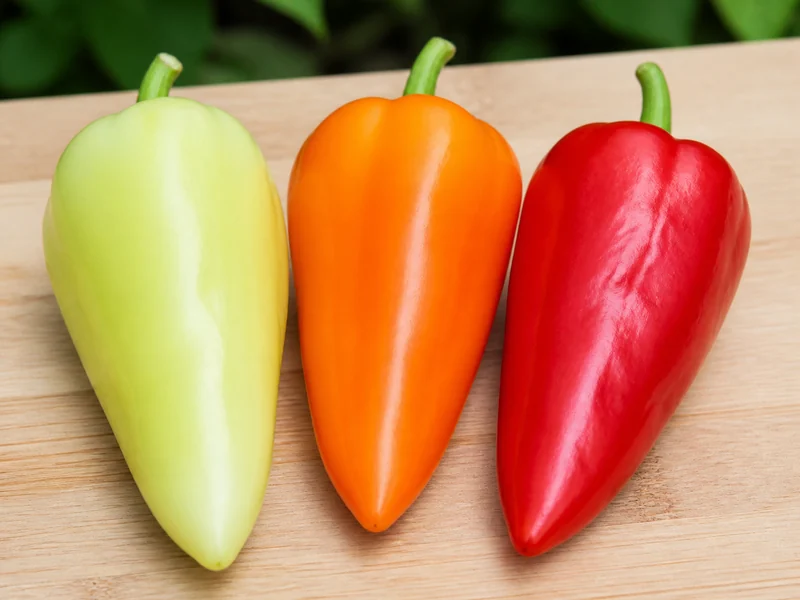
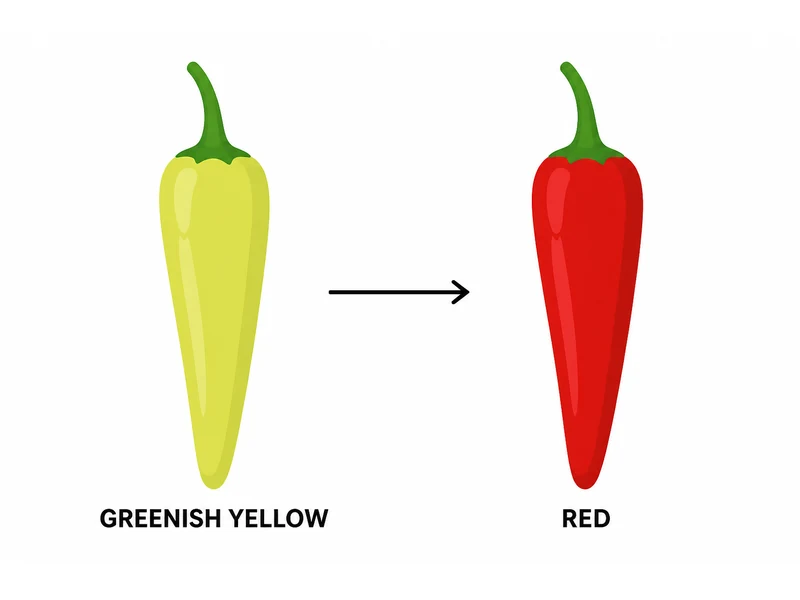
It shares that species with the rich dried flavor of choricero as well, though Gypsy is bred for fresh eating rather than drying. All-America Selections describes the fruit as light greenish yellow turning red, on plants that produce early and heavily.
For anyone cooking for heat-sensitive guests or introducing kids to fresh peppers, Gypsy is a dependable choice.
What Is the History of Gypsy Pepper?
Gypsy is an F1 hybrid bred for early production and sweet flavor on a compact plant. All-America Selections named it a 1981 edible vegetable winner, and that award accelerated its adoption among North American home gardeners.
Its origin lies in a commercial breeding program rather than a regional food tradition, unlike paprika's centuries-long cultivation in Hungary. The piquillo's deep roots in northern Spain draw the same contrast.
Despite the hybrid status, Gypsy holds a following among gardeners who value its earliness and yield. It remains a standard offering in major seed catalogs.
How Hot Is Gypsy Pepper, and What Does It Taste Like?
The Gypsy Pepper delivers 0 Scoville Heat Units, placing it in the Mild tier (0-999 SHU).
What Nutrients Does Gypsy Pepper Provide?
Ripening stage moves the numbers here more than the cultivar does.
Raw yellow sweet pepper carries 27 calories, 6.32g of carbohydrate and 0.9g of fiber per 100g in the USDA reference. The vitamin C figures by stage sit in the ripening table further down, because they answer a harvest question rather than a nutrition one.
Red fruit gives 26 calories and 1,620µg of beta-carotene at the same reference. Ripening to red therefore buys carotenoids rather than vitamin C.
Gypsy has no USDA entry of its own, so all of that describes sweet pepper as a class.
Capsaicin is absent at every stage, which is what makes this workable for people avoiding heat entirely. Why other peppers burn at all is a separate story, told in how capsaicin trips a heat receptor.
What Is Gypsy Pepper Best Used For?
The thin walls are the defining cooking feature. They cook fast, and a few minutes in a hot pan is enough to blister the skin and soften the flesh.
That speed suits Gypsy to quick sautes where you want tender results without long cooking. Stuffing works too, because the elongated cavity holds filling and the mild flavor does not compete with cheese, rice, ground meat, or herb mixtures.
Compare that to the Sweet Italian Pepper, which shares the application on slightly thicker walls. Raw and sliced, Gypsy adds color and crunch without the faint bitterness some people find in bell peppers.
The sweetness pairs well with acidic dressings, and the brightness cuts through a vinaigrette. Roasted in a large batch and blended with a handful of shishito's occasional surprising heat, it becomes the sweet base of a sauce with a little edge.
Roasted and frozen, the pods add body to winter soups and stews. The ghost pepper hot sauce shows how roasting transforms pepper flavor, and the same principle applies at the sweet end.
How Should You Buy and Store Gypsy Pepper?
Summer into early fall, at farmers markets and specialty grocers, is where this one shows up. Look for firm unblemished fruit with tight skin, since wrinkling signals moisture loss.
Store them unwashed in the refrigerator crisper drawer, where they hold for 1 to 2 weeks. Washing before storage traps moisture and speeds decay.
For longer keeping, roast the pods and freeze them. Blister the skins under a broiler, steam them in a covered bowl, peel, and pack them flat in freezer bags.
Frozen roasted Gypsy holds quality for 4 to 6 months. Whole unblanched pods freeze well too, thawing soft but perfectly usable in a cooked dish.
Which Peppers Can Replace Gypsy Pepper?
No dedicated substitute guidance is published for Gypsy Pepper yet.
How Do You Grow Gypsy Pepper at Home?
Gypsy is among the earlier sweet peppers, which is what makes it useful in short-season climates where larger bell types struggle to ripen before frost. The AAS timing and plant figures are in the stats box above, and what each ripening stage buys you is in the table below.
Sow indoors about 8 to 10 weeks ahead of your last frost, holding the tray at 75 to 85°F for reliable germination.
For timing and technique, the seed germination and transplanting for peppers covers the process in detail. Plants average 18 to 20 inches tall with a 14 to 18 inch spread, which suits containers and smaller raised beds.
Space transplants 15 to 18 inches apart in the ground and give them full sun. Fewer than six hours noticeably reduces yield.
The thin walls leave fruit prone to sunscald in intense heat, so some growers keep lower foliage to shade developing pods. Consistent moisture prevents the blossom-end problems that follow water stress.
Gypsy also carries resistance to tobacco mosaic virus, recorded by All-America Selections as Tobamo P. For a hotter variety to try next season, the growing cayenne is a reasonable step up.
| Stage | What you get | Vitamin C per 100g |
|---|---|---|
| Light greenish yellow | The stage AAS describes at harvest, crisp and mild | 184 mg at the yellow stage |
| Red | Deeper color and more beta-carotene, softer flesh | 128 mg at the red stage |
Gypsy Pepper FAQ


- All-America Selections, Pepper Gypsy hybrid, 1981 edible vegetable winner
- USDA FoodData Central, SR Legacy 169383, Peppers, sweet, yellow, raw
- USDA FoodData Central, SR Legacy 170108, Peppers, sweet, red, raw
Species classification: Capsicum annuum - based on published botanical taxonomy.