Heat with context
SHU ranges are checked against attributable records. Uncertain or disputed figures are labeled instead of treated as settled.

A pepper reference site built to make heat data, growing guidance, and substitution advice easier to verify and use.
Reviewed July 2026
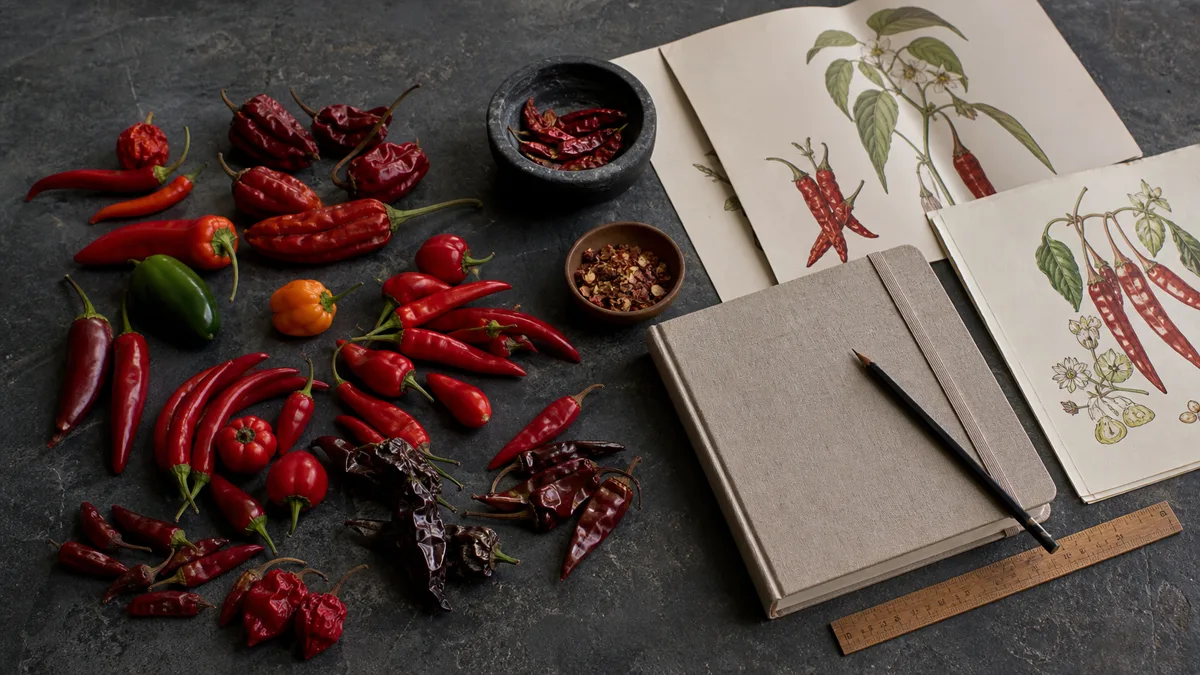
KnowThePepper organizes pepper heat, flavor, growing, cooking, and substitution information around the questions readers need to answer. Each page should identify the pepper or task clearly, name the source owner behind factual claims, and state important limits.
The site is an editorial reference project that synthesizes published evidence.
It does not present the Editorial Team as growers, laboratory researchers, or firsthand product testers.
That distinction matters because pepper information often moves between breeder descriptions, institutional databases, research papers, seed catalogs, and repeated web summaries. KnowThePepper separates what a source directly establishes from the practical guidance the Editorial Team derives from several records.
The library is designed for concrete choices: identifying a pepper, comparing heat, choosing a substitute, planning a harvest, or checking a handling risk. A useful page gives the answer early, then supplies the measurements, conditions, and named references a reader needs to judge it.
SHU ranges are checked against attributable records. Uncertain or disputed figures are labeled instead of treated as settled.
Growing advice accounts for climate, cultivar, and method. General garden lore does not become fact without support.
Substitution guidance explains heat, flavor, availability, and the conditions that can change the recommendation.
Indexable pages need a distinct reader task, enough evidence, and a practical reason to exist.
These standards apply differently by page type. A profile needs identity and heat evidence, a comparison needs a direct decision, and a guide needs steps, thresholds, and safety limits.
The structure serves the reader’s task instead of forcing every subject into the same article shape.
KnowThePepper Editorial Team is the public owner for sourcing standards, corrections, and update decisions. Published work uses this team byline unless a named contributor has a verified public record that supports the attribution.
The team byline identifies responsibility for the published page. It does not imply laboratory work, commercial endorsement, or a personal trial.
When a claim belongs to USDA, a university, a breeder, a journal, or another organization, the page names that owner directly.
Corrections and substantive updates remain part of that ownership. The same standard applies whether an error begins in prose, a comparison table, structured data, or a linked recommendation.
KnowThePepper Editorial TeamEditorial team for KnowThePepper reference pages, source notes, and data review.The evidence base includes USDA FoodData Central, Wikidata, the Chile Pepper Institute at New Mexico State University, peer-reviewed journals, Guinness World Records where relevant, and other clearly named records. The methodology and sources page explains what each source can support and how disagreements are handled.
Send the page URL, the exact claim, and a supporting source. The team reviews the evidence and updates the page when it supports a correction.
Report a correction