

KnowThePepper
Marconi Pepper: The 6- to 10-Inch Italian Sweet Pepper Built for Roasting
The Marconi pepper is a thick-walled Italian sweet pepper registering just 0 to 500 SHU - essentially no heat at all. Its flavor is rich, almost candy-sweet when raw, and deepens into something almost smoky when roasted.
Long, tapered, and brilliant red at full ripeness, it's a staple in Italian cooking and increasingly popular with home gardeners who want serious flavor without any fire.
- Species: C. annuum
- Heat tier: Mild (0-999 SHU)
What Is Marconi Pepper Known For?
Marconi peppers often show up at farmers markets, where a single tasted slice, sweet, thick, almost juicy, is enough to send someone searching for seeds.
The Marconi pepper (Capsicum annuum) is an Italian heirloom measuring 6 to 10 inches in length with walls thick enough to hold up to roasting, stuffing, or a hot cast-iron pan. It sits firmly in the low-heat pepper band, topping out around 500 SHU - which puts it closer to a bell pepper than anything you'd call spicy.
Flavor is where Marconi earns its reputation. Raw, it delivers clean sweetness with a slight grassy brightness.
Roasted, the sugars caramelize and the flesh turns silky, developing a depth that surprises people expecting something flat.
That transformation is the whole point.
Fruits start green and ripen through yellow to a deep, glossy red. Red is the sweet spot, flavor fully developed, walls at maximum thickness.
The the annuum species line encompasses thousands of cultivars, but Marconi stands out for its combination of size, wall thickness, and that concentrated sweetness.
It's a productive plant, reaching 24 to 36 inches tall and setting fruit consistently through the summer. For anyone who wants a roasting pepper with real character, Marconi is the answer.
Where Does Marconi Pepper Come From?
The Marconi pepper traces its roots to southern Italy, where sweet frying peppers have been grown for generations. Named after the Italian inventor Guglielmo Marconi, though the exact origin of that naming is unclear, this variety became a fixture in Italian-American immigrant gardens through the early 20th century.
It belongs to the broader tradition of Italian sweet peppers, a category that includes closely related varieties like the zero-heat Italian sweet and the similarly mild bull's horn-shaped Corno di Toro. These peppers traveled with Italian immigrants to North America and found a second home in backyard gardens from New Jersey to California.
Heirloom seed companies helped preserve the variety through the late 20th century, and it has seen renewed interest as cooks rediscover the depth that a proper roasting pepper provides.
How Hot Is Marconi Pepper? Heat and Flavor
The Marconi Pepper delivers 0–500 Scoville Heat Units, placing it in the Mild tier (0-999 SHU).
Flavor notes: sweet and mild.
Marconi Pepper Nutrition Facts
A 100-gram serving of raw Marconi pepper delivers roughly 31 calories, 7g of carbohydrates, and 2g of fiber. Red-ripe fruits contain significantly more vitamin C than green ones, often exceeding 150mg*, which is more than double the daily recommended intake.
Red Marconi is also a strong source of beta-carotene and vitamin A. Because this pepper registers near 0 SHU, there's no meaningful capsaicin present, which means none of the metabolism-boosting effects associated with hot peppers, but also none of the digestive irritation.
For people sensitive to spice, that's a real advantage.
How Do You Use Marconi Pepper in the Kitchen?
Marconi is built for the flame. Roasting over an open burner or under a broiler blisters the skin in minutes, and once peeled, the flesh is silky and intensely sweet, nothing like a raw bell pepper.
Dress it with olive oil, garlic, and a pinch of salt, and you have something that needs no further improvement.
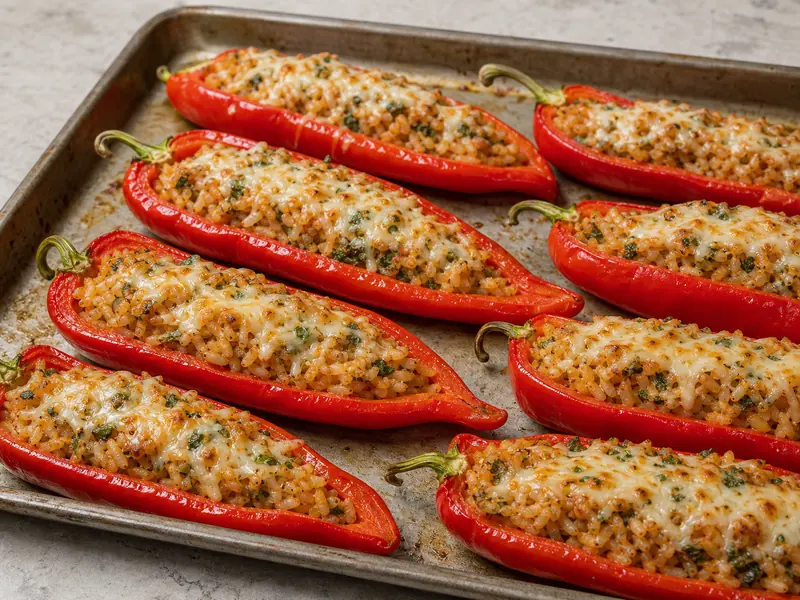
For stuffing, the thick walls and open interior cavity make it ideal. A mixture of ricotta, herbs, and breadcrumbs holds together well inside a halved Marconi, and it bakes without turning mushy.
Sliced raw into a salad, it adds sweetness without the vegetal sharpness that bell peppers sometimes carry.
If you want to dial back heat in any dish, Marconi is the obvious swap, it brings body and flavor where a spicy pepper would bring fire. That makes it useful alongside tangy, lightly pickled Italian-origin peppers when building antipasto plates that need range without intensity.
For anyone experimenting with stuffed pepper recipes, or looking for a mild base for something like jalapeno poppers - Marconi's size and wall thickness make it one of the most practical choices available. It holds heat from the oven without collapsing.
How Do You Buy and Store Marconi Pepper?
Fresh Marconi peppers show up at farmers markets and Italian specialty grocers in late summer. Look for glossy skin, firm walls, and no soft spots, a wrinkled shoulder means it's past peak.
At home, store unwashed in the crisper drawer for up to 10 days. For longer storage, roast, peel, and pack in olive oil.
Refrigerated, they keep for 2 weeks and improve in flavor.
Freezing raw Marconis is possible but degrades the texture, better to freeze them roasted.
If you can't find Marconi fresh, the Pimento Pepper is a reasonable substitute for roasting applications.
What Can You Use Instead of Marconi Pepper?
No dedicated substitute guidance is published for Marconi Pepper yet.
How Do You Grow Marconi Peppers?
Marconi performs best in full sun with consistent moisture and warm nights. Start seeds indoors 8 to 10 weeks before your last frost date, peppers need a long head start, and Marconi is no exception.
Transplant outdoors once soil temperatures reach at least 60°F. Space plants 18 to 24 inches apart.
They get bushy and need airflow to prevent fungal issues.
If you want a full step-by-step approach, the grow peppers from seed covers everything from germination to harvest.
Fruits reach full red ripeness in approximately 75 to 80 days from transplant. Green Marconis are edible but significantly less sweet, patience pays off here.
The flavor jump between green and red is more dramatic than most people expect.
The sweet Italian-type growing pattern applies here: consistent watering prevents blossom drop, and a balanced fertilizer through midsummer keeps production steady. Avoid high-nitrogen feeds once flowering starts, or you'll get foliage at the expense of fruit.
Staking helps, loaded plants can lean heavily. A simple tomato cage works fine.
In cooler climates, row cover early in the season can extend your window meaningfully.
Marconi Pepper FAQ


- Capsicum annuum L. - USDA GRIN Taxonomy
- Baker Creek Heirloom Seeds - Marconi Red Pepper
- Peppers - UC Small and Organic Farm Advisor, UC ANR
- USDA FoodData Central - Sweet Red Pepper
Species classification: C. annuum - based on published botanical taxonomy.