

KnowThePepper
Cherry Pepper: Round and Sweet, With Barely a Tingle at 100-500 SHU
The cherry pepper tops out at just 100 to 500 SHU, putting it firmly in the gentle heat category alongside bell peppers and sweet snacking varieties. Its round, compact shape and genuinely sweet flavor make it a kitchen workhorse, equally at home stuffed with cheese, pickled for antipasto, or roasted whole.
Think sweetness first, with barely a whisper of heat.
- Species: C. annuum
- Heat tier: Mild (0-999 SHU)
What Makes Cherry Pepper Different?
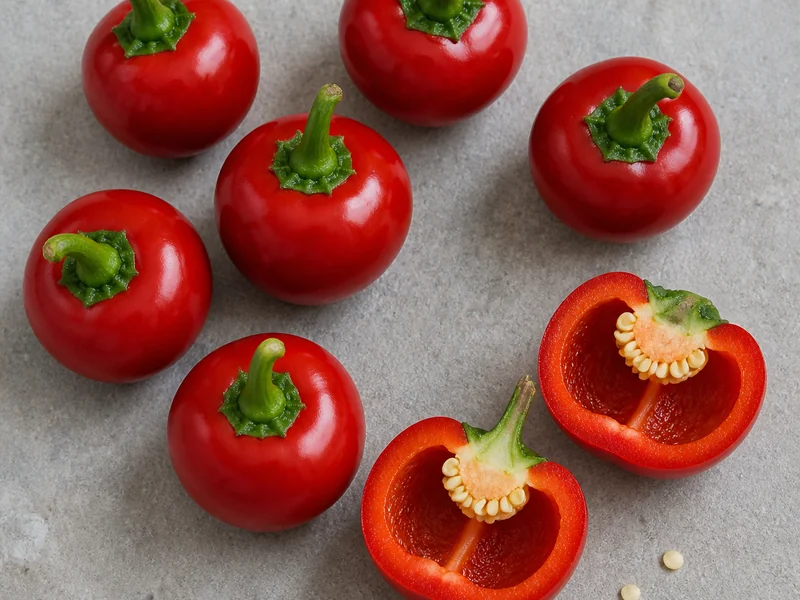
Cherry peppers look exactly like their name suggests: round, about 1 to 2 inches in diameter, and bright red at full maturity, though they also appear in green and yellow stages. That shape alone sets them apart from elongated frying peppers like the corno di toro.
At 100 to 500 SHU, they register on the Scoville scale well below any jalapeño, closer to a bell pepper with a faint tingle. The flavor is the real story: thick-walled flesh that's genuinely sweet, slightly fruity, and dense enough to hold up to stuffing, roasting, or brining without falling apart.
Belonging to the Capsicum annuum cultivar family, the same botanical family that includes bells, jalapeños, and paprika, cherry peppers demonstrate how wide the flavor range of this species actually is. The thick walls mean they pickle beautifully and retain texture even after extended processing.
Two main types appear in markets: sweet cherry peppers (essentially zero heat) and hot cherry peppers that push toward the upper 500 SHU boundary. Even the 'hot' version would barely register as spicy to anyone accustomed to medium-heat peppers.
For cooks who want flavor without fire, this pepper delivers consistently.
| Sweet cherry | Hot cherry | |
|---|---|---|
| Heat | 100 to 500 SHU, essentially a sweet pepper | Noticeably hot, and sold as hot cherry or cherry bomb |
| Usual form | Jarred whole, or fresh in late summer | Jarred in oil or vinegar, often sliced |
| What it is for | Stuffing, where the filling is the point | Sandwiches and pizza, where the heat is the point |
| Buying | The label is the only reliable signal, since the pods look alike | Same. Taste a small piece before committing a filling to a jar |
What Is the History of Cherry Pepper?
Cherry peppers have been cultivated in the United States for well over a century, though their exact origin story is less dramatic than many heritage varieties. They became fixtures in Italian-American cooking communities, particularly in the Northeast, where pickling and antipasto traditions kept demand steady.
The compact round shape and thick walls made them ideal for home preservation, qualities that home canners and commercial pickle producers both valued. By the mid-20th century, jarred cherry peppers had become a supermarket staple across the country.
Unlike the Trinidad Perfume, whose Caribbean origins are well documented, cherry pepper history is more agricultural than cultural, a practical variety developed for its processing qualities and reliable sweetness rather than regional cooking tradition. Today they're grown commercially throughout the mid-Atlantic states.
How Hot Is Cherry Pepper? Heat and Flavor
The Cherry Pepper delivers 100–500 Scoville Heat Units, placing it in the Mild tier (0-999 SHU).
Flavor notes: sweet and mild.
How Nutritious Is Cherry Pepper?
A 100-gram serving of cherry peppers provides roughly 30 to 40 calories, making them a low-calorie flavor addition to any meal. They're a solid source of vitamin C - red-stage peppers contain more than green ones due to continued ripening.
Like other C. annuum varieties, they provide vitamin A, vitamin B6, and dietary fiber.
The capsaicin content at 100 to 500 SHU is minimal, so the metabolic effects associated with hotter peppers don't apply here. Antioxidant compounds including carotenoids increase as the fruit ripens from green to red.
Sodium content depends entirely on preparation, fresh cherry peppers are sodium-free, while jarred versions can contain significant salt from brine.
Which Dishes Suit Cherry Pepper?
Stuffed cherry peppers are the classic application, and for good reason. The thick walls and hollow interior create a natural container that holds fillings through roasting, frying, or baking.
Provolone and prosciutto is the Italian-American standard.
Cream cheese with herbs works equally well for a lighter option.
Pickled cherry peppers appear on nearly every antipasto platter worth its salt. The brine penetrates the flesh without turning it mushy, a texture advantage over thinner-walled peppers.
They hold up to vinegar-based brines for months, which explains their dominance in the jarred pepper section at most grocery stores.
Roasting concentrates the sweetness considerably. Whole roasted cherry peppers alongside the sweet, heat-free paprika pepper make a striking side dish with very little effort.
Chop them into pasta sauces, grain salads, or egg dishes where you want color and mild sweetness without any heat complication.
They also slice well for pizza toppings, where their compact size means even coverage without large pepper pieces overwhelming individual bites. For heat-sensitive guests, cherry peppers offer a genuine pepper flavor experience, compare them to a pepperoncini when building a condiment spread.
Stuffing them without losing the filling
- Cut the top off rather than halving the pod, so the wall stays a closed cup.
- Scoop the seeds and the pale membrane out with a small spoon; the membrane carries whatever heat the pod has.
- Pat the inside dry, since water left in the cavity loosens a cheese filling.
- Pack the filling firmly but leave a few millimetres at the top for it to expand.
- Roast, fry or bake upright so the filling stays where you put it.
How Do You Buy and Store Cherry Pepper?
Fresh cherry peppers appear at farmers markets and well-stocked grocery stores from late summer through fall. Look for firm, glossy skin without soft spots or wrinkling.
Jarred versions are available year-round and are often the more practical choice given how well this pepper takes to pickling.
Store fresh peppers in the refrigerator crisper drawer for up to two weeks. Don't wash until ready to use, moisture accelerates deterioration.
Opened jarred peppers keep refrigerated for 3 to 4 weeks submerged in their brine.
For the best flavor comparison with similar mild options, the sweet, thick-fleshed pimento-type pepper is often stocked nearby and makes an interesting side-by-side tasting.
What Can You Use Instead of Cherry Pepper?
Compare substitutes for Cherry Pepper by form, flavor, and heat before choosing a ratio. Measured adjustments must account for the dish and the concentration of the replacement.
Direct comparisons show where flavor, form, and preparation differ in the Cherry Pepper vs Pimento and Peppadew vs Cherry Pepper matchups.
Compare Cherry Pepper with: Cherry Pepper vs Cherry Bomb
How Do You Grow Cherry Pepper at Home?
Cherry peppers are reliable producers that suit both container growing and in-ground beds. Plants typically reach 18 to 24 inches tall and produce heavily once established.
The compact fruit size means you'll get dozens of peppers per plant across a long harvest window.
Start seeds indoors 8 to 10 weeks before last frost - the timing guidance for pepper planting applies directly here. Germination happens fastest at soil temperatures around 80 to 85°F.
Once seedlings develop their second set of true leaves, follow the transplant seedling process carefully.
Cherry peppers respond well to hardening off before going into the ground.
Full sun is non-negotiable, at least 6 to 8 hours daily. They're less fussy about soil than some varieties, though consistent moisture prevents the blossom-end rot that affects thick-walled types.
Spacing plants 18 inches apart gives adequate airflow.
For growing comparison, cherry peppers are considerably more straightforward than a Jimmy Nardello, which can be more finicky in humid climates. Harvest cherry peppers at any color stage, green, yellow, orange, or red, though red fruit offers maximum sweetness.
They continue producing until frost.
Cherry Pepper FAQ


- Cherry Pepper Scoville Reference
- Chile Pepper Institute - New Mexico State University
- USDA FoodData Central - Sweet Peppers
- Pepper Production, Vegetable Production Handbook of Florida - UF/IFAS EDIS
Species classification: C. annuum - based on published botanical taxonomy.