
Peppadew vs Cherry Pepper: A Single Brand Against a Sweet-or-Hot Category
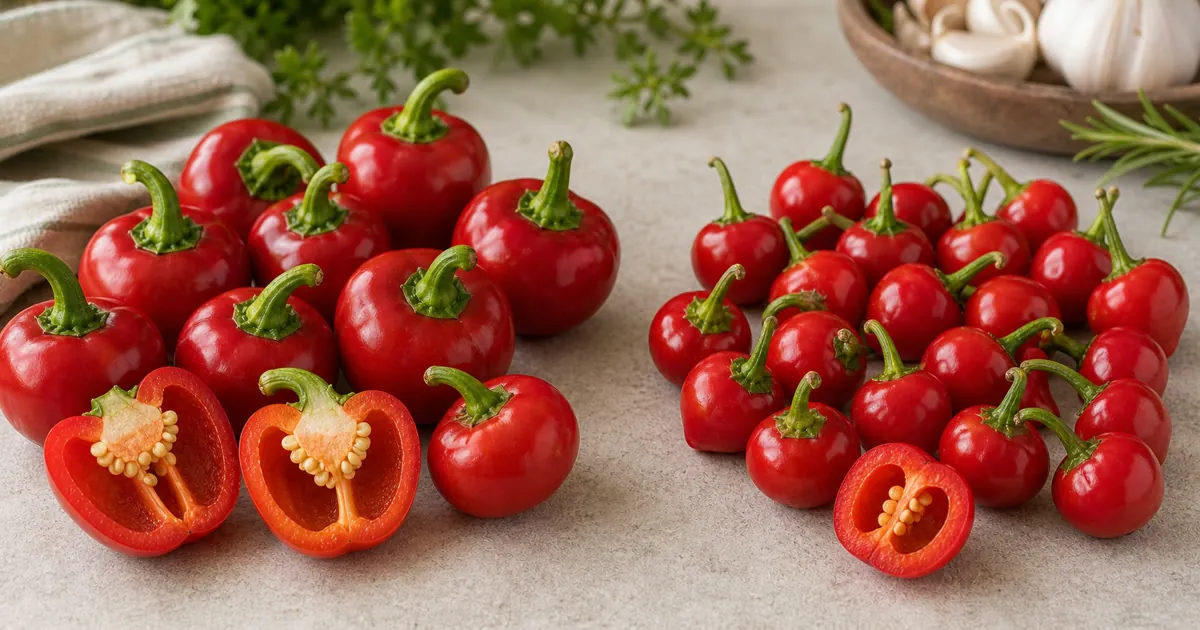
Peppadew behaves like a branded brined condiment with predictable sweet tang and gentle warmth. Cherry pepper behaves like a broader pepper category: sweet, hot, fresh, pickled, or stuffed depending on the jar. The choice is not only pepper shape. It is how much control you want over brine, heat, filling, and final texture.

Peppadew Pepper
MildCherry Pepper
MildQuick Comparison
| Attribute | Peppadew Pepper | Cherry Pepper |
|---|---|---|
| Scoville evidence | 280-650 SHU | 100-500 SHU |
| Heat Tier | Mild | Mild |
| vs Jalapeño | n/a | n/a |
| Flavor | sweet, tangy, and lightly brined | sweet and mild |
| Species | C. baccatum | C. annuum |
| Origin | South Africa | USA |
Is Peppadew a Type of Cherry Pepper?
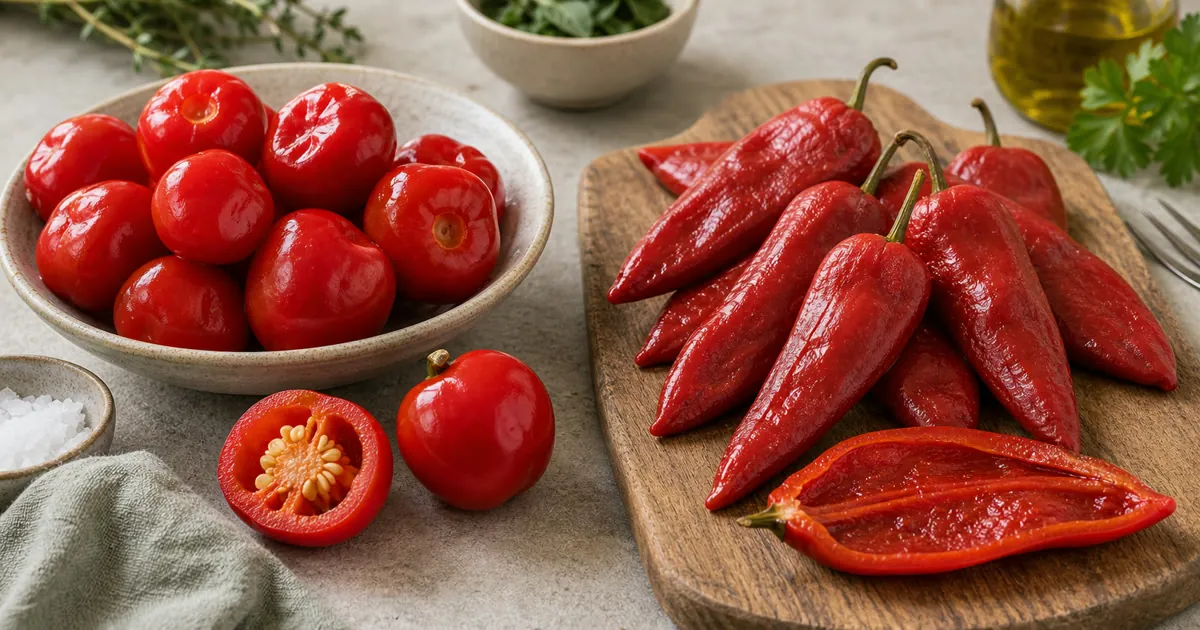
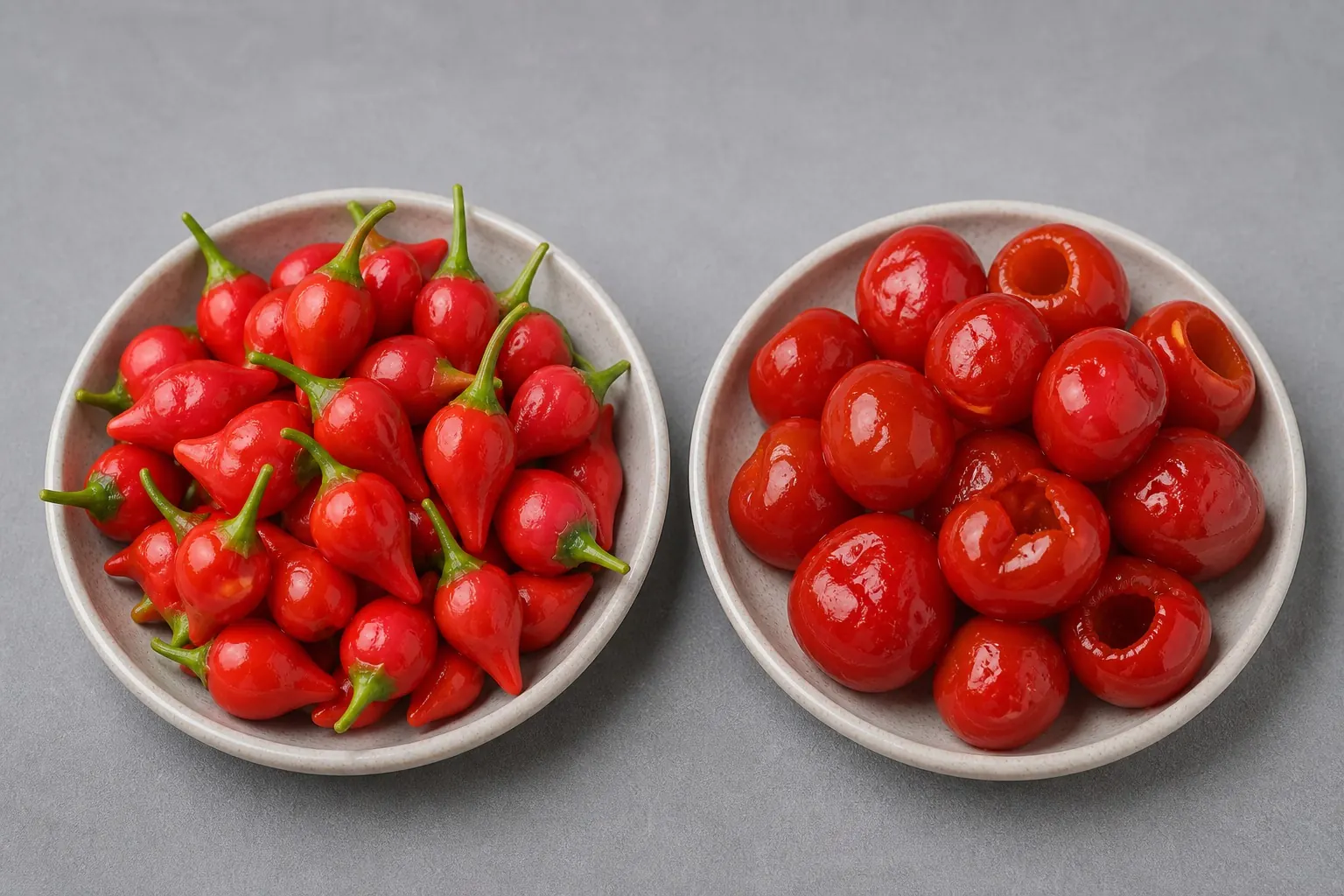
Peppadew is Capsicum baccatum, discovered in South Africa in the mid-1990s and sold under a single controlled brand. Cherry pepper is Capsicum annuum, a much older category grown in the United States for over a century within Italian-American pickling traditions.
Peppadew narrows the buyer's expectation. The name is tied to a South African sweet-heat product, usually brined and ready to eat.
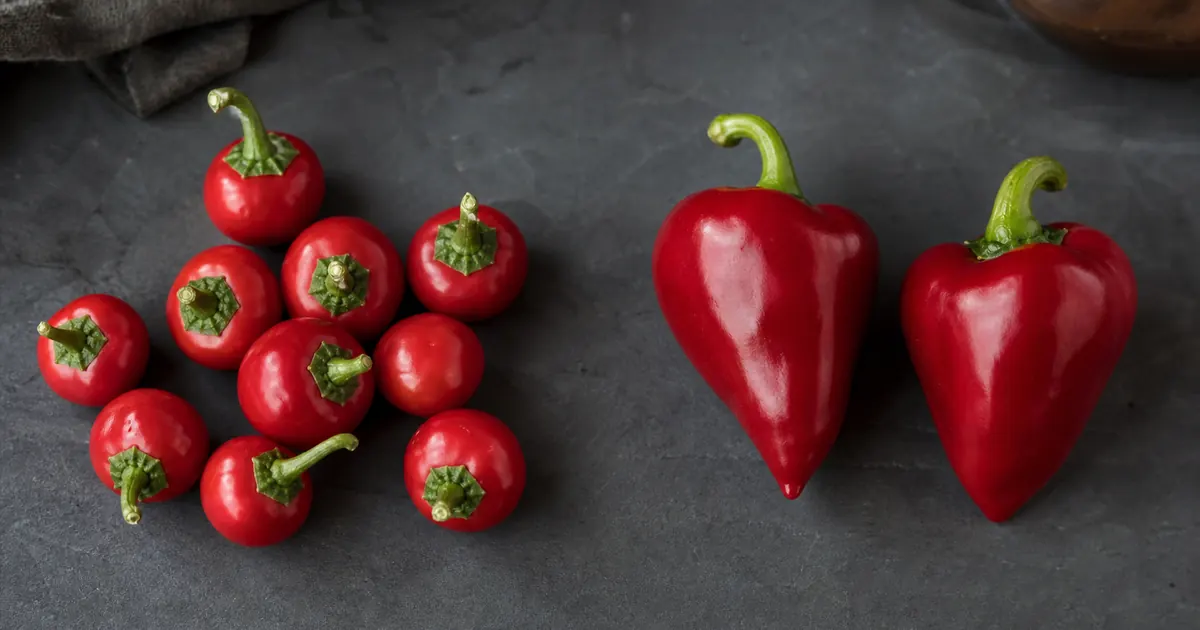
Cherry pepper is a wider category: sweet, hot, stuffed, sliced, whole, fresh-packed, or heavily vinegared.
That makes this a control question. Peppadew pepper gives consistency, while cherry pepper gives options, but the jar has to be read.
That single-brand versus open-category split also explains why recipes rarely specify an exact cherry pepper brand, but often specify "Peppadew" by name. Cherry pepper recipes are written around a style (sweet or hot, whole or sliced), while Peppadew recipes are written around a specific, repeatable jar.
Brine As Ingredient
Peppadew's brine is not background liquid. It seasons cream cheese, mozzarella, salami, pizza, and grain bowls even after the pepper is drained.
Cherry pepper brine is a variable. A sweet jar may taste mild and fruity.
A hot deli jar may be sharper, saltier, and more vinegar-forward.
That is why the same substitution can fail in opposite directions. Peppadew can make a deli-style dish too sweet.
Cherry pepper can make a cheese filling too sharp.
Taste the liquid before measuring the peppers. The brine often changes the food more than the pepper wall does.
That salt swing traces back to processing, not the fruit. Fresh Peppadew is a low-sodium vitamin-C source like any sweet pepper, and the brining step is what introduces the sodium load worth checking on a label.
Which Is Hotter, Peppadew or Cherry Pepper?
Peppadew is listed at 280-650 SHU, while cherry pepper is listed here at 100-500 SHU, so the normal heat answer is simple: both are mild. The exception is jar category.
Hot cherry peppers can outrun that sweet-profile expectation, while Peppadew usually stays predictable for party boards and heat-sensitive guests.
That predictability gap tracks back to the same species and production split covered above: Peppadew's single-source baccatum crop is bred and processed under one company's control, while cherry pepper's annuum category spans countless independent growers and picklers, each setting their own sweet-to-hot line.
Which Pepper Is Better for Stuffing?
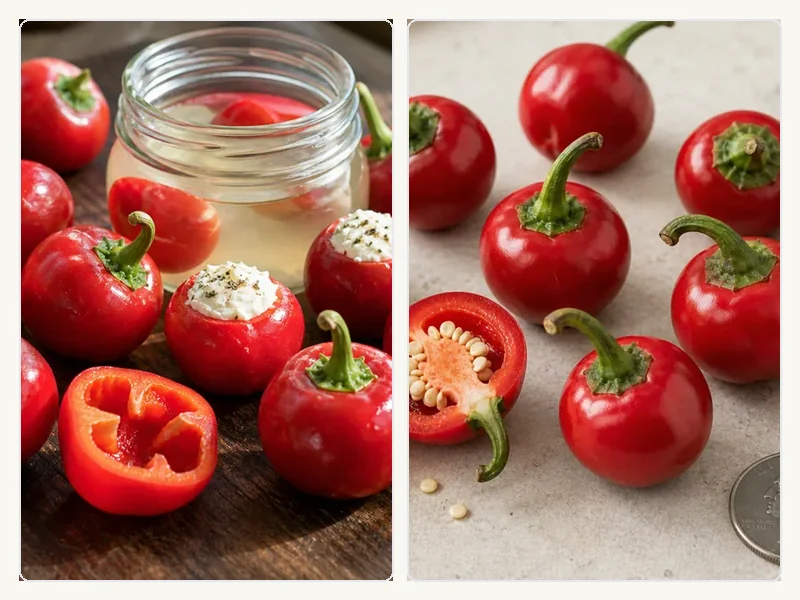
Stuffing separates convenience from control. Peppadew is quick: drain, pat dry, fill with goat cheese or mozzarella, and the pepper already brings sweet tang.
Cherry pepper asks for more choice. A whole hot cherry can handle heavier deli fillings such as provolone and prosciutto, and its wall gives a firmer chew.
Choose Peppadew when the filling should stay simple. Choose cherry pepper when the stuffed bite needs more resistance, salt, or heat.
Wall thickness explains why cherry pepper handles heavier fillings without splitting: the same thick walls that made it a home-canning favorite for over a century give it more structural resistance than Peppadew's thinner-walled fruit once a filling is packed in tight.
| Decision | Peppadew expectation | Cherry pepper check |
|---|---|---|
| Flavor | Predictable sweet tang | Sweet or hot label |
| Brine | Taste before seasoning | Compare vinegar, salt, and sugar |
| Stuffing | Drain and pat dry | Check wall firmness and cavity |
| Serving | Board, pizza, salad | Deli, antipasto, sausage, or stuffing |
Buying And Storage
Read the label before buying either jar. Cherry pepper labels usually say sweet or hot, and mixing up the two changes the dish more than any other variable in this comparison.
Peppadew is typically sold in glass jars or tins under the single brand name, so the product is consistent from jar to jar. Cherry pepper is sold under many private labels, so brine strength and heat level vary by brand even within the same "hot" or "sweet" category.
Refrigerate both after opening and keep the peppers submerged in their own brine. A pepper left above the liquid line dries out and loses the texture that makes it worth stuffing or slicing.
Whole peppers hold their shape and heat level longer than pre-sliced jars, since more surface area is exposed to air and brine once a pepper is cut.
Cherry peppers have been a supermarket jar staple since the mid-20th century, so brand-to-brand variation is old, not new. Peppadew's single-brand consistency comes directly from Peppadew International's trademark control, while cherry pepper's wider spread of sweet and hot jars comes from a century of independent regional producers with no unifying brand behind the category.
When Should You Choose Peppadew or Cherry Pepper?
Consistency favors Peppadew: snack boards, pizza, simple cheese fillings, and salads where sweet tang should be predictable. Control favors cherry pepper: hoagies, antipasto, sausage dishes, and any recipe where sweet versus hot or whole versus sliced matters.
For the nearby mild red pepper question, cherry pepper versus pimento handles a different split: firm pickled bite versus soft sweet pepper body.
A host who wants zero surprises across repeat events should stick with Peppadew every time. A cook building a specific antipasto flavor profile has more room to experiment among the many private-label cherry pepper jars, since brine strength and heat vary enough between brands to be worth taste-testing before committing to a recipe.
Is Peppadew a Brand or a Pepper?
Peppadew is a trademarked prepared product tied to a named piquante pepper, while cherry pepper is a broad market category. The stored Peppadew product source and USDA GRIN taxonomy support that distinction, but they do not make every round red pepper a Peppadew.
The old century-by-century cherry pepper history and exact discovery narrative have been removed because the current jar label gives better purchase evidence. Check the product name, species or pepper description when supplied, sweet or hot wording, whole or sliced form, and ingredient list.
A Peppadew-style product from another maker may still work in a recipe, but it should not be presented as the trademarked product. A cherry pepper jar can vary widely, so the category name alone never guarantees Peppadew-like sweetness or heat.
Why Does Nutrition Vary From Jar to Jar?
Generic fresh-pepper nutrition does not describe a drained prepared pepper accurately. Brine, added sugar, salt, serving size, and drain weight vary by jar, so compare the two products using their actual nutrition and ingredient labels.
For stuffing, drain and pat the cavity dry so cheese or deli filling stays in place. For pizza, salad, or antipasto, taste both pepper and brine before adding more salt, acid, or sweetness to the dish.
Refrigerate after opening according to the package direction and keep unused peppers submerged in their own brine with clean utensils. Discard a jar with an off odor, unexpected gas, mold, or a damaged seal rather than relying on a generic storage promise.
Peppadew Pepper vs Cherry Pepper FAQ
- Capsicum baccatum L. - USDA GRIN Taxonomy