
Peppadew vs Piquillo: Which Pepper Fits Your Dish?
Peppadew is the sweet-brined, crisp choice for cold stuffed bites and tangy accents. Piquillo is the flame-roasted, soft choice for warm tapas, substantial fillings, purées, and sauces.

Peppadew is a small, firm sweet piquanté pepper in sugar-vinegar brine. Piquillo is a thin, triangular pepper that is flame-roasted and soft. Choose Peppadew for cold bites and tangy accents, or piquillo for warm stuffing and sauces.
- Defining process: Sweet vinegar brine vs Flame-roasted and dry-peeled
- Shape: Small, round, cored cup vs Short, triangular, pointed
- Texture: Firm and crisp vs Thin and pliable
- Flavor direction: Sweet, tangy, lightly hot vs Sweet, roasted, savory
- Best first use: Cold appetizers and bright accents vs Warm stuffing, tapas, and sauces
Peppadew Pepper
MildPiquillo Pepper
MediumQuick Comparison
| Attribute | Peppadew Pepper | Piquillo Pepper |
|---|---|---|
| Defining process | Sweet vinegar brine | Flame-roasted and dry-peeled |
| Shape | Small, round, cored cup | Short, triangular, pointed |
| Texture | Firm and crisp | Thin and pliable |
| Flavor direction | Sweet, tangy, lightly hot | Sweet, roasted, savory |
| Best first use | Cold appetizers and bright accents | Warm stuffing, tapas, and sauces |
What Really Separates Peppadew and Piquillo?
The practical difference is the processing, not a contest over mild heat. Peppadew supplies sweet vinegar tang and a firm bite, while piquillo supplies soft flame-roasted pepper flesh.
That distinction begins before either jar reaches your kitchen. The official Peppadew mild whole product lists water, sugar, spirit vinegar, salt, acids, and calcium chloride around the peppers, so the packing liquid and firming agent shape the finished ingredient.
Pimiento del Piquillo de Lodosa follows a very different protected process. The official specification requires the small red peppers to be roasted over direct flame, peeled without water or chemicals, and packed without added covering liquid.
Both can taste sweet and both may deliver a gentle prickle. Neither shared trait makes them equivalent because one arrives as a crisp sweet pickle and the other as a thin-walled roasted pepper.
The jar liquid gives you an immediate kitchen test. Peppadew brine tastes noticeably sweet and acidic, while a good piquillo jar contains natural pepper juices and roast character rather than a formulated sweet pickle bath.
This changes seasoning before the pepper even enters the dish. A spoonful of chopped Peppadew may replace part of the vinegar, sugar, and salt in a dressing, but piquillo usually adds body and roasted depth without the same sharp correction.
Texture creates the second major split. Peppadew is designed to stay firm enough for a neat bite-size filling, whereas piquillo bends, folds, and settles into a warm sauce.
Use the processing question as the first decision. If the dish needs bright sweet acid and a small crisp pepper, start with Peppadew.
If it needs pliable roasted flesh, start with piquillo.
The jar process predicts the result
| Decision clue | Peppadew | Piquillo | Why it matters |
|---|---|---|---|
| Packing medium | Sweet vinegar brine | Natural pepper juices | Changes acid, sugar, and salt |
| Surface | Smooth and glossy | Wrinkled with roast marks | Reveals pickle versus flame roast |
| Wall behavior | Firm and springy | Thin and flexible | Changes stuffing and sauce use |
| Dominant role | Seasoning accent | Roasted pepper body | Guides the first choice |
How Can You Tell Peppadew and Piquillo Apart?
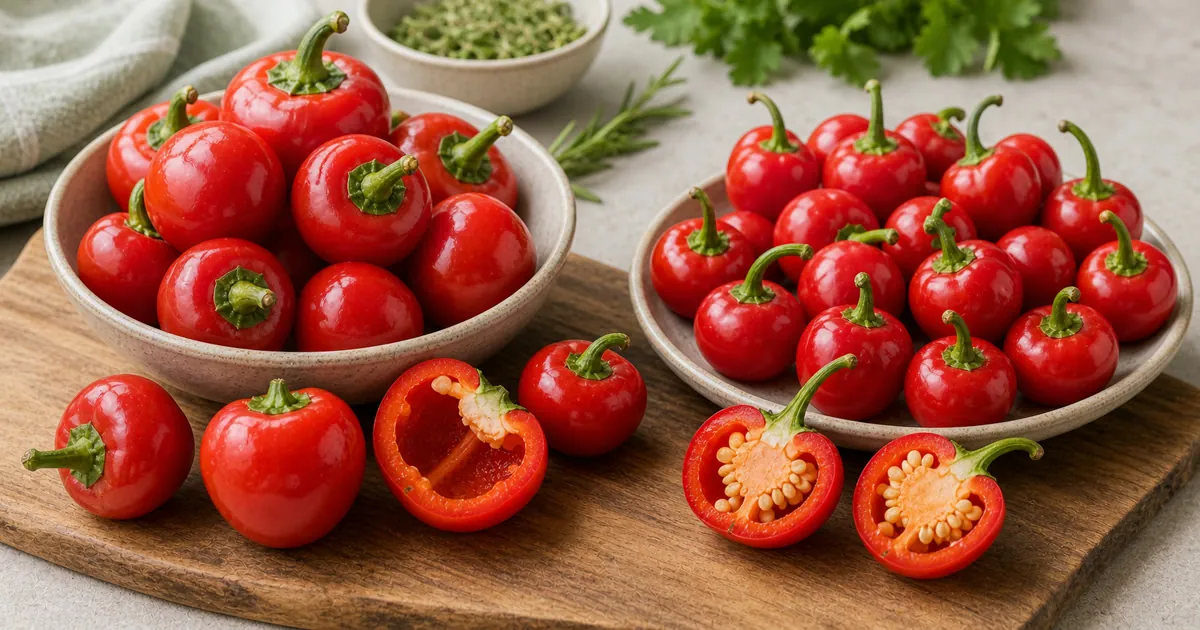
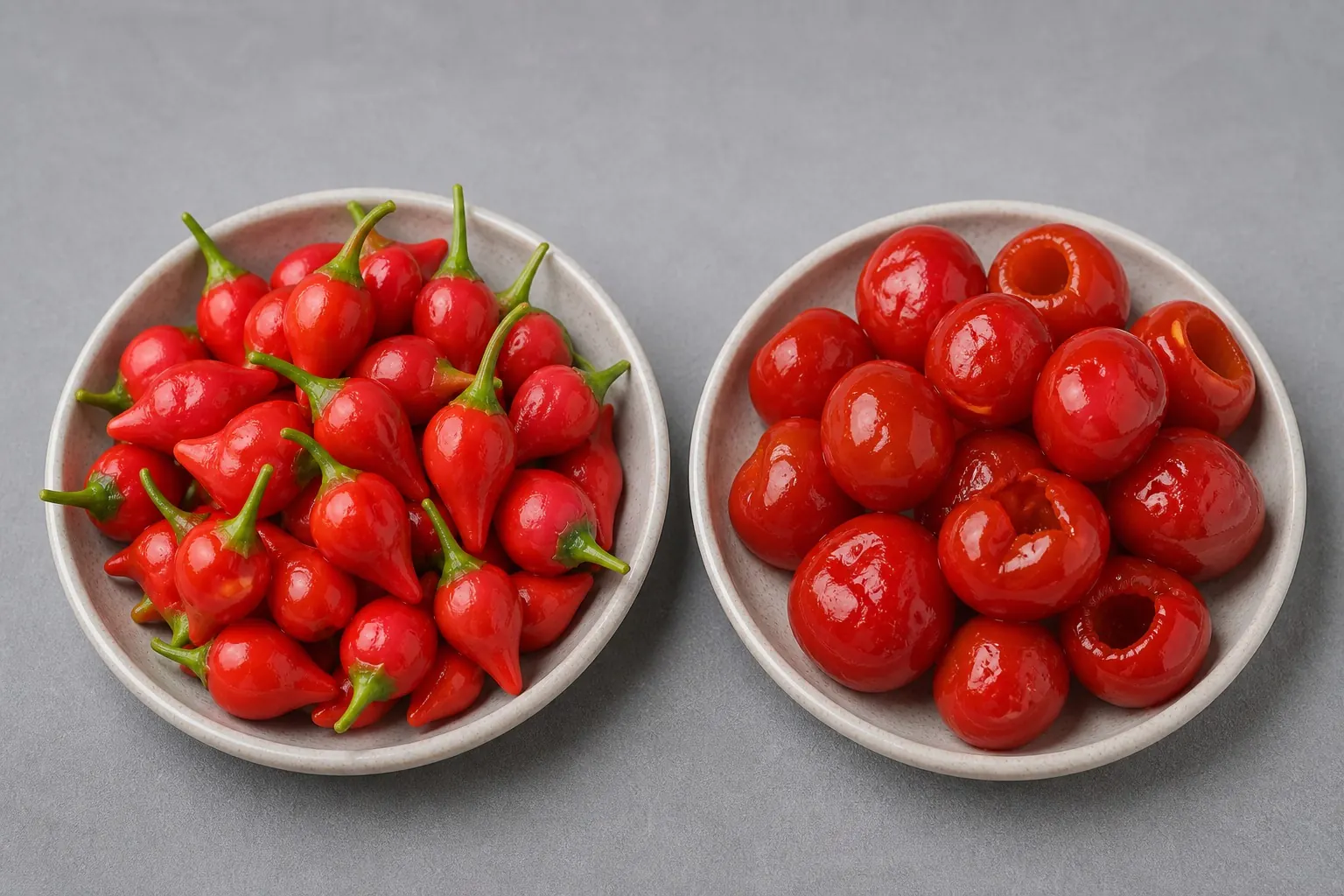
Start with shape when the labels are out of view. Peppadew sweet piquanté peppers are small and round with a wide hand-cored opening, while piquillos form short triangles that narrow to a clear point.
Surface tells you what happened after harvest. Peppadew looks smooth and glossy from brine, but piquillo often shows wrinkles, dark roast marks, and a softer surface left by flame roasting and dry peeling.
The protected Lodosa specification gives useful dimensions for authentic product. It describes a pepper generally no longer than 10 centimeters, about 4 to 5 centimeters across, with thin flesh around 3 millimeters thick.
Those figures are identification clues, not a reason to measure dinner with a ruler. A triangular pointed body plus fine roasted flesh is more useful than size alone because generic jarred red peppers can fall in the same broad range.
The liquid provides a third clue. Peppadew peppers sit in a clear sweet vinegar brine, while PDO Lodosa piquillos are packed without added brine and release their own reddish juices after processing.
Flavor follows those visible signals. Peppadew tastes sweet, tangy, and lightly hot with a clean pickle finish that remains obvious even after thorough draining.
Piquillo tastes sweet in a different way. Direct flame adds a toasted edge, while thin flesh and natural juices produce a softer, more savory impression without the deliberate sugar-vinegar balance of Peppadew.
Do not identify either product by red color or a loose menu name. Restaurants and retailers sometimes use "piquante pepper," "cherry pepper," "roasted red pepper," and "piquillo" loosely, even though those labels can describe different shapes and processing methods.
Also avoid treating Peppadew as the name of every small round sweet pepper. It is a brand applied to a range of products, so the complete product name and ingredient list matter when you want the familiar sweet piquanté result.
For piquillo, the words Pimiento del Piquillo de Lodosa, the PDO logo, and a numbered counter-label identify the protected Navarra product. A jar labeled only "piquillo peppers" may still be useful, but it does not promise the same origin and controlled process.
Small, round, and broadly cored
Clear sweet vinegar brine
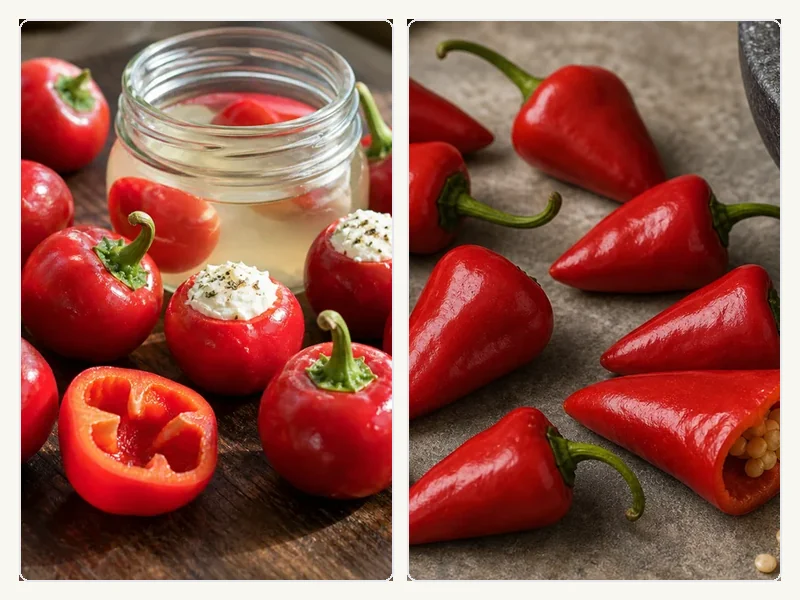
Short triangle with a pointed tip
Wrinkles and direct-flame roast marks
Which Pepper Suits Stuffing, Tapas, and Sauces?
Cold stuffing is Peppadew's clearest advantage. The round cavity holds goat cheese, cream cheese, feta mousse, tuna salad, or herbed ricotta, and the firm wall keeps each bite tidy on an antipasto board.
Drain the peppers well before filling them. Excess brine loosens soft cheese and can make an already salty filling taste sharper than planned.
Piquillo becomes more useful when the filling and pepper should behave as one warm dish. Its flexible triangular wall wraps around salt cod, tuna, crab, mushrooms, rice, braised meat, or soft cheese, then rests naturally in tomato, cream, or pepper sauce.
That softness is an asset in a cazuela and a liability on a cocktail pick. A warm stuffed piquillo can yield under a fork, while the same pepper may slump or tear when asked to stand upright like a small pickled cup.
For salads and sandwiches, decide whether the pepper should act as seasoning or as a vegetable layer. Chopped Peppadew distributes sweet acid in bright bursts, while strips of piquillo give a broader roasted layer with less vinegar impact.
Pasta exposes the same choice. Peppadew works in a cold pasta salad or a warm dish that needs a tangy accent, but piquillo blends more smoothly into a creamy sauce, a tomato base, or a purée with almonds and garlic.
Pizza can take either pepper for different reasons. Peppadew keeps recognizable sweet-tart pieces after baking, while piquillo settles into the cheese and behaves more like a roasted topping.
The peppers also differ in blended sauces. Peppadew can make a sauce unexpectedly sweet and acidic if the brine follows it into the blender, whereas piquillo contributes more pepper flesh and roast character.
Measure drained peppers for either sauce, then add jar liquid separately only when it improves the balance. This simple separation preserves control over salt, sugar, acid, and thickness.
Choose by the job the pepper must perform. A cold bite, relish, chopped salad accent, or sweet-tangy garnish favors Peppadew.
A warm filling, tapa, soup, purée, or integrated pan sauce favors piquillo.
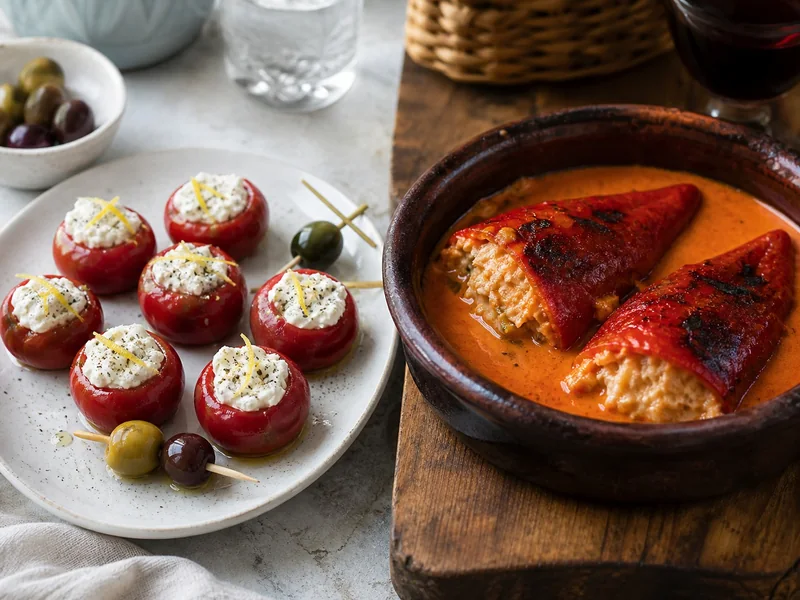
Match the pepper to the dish
| Dish | Better first choice | Reason |
|---|---|---|
| Cold cheese-stuffed bite | Peppadew | The round cavity and firm wall hold their shape |
| Warm stuffed tapa in sauce | Piquillo | Thin roasted flesh folds around filling |
| Chopped salad or relish | Peppadew | Sweet acid arrives in small bright bursts |
| Purée, soup, or pan sauce | Piquillo | Soft flesh integrates without pickle dominating |
| Pizza topping | Either | Choose tangy pieces or a softer roasted layer |
Which Should You Buy, Peppadew or Piquillo?
Buy Peppadew when the recipe depends on a small round cavity, crisp texture, or sweet-tangy pickle flavor. The official mild whole product is already cored for stuffing, so it also saves preparation time for cold appetizers.
Buy piquillo when the recipe asks for a roasted pepper that can fold around filling or disappear into sauce. Whole peppers suit stuffing, while strips or pieces work well when shape does not matter.
Read the ingredient panel before deciding. Sugar and vinegar near the top confirm that a jar will season the dish as well as supply pepper, while a shorter piquillo ingredient list keeps the emphasis on roasted flesh and natural juices.
Authenticity matters most when the regional product is part of the point. The Piquillo de Lodosa regulatory council says protected jars carry the appellation logo and a numbered counter-label, and the product name includes Lodosa.
That protection does not mean every other piquillo jar is unusable. It means you should not assume a generic label guarantees the same Navarra origin, flame-roasting controls, dry peeling, or packing method.
There are cases where neither jar is the right answer. A recipe needing a large sturdy shell for baking calls for a bell pepper, while one needing a neutral roasted strip may be better served by plain roasted red pepper without added sweet brine.
Best overall rule: choose Peppadew for a bright pickled accent and piquillo for a soft roasted foundation. The dish's texture and seasoning needs settle the choice more reliably than color or a small difference in perceived heat.
Buy by the job, then verify the label
- Choose Peppadew for a cored cold appetizer cup, firm bite, or sweet-tangy accent.
- Choose piquillo for warm stuffing, pliable roasted strips, purée, or sauce.
- Look for Lodosa PDO cues when protected Navarra origin and process matter.
- Choose neither when the recipe needs a large sturdy shell or a neutral roasted pepper.
Can Peppadew and Piquillo Replace Each Other?
They can replace each other when pepper shape is not carrying the dish, but the swap changes seasoning and texture. Match the drained amount first, then repair the missing quality after tasting.
Use this order when piquillo replaces Peppadew.
- Drain and weigh or measure the piquillo. Use the same prepared quantity the recipe assigns to Peppadew.
- Add it before extra seasoning. Piquillo may already contain salt even without sweet pickle brine.
- Restore sweet acid gradually. Mix a small amount of vinegar with a pinch of sugar, add part, and taste before adding more.
- Protect the texture. Fold soft piquillo into salads near the end instead of stirring aggressively.
Reverse the correction when Peppadew replaces piquillo. Drain it thoroughly, reduce other vinegar or sugar, and expect a firmer bite plus a brighter pickle note.
Do not force the swap in a presentation built around shape. Peppadew is too small and crisp for a large warm piquillo filling, while piquillo is too soft and pointed to behave like a neat cold appetizer cup.
For a blended sauce or chopped filling, the exchange is more forgiving. Reserve both jar liquids until the final seasoning step so you can adjust acidity, sweetness, salt, and thickness independently.
What changes in each direction
| Swap | Add or protect | Reduce or expect |
|---|---|---|
| Piquillo for Peppadew | Add sweet acid slowly | Expect a softer bite |
| Peppadew for piquillo | Drain well and fold gently | Reduce other vinegar or sugar |
| Either in blended sauce | Match drained quantity first | Hold jar liquid until the end |
| Either for shaped stuffing | Keep the original pepper | The forms are not interchangeable |
Peppadew Pepper vs Piquillo Pepper FAQ
- PEPPADEW - Sweet Piquante Peppers Mild Whole
- Piquillo de Lodosa Regulatory Council - The Pepper
- European Union - Pimiento del Piquillo de Lodosa PDO Specification