Dundicut vs Kashmiri Chili: Stronger Dried-Chile Bite or Deep Red Color?
Dundicut supplies the stronger dried-chile bite, while Kashmiri chilli is the easier choice for deep red color with controlled heat. Published Kashmiri heat specifications vary, so choose by the job and verify the exact package before dosing.

Dundicut is the stronger heat choice, while Kashmiri chilli is the color-first choice. Dundicut reporting from Kunri gives 30,000 to 35,000 SHU, but published Kashmiri product specifications vary enough that the exact package must guide the dose.
- Primary job: Direct dried-chile heat vs Deep red color with controllable heat
- Documented pod shape: Round or button-shaped vs Long, fleshy, and deep red
- Heat evidence: 30,000 to 35,000 SHU in Dawn reporting from Kunri vs Retail specifications vary by product
- Color evidence: No comparable ASTA figure in the selected sources vs ASTA 54.10 from the Indian Spices Board
- Best starting use: Pickles, lentils, chile oil, and heat-forward masala vs Rogan josh, tandoori marinades, and red curry bases
Dundicut Pepper
HotKashmiri Chili
MediumQuick Comparison
| Attribute | Dundicut Pepper | Kashmiri Chili |
|---|---|---|
| Primary job | Direct dried-chile heat | Deep red color with controllable heat |
| Documented pod shape | Round or button-shaped | Long, fleshy, and deep red |
| Heat evidence | 30,000 to 35,000 SHU in Dawn reporting from Kunri | Retail specifications vary by product |
| Color evidence | No comparable ASTA figure in the selected sources | ASTA 54.10 from the Indian Spices Board |
| Best starting use | Pickles, lentils, chile oil, and heat-forward masala | Rogan josh, tandoori marinades, and red curry bases |
Which Is Hotter, Dundicut or Kashmiri Chili?
Choose Dundicut for a clear dried-chile bite, and choose Kashmiri chilli when the main job is a deep red sauce or marinade whose heat remains easier to control.
Dawn's reporting from Kunri places Dundicut at 30,000 to 35,000 Scoville heat units. A named Kashmiri chilli supplier specification lists 1,000 to 2,000 SHU, while a separate 2024 whole-chilli specification lists 15,000 SHU with a 5,000-SHU tolerance.
Those conflicting Kashmiri specifications make one universal heat ratio misleading. Use the heat statement on the exact package when choosing the dose.
The Scoville number describes pungency, while ASTA color measures extractable color. India's Spices Board reports an ASTA value of 54.10 for Kashmir chilli, so its red contribution has its own measurement instead of being inferred from heat.
Dundicut's documented role centers on the stronger bite. Dawn's Kunri report gives the 30,000 to 35,000 SHU band, but KnowThePepper does not extend that figure to every packet sold under a broader red-chilli label.
The Spices Board also publishes a capsaicin percentage for Kashmir chilli, but that figure should not be converted casually into the SHU printed by a retailer. Laboratory method, sample, grade, and whether the value refers to capsaicin alone or total capsaicinoids can change the comparison.
Keep heat and red color separate when dosing the pair. That measurement caveat is why color should be established before Dundicut is added for bite.
For a heat-sensitive table, KnowThePepper recommends testing the exact powder in a small cooked portion before seasoning the full pot. The purpose is batch control, not a claim that every Kashmiri product is mild.
How Do Dundicut and Kashmiri Chili Taste Different?
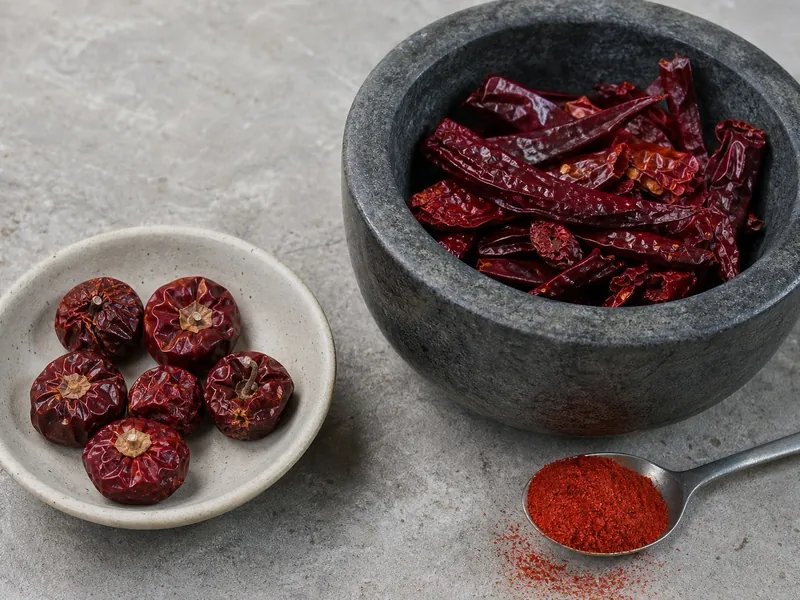
Dundicut, also spelled Dandicut, is a Pakistani dried chile associated with Kunri in Sindh. The USAID Pakistan chilli production manual identifies it as a round-shaped, open-pollinated variety, while Dawn describes the mature pod as button-shaped.
Dawn's report quotes Kunri growers describing Dundicut as aromatic, flavorful, and not bitter. That is named regional testimony rather than a KnowThePepper tasting claim, so the article does not invent smoky, metallic, or tangy notes that the cited sources do not establish.
Kashmir chilli belongs to a different regional trade. India's Spices Board says it is grown in temperate areas including Himachal Pradesh and Jammu and Kashmir, as well as northern Indian subtropical regions during winter.
The Spices Board describes Kashmir chilli as long, fleshy, and deep red. Its catalogue documents color and capsaicin values but does not supply a tasting note, so package descriptions of sweetness or fruitiness should not be presented as a universal sensory result.
The practical flavor decision follows the evidence that is available. Dundicut brings the more assertive pungency, while Kashmiri chilli lets the sauce's other spices remain easier to read because many retail grades contribute less heat.
The Spices Board lists lal mirch as an Indian name for chilli in Hindi and Urdu. That broad term does not prove that a packet contains Dundicut, so a label saying only lal mirch should be treated as generic red chilli unless the variety is also named.
Dry toasting, oil blooming, and long simmering can all change what reaches the plate. Because the selected authorities document identity more strongly than sensory chemistry, this comparison keeps cooking consequences practical and avoids pretending one aroma description survives every method.
Which Dishes Suit Dundicut and Which Suit Kashmiri Chili?
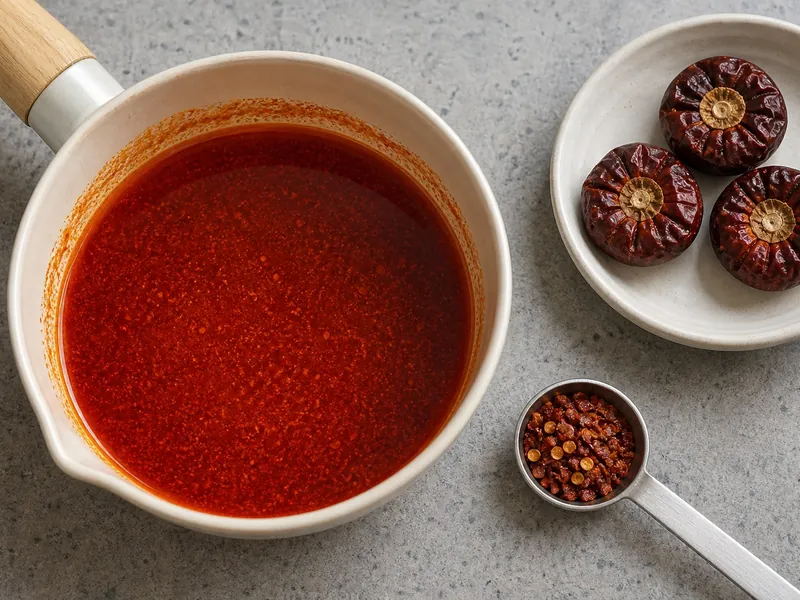
Use Dundicut where a compact amount of dried chile should remain noticeable beside strong spices. It fits Pakistani-style pickles, lentils, chile oil, and masala blends when the cook wants heat to survive the rest of the seasoning.
The Pakistan Planning Commission's chilli cluster report identifies Sindh as the country's major chilli-producing center and discusses Kunri's research and market infrastructure. That regional context supports Dundicut's place in Pakistani spice cooking without claiming that one pod defines every regional recipe.
Use Kashmiri chilli where red color has a visible job in the finished food. The Spices Board says dried chilli is used in curried dishes, curry powder, and seasonings, and its Kashmir entry documents the long, deep-red pod that cooks seek for color-rich marinades and sauces.
Rogan josh, tandoori marinades, and red curry bases are practical matches for Kashmiri chilli because the sauce must look red before extra heat is considered. Build the color first, then decide whether the dish still needs a hotter chile.
Whole Dundicut is useful when the cook wants to count pods or remove them after an infusion. Kashmiri powder is useful when the cook needs red pigment to disperse evenly through oil, yogurt, or sauce.
Method matters as much as the dish name. A whole Dundicut pod can perfume oil and be removed, while ground Dundicut distributes its heat through every serving.
Kashmiri powder works differently because fine particles spread color through a marinade or sauce. Stir it evenly into the fat or wet base before deciding whether the dish needs another source of heat.
A recipe that names Kashmiri chilli for a red marinade is asking for a visual result as well as seasoning. A recipe that names Dundicut in a pickle or chile oil is more likely to depend on its sharper pungency, so replacing it only for color leaves part of the recipe's job unfinished.
| Cooking job | Start with | Control it this way |
|---|---|---|
| Whole-pod infusion | Dundicut | Count the pods and remove them when the oil or sauce has enough bite. |
| Red marinade or curry base | Kashmiri chilli powder | Disperse the color through the wet base before adding a hotter chile. |
| Heat-forward pickle or masala | Dundicut | Measure the stronger chile separately so the dose stays repeatable. |
Verdict
Dundicut wins on heat when that is the required contribution. Its documented Kunri range makes it the more direct choice for a pickle, lentil dish, or chile oil that should carry a clear bite.
Kashmiri chilli wins on red color when that is the required contribution. The Indian Spices Board's 54.10 ASTA value gives that color role a measured basis, while the product's exact pungency still depends on the grade and package.
For cooks who keep both, the useful pantry split follows those two controls. Store Kashmiri chilli as the measured color ingredient and Dundicut as the separately measured heat ingredient, then let the recipe decide whether it needs one or both.
When the dish needs both color and heat
Set the red color with Kashmiri chilli first, then add Dundicut in measured increments. This keeps one correction from changing both variables at once.
How to Identify Dundicut and Kashmiri Chili When Buying
For whole Dundicut, look for the round or button-shaped form documented by USAID and Dawn. USAID explains that the fruit separates from the stem during harvest, a trait valued for producing stem-free dried material.
For Kashmiri chilli, look for a package that names the chile, its origin, and a heat or color specification when available. The Spices Board's long, fleshy, deep-red description gives a better identity check than bright red packaging alone.
- Ingredient: the package names one chile rather than an unexplained red-chilli blend.
- Identity: the variety, regional name, or origin matches the chile the recipe requests.
- Batch: the pack carries a lot code and best-before date that make it traceable.
- Specification: the seller gives a heat statement, color value, or product sheet when the dose depends on it.
Powders need more label evidence because the pod shape is no longer visible. Whole Dundicut is easier to count and remove, while Kashmiri powder is easier to distribute evenly for color.
Dundicut and Dandicut are established spelling variants in the selected Pakistan sources, but lal mirch is a generic chilli name. A seller should identify Dundicut or Longi directly if the button-shaped regional type is what the package contains.
Dawn reports aflatoxin problems in parts of Pakistan's chilli supply and cites European Union limits of 5 micrograms per kilogram for aflatoxin B1 and 10 micrograms per kilogram for total aflatoxins. Buyers cannot verify contamination by color or smell, so sealed packaging and traceable batches matter.
If the seller cannot identify the chile or document the batch, do not build a precise substitution ratio around that package. Test it as an unknown red chilli in a small cooked portion instead.
Substitution
A one-for-one swap is unreliable because it changes heat and color at the same time. Dundicut can make a Kashmiri-led dish too hot before the sauce reaches the expected shade, while Kashmiri can leave a Dundicut-led dish short of bite.
When replacing Kashmiri chilli, KnowThePepper recommends starting with a mild color-rich powder, then adding Dundicut in small measured increments. Do not use an invented fixed ratio across brands, because published Kashmiri specifications span materially different heat levels.
When replacing Dundicut, start with the Kashmiri amount needed for the recipe's color and add a separately measured hotter chile only if the dish needs more heat. This two-part method is more controllable than pretending color and pungency rise at the same rate.
Bloom either powder over moderate heat and stop if it darkens rapidly. This is a cooking safeguard rather than a claim that one exact oil temperature works for every pan, grind, or fat.
Before changing the full dish, identify whether the original chile is supplying color, heat, a removable whole-pod infusion, or evenly dispersed powder. That single check decides whether the replacement needs one ingredient or a controlled combination.
For a marinade or sauce, mix the color-building chile through a small portion of the base first. Add the hotter component only after the sample has been cooked enough to judge, because tasting dry powder does not reproduce its distribution through the finished food.
For an oil infusion, keep whole pods countable and removable. Crushed powder releases into the oil and cannot be taken back out, so it requires a more cautious first addition.
Separate color from heat before you swap
- Name the original job as color, heat, whole-pod infusion, or powder dispersion.
- Match the color with the milder component before increasing heat.
- Test a small cooked portion from the exact package.
- Record the amount that worked for that batch instead of treating it as a universal ratio.