Kashmiri vs Cayenne: Deep Color vs Sharp Heat

Use Kashmiri chili when the dish needs deep red color and only gentle warmth. Use cayenne when a small spoonful needs to raise the burn without adding much bulk. Kashmiri sits at 1,000-2,000 SHU, while cayenne lands at 30,000-50,000 SHU, so the real choice is job first, not species first.

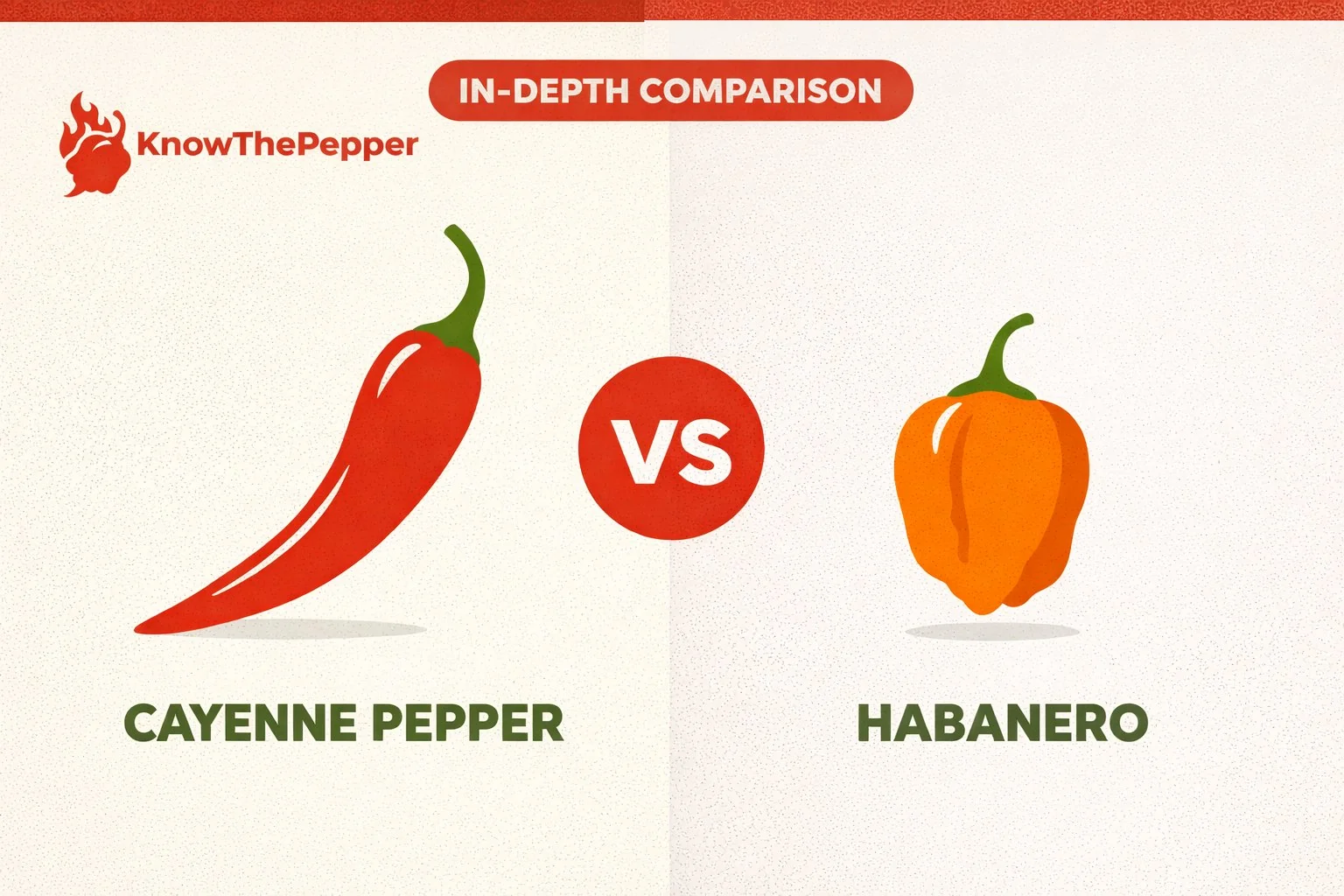
Kashmiri Chili vs Cayenne comparison
Quick Comparison

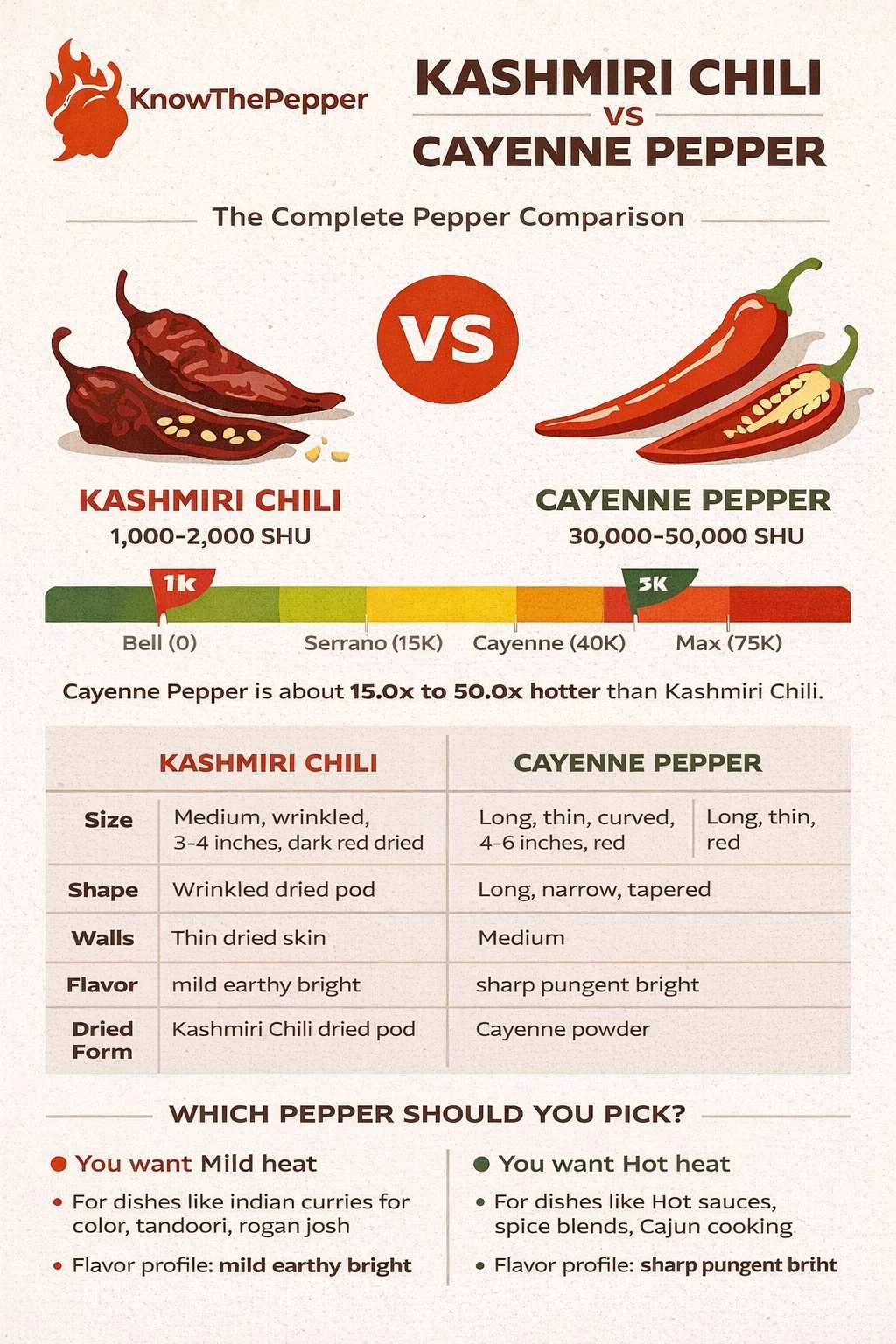
Kashmiri Chili measures 1K–2K SHU while Cayenne Pepper registers 30K–50K SHU. That makes Cayenne Pepper about 25x hotter by upper SHU range. Kashmiri Chili is known for its mild and sweet flavor (C. annuum), while Cayenne Pepper offers neutral and peppery notes (C. annuum).

Kashmiri Chili
1K–2K SHU
Medium · mild and sweet
Cayenne Pepper
30K–50K SHU
Hot · neutral and peppery
  • Heat difference: Cayenne Pepper is about 25× hotter by upper SHU range
  • Species: Both are C. annuum
  • Best for: Kashmiri Chili excels in everyday cooking and salsas, Cayenne Pepper in fresh salsas and mild recipes

Kashmiri Chili vs Cayenne Pepper Comparison

Attribute Kashmiri Chili Cayenne Pepper
Scoville (SHU) 1K–2K 30K–50K
Heat Tier Medium Hot
vs Jalapeño n/a 6x hotter
Flavor mild and sweet neutral and peppery
Species C. annuum C. annuum
Origin India French Guiana

Kashmiri Chili vs Cayenne Pepper Heat Levels

Kashmiri chili sits at 1,000-2,000 SHU in the mild tier. Cayenne lands at 30,000-50,000 SHU. That is a real gap, but the more useful kitchen difference is how much of each pepper you can use before the dish changes.

Two teaspoons of Kashmiri can turn a curry base red with only mild warmth. The same volume of cayenne would make the pot sharply hot. If you need a powder you can season by the spoon, Kashmiri owns that job.

Cayenne works the other way. A pinch can lift chili, soup, or hot honey fast, which is why it lives in the hot pepper tier instead of the mild one.

Flavor Profile Comparison

Kashmiri Chili
1K–2K SHU
mild sweet
C. annuum

Color is the whole point with Kashmiri chili.

Cayenne Pepper
30K–50K SHU
neutral peppery
C. annuum

Few peppers have traveled as far or worked as hard as cayenne.

Kashmiri tastes mild and sweet. It gives oil and yogurt a red stain plus a soft pepper note that stays in the background.

Cayenne tastes cleaner and drier. It adds peppery burn without much sweetness, so the rest of the spice mix keeps talking.

The South American pepper tradition behind cayenne usually treats heat as the lead note, while the Indian pepper pantry keeps Kashmiri around for color-driven masalas.
Kashmiri Chili and Cayenne Pepper comparison

Culinary Uses for Kashmiri Chili and Cayenne Pepper

Kashmiri Chili
Medium

Kashmiri chili powder is the backbone of Rogan Josh, butter chicken, and tandoori marinades - dishes where the visual impact matters as much as flavor. The standard ratio in most restaurant-style Rogan Josh is 2-3 teaspoons per serving, enough to turn the sauce a deep amber-red without pushing heat past comfortable.

View full profile
Cayenne Pepper
Hot

Ground cayenne is a workhorse ingredient. A quarter teaspoon can lift an entire pot of soup; a full teaspoon starts to build serious heat.

View full profile

Reach for Kashmiri in rogan josh, butter chicken, tandoori marinades, and dal when the sauce should look deep red before it tastes hot.

Reach for cayenne in dry rubs, chili, eggs, and quick sauces when the base already has enough color and only needs more burn. For smoky powder logic, the cayenne versus chipotle comparison shows why cayenne behaves more like a clean heat tool than a smoky chile.

Some cooks use both. Kashmiri builds the red base, then cayenne nudges the heat line higher. That pairing works better than trying to force one jar to do both jobs, and the paprika versus cayenne split shows the same color-versus-heat problem from another angle.

Which Should You Choose?

If the pan needs color, use Kashmiri first. If the pan needs a small, measurable heat push, use cayenne.

They are both Capsicum annuum peppers, but they are not close substitutes. The first is a color-forward curry powder. The second is a dose-controlled heat source.

Can You Substitute One for the Other?

Start near 1:1 by amount. The heat ranges are close enough that flavor, form, and recipe role matter more than a strict Scoville conversion.

Growing Kashmiri Chili vs Cayenne Pepper

Growing notes

Kashmiri Chili

Kashmiri chili is a warm-season annual that performs best in USDA zones 9-11 outdoors, though it grows well as a container plant in cooler climates when brought inside before frost. Start seeds indoors 8-10 weeks before last frost, maintaining soil temperature around 75-85°F for germination.

The plants are relatively compact - typically 18-24 inches tall - and moderately productive. They prefer well-drained, slightly acidic soil with consistent moisture.

For those comparing cultivation approaches, the Aji Panca's similarly low-heat growing profile offers a useful parallel - both reward patience over intensity manipulation.

Growing notes

Cayenne Pepper

Cayenne is one of the more forgiving hot peppers to grow, which explains its global reach. Start seeds indoors 8–10 weeks before last frost.

Cayenne wants 8+ hours of direct sun daily. It tolerates more heat than many peppers and continues setting fruit at temperatures that cause jalapeños to drop blossoms - a key advantage in hot summer climates.

Space plants 18–24 inches apart in well-drained soil with pH 6.0–6.

Where They Come From

Origin & background

Kashmiri Chili

India · C. annuum

The Kashmir Valley's cool climate and rich alluvial soil created ideal conditions for a distinct chili landrace that local farmers selected over generations for deep color and mild heat. Chili cultivation in Kashmir likely intensified after Portuguese traders introduced Capsicum species to South Asia in the 16th century, with regional varieties diverging quickly based on local culinary preferences.

Kashmiri cuisine prizes color and layered spicing over raw heat, which explains why farmers selected for pigment-dense pods rather than capsaicin. The pepper became embedded in Wazwan - the elaborate multi-course feast of Kashmiri cuisine - where dishes like Rogan Josh owe their signature crimson appearance almost entirely to Kashmiri chili powder.

Origin & background

Cayenne Pepper

French Guiana · C. annuum

Cayenne traces back to French Guiana on South America's northeastern coast, where indigenous peoples cultivated Capsicum annuum varieties long before European contact. Portuguese and Spanish traders carried the pepper eastward in the 16th century, and it took root across Asia, Africa, and Europe with remarkable speed.

By the 18th century, cayenne had become a staple in European apothecaries, listed as 'capsicum tincture' for digestive complaints and circulation. This medicinal reputation persisted well into the 19th century - cayenne tinctures appeared in the British Pharmacopoeia until the mid-20th century.

Buying & Storage

Whether you’re shopping for Kashmiri Chili or Cayenne Pepper, the same quality indicators apply. Fresh peppers should feel firm and heavy for their size, with taut, glossy skin and no soft or wet spots. Minor stem cracks known as “corking” are perfectly normal and often indicate a mature, flavorful pod.

Selection

What to look for

  • Firm pods with taut skin and consistent color
  • Should feel heavy relative to size
  • Minor stem cracks (“corking”) are normal
  • Avoid anything soft, shriveled, or with dark wet spots

Storage

How to store them

  • Fresh: Paper bag, crisper drawer, 1 to 2 weeks
  • Frozen: Wash, dry, freeze on sheet pan, 6+ months
  • Dried: Airtight and away from light, up to 1 year

Mistakes to avoid

Common misses

Kashmiri Chili

  • Equating green with unripe. Different products.
  • Overcooking. Cell walls break down fast.
  • Sealed plastic storage. Causes rot. Use paper bags.

Common misses

Cayenne Pepper

  • Blaming the seeds. Membranes hold most capsaicin.
  • Adding heat too early. Capsaicin breaks down with cooking.
  • Not tasting individual pods. Heat varies 30%+.
Final call

Kashmiri Chili vs Cayenne Pepper

Kashmiri Chili and Cayenne Pepper occupy very different positions on the heat spectrum. Cayenne Pepper delivers about 25× more upper-range heat with its distinctive neutral and peppery character. Kashmiri Chili, with its mild and sweet profile, excels in everyday cooking.

Heat gap about 25× by upper range Kashmiri Chili mild and sweet Cayenne Pepper neutral and peppery

Blooming Order

Oil tells the difference fast. Kashmiri can bloom for 20 to 30 seconds and turn the fat red without turning bitter.

Cayenne burns sooner. Keep that bloom short, or stir it in after the onions and other spices have already softened.

When a dish still looks flat, the fix changes too. Add more Kashmiri for color and mild body. Add cayenne only when you are sure the dish can carry more heat.

Swap Math

A straight 1:1 swap almost never works. Replacing Kashmiri with cayenne gives you heat without the same red body. Replacing cayenne with Kashmiri gives you color without enough bite.

The safer repair is a blend. Start with about 1 teaspoon Kashmiri plus 1/8 teaspoon cayenne when a recipe needs color and moderate heat. Go the other direction with Kashmiri or sweet paprika plus a pinch of cayenne when the recipe names Kashmiri and you only have a hotter jar.

The cayenne versus jalapeno breakdown shows the same rule in another form. If the missing note is dried-chile body rather than raw heat, the cayenne versus ancho contrast is the better model.

Jar Labels

Read the label before you buy. A jar that says only red chili powder may hide a much hotter blend, which matters far more for Kashmiri than for cayenne.

Cayenne usually does best when the store turns over spices quickly. Kashmiri does best when the powder still looks brick red instead of brown.

Fact-Checked & Expert Reviewed
Editorial Standards: Head-to-head comparisons include blind tasting when applicable. Heat levels cross-referenced with multiple sources. All substitution ratios tested side-by-side.
Review Process: Written by James Thompson (Lead Comparison Reviewer) , reviewed by Karen Liu (Lead Fact-Checker & Science Editor) . Last updated June 30, 2026.

Kashmiri Chili vs Cayenne Pepper FAQ
Kashmiri carries strong red pigment with mild heat, so you can use enough powder to stain the oil and sauce. Cayenne is too hot to use at the same volume in most curries.

Yes, but not by equal measure. Use a small pinch of cayenne for heat, then add Kashmiri or sweet paprika for the missing color so the sauce does not turn harsh.

In kitchen use, Kashmiri usually sits closer to paprika because color and mild body matter more than raw heat. It still brings more warmth than most sweet paprika blends.

Yes, but the timing changes. Kashmiri can bloom a little longer for color, while cayenne should stay brief because it burns faster and can turn bitter.

Sources & References
KL
Fact-checked by Karen Liu
Research Contributor
SHU Verified
Sources Cited
Expert Reviewed
All Comparisons Browse Peppers Scoville Scale