
Cayenne vs Habanero: Which Pepper Belongs in Your Dish?
Cayenne is the better choice for measured background heat, especially as powder. Habanero is much hotter and belongs in recipes that need its fresh fruit, citrus, and floral character.

Cayenne Pepper
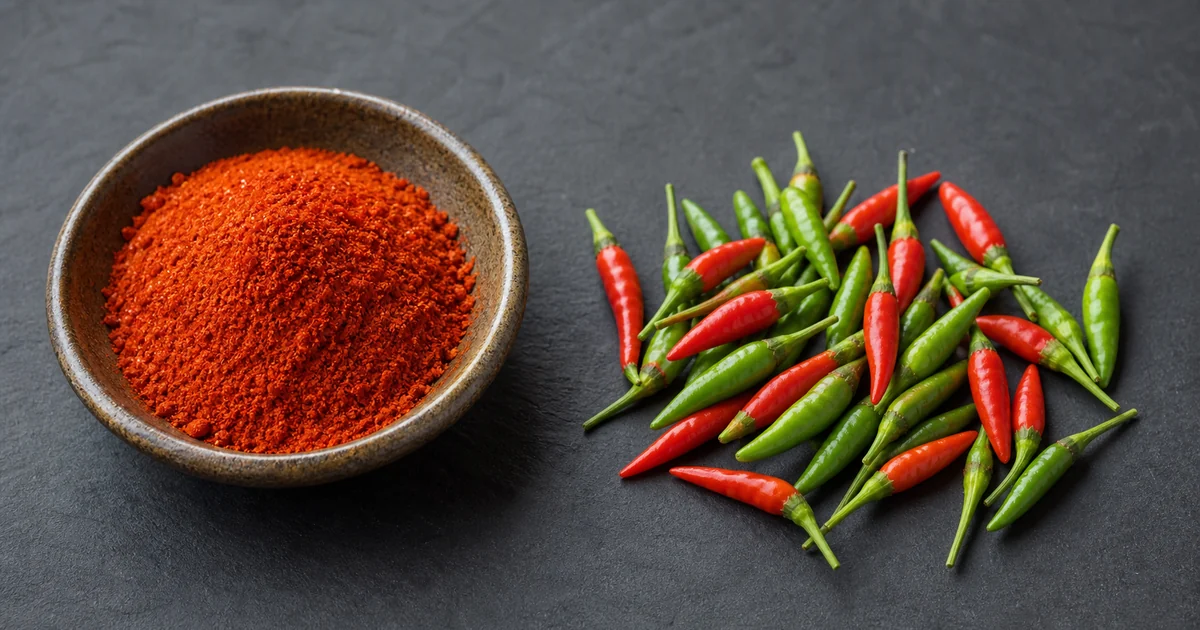
HotHabanero
Extra-HotQuick Comparison
| Attribute | Cayenne Pepper | Habanero |
|---|---|---|
| Scoville evidence | 25,000-50,000 SHU | 100,000-350,000 SHU |
| Heat Tier | Hot | Extra-Hot |
| vs Jalapeño | 6x hotter | 44x hotter |
| Flavor | direct pepper heat with a mild earthy note; the dried powder is less aromatic than a fresh pod | fruity and citrusy |
| Species | C. annuum | C. chinense |
| Origin | Cayenne, French Guiana (namesake) | Mexico |
How Much Hotter Is Habanero Than Cayenne?
Habanero is the hotter choice, while cayenne gives most cooks a wider margin for adjustment. UF/IFAS places cayenne pepper at 25,000 to 50,000 Scoville heat units and habanero at 100,000 to 350,000 SHU.
At the closest published endpoints, the habanero range begins at twice the upper end of cayenne. At the widest endpoints, 350,000 divided by 25,000 produces a fourteenfold gap.
Those endpoints describe tested pepper material, not a guaranteed pod or spoonful. The New Mexico State University Chile Pepper Institute explains that laboratories measure capsaicinoids by high performance liquid chromatography and convert the result to the familiar Scoville scale.
Pepper variety and growing conditions can move an individual sample within or beyond a commonly published range. In the NMSU paper introducing NuMex Suave cultivars, the commercial orange habanero control measured 247,475 SHU, while the authors also identified environment as a source of pungency variation.
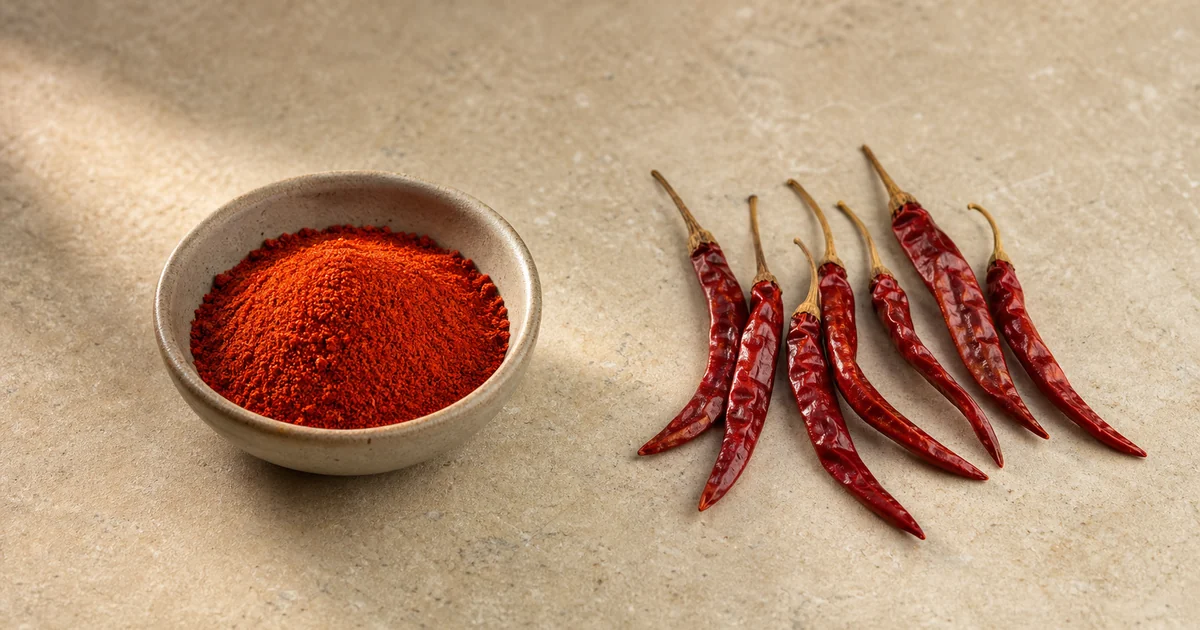
Form adds another variable. University of California Cooperative Extension describes cayenne as a long red pepper used fresh or dried, so the word cayenne does not automatically mean a jar of powder.
A fresh cayenne pod carries water, flesh, and an uneven amount of capsaicinoids. Ground cayenne removes most of that water and can be weighed, but brands and grinds still vary, so a level teaspoon is not a laboratory heat unit.
Capsaicin is concentrated mainly in the internal membranes and nearby flesh, according to UC Cooperative Extension. Seeds can pick up capsaicin through contact, but counting or removing seeds alone does not create a reliable heat adjustment.
For a recipe that needs gradual background heat, measured cayenne powder is the easier control. For an intentionally very hot dish, habanero can supply that intensity with less pepper material, but its larger range leaves less room for a careless addition.
How Do Cayenne and Habanero Taste Different?
Heat alone does not explain the flavor difference between cayenne, a Capsicum annuum pepper, and habanero. The habanero belongs to Capsicum chinense, and the two peppers bring different forms and aromas to a dish.
UF/IFAS describes habanero as fruity, citrus-like, and floral. UC Cooperative Extension likewise recommends it for salsa or dip and notes a subtle fruit flavor, which is why habanero remains noticeable even when a cook uses only a small portion.
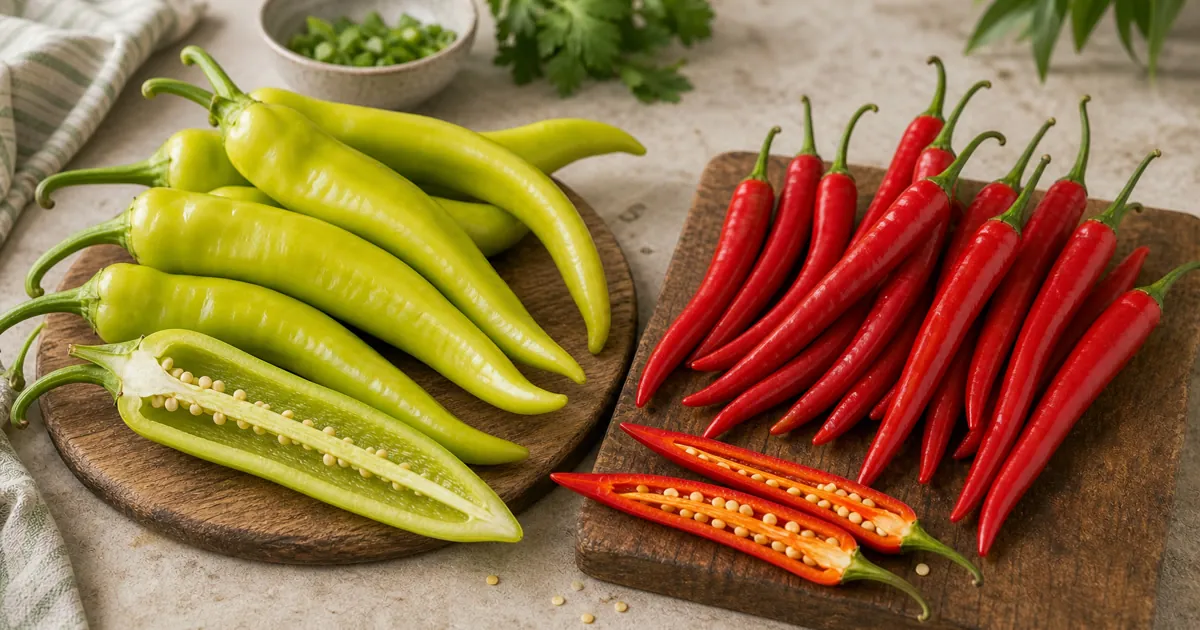
Fresh ripe cayenne tastes like a lean, hot red chile and contributes actual pepper flesh. The same UC guide calls cayenne useful both fresh and dried, an important distinction for anyone comparing produce rather than spice jars.
Drying changes the cooking job because the pepper loses water and becomes easier to grind or crumble. Powder disappears into a sauce or seasoning, while flakes and whole dried pods leave a more visible texture and release their heat less uniformly.
Fresh habanero moves in the opposite direction. Its juicy flesh adds moisture, and fine mincing or blending spreads both its aroma and heat through the batch.
A fresh-to-fresh comparison therefore gives cayenne more physical presence before the heat becomes extreme. Habanero delivers much more heat from a smaller portion, so another mild pepper may be needed when a recipe also depends on chile flesh.
A powder-to-powder comparison removes the moisture difference but not the aroma or heat gap. Habanero powder retains a distinct fruity character and can overwhelm a blend long before it reaches the same weight as cayenne powder.
Cooking time changes how those differences are perceived, even though it does not provide a dependable way to erase capsaicin. A long stew can integrate cayenne into the background, while habanero aroma is easiest to recognize in salsa, a short-cooked sauce, or a finishing condiment.
Choose by the flavor the dish must keep, then adjust heat within that choice. Starting with a heat number and ignoring form is how a substitution changes both taste and texture.
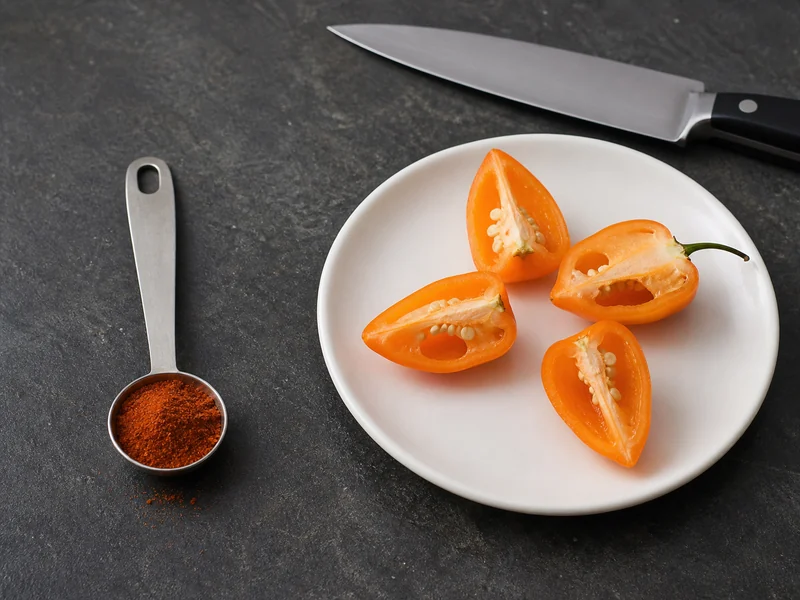
Cayenne and Habanero Swaps by Form
| What you are replacing | What changes | Practical starting rule |
|---|---|---|
| Fresh cayenne with fresh habanero | Heat rises sharply while pepper flesh and aroma change. | Use a small habanero portion and restore needed pepper mass with a mild fresh pepper. |
| Cayenne powder with habanero powder | Heat and aroma change without adding fresh moisture. | Compare credible labeled SHU values and weigh the cautious starting fraction. |
| Cayenne powder with fresh habanero | Heat, moisture, texture, and aroma all change. | Decide whether the dish can accept fresh pepper before attempting any heat conversion. |
These form differences follow the fresh-and-dried uses documented by UC Cooperative Extension. The starting rules are practical applications of those differences, not universal conversion ratios.
Culinary Uses
Cayenne fits recipes that already have their own dominant aroma and need a clean layer of heat. Dry rubs, seasoned nuts, eggs, popcorn, bean dishes, tomato soups, and flour-based coatings all benefit from powder that disperses without adding moisture.
Fresh cayenne has a different use. Its long, narrow pods can be sliced into cooked dishes, pickled, or dried for later grinding, which matches the fresh-or-dried use recorded by UC Cooperative Extension.
Habanero earns its place when fruit aroma should remain part of the finished food. UF/IFAS connects the pepper with the Yucatan Peninsula and regional sauces, while UC Cooperative Extension specifically points to salsa and dip.
For a fruit salsa, habanero can join mango, pineapple, citrus, or ripe tomato without tasting like a dry seasoning. The cook still needs to distribute a small amount through the full bowl because one concentrated piece can carry far more heat than the surrounding salsa.
For a blended hot sauce, habanero supplies aroma and intense heat at the same time. Cayenne powder can raise the heat of a sauce, but it cannot replace the fresh pepper mass or reproduce the same floral and citrus character.
A dry barbecue rub usually favors cayenne because moisture would make the blend clump and fresh pepper would not coat the food evenly. A fresh table salsa usually favors habanero when the recipe was designed around its aroma, although fresh cayenne is the calmer choice when diners need a larger safety margin.
Soup, stew, and curry sit between those cases. Cayenne is easier when the goal is a repeatable heat level across the pot, while finely blended habanero makes sense when its fruit character supports the other aromatics.
Do not treat cooking time as a correction for adding too much habanero. Diluting the complete batch with its non-spicy base ingredients is more predictable than waiting for heat to disappear.
Handling also affects the choice. UC Cooperative Extension warns that hot pepper juice can burn skin and cause severe eye pain, so rubber gloves and careful cleanup are especially important when cutting or blending habanero.
Verdict
Choose cayenne when control matters more than fresh pepper aroma. Powder is the practical choice for rubs, soups, coatings, and seasoning blends, while fresh cayenne works when the dish needs visible chile pieces at a lower heat tier than habanero.
Choose habanero when the recipe depends on fruity Capsicum chinense character. Salsa, dip, and blended sauce can use that aroma deliberately, but the hotter range requires a smaller starting portion and thorough distribution.
The decision changes when the recipe names a form. Fresh cayenne and cayenne powder are not interchangeable with each other, so neither should be treated as an automatic one-step replacement for fresh habanero.
For ordinary cooking, match the form first, preserve the dish's needed pepper mass, and then correct the heat. For tested canning, preserve the total fresh pepper amount and every safety-critical ratio in the published recipe.
If a recipe only says cayenne, check the ingredient list and method before choosing. A measurement in teaspoons usually signals powder, while instructions to stem, seed, chop, roast, or blend signal a fresh pod.
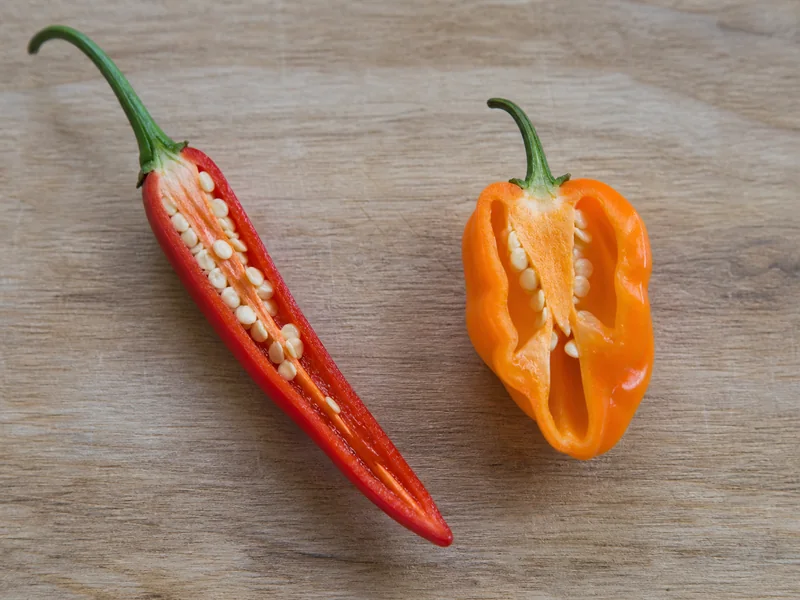
Substitution
There is no universal teaspoon-to-pod conversion between cayenne and habanero. Pod size, water content, cultivar, growing conditions, powder density, and actual SHU can all change the result.
For powder-to-powder substitution, compare labels from the two products and work by weight. Divide the SHU of the milder powder by the SHU of the hotter powder to estimate a cautious starting fraction.
A cayenne powder labeled 40,000 SHU divided by a habanero powder labeled 200,000 SHU equals 0.2. Start the habanero powder at about one-fifth of the cayenne weight, mix it through the whole batch, and reassess before adding more.
That calculation estimates heat only. It does not make habanero powder taste like cayenne, and it becomes unreliable when either package lacks a credible SHU value.
For a fresh cayenne to fresh habanero swap in an ordinary sauce or stew, do not replace equal weights with habanero alone. Use a small habanero portion for heat and make up the remaining pepper mass with a mild fresh pepper when texture and volume matter.
For a recipe written for fresh habanero, cayenne powder can supply heat but cannot supply the missing flesh, water, or fruit aroma. A habanero substitute with similar fresh, fruity character is usually a closer first choice.
For a recipe written for cayenne powder, a fresh habanero also adds unwanted moisture and pieces of pepper. A dry cayenne substitute is easier to measure and preserves the intended texture.
Do not use the one-fifth powder example for fresh pods. The calculation compares two labeled powders by weight and cannot correct for the water and variable size of fresh peppers.
Tested salsa, pickle, jelly, and sauce recipes require the canning rule from UC Master Food Preservers. Keep the prescribed total amount of fresh pepper and use only substitutions allowed by the tested process.
Wear gloves while cutting either hot pepper and avoid touching the face. Habanero deserves extra caution because a small amount of internal membrane can carry enough capsaicin to contaminate a knife, board, blender lid, or dish towel.
A Safe Order for Making the Swap
- Match the form first. Compare fresh pepper with fresh pepper or powder with powder before estimating heat.
- Protect the dish's needed pepper mass. In ordinary cooking, add a mild fresh pepper when a small habanero portion cannot supply enough flesh.
- Use credible heat values. Apply a calculated fraction only when both same-form products provide trustworthy SHU figures.
- Mix through the full batch. Let a hot cooked dish reach an even temperature before making one measured adjustment.
- Follow tested canning instructions exactly. Keep the required fresh-pepper amount, acid level, and processing time.
- UF/IFAS Extension - Pepper Production in Miami-Dade County, Florida
- New Mexico State University - NuMex Suave Red and Orange Mild Capsicum chinense Cultivars
- New Mexico State University Chile Pepper Institute - Heat and HPLC Testing
- University of California Cooperative Extension - Peppers in Your Garden
- UC Master Food Preservers - Safely Substituting Peppers